Senate Guts Radical California Vehicle Emissions Regulations and Leaves Democrats Furious – RedState
Thursday, the Senate voted to block a package of vehicle emissions regulations issued by California, including a highly controversial rule that would have banned the sale of gasoline-powered (aka real) cars by 2035. In the process, tears were shed, threats were issues, and knickers became tightly knotted by leftist Democrats out to cripple the US economy. //
Only a month before leaving office, the [Biden administration] approved a California regulation that banned the sale of new cars and trucks in California in 2035. This was a decision of earthshaking import. Given the size of its market, unilateral economic actions affect the entire country as businesses adjust their processes to accommodate California regulations. Making matters worse, 11 other states were in the process of enacting similar bans. All told, this would have reduced the market for new gasoline-powered automobiles in the US by 40%. This approval was an obviously malicious act by the outgoing EPA management. The EPA had been sitting on the approvals since 2022 but dumped this burning bag of ordure on the front porch of the Trump White House for political points.
The House teed up the action with a bipartisan vote of 246-164 to disapprove three EPA waivers granted to California: a "zero emissions" standard for trucks, a regulation that would have essentially banned heavy-duty off-road vehicles, and the 2035 ban on real cars and trucks.
When the resolution of disapproval arrived in the Senate, its fate was in question. The General Accounting Office had rendered a "legal opinion" (funny how that phrase has become synonymous with "anti-Trump mischief-making") that a mere waiver of an existing law did not rise to the level of being a regulation that the mere collective vote of Congress could override. In this assertion, the GAO was joined by the Senate parliamentarian. //
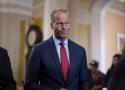
Neither the GAO nor the parliamentarian has binding authority over the will of the Senate, but what Republicans wanted to avoid was the appearance of steamrolling the parliamentarian. This is where the solid leadership of South Dakota's John Thune came into play in a clear contrast to the "failure theater" directed by Mitch McConnell whenever he was majority leader. //
Thune decided to go around the bureaucratic obstacle. “What I didn’t want to do was vote to overturn the parliamentarian," said Sen. Susan Collins (R-Maine), "and with help from a lot of experts the leader came up with an approach that avoids that outcome, and I’m glad.” //
What Thune did was get a ruling from the floor that the situation was not as cut and dried as the GAO and parliamentarian had claimed and that the waivers did, indeed, fall under the provisions of the Congressional Review Act. //
DaveM
8 hours ago
"[Schumer]: This Senate vote is illegal,"
Apparently we have more than a few Senators sworn to uphold the Constitution that have never bothered to read it.
Article II Section 5 Paragraph 2:
"Each House may determine the Rules of its Proceedings..." //
Romeg
7 hours ago
After carefully scouring my copy of The Constitution of The United States of America I have to report that I was unable to find that article, clause, paragraph or amendment that grants California the power to regulate interstate commerce. Perhaps someone reading this can help me out. //
anon-hlc8 streiff
7 hours ago
Sometimes the problem is that whomever is prosecuting the case does not bring that point of law up in their briefing. If they do not bring up that states may not regulate or impede interstate commerce, the judge is not going to help them out. //
Romeg streiff
5 hours ago
I cannot avoid the conclusion that such rulings utterly negate the commerce clause of the U.S. Constitution. Wickard v Filburn went in the completely opposite direction making ALL commerce, in effect, Interstate Commerce and thus subject to congressional regulation. The ruling you cite along with past failures to challenge CA's high-handedness seem to be judicial nullification of at least certain aspects of that clause in the Constitution.

