The 2025 Half Century spectacular will showcase large daily field demonstrations, remarkable feature displays, a daily Parade of Power down the runway, and sanctioned tractor pulls.
We look forward to seeing you August 21-24!


Newly announced catalog collects pre-2022 sources untouched by ChatGPT and AI contamination. //
As it turns out, his pre-AI website isn't new, but it has languished unannounced until now. "I created it back in March 2023 as a clearinghouse for online resources that hadn't been contaminated with AI-generated content," he wrote on his blog.
The website points to several major archives of pre-AI content, including a Wikipedia dump from August 2022 (before ChatGPT's November 2022 release), Project Gutenberg's collection of public domain books, the Library of Congress photo archive, and GitHub's Arctic Code Vault—a snapshot of open source code buried in a former coal mine near the North Pole in February 2020. The wordfreq project appears on the list as well, flash-frozen from a time before AI contamination made its methodology untenable.
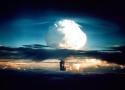
The site accepts submissions of other pre-AI content sources through its Tumblr page. Graham-Cumming emphasizes that the project aims to document human creativity from before the AI era, not to make a statement against AI itself. As atmospheric nuclear testing ended and background radiation returned to natural levels, low-background steel eventually became unnecessary for most uses. Whether pre-AI content will follow a similar trajectory remains a question.
Still, it feels reasonable to protect sources of human creativity now, including archival ones, because these repositories may become useful in ways that few appreciate at the moment. For example, in 2020, I proposed creating a so-called "cryptographic ark"—a timestamped archive of pre-AI media that future historians could verify as authentic, collected before my then-arbitrary cutoff date of January 1, 2022. AI slop pollutes more than the current discourse—it could cloud the historical record as well.
For now, lowbackgroundsteel.ai stands as a modest catalog of human expression from what may someday be seen as the last pre-AI era. It's a digital archaeology project marking the boundary between human-generated and hybrid human-AI cultures. In an age where distinguishing between human and machine output grows increasingly difficult, these archives may prove valuable for understanding how human communication evolved before AI entered the chat.
It has long been clear that the leftist activists who succeeded in getting “Juneteenth” added as a federal holiday meant to strip Independence Day of some of its moral and historical significance. The timing of Juneteenth, only a fortnight and change before the Fourth of July, is intended to usurp some of the Fourth’s glory. At the same time, the theme of the new holiday is designed to suggest that slavery, rather than liberty, is the defining feature of our founding. It’s an attempt to make 1776 vie with 1619, with the abolition of slavery being portrayed as our real moment of independence, in place of the moment when we actually proclaimed our independence and declared that “all men are created equal.” //
Per the Office of Personnel Management, the official name of the holiday to be observed on June 19 is “Juneteenth National Independence Day.” The official name of the holiday to follow 15 days later is “Independence Day.” It could hardly be clearer that Juneteenth was intended to compete with, and partially marginalize, the Fourth of July.
America does not need, should not have, and does not legitimately have, two Independence Days. Designating Juneteenth as “National Independence Day” intrudes upon our actual Independence Day. It suggests that Americans’ freedom doesn’t really trace to the Declaration of Independence but rather to the Emancipation Proclamation — or, more exactly, to awareness of that proclamation (more than two years after it was issued). It also suggests that our actual Independence Day doesn’t apply to all Americans. //
PBS writes, “Juneteenth commemorates when the last enslaved African Americans learned they were free.” This, however, is false. After Juneteenth, which marks the moment when federal troops arrived in Galveston, Texas in June 1865 and announced that all slaves in Texas were free, people were still held in slavery in Delaware and Kentucky, border states unaffected by the Emancipation Proclamation. //
Only Congress and the states, through the passage of a constitutional amendment, had the power to end slavery on a national basis.
This fact, and the fact that slavery remained in existence in Delaware and Kentucky after Juneteenth, likely would have been raised in the Senate had it bothered to engage in a genuine debate over whether Juneteenth should be a federal holiday. Instead, that body, which once prided itself on its vigorous deliberations, passed the Juneteenth bill under a unanimous consent agreement in the wake of the George Floyd riots, an act of true irresponsibility and political cowardice.
Since Juneteenth marked the end of slavery in Texas, rather than the end of slavery in the U.S., it a much more sensible holiday for Texas than for the U.S. as a whole.
On a national basis, a date truly worth commemorating would be December 6, the day on which the 13th Amendment was ratified, marking our constitutional triumph over an inherited evil that clashed with our founding principles. On that day in 1865, Americans successfully amended their Constitution to read, “Neither slavery nor involuntary servitude … shall exist within the United States, or any place subject to their jurisdiction.” That is a day, and those are words, worth celebrating.
Congress should make December 6 a federal holiday to celebrate America’s abolition of slavery, while eliminating Juneteenth as a federal holiday and thereby confirming that we have but one Independence Day.

Rare RCA control panel from 1966 may be the only surviving example of its kind.
All indications are that the Democrat Party is in big trouble.
Let’s look back at American political history. This country has had a tradition of having two broad and ideologically fluid coalition parties that contest with each other across the nation. Over our history, two of these American parties have disappeared from existence – the Federalists and the Whigs.
How and why did this happen?

The Web Era arrives, the browser wars flare, and a bubble bursts.
Welcome to the second article in our three-part series on the history of the Internet. //
In 1965, Ted Nelson submitted a paper to the Association for Computing Machinery. He wrote: “Let me introduce the word ‘hypertext’ to mean a body of written or pictorial material interconnected in such a complex way that it could not conveniently be presented or represented on paper.” The paper was part of a grand vision he called Xanadu, after the poem by Samuel Coleridge.
A decade later, in his book “Dream Machines/Computer Lib,” he described Xanadu thusly: “To give you a screen in your home from which you can see into the world’s hypertext libraries.” He admitted that the world didn’t have any hypertext libraries yet, but that wasn’t the point. One day, maybe soon, it would. And he was going to dedicate his life to making it happen.
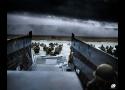
We start our D-Day Memorial Broadcast around 5:00 pm EDT on the evening of June 5th and it'll run through at least twice before I switch to something else.
Since Eastern Daylight Savings Time is the same as Eastern War Time, the NBC D-Day Broadcasts will begin at roughly the correct time of 2:45 am on June 6th.
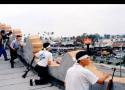
Rooftop Koreans: An example advocating for the importance of citizen ownership of firearms
Rooftop Koreans or Roof Koreans refer to the Korean American business owners and residents who armed themselves and took to the rooftops of local businesses to defend themselves during the 1992 Los Angeles riots.
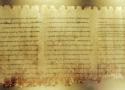
Combining radiocarbon dating and a new AI program called Enoch yields surprising results.
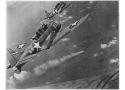
In one day, Japan had lost four fleet carriers, a heavy cruiser, and more than 300 front-line naval aircraft. Three of those carriers were lost in the space of a few moments, on the morning of June 4th. The Americans lost the Yorktown, a destroyer, and 150 aircraft. //
I've left a lot of detail out of this account. Explaining everything that happened in the days around this battle would fill a book. But it was the sinking of the Japanese carriers that turned that tide; that was the decisive moment of the war in the Pacific. The war went on for three more years, ships and men were lost, battles were fought and won, and while America suffered some setbacks, after Midway, the outcome was never truly in doubt. The Battle of Midway was the turning point. //
The famous American film director John Ford was on Midway when it was attacked on June 3rd; you can see his account of that battle here. https://www.youtube.com/watch?v=Jr4YgpKU8ak. //
Eccentric
2 hours ago
The loses for the Japanese were not just the carriers and planes.
They also lost the majority of their experienced naval pilots. The US retained theirs.
As US war production ramped up and older obsolete planes were replaced by newer and better ones, the Japanese were unable to compete.
Atticus62 Eccentric
2 hours ago edited
A massive chunk of the Japanese pilots who bombed Pearl Harbor were lost at Midway. The Japanese went no further in their invasion/acquisition strategy after Midway. Everything started to contract for the Japanese after Midway.
Small, little known story that also affected the Pacific War from that campaign. A Japanese pilot landed his Zero on the ground intact and died quickly during the Alaska invasion portion of the the Midway campaign. The US Army recovered that Zero intact in Alaska and kept the discovery top secret.
The technology and plane were analyzed by the US military and the plane flown by many US pilots and they learned how to quickly counter the Zero's strengths. The intelligence value from that Zero was immeasurable. The Zero soon became a sitting duck in dogfights with US aircraft. That was also a result of the Midway campaign that the Japanese never recovered from. It's just not publicized as much because it took place in Alaska. //
Atticus62
2 hours ago edited
Posted this on PJ, but its important to pass along. If people are interested in reading more about the Midway campaign, I highly recommend the award winning 2005 book Shattered Sword: The Untold Story of the Battle of Midway. It is written by Jonathan Parshall & Anthony Tully. It is a 700 page, extremely well written book that gives one a thorough account of the battle and its ramifications.
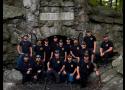
Mission: Underground Miners is a 501(c)3 nonprofit organization, dedicated to preserving Pennsylvania’s anthracite coal mining heritage through a historical online archive, mine rehabilitation, equipment restoration, and educational public events.
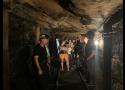
The Brooks Mine was first conceived by Reese Brooks in 1900 as a showpiece for anthracite mining during the development of Nay Aug Park. Brooks opened this drift mine publicly in 1902 as an exhibition while he was the operator of the Greenwood Mine in Moosic. While not a large mine, there is a sizable coal deposit inside, and under Nay Aug Park. The mine is driven into the outcrop of the Dunmore No.2 and No.3 Veins of coal as they come together in a fault under the park. The mine was closed temporarily in 1938. In 1953 it was retimbered by the Moffat Coal Company, the lighting was upgraded by the Scranton Police Traffic Repair Squad, and mannequins installed simulating miners working at the face. In 1975 the mine was closed for good and with the opening of the Lackawanna 190 Slope Mine Tour in the Keyser valley in the 1980s, it would be deemed un-necessary to reopen. //
In April of 2022, experienced coal miners, timber men, and laborers within our group began volunteer weekend work spending over 3000 man hours to reopen the 120-year-old Historic Brooks Drift Mine. This included cleaning debris from the mine and retimbering the place using standard anthracite mining practices. Since the mine only had one way in and out, we had to drive a second opening outside as an escapeway and for proper ventilation through the Dunmore No.2 Vein. Track work would then be completed laying all new rail through the mine, installing a new electrical and lighting system, and finally a grand re-opening ceremony on August 11, 2023. The mine is inspected and approved for tours by the Pennsylvania State Mine Inspectors and it is examined daily prior to any tours by our Anthracite Mine Foreman. This entire project could not have been completed without the generosity of the community! It has been completely funded by donations from local individuals and businesses who want to see this succeed.
500 Arthur Ave, Scranton, PA 18510
Why Rome Collapsed - Barry Strauss
Watch the full interview now, right here on X.

North Korea is infiltrating the West digitally. We must respond with vigilance, not wishful thinking. //
Pro tip for companies: ask prospective employees if they think Kim Jong-un is fat. Seriously. Multiple companies have caught North Korean operatives this way. They won’t criticize the regime—because they don’t want to die. And they’ll walk away from the job if you ask.
Lastly, a moment of reflection.
Harrison Ruffin Tyler, grandson of 10th U.S. President John Tyler, has passed away at age 96.
Yes, you heard that right: the grandson of a man born in 1790 lived into the third decade of the 21st century. That’s not just trivia—it’s a powerful reminder of how young our republic truly is.
John Tyler served before the Civil War—before Lincoln. And now his grandson, a man who lived through the Great Depression, WWII, the Cold War, the Space Race, and the internet age—is gone.
In a culture obsessed with the now, we forget how close the past really is. We are not far removed from the Founders—we’re their grandchildren. Literally.
Harrison Tyler preserved Sherwood Forest, his family’s historic estate. He protected Virginia’s architectural legacy. But perhaps his greatest legacy was just living—living proof that America’s past is not distant. Our institutions, our Congress, our civic inheritance—they’re real. They’re tangible. And they’re fragile.
His passing reminds us to cherish what we’ve inherited. To study it. To defend it. And to pass it on.
The line between the Founders’ America and our own isn’t theoretical—it’s family.
Dating back 1,600 years ago, the colorful mosaic portrays hunting scenes, animals, and daily life in 55 medallions – a 'story that connects past, present, and future'

How Enrico Tedeschi built a collection of over 10.000 artifacts, saved the Marconi Collection, and created the first Sinclair Exhibition. //
Enrico Tedeschi’s legacy: A life-long devoted to researching, collecting, studying, and catalouging consumer electronics. //
“Collecting should not be just amassing the largest possible number of artifacts and memorabilia but also and mainly for the research and understanding of how, when, why, and who invented and produced what, and the social impact and consequences that these products had on the life of millions of people. Collecting should be a way of learning, growing, and self-improvement, and not just a hobby, or an investment,” Enrico Tedeschi wrote in the Introduction of his 1999 self-published book, The Magic of Sony.

Speaking to "Fox News Sunday" host Shannon Bream, the 70-year-old actor revealed ahead of the event that one of the pieces of music at the Memorial Day concert on PBS is called “Rise” and it’s one of the pieces of music his late son, a composer, composed before he died in 2024 following a five year battle with a rare bone cancer. He was 33.
“It’s an incredible thing,” Sinise said when asked about getting to hear his late son’s music being played by the National Symphony Orchestra. “I had sent them a piece of music that Mac had written. It’s a piece called the ‘Rise.’” //
He later posted his speech from the evening with actor Esai Morales, which will have you standing up and shouting “USA, USA.”
“America began as an idea, a dream; the blood of those who placed duty before itself made that dream a reality,” Sinise said. “Our Armed Forces answered the call to service even before the United States became a nation.”
“This year marks the 250th anniversary of the birth of our armed forces,” he added. “On April 19th, 1775, the shot heard round the world was fired on Lexington Green when militiamen from Massachusetts faced off against British forces. Two months later, the Congress authorized the establishment of a united fighting force drawn from across the colonies. George Washington was nominated to be its leader over eight arduous years of struggle with Great Britain. What emerged as the United States Army became the symbol around which 13 fractious colonies rallied and ultimately won their freedom.”
“The principles established at its founding remain unwavering. Always place the mission first, never accept defeat, and never quit … Our Armed Forces gave birth to our nation,” he continued later. “Today, they sustain that nation’s freedoms on land, sea, air, and in space. This Memorial Day, we salute their selfless devotion to an America made possible by their sacrifice."
“Our Army, Navy, and Marines have always been proud to serve, and we, as a grateful nation, owe them our thanks,” Morales concluded. “More than that, we owe them our country.”
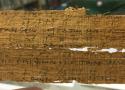
Historian teams up with Chris Tomlin and Hillsong’s Ben Fielding to adapt rare music dating back to the third century. //
Early conversations between Dickson and Fielding eventually led to a collaboration with Grammy-winning worship artist Chris Tomlin, culminating in the production of a new worship song, “The First Hymn,” and a documentary about the discovery and study of the papyrus fragment containing the hymn.
Charles "Wes" Tyson and his three co-inventors at Exxon Research & Engineering Co. (ER&E), called the Four Horsemen, were part of the team responsible for developing fluid catalytic cracking, the process that produces over half the world's gasoline. They developed the process in 1942, and the first commercial fluid cat cracking facility went on-line on May 25, 1942.
In the 1930s, ER&E was looking for a way to increase the yield of high-octane gasoline from crude oil. Researchers discovered that a finely powdered catalyst behaved like a fluid when mixed with oil in the form of vapor. During the cracking process, a catalyst will split hydrocarbon molecule chains into smaller pieces. These smaller, or cracked, molecules then go through a distillation process to retrieve the usable product. During the cracking process, the catalyst becomes covered with carbon; the carbon is then burned off and the catalyst can be re-used.
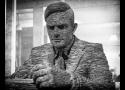
Precious scientific papers once belonging to wartime codebreaking genius Alan Turing – rescued from an attic clear-out where they faced destruction – are set to fetch a fortune at auction next month.
The incredible archive, tipped to rake in tens of thousands, includes a rare signed copy of Turing's 1939 PhD dissertation, Systems Of Logic Based On Ordinals [PDF]. Experts reckon this manuscript alone could go for between £40,000 and £60,000 (c $54-$81,000).
Also among the finds is Turing's legendary 1937 paper, On Computable Numbers [PDF] – dubbed the first-ever "programming manual" and introducing the world-changing concept of a universal computing machine.
The papers, originally gifted by Turing's mother Ethel to his mathematician pal Norman Routledge, vanished from public view and were stashed forgotten in a family loft after his death.