The modern western mind views time as linear with a beginning and end. Whether you ascribe to the theory of evolution or creation, the timeline for planet earth is the same, a beginning and an end. The creationist views this span of time in the thousands of years with the beginning the creation of the earth by the hand of God and its destruction also by the hand of God. The evolutionist views this span in the billions of years with the beginning the creation of the earth through cataclysmic events and its destruction through another cataclysmic event. //
Time is not linear it is circular. A clock is not a timeline but a circle for the simple reason that time does not begin or stop, it continues without beginning or end. In the same fashion days and years are also circular.
If the timeline above for the span of the earth and man is bent back onto itself, we create a circle of time. With a circular view of time our perspective on the beginning and end of the earth and man change. No longer is the beginning the beginning and the end the end, but a continual cycle of beginnings and endings. ///
Thomas Cahill (Gifts of the Jews) begs to differ -- the linear view of history is one of the greatest gifts of the Jews


Bible Timeline Chart with World History
Easily See Over 6,000 Years of Biblical and World History Together!
Unique Circular Format – more in less space. How does all this information fit on a 37″ x 45″ poster – compared to the 15 or 20 feet of a straight timeline?
Longest period of continual operation for a computer
Who
Voyager Computer Command System
What
43:70 year(s):day(s)
Where
Not Applicable
When
20 August 1977
The computer system that has been in continual operation for the longest period is the Computer Command System (CCS) onboard NASA's Voyager 2 spacecraft. This pair of interlinked computers have been in operation since the spacecraft's launch on 20 August 1977. As of 29 October 2020, the CCS has been running for 43 years 70 days.

CKing123 Ars Centurion
9y
282
MedicinalGoat said:
No more 486 support?! Don't come crying to me when your fancy pants speculative execution gets you into another security bind! Angrily shakes old man fist at clouds
That made me interested on the last in-order x86 CPU and it is Saltwell atom chips (which were a die-shrink of Bonnell) and some of these chips based on Saltwell were released as late as 2012(!) and they are even 64-bit.
America is the only nation in history to be founded on the premise that all men are created equal

Command and Control, Goldsboro 1961
Clip | 2m 6s
Sometimes all that stands between the world and nuclear disaster is the flip of a switch.
Aired 01/10/2017 | Rating NR

Command and Control, Chapter 1
Clip | 9m 21s
A chilling nightmare at a Titan II missile complex in Arkansas in September, 1980.
Aired 01/10/2017 | Rating NR

Command and Control, Accident Report
Clip: Season 29 Episode 1 | 1m 8s
The Accident Report
Aired 01/10/2017 | Rating NR

Command and Control The Socket
Clip | 3m 26s
Director Robert Kenner breaks down the scene for The Socket.
Aired 01/10/2017 | Rating NR

A powerful story of the most destructive invention in human history, outlining how America developed the nuclear bomb, how it changed the world and how it continues to loom large in our lives. Witness the raw power and strangely compelling beauty of rare views of above-ground nuclear tests.

I remember being more than a little surprised when I found out that Papi had been living in the US for 10, 15, or 20 years on average and obviously had not bothered to learn the language. Many were truck drivers, and while you don't need to know English to understand what a stop sign is telling you, it did make you wonder what aspects of the rules and regulations of the road they didn't fully comprehend because they couldn't speak the language. And if they couldn't speak the language, it made you wonder about assimilation and how much they knew about the place they were living in.
Thomas Jefferson? Que? Pearl Harbor? Que? The Bill of Rights? Que paso, hombre. //
If you can't be bothered to learn your host country's language, then there are probably a lot of other aspects of the culture that you're ignorant of as well. Like politics or current events, the former of which is downstream from the latter. And if you're unaware of such things, then either you're getting your information from family members (which will have a certain viewpoint) or Telemundo, which has its own slant. Neither of these is a great way to invest in your adopted homeland because you should be educating yourself, separating the wheat from the chaff, and arriving at your own conclusions. That contributes to a more informed and independent society rather than one that just accepts what it is told to accept.
Having a common language is like glue that binds a society. It holds it together and makes it strong, and it's one of the most durable adhesives in a culture. When you don't have a common language, you get tribalism. You get division. You get Balkanization. None of these bode well for what is supposed to have been a melting pot where all of the ingredients meld together and assimilate to become one people. Today, thanks to mass uncontrolled illegal immigration, we may never become what we once were. //
Diversity is great, but only if it adds to the culture instead of splitting it up.
Anyway, the diversity trope is getting so tiresome because if it doesn't put unity of purpose in line ahead of it, then we're going to diversify ourselves right out of a country.
MOMSR is dedicated to the preservation of the technology of magnetic sound recording and its impact on music, broadcasting, film/video and science. While most content deals with the history and manufacturers of the reel to reel tape recorder, or tape deck, we cover many aspects of magnetic recording.
In addition to the vintage technology, our Museum documents the significant individuals who invented, manufactured, engineered and produced audio creating the sounds in our lives!
Welcome to the Museum of Magnetic Sound Recording
MOMSR is dedicated to the preservation of the technology of sound recording and its impact on music, broadcasting, film/video and science. While most content deals with the history and manufacturers of the reel to reel tape recorder, or tape deck, we cover many aspects of magnetic recording.
In addition to the vintage technology, our Museum documents the significant individuals who invented, manufactured, engineered and produced audio creating the sounds in our lives!
This note describes XyWrite III+ in some detail, with emphasis on (a) its overall architecture and on "internals," and (b) its "macro"/programming/automation facilities. The target audience is threefold: (1) XyWrite III+ users who want more understanding, mostly of XyWrite XPL programming, (2) others who have never used XyWrite, and "wonder what the fuss is/was all about," and (3) myself -- since nothing clarifies one's thoughts about a given topic as trying to explain the topic to someone else. //
XyWrite III+ is a product that many users still feel is the best writing tool they have ever experienced. But, due to some misestimation by XyQuest (XyWrite's developer) as to how much MS Windows would damage the DOS applications market, plus an untimely, misguided, and costly partnership between XyQuest and IBM at about the time Windows was emerging, XyQuest failed at about the time MS Windows emerged. XyWrite development largely ceased soon thereafter.
In my view, many of the concepts that made XyWrite great have never been articulated, and many of them died when XyQuest died. This note attempts to explore and lay out some of those concepts, in a way that they might be appreciated even by someone who has never used the product, in the hope that some of these concepts might emerge in some measure in future "word processing" software. This hope, however, is perhaps a rather slim one -- nothing will make a person into a XyWrite fan as much as actually using the product will.
So much for “the shot heard ‘round the world.”
The nation recently celebrated a quarter-millennium since the first battles of the American Revolution, fought at Lexington and Concord on April 19, 1775. But, as a recent Wall Street Journal column noted, you wouldn’t know it from talking to most Americans. The anniversary of events celebrated by Ralph Waldo Emerson’s 1837 “Concord Hymn” passed largely unnoted and unnoticed, “the shot heard ‘round the world” turning into a quiet squib barely detected, save perhaps for the towns in Massachusetts where the events occurred.
The nation’s impending semiquincentennial — a fancy term for our 250th birthday, which we will celebrate next July — provides an excellent time for Americans to rediscover our nation’s history. In an ideal scenario, the more our fellow citizens recognize the sacrifices that our forebearers made to establish, as Lincoln noted, “a new nation, conceived in liberty and dedicated to the proposition that all men are created equal,” the more we might cherish, value, and nurture those freedoms today.
Next year marks the 250th anniversary of America’s Declaration of Independence — the semiquincentennial. Unfortunately, instead of a yearlong birthday party and a celebration of American history, the stage is being set for 2026 to be a year of neurotic self-loathing.
The U.S. Semiquincentennial Commission (also called America 250) was created to provide national coordination for next year’s commemorative events. Ostensibly, each state and territory has also appointed its own independent committee to plan more local contributions to the festivities. In reality, a minimum of 14 states have adopted programming recommendations from a single non-profit called the American Association for State and Local History (AASLH).
The motivation driving the AASLH’s recommendations is neither celebratory nor constructive. John Dichtl, the president and CEO of the AASLH, recorded a Zoom presentation in 2021 in which he explicitly outlined their goals. He describes 2026 as a “once in a generation opportunity to critically engage with our nation’s history,” and a chance to “foster critical awareness of our faults, past and present, and the changes we need to make now to move toward justice.”

America’s education system wasn’t designed to unlock the genius in every child. It was designed to produce compliance. Efficiency. Predictability. In short—factory workers, not thinkers.
This isn’t a conspiracy theory. It’s a matter of historical record.
The Industrial Blueprint
In the late 1800s and early 1900s, as the U.S. surged into the Industrial Revolution, it looked a lot like today’s China—a manufacturing behemoth. Industrialists like Andrew Carnegie and John D. Rockefeller understood that in order to fuel mass production, they didn’t need philosophers or inventors. They needed disciplined laborers who could follow instructions, show up on time, and never question authority.
So the school system was modeled on the factory floor:
- Rows of desks like assembly lines
- Bells to simulate shift changes
- Subjects taught in isolation, with minimal cross-disciplinary thought
- One-size-fits-all learning geared toward standardization, not inspiration
Horace Mann and John Dewey—often celebrated as pioneers—helped usher in this system. Dewey even said: “The teacher is not in the school to impose certain ideas or to form certain habits in the child, but is there as a member of the community to select the influences which shall affect the child and assist him in properly responding to these influences.” In other words, social conditioning, not personal discovery. //
It’s time to unplug the conveyor belt.
Let’s stop pretending our schools are sacred. Let’s start building a system that grows free minds, not gray-suited cogs.
Because our children aren’t factory products.
They’re image-bearers of God—capable of wonder, wisdom, and greatness. If we don’t fight for their minds, someone else will program them.

A Swedish columnist, Linda Jerneck, has the right take on this:
Still, putting the best-preserved 17th-century ship at risk “reveals the activists’ fanaticism,” columnist Linda Jerneck wrote: “Restore Wetlands wants us to show solidarity with future generations—by pissing on what previous generations left behind.”
But it's worse. These eco-loons are not only initiating micturition on the past, including on the legacy of one of Sweden's greatest kings, but also on the future. They oppose everything that makes our modern lifestyle possible. They oppose, in effect, modern civilization. And this latest act just shows the callous disregard they have for the past, the present, and the future.
In George Orwell’s prescient novel, 1984, the slogan of the Party is
Who controls the past controls the future. Who controls the present controls the past.
The idea is both simple and profound. By eradicating and reinventing history, it is possible to completely reframe reality for future generations. This is routinely done by leftwing academics searching for penumbras and emanations of the US Constitution. //
Salon runs one of these epic falsehoods titled Sorry, NRA: The U.S. was actually founded on gun control. //
This is simply nutbaggery. Madison’s draft amendment is only intended to protect Quakers and Mennonites from being compelled to provide military service. It’s pretty simple.
Ed-squared also turn the logic of the Second Amendment upon its head. If the Founders had, indeed, harbored fear of an armed populace then they went to great lengths to hide it. Take a look at the militia laws extant in the colonies at the signing of the Constitution.
Connecticut required every male over sixteen to keep a musket, powder and shot.
Virginia declared that all free men were required to possess a musket, four pounds of lead and one pound of powder. If a free man was not financially able to afford a weapon, the county had to provide one.
New York dictated a fine of five shillings to any male, sixteen to sixty, who could not arm himself.
Similar statutes are in all colonies. The clear intent of these laws is not that they link firearms ownership to militia membership, rather they are aimed at people who don’t have firearms in order to ensure the colony has a militia. Think of these laws in the same way that you’s think of laws requiring kids to be immunized before they can go to school. The laws aren’t aimed at people who voluntarily immunize and the purpose isn’t to further public education. Rather mandatory immunizations are on the books as a way of coercing people who would not immunize voluntarily. //
A free and an independent people are a direct threat to the progressive experiment. The only way they will achieve that goal is to lie and lie relentlessly and shamelessly until they control the past. We can’t allow that to happen.
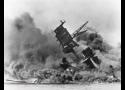
Southside Judge Smails
a day ago
I didn't know any of that...any specific books recommended?
anon-y2mh Southside
a day ago edited
Probably the biggest one I can think of off the top of my head was "At Dawn We Slept" by Gordon Prange.
However, something to think about - the USN actually wargamed an attack where the US had 24 hours warning. Pacific Fleet was able to sortie, and they met Kido Butai some four or five hundred miles north of Pearl Harbor.
Where they proceeded to get their asses kicked (it hurts to say, but I say that as a veteran myself - call Pearl Harbor what it was) as badly as they did in real life. There were only 2 carriers available in PacFlt at that point. One was off delivering aircraft to someplace (Midway, I believe). Don't remember where the other was, but they were not in any shape at all to contribute to a battle with 6 Japanese carriers.
The gotcha was where they were. In the real world, Pearl Harbor was only something like 60 - 100 ft. deep. The Navy was able to salvage and patch many of the ships initially sunk or mangled. Had they met the Japanese navy 500 miles northwest of Pearl, they would have been in multi-thousand foot deep water. Any ship lost there would have been lost permanently.
The point is that Pearl Harbor has on several occasions been called the most "successful defeat" in USN history. Had they been warned, the death toll would have been higher and the permanent destruction of PacFlt (minus the two carriers) would most likely been almost total.
anon-y2mh Mrs. deWinter
2 hours ago edited
Hat tip!
First, I owe Mrs. deWinter and mopani an apology. When I wrote my original post, I had a false memory and used an incorrect number. There were 3 carriers (not 2) in PacFlt's order of battle. The carriers were Enterprise, Lexington, and Saratoga. Enterprise was returning from a mission to send a Marine fighter squadron to Wake Island. On the morning of 7 December, the task force was about 215 miles west of Oahu. Lexington and her task force was returning from a similar mission to Midway, and was, on the morning of 7 December, 500 miles southeast of Midway. She alone, of the 3 carries, was in a position to do something about Kido Butai. However, the smart money would have been a direct order to her commander telling him to run for it. There was no way on the face of this planet that Lexington was in a fit state to go up, effectively by herself, against any two of the 6 Japanese carriers present. Had she attempted to do so, she would almost definitely been sunk, losing a significant number of her sailors.
The third carrier (the one I'd forgotten about because she wasn't present in theater that morning) was Saratoga who was just pulling into San Diego when the attack started in Hawaii.
One other thing I touched on but didn't really go into depth on was the death/injury toll. Of the 8 battleships present in Pearl Harbor that morning, 5 were either sunk outright or damaged badly enough that they would be expected to sink had that damage occurred in deeper waters.
Of those 5 battleships, only two (Arizona and Oklahoma) were completely written off. The remaining three (Nevada, California, and West Virginia) were ultimately moved to Puget Sound, WA for repairs and refit.
Being the only ship to successfully get underway, Nevada was hit by at least one torpedo and 6 bombs, forcing her crew to turn out of the channel and beach her near the mouth of the harbor (had she sunk in the mouth of Pearl Harbor, the harbor would have been utterly useless until she was cleared out of the way). After repairs, Nevada, was used for convoy duty in the Atlantic and provided fire support for 5 landings (Attu, Normandy, Southern France, Iwo Jima, and Okinawa).
California was hit by two torpedoes and a bomb. However one of the hits started a fire which disabled part of the electrical system that powered the pumps. So she slowly sank over the next 3 days. After she was refloated and repaired, she took part in the Battle of Suriago Straight, she was hit by a kamikaze during the invasion of Lyangen Gulf. Following repairs, she was again present and providing fire support during the invasion of Okinawa.
West Virginia sank after multiple torpedo hits. After being refloated and repaired, she was sent to support the invasion of the Phillipines (Gen. MacArthur and his "I Have Returned" moment), taking part in the Battle of Suriago Straight, as well as the battles of Lyangen Gulf, Iwo Jima, and Okinawa.
So I think it's safe to say that those three ships materially contributed to the success of the war effort, and none would have been available had they been sunk 400 miles northwest of Oahu.
Now the men are something different. There were 2,008 sailors killed and 710 wounded during the attack, with roughly half of the fatalities coming from the explosion on board Arizona. We can probably deduct the Army/Army Air Corps casualties (218 killed, 364 wounded) from the totals, as the Army Air Corps couldn't have been present due to range from Pearl Harbor. The Marines would still have suffered some fatalities, but it would come down to whether or not they were deployed on the ships or if they were shore Marines at the time.
Let's start with keeping the Marines out of it, and deducting the Army/AAC totals from the Navy. That would leave us with a floor of 1790 killed and 646 wounded.
This is where it gets really sketchy to determine what a reasonable total should be. If we determine that California, Nevada, and West Virginia were total losses (with only California sinking slowly enough to get more than a tithe of her men off), we'd be looking at 778 casualties from Nevada and 1157 casualties from from West Virginia, assuming that they sank in a similar way in this universe as they did in ours. In our world, West Virginia lost 106 killed and Nevada lost 60 killed and 109 wounded. So, if you take the C-A-T =DOG numbers that we came up with above, my back-of-the-napkin arithmetic raises the casualties from 2043 killed and 1178 wounded to something on the close order of 3450 killed and 646 wounded (the numbers I have access to don't easily differentiate between wounded and killed, so I've been kind of lumping everything into the killed basket).
And this is, frankly, almost more important than saving 3 ships for battle later. Our back of the envelope estimate says we'd lose 1400 or so more trained sailors. And from a human perspective, we'd lose another 1400 or so brothers, sons, and fathers. In Pearl Harbor, these men were able to frequently self-rescue by crawling to other ships via mooring lines. They were close enough to shore that, assuming that they could dodge the burning oil slicks, they stood a passable chance of getting to dry ground. In the middle of the Pacific, they'd have to take their chances that someone would be around to rescue them, as they would be in no position to rescue themselves.
So, yeah. I'll freely admit that the above was a bunch of back-of-the-napkin arithmetic held together by more wild guesses that I should have used, but it kind of puts things in perspective.