
The brainchild of one ambitious American astrophysicist during the course of U.S. nuclear tests yielded the first manmade object in Earth’s orbit. The four foot round steel cap was launched into orbit in late August 1957 by the United States, beating the USSR’s Sputnik 1 to orbit by one month and nine days, scoring a major victory in the space race for the Americans. This feat has gone largely unrecognized by most historians. //
Operators
United States – Originally launched from the Nevada Test Site in 1957, the Pascal B Cap remains in service in Earth’s orbit despite its unknown location. //


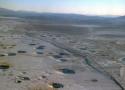
A manhole cover launched into space with a nuclear test is the fastest human-made object. A scientist on Operation Plumbbob told us the unbelievable story. //
Robert Brownlee was on the Operation Plumbbob team that launched an object in space before Sputnik.
They put a manhole cover above a nuke underground, and the explosion shot the iron cap into space.
The fastest human-made object was part of the US government's nuclear testing in the 1950s.
But the very first underground nuclear tests were a bit of an experiment — nobody knew exactly what might happen.
The first one, nicknamed "Uncle," exploded beneath the Nevada Test Site on November 29, 1951.
Uncle was a code for "underground."
It was only buried 17 feet, but the top of the bomb's mushroom cloud exploded 11,500 feet into the sky. //
The underground nuclear tests we're interested in were nicknamed "Pascal," during Operation Plumbbob in 1957. //
Brownlee said he designed the Pascal-A test as the first that aimed to contain nuclear fallout. The bomb was placed at the bottom of a hollow column — 3 feet wide and 485 feet deep — with a 4-inch-thick iron cap on top.
The test was conducted on the night of July 26, 1957, so the explosion coming out of the column looked like a Roman candle. //
Brownlee wanted to measure how fast the iron cap flew off the column, so he designed a second experiment, Pascal-B, and got an incredible calculation. //
Brownlee replicated the first experiment, but the column in Pascal-B was deeper at 500 feet. They also recorded the experiment with a camera that shot one frame per millisecond.
On August 27, 1957, the "manhole cover" cap flew off the column with the force of the nuclear explosion. The iron cover was only partially visible in one frame, Brownlee said.
When he used this information to find out how fast the cap was going, Brownlee calculated it was traveling at five times the escape velocity of the Earth — or about 125,000 miles per hour. //
Pascal-B's estimated iron cover speed dwarfs the 36,373 mph that the New Horizons spacecraft — which many have called the fastest object launched by humankind — eventually reached while traveling toward Pluto. //
"After I was in the business and did my own missile launches," he told Insider in 2016, "I realized that that piece of iron didn't have time to burn all the way up [in the atmosphere]."
Mere months after the Pascal tests, October 4, 1957, the Soviet Union launched Sputnik, the world's first artificial satellite. While the USSR was the first to launch a satellite, Brownlee was probably the first to launch an object into space. ///
Now exceeded by the Parker Solar Probe...
At its closest approach [to the sun] in 2024, its speed relative to the Sun was 690,000 km/h (430,000 mph) or 191 km/s (118.7 mi/s), which is 0.064% the speed of light.[7][9] It is the fastest object ever built on Earth.[
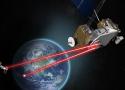
Laser communications, an ever so important factor for the future of space exploration, has seen some important steps forward recently. Two test missions are on the way to provide important information, and a third one is planned for next year. //
Like using a laser pointer to track a moving dime from a mile away, aiming a laser beam over millions of miles requires extremely precise “pointing.” So, the transceiver must be isolated from the spacecraft vibrations, which would otherwise nudge the laser beam off target.
The demonstration also needs to compensate for the time it takes for light to travel from the spacecraft to Earth over vast distances. In the first DSOC test, the near-infrared photons took about 50 seconds to travel from the probe to Earth. Once the probe arrives at the asteroid, the transmission time will be extended to 20 minutes. In that time, both the spacecraft and the planet will have moved, and the uplink and downlink lasers will have to be adjusted accordingly.

Designed to study Pluto, the spacecraft’s instruments are being repurposed. //
New Horizons is now nearly twice as far from the Sun as Pluto, the outer planets are receding fast, and interstellar space is illuminated by the vast swath of the Milky Way ahead. But the spacecraft’s research is far from over. Its instruments are all functioning and responsive, and the New Horizons team has been working hard, pushing the spacecraft’s capabilities to carry out new tasks. //
In 2021, his team photographed a dark patch of sky and digitally removed all known light sources in the Universe. What remained—the estimated COB—is roughly twice as bright as expected. “Our test field was far from the Milky Way, bright stars, dust clouds—anything that would wash out the fragile darkness of the Universe, yet that mysterious glow is still there. It’s like being in an empty house out in the countryside, on a clear moonless night, with all the lights turned off, and finding it’s not completely dark,” said Lauer.
For example, the argument about "too many launches" actually breaks down when you consider the payload that gets brought to the lunar surface. If it was just meant to be a cheap gag, feel free to ignore the following: The LEM weighs a little over 5 tons dry, and leaves half of its mass (2.5 tons) on the surface upon return. Maybe factor in another ton for dispensable cargo and Apollo delivers 3.5 tons of material to the lunar surface (not all of this is "useful" material, but we can ignore that for the time being). Starship HLS is designed to leave 100 tons of useful payload on the lunar surface. It would take 28 Saturn V launches to deliver that much material to the moon! And that's with fully expendable launch vehicles! Suddenly a dozen (or even 2 dozen) fully reusable Starship launches doesn't sound so bad in comparison.
I also thought the criticism about the complexity of the Lunar Gateway is somewhat missing the point. To me it seems clear that a lot of the complexity in the mission is the goal; that is, developing bleeding edge technologies that we need for future manned space travel to the moon and beyond. At some point we're going to have to maintain a station somewhere in deep space acting as a permanent hub that supports ferry/cargo craft and landing vehicles. The best place to prove out that concept is around the moon.

Amazon announced Friday that it has purchased three Falcon 9 rocket launches from SpaceX beginning in mid-2025 to help deploy the retail giant's network of Kuiper Internet satellites. //
Last year, Amazon bought up most of the Western world's excess launch capacity from everyone but SpaceX, securing 68 rocket flights from United Launch Alliance, Arianespace, and Blue Origin to deploy thousands of satellites for the Kuiper broadband network. Amazon previously contracted with ULA for nine Atlas V launches to support the initial series of Kuiper launches, the first of which lifted off in October with Amazon's first two Kuiper prototype satellites. More Atlas Vs will start launching operational Kuiper satellites next year. //
Amazon is helping to fund a big expansion in ULA's footprint at its Florida launch base, an effort that will double the ULA's launch capacity. The investment to fund the growth in ULA's capability to support Kuiper launches totals about $2 billion, with around $500 million going toward upgrades at Cape Canaveral.
Those upgrades include the outfitting of a second vertical hangar and a second mobile launch platform for Vulcan rockets, alongside the integration facility and launch table already built to support the first few Vulcan missions. Having dual lanes for launch processing in Florida will allow ULA to fly as many as 25 Vulcan rockets per year, the company says.
ULA and its subcontractors are also expanding factory space at locations around the country to produce more Vulcan engines, solid rocket boosters, and payload fairings for the Kuiper missions.
Amazon and ULA officials hope these investments will spare the Vulcan rocket from the growing pains experienced by other launch vehicles as they enter service. For example, it took 31 months for the Atlas V rocket to reach its fifth flight in the early 2000s. A decade ago, SpaceX's Falcon 9 made its fifth flight 33 months after its inaugural launch.
That won't do if Amazon is going to deploy more than 1,600 Kuiper satellites by mid-2026.

Once we open the path to the stars, we set humans on a quest for eternity that this life can never fulfill. //
All but a small few have no idea whether we can colonize Mars. The technological subjects overawe most minds. But all must consider whether we should colonize Mars and eventually other planets in distant solar systems.
We, indeed, face a fork in the road of human destiny, and we should consciously plot our course. //
Musk has given a compelling philosophical defense of multiplanetary colonization. In an interview with Google co-founder Larry Page, Musk said that “human consciousness is a precious flicker of light in the universe, and we should not let it be extinguished.” //
In Perelandra, the second book of his Space Trilogy, C.S. Lewis described the motivation behind humanity’s quest for interplanetary colonization.
“It is the idea that humanity, having now sufficiently corrupted the planet where it arose, must at all costs contrive to seed itself over a larger area: that the vast astronomical distances which are God’s quarantine regulations, must somehow be overcome. This for a start.”
He warned that if man ever had “the power … put into its hands” to reach distant planets, then it would “open a new chapter of misery for the universe.” //
Maybe we can tolerate some losses of native extraterrestrial species for the preservation of the human species. And maybe humans will perpetually land on worlds with nothing but raw materials. But we need to determine whether God gave us our native terrestrial ball to govern, as Lewis contended, or whether he gave us a universe to govern. //
Once we open the path to the stars, however, we set humans on a quest for eternity that this life can never fulfill. The only hope of eternally maintaining the light of human consciousness is in the Holy Spirit. Musk’s dream for mankind might turn into a nightmare that stretches across galaxies and millennia.

On Monday, Israel shot down a ballistic missile in flight outside of the Earth's atmosphere. This marks a historical first time that an anti-ballistic missile has successfully intercepted a target in space during combat. The missile was fired by Houthi rebels in Yemen and was targeting Israel. The Israel Defense Forces (IDF) used their Arrow anti-ballistic missile defense system, which is a joint American-Israeli project first deployed in Israel over 20 years ago.
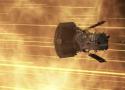
Over the past couple years, NASA's Parker Solar Probe has continually smashed its own speed records. And in the next year, it will continue to break more records.
The agency's well-fortified spacecraft is swooping progressively closer to the sun, and during each pass, picks up more speed. In 2018, soon after its launch, the probe became the fastest human-made object ever built, and by 2024 it will reach a whopping 430,000 miles per hour.
At such a speed, one could travel from San Francisco to Washington, D.C., in 20 seconds.
The spacecraft recently reached 394,736 mph. //
Space weather researchers have some weighty questions. They want to know why the solar wind accelerates after it leaves the sun, reaching up to 2 million mph. They want to grasp why the corona (which reaches 2 million degrees Fahrenheit) is so much hotter than the sun's surface (it's 10,000 degrees Fahrenheit). And they want to understand how extreme space weather, caused by different types of solar explosions, can behave and ultimately impact Earth. //
On the outskirts of the corona, the spacecraft is relentlessly exposed to brutal heat and radiation, and in September 2022 it flew through "one of the most powerful coronal mass ejections (CMEs) ever recorded," NASA said. Yet the craft remains in great shape. That's largely thanks to a 4.5-inch-thick carbon heat shield that's pointed at the sun. The shield itself heats up to some 2,500 degrees Fahrenheit, but just a couple of feet behind the shield, the environs are surprisingly pleasant.
"Most of the instruments are working at room temperatures," Raouafi said.
all the tags from https://b.plas.ml
1st-amendment 2nd-amendment 4th-amendment 5th-amendment 9/11 a8 abortion acl adhd afghanistan africa a/i air-conditioning amateur-radio amazon america american android animals anti-americanism antifa anti-semitism antiv antivirus aoip apollo apple appliances archaeology architecture archive art astronomy audio automation avatar aviation backup bash batteries belleville bible biden bill-of-rights biology bookmarks books borg bush business calibre camping capitalism cellphone censorship chemistry children china christianity church cia clinton cloud coldwar communication communist composed computers congress conservatives constitution construction cooking copyleft copyright corruption cosmology counseling creation crime cron crypto culture culture-of-death cummins data database ddt dd-wrt defense democrats depression desantis development diagrams diamonds disinformation diy dns documentation dokuwiki domains dprk drm drm-tpm drugs dvd dysautonomia earth ebay ebola ebook economics education efficiency electricity electronics elements elwa email energy engineering english environment environmentalism epa ethernet ethics europe euthanasia evolution faa facebook family fbi fcc feminism finance firewall flightsim flowers fonts français france fraud freebsd free-speech fun games gardening genealogy generation generators geography geology gifts git global-warming google gop government gpl gps graphics green-energy grounding hdd-test healthcare help history hollywood homeschool hormones hosting houses hp html humor hunting hvac hymns hyper-v imap immigration india infosec infotech insects instruments interesting internet investing ip-addressing iran iraq irs islam israel itec j6 journalism jumpcloud justice kindle kodi language ldap leadership leftist leftists legal lego lgbt liberia liberty linguistics linux literature locks make malaria malware management maps markdown marriage mars math media medical meshcentral metatek metric microbit microsoft mikrotik military minecraft minidisc missions moon morality mothers motorola movies mp3 museum music mythtv names nasa nature navigation navy network news nextcloud ntp nuclear obama ocean omega opensource organizing ortlip osmc oxygen paint palemoon paper parents passwords patents patriotism pdf petroleum pets pews photography photo-mgmt physics piano picasa plesk podcast poetry police politics pollution pornography pots prayer pregnancy presentations press printers privacy programming progressive progressives prolife psychology purchasing python quotes rabbits rabies racism radiation radio railroad reagan recipes recording recycling reference regulations religion renewables republicans resume riots rockets r-pi russia russiagate safety samba satellites sbe science sci-fi scotus secularism security servers shipping ships shooting shortwave signal sjw slavery sleep snakes socialism social-media software solar space spacex spam spf spideroak sports ssh statistics steampowered streaming supplement surveillance sync tarsnap taxes tck tds technology telephones television terrorism tesla theology thorium thumbnail thunderbird time tls tools toyota trains transformers travel trump tsa twitter typography ukraine unions united.nations unix ups usa vaccinations vangelis vehicles veracrypt video virtualbox virus vitamin vivaldi vlc voting vpn w3w war water weather web whatsapp who wifi wikipedia windows wordpress wuflu ww2 xigmanas xkcd youtube zfs