Over 5,000 orbital rocket launches from nearly 30 different sites are depicted, starting in 1957 when Sputnik became the first artificial object in orbit.


“Safety tends to not be on the front burner until it really needs to be on the front burner.” //
Since the beginning of the year, landowners have discovered several pieces of space junk traced to missions supporting the International Space Station. On all of these occasions, engineers expected none of the disposable hardware would survive the scorching heat of reentry and make it to Earth's surface.
These incidents highlight an urgency for more research into what happens when a spacecraft makes an uncontrolled reentry into the atmosphere, according to engineers from the Aerospace Corporation, a federally funded research center based in El Segundo, California. More stuff is getting launched into space than ever before, and the trend will continue as companies deploy more satellite constellations and field heavier rockets.

"Look, there's no accidental monopoly. They are a ruthless competitor." //
Most of our customers, you know, we still have new customers, but there's a tremendous amount of returning customers. And if you look at it from their point of view, even if someone turns up with a rocket that is half the price, really the reliability of Electron and the precision of it, it's hard for someone to move onto a new platform. Now, I don't I don't mean that to sound arrogant at all. It's just that price is not the number one thing. It's important, but it's just not the number one thing anymore. I mean, we're inserting to an accuracy of 400 meters at this point. So that's almost good enough to rendezvous straight off the rocket. //
We sold over 22 launches this year, and next year is looking even better. There is a definite demand that small launch has, and a capability that small launch gives. We have just so many customers now that absolutely rely on Electron. They've designed their constellation or their spacecraft around Electron. It does things that you just can't get on other missions. I think a lot of people compare Transporter (SpaceX's rideshare missions on the Falcon 9 rocket) to Electron and dedicated launch, and there is no comparison. Transporter can do it for free for all we care, because the customer who is coming to Electron really needs instantaneous launch, the right inclination or orbital plane. If we just stopped doing Electron, there would be a whole lot of people with nowhere to go. There's been a market built up around the product, and it continues to grow. //
TheWarOnSilence Seniorius Lurkius
9y
10
Subscriptor
I did enjoy this quote:
"We have a saying here at Rocket Lab that we have no money, so we have to think." It is, of course, the re-stating of another famous New Zealand knight of the realm, Sir Ernest Rutherford, who memorably said "We haven't got the money, so we'll have to think".
More than a hundred years after Rutherford made the statement in the context of nuclear physics, it's a delight to see that same drive and determination shine through at Rocket Lab.

It is about 3,000 light-years from Earth, but it can be witnessed with the naked eye. //
NASA predicts a nova will occur sometime this summer, about 3,000 light-years from Earth, but it can be witnessed with the naked eye.
The nova reoccurs once every 80 years. //
The nova should happen in a dark spot among the seven stars of Corona Borealis, known as the Northern Crown.
The dark spot contains “two stars that are bound to and in orbit around each other,” known as T Coronae Borealis or T CrB. NASA nicknamed it the Blaze Star:

On Tuesday, Stoke Space announced the firing of its first stage rocket engine for the first time earlier this month, briefly igniting it for about two seconds. The company declared the June 5 test a success because the engine performed nominally and will be fired up again soon.
"Data point one is that the engine is still there," said Andy Lapsa, chief executive of the Washington-based launch company, in an interview with Ars.
The test took place at the company's facilities in Moses Lake, Washington. Seven of these methane-fueled engines, each intended to have a thrust of 100,000 pounds of force, will power the company's Nova rocket. This launch vehicle will have a lift capacity of about 5 metric tons to orbit. //
Lapsa and Stoke, which now has 125 employees, have also gone for an ambitious design in the first-stage engine tested earlier this month. The engine, with a placeholder name of S1E, is based on full-flow, stage-combustion technology in which the liquid propellants are burned in the engine's pre-burners. Because of this, they arrive in the engine's combustion chamber in fully gaseous form, leading to a more efficient mixing.
Such an engine—this technology has only previously been demonstrated in flight by SpaceX's Raptor engine, on the Starship rocket—is more efficient and should theoretically extend turbine life. But it is also technically demanding to develop, and among the most complex engine designs for a rocket company to begin with. This is not rocket science. It's exceptionally hard rocket science. //
Dtiffster Ars Praefectus
8y
3,002
Subscriptor
deadman12-4 said:
How is a big bulky weight penalty on your second stage good for reuse?
The extra drymass that come from the low density hydrolox is partially mitigated by it's Isp. If the upper stage was expendable, the more than double the volume (and thus likely cost) would be a bad tradeoff for what is close to a push in performance for payload to LEO. But as a reusable upper, hydrogens much better heat of vaporization vs methane and the really low ballistic coefficient are definitely big wins. The low ballistic coefficient combined with lift from their asymmetric design means they can shed velocity very high in the atmosphere where they can reradiate a lot of it back into space. And then when they get lower they use the excellent heat carrying capacity of the hydrogen to protect them from high heat fluxes. From an integrated system perspective, the trades start to make a lot of sense. //
greybeardengineer Ars Tribunus Militum
5y
12,948
Malmesbury said:
Seems like yesterday that Henry Spencer was telling us (and we all agreed) that developing new rocket engines for new launchers was a terrible idea. It would always cost billions. Even warming over old engines was fraught.And it seemed to be true - see the J2-X comedy.
And no one could match the Russian engines from the Forgotten Years.
Now we have slack handfuls of rocket nerds creating orbital class FFSC engines.
That, right there, is New Space
Once a leadership company achieves something new and very difficult it does two important things: 1) it tells entrepreneurs and investors that it can be done, and 2) a cadre of engineers and managers is created familiar with the technology who are free to move on and disseminate the general understanding of the new technology elsewhere.
As someone once said the greatest secret of the atomic bomb was that it can be built and that it works. Same goes for ORSC. :sneaky: //
That, right there, is New Space
It's quite an accomplishment to blow past the performance of the Soviet/Russian/Ukrainian ORSC engine designs. //
jandrese Ars Legatus Legionis
22y
12,795
Subscriptor++
Bad Monkey! said:
This is amusing considering how long it took BO to get a not terribly ambitious staged combustion engine into production, yet Stoke is all of four years old. Did BO lose all the good ones to Stoke?
Blue Origin is run like an old Aerospace company, which is more risk adverse and slow to develop. Rockets are hard, and being able to prototype designs and work out problems is an enormous productivity boost. Years and years of experience shows that trying to do everything on paper first before building the rocket results in very slow and expensive development. Building engines and blowing up your first half dozen is much faster and cheaper and leads to a better product in the end. //
Wickwick Ars Legatus Legionis
14y
34,700
deadman12-4 said:
How does resources matter. We are talking about a 50 year improvement in technology. This has nothing to do with it being a "commercial" company. Look at China - it'd be embarrassing for them if their engines also didn't blow away old soviet stuff.I'm not saying "soviet stuff is bad cause its soviet", we need to realize its 50 year old tech. Worshiping it is silly. Everyone should be able to do better than 50 yr old tech, no matter who made it. Its strange how soviet tech is a sacred cow. Its just tech made by someone like anything else. It was good for its time, but that was half a century ago.
You seem to think that "technology" improving just makes everything easier. Sometimes, someone's expertise matters more than technology.
Pratt & Whitney actually had a license to manufacture the RD-180 engine domestically. They literally had the blueprints and everything they needed to know on the metallurgical side to make it happen. They eventually chose not to execute on the license because just duplicating the Russian/Ukrainian design was sufficiently outside of the capabilities of P&W that they felt they would never be cost competitive with the price ULA could buy the engines as imports - duties and all. And lest you think P&W were just a bunch of schleps, they were the makers of the RL-10 engine.
So it's not just a 50 year-old technology. Less than 20 years ago, one of the premier rocket engine manufacturers in the US couldn't make it work even with the recipe. //
I Like Pi Seniorius Lurkius
16y
23
deadman12-4 said:
) How is a big bulky weight penalty on your second stage good for reuse?
Um…you get the stage back… //
Malmesbury Smack-Fu Master, in training
1m
91
deadman12-4 said:
hmm... I would disagree at this point. We're talking about 1970s tech. Yes they were amazing for time, but their time was like 2 generations ago. They are only still relevant because so few engines have been made and used in the last 50 years.
I would say it would be embarrassing if a company couldn't blow past the benchmarks of soviet engines today.
Not long ago, the Received Wisdom from professionals in the industry was that only incremental improvements on existing engines were worthwhile. And possible.
Now, everyone and his dog is building new engines. Using cycles that the pros said they couldn’t do. //
greybeardengineer Ars Tribunus Militum
5y
12,948
Just to be clear, this Stoke first stage engine is methalox. They use hydrolox for their second stage. The article doesn't make that clear and it appears that some in the comments don't realize this. //
phat_tony Ars Centurion
18y
291
Subscriptor
Joey S-IVB said:
445 kilonewtons for each engine, or 3.1 meganewtons for all seven engines combined on the first stage. That's under half of the Falcon 9's approximately 6.9 meganewtons. So, if it can put 5 tonnes into LEO, I'm guessing the second stage isn't as powerful/efficient as the F9's second stage? If this first stage is roughly half as powerful as the F9's booster stage, it is putting less than half the tonnage in comparison (should be about 8.5 tonnes to LEO if half). Still, it's great to see that Stoke is making rapid progress.
Others have pointed out the reusable second stage adds mass vs expendable; but furthermore, you just shouldn't expect rockets to scale linearly at all. Other things being equal, the larger the rocket, the higher percentage of the rocket's total launch mass can be payload.
The SS-520 is the smallest orbital rocket and it's 5,700 lbs and the mass to orbit is effectively 0 - it's 9 lbs. Any smaller and the rocket could not even get itself to orbit.
Some things on the rocket don't scale - the avionics and sensors for a tiny rocket and Starship aren't necessarily very different, so there's a flat mass you need to take. But the most important thing in rocket scaling is that the volume of a fuel tank goes up faster than the surface area when you make it bigger, keeping all proportions identical. The bigger the tank, the lower the ratio of tank mass to fuel mass.

The ground launch sequencer computer called a hold at T-minus 3 minutes, 50 seconds. //
Saturday's aborted countdown was the latest in a string of delays for Boeing's Starliner program. The spacecraft's first crew test flight is running seven years behind the schedule Boeing announced when NASA awarded the company a $4.2 billion contract for the crew capsule in 2014. Put another way, Boeing has arrived at this moment nine years after the company originally said the spacecraft could be operational, when the program was first announced in 2010. //
Crying Croc Wise, Aged Ars Veteran
8m
449
Matthew J. said:
The Boeing Curse...
The McDonnell Douglas Curse.
[Edit to correct]: Actually, it's just McDonnell. Douglas was once a proud airplane maker that sadly became an earlier victim of McD. Boeing is Victim 2.0. //
FabiusCunctator Ars Scholae Palatinae
4y
857
Subscriptor
OccasionallyLeftHanded said:
The term “kludge” comes to mind.
Or more like: “something that was originally designed back in the early days of the Delta program and kept going with bubble gum and baling wire for forty years.”
And I can understand this! The software’s been fully debugged and is well proven. Why change it if you don’t have to? //
Wandering Monk Wise, Aged Ars Veteran
4y
128
Subscriptor
There’s definitely something to be said for the general plan of, “get the system working while shipping cargo, and then add life support”. If these delays happened with a boring payload, it wouldn’t get nearly the attention. //
Lone Shepherd Ars Tribunus Angusticlavius
24y
6,868
Subscriptor
All three computers must be fully functioning in the final phase of the countdown to ensure triple redundancy.
This sentence does not make sense. If all three must be functioning, then there is zero redundancy.
Triplex redundant systems are usually set up to enable majority (2 out of 3) voting to allow mission success while being robust to any single operational fault.
If this was actually a triple redundant system then fault of one computer would be detected by the other two and that unit would have been "voted out" and the launch would have proceeded. ///
But they have to be operational first. If all three aren't operational to begin with, then you don't have a triplex system, you've already lost one to a failure. //
The computers have to provide functionality in the event of a failure after launch commit. That is mission critical, and thats why they need fault tolerance.
Before that, a failure results in a hold/scrub, because it means the necessary failt tolerance wont be present after commit.
Holding/scrubbing isn't an option after commit. At that point the vehicle must go, and the GSE must work. //
ninjaneer Ars Praetorian
10y
540
Subscriptor
galahad05 said:
Wait, this is a joke right? Like a de-motivational poster or something?
He said it in 2004 and it resurfaced everywhere in 2020. The guy's still alive but likely has too much of a psychopathic ego to feel it bite him in the ass.
Ctrl-F "culture" in the Fortune article below and you'll spot it in action
https://fortune.com/longform/boeing-737-max-crisis-shareholder-first-culture/. //
Jharm Wise, Aged Ars Veteran
6y
125
ninjaneer said:
"When people say I changed the culture of Boeing, that was the intent, so that it's run like a business rather than a great engineering firm."
-- Harry Stonecipher
I couldn't believe he would have said so. But sure he did!
Hopefully other business will learn of these mistakes. Many articles (e.g.
https://www.euronews.com/business/2024/02/07/boeings-tragedy-the-fall-of-an-american-icon ) about what went wrong but so far those I have read have all in common that they slashed the R&D for short term gains and then they believed they could easily restart again. This happens when you have bean counters to run the company.
I am sitting in a company of 40.000 people, here we see the same going on. EBIT and cashflow before everything else. No training of new young talent, no visions, just reaction to the competition and not what the customer wants. //
Zylon Ars Scholae Palatinae
3y
838
Subscriptor
I haven't been to this particular facility, but I've crawled around under computer flooring and installed racks at several NASA facilities, and the idea that anything about them is jury-rigged is laughable. You don't truly understand the meaning of the word "nitpicky" until you've been through a NASA QC audit. I spent more time on documentation than I did installing the equipment!
These are stupendously complex systems, and shit happens. I had a timing system that had behaved perfectly during burn-in testing go nuts, and the automatic fail over, didn't. Even though we had tested fail over and fail back. It took the site down for an hour. So you learn from your mistakes, build in redundancy, and when only two of the three voting computers are online at T-4:00, you abort the launch.
Oh, and I wouldn't read too much into the phrase "boot up" when used by a manager, even one who used to be an engineer. Something wasn't ready when it was supposed to be. They'll figure it out. If it was a "network glitch", it will be in the Wireshark archiver. //
Is Boeing having an unusually high number of scrubbed launches? A normal amount? A low amount?
Compared to the Shuttle? Not so unusual. Compared to what we’ve become used to with SpaceX? A lot.
This graph shows the number of sunspots seen each year for 400 years (from 1600 to 2000). There were almost no sunspots during the Maunder Minimum. During the Dalton Minimum, there were fewer sunspots than normal. //
The first written record of sunspots was made by Chinese astronomers around 800 B.C. Court astrologers in ancient China and Korea, who believed sunspots foretold important events, kept records off and on of sunspots for hundred of years. An English monk named John of Worcester made the first drawing of sunspots in December 1128. //
It would appear that sunspots not only have a connection to geomagnetic activity at Earth, but they play a role in climate change as well. In the last thousands of years, there have been many periods where there were not many sunspots found on the Sun. The most famous is a period from about 1645 to 1715, called the Maunder Minimum. This period corresponds to the middle of a series of exceptionally cold winters throughout Europe known as the Little Ice Age. Scientists still debate whether decreased solar activity helped cause the Little Ice Age, or if the cold snap happen to occur around the same time as the Maunder Minimum. In contrast, a period called the Medieval Maximum, which lasted from 1100 to 1250, apparently had higher levels of sunspots and associated solar activity. This time coincides (at least partially) with a period of warmer climates on Earth called the Medieval Warm Period. Sunspot counts have been higher than usual since around 1900, which has led some scientists to call the time we are in now the Modern Maximum.
Kerbal Space Program is a computer game in which the player can build spacecraft, aircraft, and spaceplanes to their own design and use them on missions, both robotic and with crews, to explore the planetary system of the star Kerbol. The space program is conducted on behalf of the Kerbals, inhabitants of planet Kerbin, and the player manages the space program, advancing in technological capability, ambitiousness of missions, and size and skill of the kerbonaut corps. //
One thing which is certain is that after you've spent some time with Kerbal Space Program you will develop an intuition about orbital mechanics which few people, even authors of “hard” science fiction, have.

Russia vetoed a United Nations Security Council resolution Wednesday that would have reaffirmed a nearly 50-year-old ban on placing weapons of mass destruction into orbit, two months after reports Russia has plans to do just that.
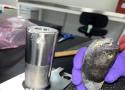
By all accounts, this is the first time a piece of space junk has fallen out of orbit and damaged someone's home, at least in the United States. This means Otero and his attorney, Mica Nguyen Worthy, are entering uncharted legal waters as they prepare to file a claim with NASA for damages. //
NASA has confirmed that the object that fell into a Florida home last month was part of a battery pack released from the International Space Station.
This extraordinary incident opens a new frontier in space law. NASA, the homeowner, and attorneys are navigating little-used legal codes and intergovernmental agreements to determine who should pay for the damages. //
But a series of delays meant the final cargo pallet of old batteries missed its ride back to Earth, so NASA jettisoned the batteries from the space station in 2021 to head for an unguided reentry. Ars published details of the circumstances that led to this in a previous story.
This isn't the way NASA prefers to get rid of space debris, but managers decided they couldn't keep the pallet at the space station, where it took up a storage location needed for other purposes. NASA expected the roughly 5,800 (2.6-metric ton) battery pallet to fully burn up during reentry.
But Otero's experience shows that was not the case, and it's possible other fragments may have fallen in the Gulf of Mexico or in unpopulated areas of southwest Florida. //
One of the most well-known reentry debris incidents occurred in 2003 when a piece of the doomed space shuttle Columbia smashed through the roof of a dentist's office in Texas. Fortunately for those who worked there, the Columbia accident happened on a Saturday when the office was closed. The Columbia accident differs from Otero's experience because the shuttle was flying back to Earth for a controlled reentry.
A person in Oklahoma was hit by a lightweight piece of material in 1997 that experts linked to the reentry of the upper stage from a Delta II rocket. It was a glancing blow, and the air helped slow down the piece of debris, so she escaped injury. There was also an incident in 1969 when a fragment from a Soviet spacecraft reportedly hit a small Japanese ship near the coast of Siberia, injuring five people.
When a large Chinese Long March 5B rocket fell out of orbit in 2020, wreckage damaged a village in the Republic of Côte d'Ivoire. The Long March 5B is a frequent offender of debris because its massive core stage makes it all the way into orbit, an unusual design feature for a rocket. This booster then comes back into the atmosphere unguided. Four Long March 5Bs have been launched to date, with more flights planned in the coming years. //
worley Seniorius Lurkius
15y
45
Also, a homeowner can hire a lawyer and the lawyer make a public statement in days. A government bureaucracy dealing with a situation that is literally the first time ever -- and has to avoid criticism for letting grifters from getting government money they aren't entitled to -- is going to take a while to sort it out. //
peterford Ars Praefectus
14y
3,631
Subscriptor++
I've previously told my family that if I should die in this way they're to tell the media "it's exactly the way he wanted to go".
It's not quite true, the exact way would involve many decadences, but it's a near enough the top of the list that the lie won't matter. //
Therblig Ars Centurion
8y
218
Subscriptor++
The tinfoil hat crowd needs to add titanium umbrellas. //
Pueo Ars Scholae Palatinae
10y
986
TechfanMD said:
I wonder what Otero's uncovered expenses entail (beyond what his insurance paid). I'm a bit surprised he has a lawyer. While I get the reasons to hire a lawyer, they aren't cheap and I would only be hiring one if I thought that the outcome would make paying for the lawyer worthwhile.
I wouldn't be surprised if his lawyer is charging a lower fee for the opportunity to become "the space lawyer." Becoming "the guy" for a section of law that has relatively few cases but deep pocketed parties is a good way to establish a comfortable practice.

On October 31, 2023, humanity discovered the history of war in Space. The interception of the warhead of a Yemeni medium-range ballistic missile by an Israeli Arrow-3 missile became the first combat operation to take place outside the earth’s atmosphere.
This is also the first time that a medium-range ballistic missile has been destroyed by an anti-missile missile in a real combat situation. All previous cases of interception of ballistic missiles were interceptions of short-range ballistic missiles or generally operational-tactical ones. An intermediate-range ballistic missile is a much more difficult target because it flies faster and follows a higher trajectory. Actually, this was also the first time a medium-range ballistic missile was launched in a real combat situation.
Israeli missile defense has successfully completed the task. Yemeni missile was destroyed outside the atmosphere; her load, whatever it was, dissipated harmlessly tens of kilometers above the ground. In the confrontation between the ballistic sword and the anti-missile shield, the first round was left to the defense.

Sierra Space says it has demonstrated in a ground test that a full-scale inflatable habitat for a future space station can meet NASA's recommended safety standards, clearing a technical gate on the road toward building a commercial outpost in low-Earth orbit.

JohnDeL Ars Tribunus Angusticlavius
8y
6,157
Subscriptor
The single bit requirement indicates that this was primarily an engineering mission and not a science one. The intent was to test out new technology and see how it might be improved for use on later science missions.
A great example of this is the Sojourner/Pathfinder mission. Sojourner's mission goals were to roll one meter and send back one image and last one sol on the surface. The nominal plan was for it to roll (IIRC) 10 meters, send back 100 images and APXS readings, and last 7 sols. What we got was 100 meters, more than a thousand readings and images, and a lifetime of 83 sols.
Thanks to Sojourner's work, we now have freakin' huge rovers on Mars that have lasted for a decade, rolled more than 30 km, and provided thousands of images and readings that have significantly improved our understanding of Mars.
We can expect the same sort of improvement from Odie's siblings when they finally make it to the Moon. Per aspera, ad astra!

Altemus said crises like this, and the loss of the range finders, happened over and over. "This mission kept throwing us alligators, and we would reduce these alligators to snapping turtles because they don't hurt as bad," he said.
If one assumes there is a 70 percent chance of recovering from any one of these crises but you have to address 11 different crises on the way to the Moon, the probability of mission success is less than 2 percent. //
In truth, NASA is thrilled with Intuitive Machines' performance. The aerospace industry at large understands what this company was up against and is celebrating its success. Most of the customers flying on Odysseus are getting the data they paid for.
The reality is that Intuitive Machines is a private company with about 250 people working on this lunar lander program. That's a small fraction of the resources that national space programs typically devote to these initiatives, and with all the data it has gathered, Intuitive Machines and its customers can be pretty confident that the company will stick the landing next time.
And there will be a next time, as the commercial lunar landers built by private companies in the United States cost about $100 million instead of the half-billion dollars the government would have spent on a specialized, one-time mission to the Moon.
Here's why I think this is a truly notable success. Consider the trials and turmoil that a similarly sized company called SpaceX went through 18 years ago as it worked toward the first launch of its first rocket, the Falcon 1. Rockets are hard, but so are spacecraft that must make a soft landing on the Moon. I would argue that a lunar lander like Odysseus is as complicated, if not more so, than a relatively simple booster like the Falcon 1. //
Unlike the initial Falcon 1, Odysseus flew all the way to the Moon on its very first time out and made a soft landing. It has been phoning home ever since, sending a rich stream of data. That's a pretty big win.

Starlab is a joint venture between the US-based Voyager Space and the European-based multinational aerospace corporation Airbus. The venture is building a large station with a habitable volume equivalent to half the pressurized volume of the International Space Station and will launch the new station no earlier than 2028.
"SpaceX's history of success and reliability led our team to select Starship to orbit Starlab," Dylan Taylor, chairman and CEO of Voyager Space, said in a statement. "SpaceX is the unmatched leader for high-cadence launches and we are proud Starlab will be launched to orbit in a single flight by Starship." //
Starlab will have a diameter of about 26 feet (8 meters). It is perhaps not a coincidence that Starship's payload bay can accommodate vehicles up to 26 feet across in its capacious fairing. However, in an interview, Marshall Smith, the chief technology officer of Voyager Space, said the company looked at a couple of launch options.
"We looked at multiple launches to get Starlab into orbit, and eventually gravitated toward single launch options," he said. "It saves a lot of the cost of development. It saves a lot of the cost of integration. We can get it all built and checked out on the ground, and tested and launch it with payloads and other systems. One of the many lessons we learned from the International Space Station is that building and integrating in space is very expensive." //
phat_tony Ars Centurion
17y
263
Subscriptor
This is exactly what most space companies should be doing now - assuming Starship is going to work, and start planning based on the sea change that's going to create. There are still so many companies trying to duke it out in small launch where clearly the overwhelming majority of them have no chance of making it. Pivot to take advantage of the fact that everything about space launch is about to change. Figure out what we could do with a 120 ton satellite the size of a space station that we can't do now and build that satellite. Figure out what we could do with swarms of micro satellites that isn't cost effective now if they were 1/10 the cost to get to orbit. Space tugs. Commercial refueling depots. Tourism. Space stations. Solar-system wide internet as a service... NASA has a huge bandwidth problem on the Deep Space Network... even if they aren't asking for proposals, it may be a case of "if you build it, they will come."
I don't know, but when there's a two order of magnitude change pending on the most fundamental constraint of a sizable industry, that's when new players make it and old players can't adapt and break. It's like the advent of microchips, or the internet. Trying to compete with the company that's inventing the two order of magnitude improvement is the last business bet you want to make. Capitalizing on the implications is exactly what you want to do. //
pavon Ars Tribunus Militum
16y
2,100
Subscriptor
Very excited about this, finally picking up where Skylab left off. It had 350m3 pressurized volume in a single Saturn V launch, compared to the 1000m3 of ISS with 15 pressurized modules taking over a decade to assemble.
If you ever get a chance to visit Space Center Houston, you can walk through mockups of both an ISS module and Skylab, and the difference was viscerally striking to me. One was a series of hallways, like the corridors of datacenter, while the other was this spacious open area. The ISS design might be more efficient for the experiments they actually do on the ISS, and for moving about in freefall, but I can't help but imagine there were lost opportunities due to being restricted to such narrow tubes.

So, how did the team do it? They ditched traditional, space-rated hardware. They just couldn't take the mass penalty. For example, the RAD750 computer that operates most modern spacecraft—including the Perseverance rover—weighs more than 1 pound. They couldn't blow that much mass on the computer, even if it was designed specifically for spaceflight and was resistant to radiation.
Instead, Tzanetos said Ingenuity uses a 2015-era smartphone computer chip, a Qualcomm Snapdragon 801 processor. It has a mass of half an ounce.
The RAD750, introduced in 2001, is based on 1990s technology. The modern Qualcomm processor was designed for performance and has the benefit of 20 years of advancement in microprocessor technology. In addition to being orders of magnitudes cheaper—the RAD750 costs about a quarter of a million dollars, while the Qualcomm processor goes into inexpensive mobile phones—the newer chip has bucketloads of more performance.
"The processor on Ingenuity is 100 times more powerful than everything JPL has sent into deep space, combined," Tzanetos said. This means that if you add up all of the computing power that has flown on NASA's big missions beyond Earth orbit, from Voyager to Juno to Cassini to the James Webb Space Telescope, the tiny chip on Ingenuity packs more than 100 times the performance.
A similar philosophy went into other components, such as the rechargeable batteries on board. These are similar to the lithium batteries sold in power tools at hardware stores. Lithium hates temperature cycles, and on the surface of Mars, they would be put through a hellish cycle of temperatures from -130° Fahrenheit (-90° C) to 70° (20° C).
The miracle of Ingenuity is that all of these commercially bought, off-the-shelf components worked. Radiation didn't fry the Qualcomm computer. The brutal thermal cycles didn't destroy the battery's storage capacity. Likewise, the avionics, sensors, and cameras all survived despite not being procured with spaceflight-rated mandates.
"This is a massive victory for engineers," Tzanetos said.
Indeed it is. While NASA's most critical missions, where failure is not an option, will likely still use space-rated hardware, Ingenuity's success opens a new pathway for most science missions. They can be cheaper, lighter, and higher-performing in every way. This is almost unimaginably liberating for mission planners. //
The concept of flying Ingenuity came along at just the right time, in the early 2010s, as NASA was finalizing the payloads that would fly on the Perseverance rover to Mars in 2020. When NASA had to make the call on whether or not to fly the technology demonstration mission, the right mix of technologies was coming online: high energy density batteries, high-performance processors for mobile devices, lightweight cameras, and MEMS accelerometers to measure acceleration.
These devices were pushed and perfected as part of the mobile phone revolution. If there had been no iPhone, there would have been no Ingenuity. It was the perfect confluence, and it resulted in the miracle on Mars. //
It's a perilous exercise to judge history while being in the middle of history, of course. But I would rate Ingenuity among the three most innovative and important things that NASA has done during the 21st century. The other two are the James Webb Space Telescope and the Commercial Orbital Transportation Services, or COTS, program.

So Shaw took the precautions available to him.
"When we got on orbit, I went down to the hatch on the side of the orbiter, and I padlocked the hatch control so that you could not open the hatch," Shaw said. "I mean, on the orbiter on orbit you can go down there and you just flip this little thing and you crank that handle once, the hatch opens and all the air goes out and everybody goes out with it, just like that. And I thought to myself, 'Jeez, I don’t know this guy very well. He might flip out or something.' So I padlocked the hatch shut right after we got on orbit, and I didn’t take the padlock off until we were in de-orbit prep." //
After the Space Shuttle Challenger accident in 1986, the focus of the Shuttle program shifted somewhat, and NASA started flying fewer payload specialists. Those who flew came to be considered more a part of the crew and were met with less suspicion. According to some Space Shuttle astronauts, the lock was used less and less often. The final payload specialist to fly on the Shuttle was Ilan Ramon, the first Israeli astronaut. He died, of course, in the Space Shuttle Columbia disaster in 2003, when the vehicle broke up in the atmosphere during its return to Earth.
Although much of the concern for Shuttle commanders had come from flying non-professional astronauts, there was another incident later in the program with an all-professional crew that revived interest in the padlock program. It occurred during a 1999 flight. Because I have not been able to confirm the details with multiple sources, I won't name the astronaut or the mission. But essentially, a multiple-time flier had a bad reaction to some medicine he took after the launch. This seriously affected his mental state, and the astronaut had to be physically restrained from taking drastic action, including opening the hatch. //
This all may seem like a bit of historical trivia, but the issue lives on today. The Space Shuttle has been retired for 13 years, but the padlock remains in the fabric of US spaceflight with Crew Dragon. A commander's lock is an option for NASA's crews flying to the International Space Station on Crew Dragon, as well as private missions. //
That such incidents don't happen more often in commercial aviation may give us some comfort, but in reality, there have been many attempts by passengers to open an emergency exit door in flight. (Fortunately, it's almost impossible at cruising altitudes). And given that it has happened with two people out of the approximately 650 who have gone to space, it suggests the odds are non-negligible.
Nield concluded his note to me with a request. "Let me know," he said, "if you have any thoughts on how to mitigate the risks."
I wish I did. //
jeremyp66 Ars Scholae Palatinae 7y 811
YetAnotherBoris said:
The solution is obvious in this age of AI: automate all hatches, and put a computer exclusively in charge of activating them. The computer will be in turn controlled by a totally stable and reliable AI, with which the crew can communicate via voice interface.Bonus points if it's called HAL...
The Hatch AI Lock


Sometimes, success has unforeseen consequences. The United States Space Force and Air Force (and NASA) have, in essence, decided they will simply procure space launch as a service from SpaceX. This isn’t an actual decision but is nevertheless true enough, as it has become the default situation. Cost and availability — the comparative ease of getting a launch slot — have resulted in tremendous business success for SpaceX.
An unforeseen consequence of this success is that the Space Force, the Air Force, and NASA have deprioritized rocket research and development efforts that would foster continued independent space access. Some programmatic officers would suggest there is no need for the government to continue to pursue rocket science. SpaceX is doing the required R&D, so why spend money on anything other than what’s needed for deep space? ///
Where is the basic research that NASA (or anyone on earth) was doing to make it possible for boosters to land and be reused? SpaceX are the only ones in the history of space to dare think of the concept, much less try to develop it...
Government R&D?

Mining in space might be less environmentally harmful than mining asteroids on Earth.