
Please take a moment to read my pastor’s essay.



Did you know that the first character that Walt Disney created to specifically appear on television was inspired, in part, by early Space Age rocket scientists?
On this day 65 years ago (September 24, 1961), Disney introduced the “renowned scientist, lecturer, psychologist [and] world traveler,” Ludwig Von Drake. A member of the Duck family (he is the “brilliant and eccentric” uncle of Donald Duck), Von Drake was “the outstanding genius of the century” (per Disney himself) who helped to explain scientific principles and technological concepts to the millions of people who tuned in every Sunday to watch Walt Disney’s Wonderful World of Color on NBC. //
“The world-famous authority on outer space, Professor Wernher von … I mean … Ludwig Von Drake,” Disney said.

You can go retro by using an old video game console or a PC from the 1980s, but why stop there when, like one man, you can build your own vacuum tube computer using 75-year-old recycled components?
A UK resident who identifies himself only as “Mike” has done just that, as detailed on his tube computer website and accompanying Hackaday project page. Mike’s tube computer is primarily made up of 460 recycled, Soviet-era 6N3P vacuum tubes, which were common enough in their age to be readily and cheaply available online. //
“Many were used and then stored for over 50 years, so life expectancy may be questionable,” Mike explained on Hackaday. A new 6N3P tube is supposed to have around 500 hours of life, but because each has been used, its current condition is essentially a mystery. Throw in manufacturing inconsistencies of mid-century Soviet Russia, and each tube had enough variability to necessitate extensive testing, Mike explains in the technical writeup on his website. //
It takes between 10 and 15 minutes for the entire system to stabilize once switched on, Mike said, resulting in a “warm and cozy computer room.” The tubes all power up in random states, requiring the machine to be reset each time it is switched on, but then it’s ready for the fun part: computing.
The entire thing uses NOR (i.e., not OR) gates, just like the Apollo guidance computers that got humans to the Moon, which allows it to be a bit smaller than some of the other classic tube computers of yesteryear. As for what it can do, well - 16-bit math is a possibility, as well as anything else that can be done with a limited set of 16 instructions on a 4-bit instruction register.

Sheeppox is a highly contagious, often fatal viral disease that was largely eradicated from much of European livestock in the 20th century. But there is still the occasional regional outbreak, such as the one that afflicted many flocks of sheep in Greece last year. In order to reconstruct how the virus has evolved over the last 3,500 years, scientists extracted and sequenced sheeppox DNA preserved in the animal skins used for the parchment of numerous medieval manuscripts. They reported their findings in a new paper published in the journal Science Advances.

In the mid-’90s, the web was exploding, but finding anything of actual value on it felt like an elaborate negotiation with whatever proto-search engine happened to be standing closest to the door. Unlike now, when Google is widely seen as both portal and gatekeeper, sites like AltaVista, Lycos, Excite, HotBot, and Ask Jeeves promised to tame the chaos, each with its own suite of quirks, charms, and flaws.
The real story of pre-Google search is not that early engines were inferior. It’s that they reflected a different Internet entirely, one where directories mattered, crawling was still an art, ranking was fragile, and the idea of “search” had not yet hardened into a single dominant interface. //
“Most people have completely forgotten how chaotic it really was,” Friend said. “Back then, if you typed a question into AltaVista, the odds were stacked against you if you were looking for anything specific. You’d receive 40,000 results that would leave you just as confused as shouting into a crowded room.”
Compared with Google’s once-user-friendly UI and more relevant results, combing through an AltaVista results page required patience and genuine skill that was honed over time. But AltaVista did accomplish one important thing: It set the expectation that search should be immediate. That expectation proved decisive. Once users experienced a search engine that could quickly sweep a huge index, they stopped accepting sluggish, partial systems as sufficient. AltaVista didn’t win the search war, but it clarified the rules of engagement.
“The conquest of space is worth the risk of life,” said Gus Grissom.
It took two years and cost $5 million—but the results are absolutely spectacular. //
HOUSTON—Following the completion of a multi-year, multi-million-dollar restoration, NASA’s historic Apollo Mission Operations Control Room 2 (“MOCR 2”) is set to reopen to the public next week. The $5 million in funding for the restoration was partially provided by Space Center Houston, but the majority of the money was donated by the city of Webster, the Houston suburb where the Johnson Space Center is located. Another half-million in funding came from the general public via a Kickstarter campaign (disclosure: your humble author was a backer).
For the past two years, historians and engineers from the Kansas Cosmosphere’s Spaceworks team have been lovingly restoring and detailing the 1,200-pound (544kg) historic sage green Ford-Philco consoles that populated the control room—repairing damage from decades of casual neglect and also adding in the correct control panels so that each console now correctly mirrors how it would have been configured for an Apollo flight.
Ars was invited to view the restored MOCR 2 last week as the final finishing restoration touches were still being applied. We conducted some interviews and shot some photos while technicians and construction workers bustled around us, hammering and screwing the last bits and bobs into place.
This is the unique story of observing a total solar eclipse for no less than 74 consecutive minutes. On the summer morning of June 30, 1973, the Sun rises on the Canary Islands. But it is strangely indented by the Moon. The eclipse of the century has just begun. From the west, the lunar shadow rushes to the African coast at a velocity of over 2000 kilometers per hour. Astronomers on the ground will enjoy seven short minutes of total eclipse to study the solar corona - too short for Pierre Lena and seven scientists who board the Concorde 001 prototype, an extraordinary plane to become the first commercial supersonic aircraft. With André Turcat as chief pilot and a crew of five, at 17000 m altitude, the aircraft remains in the lunar shadow for 74 minutes, a record time of scientific observations not yet beaten and allowing for exceptional measurements. ////
Epub, PDF
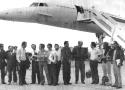
Fitted with telescopes, the plane did our longest imaging of the Sun’s corona. //
The Concorde Prototype 001 at the National Air and Space Museum of France in Le Bourget, with a map of Africa painted on it. The map depicts the aircraft’s path in the shadow of the total solar eclipse of June 30, 1973. //
“In 1970, the Concorde 001 prototype flew supersonic for the first time,” Léna told Ars. “The newspapers were full of these results. By 1972, I thought it was worth trying to approach André Turcat, the chief of test flights at Aerospatiale in Toulouse, and ask him about the possibility of using the 001 prototype to follow the June 1973 eclipse. He was very interested.”
With his plan accepted, Léna began organizing experiments for the historic flight. Flying at nearly 17 km above the Earth’s surface had many benefits. “Flying very high in the stratosphere had several advantages, including no humidity, which meant an excellent infrared transmission of the solar light.” //
With the shadow moving east at a slightly higher speed than the Concorde’s Mach 2.2, the scientists had 80 minutes of observation time in the totality before the aircraft fell behind the eclipse’s shadow. However, due to headwinds, that was reduced to 74 minutes, which was and still continues to be an astonishing achievement. “No one has achieved even half of it during the past 53 years,” Léna said.
Following this remarkable eclipse chase, the Concorde 001 landed in the Chadian capital of N’Djamena (then Fort-Lamy). “After we landed, a partial solar eclipse went on for an hour and a half or so. There were people (celebrating) on the streets with music as they were very happy to see us. It was a very special moment in my life,” Léna said.
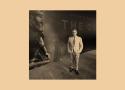
The Odyssey—the original poetry and the modern film—is not really about adventure, although it has an abundance of it. It’s also not primarily about virtues in some abstract way, whether the kill-your-enemies or love-your-enemies type. The Odyssey is about home. Odysseus wants to return to his place but comes to see that his obstacle is not merely geographical. He must become a different kind of person, the kind of man who can receive home as gift rather than as trophy. And at almost every step of the path, those who imaginatively walk with him can feel the ache.
Some of us are pulled toward nostalgia, looking to something better in the past. And some of us are pulled toward discontentment, looking to something better in the future. Regardless of where we turn, we all recognize something is missing. And all kinds of people—politicians, marketers, tech lords—are there to say, “You want to get home, and I can get you there.”
But it never works.
That’s because homesickness points in contradictory directions all at once. //
The ancient problem says “I can’t get home.” The modern problem says “I got home—it isn’t home.” One longs for return, and one longs for escape. These are not two problems but one. No matter which way we turn, we don’t know what home is. That’s why Homer still rings true, even in the era of IMAX and SpaceX.
And that’s what makes the Christian story stranger than the pagan ones. Odysseus spends 20 years trying to get back to Ithaca. Jesus has spent 2,000 years (so far) telling us to stop mistaking Ithaca for Eden.
The Bible is full of odysseys: Abraham leaves Ur. The Israelites leave Egypt. The apostles set out to “the ends of the earth” (Acts 13:47). When describing examples of faith, the Book of Hebrews says none of them “received the things promised” (11:13, ESV throughout).
These pilgrimages were not about answering the longing for home with a return to something past. We want a place prepared for us, a place to belong, a place to be known, a place to be loved. But our longing for that can sometimes leave us nostalgic for the wrong thing. The Israelites hungered in the wilderness. They responded to that with nostalgia for slavery: “We remember the fish we ate in Egypt that cost nothing, the cucumbers, the melons, the leeks, the onions, and the garlic” (Num. 11:5).
The longing wasn’t wrong. As a matter of fact, God said the hunger was necessary. The emptiness was in order that “he might make you know that man does not live by bread alone, but man lives by every word that comes from the mouth of the Lord” (Deut. 8:3). As C. S. Lewis reminded us, “Creatures are not born with desires unless satisfaction for those desires exists. A baby feels hunger: well, there is such a thing as food. A duckling wants to swim: well, there is such a thing as water.”
All of that should lead us to ponder: “If I find in myself a desire which no experience in this world can satisfy, the most probable explanation is that I was made for another world.” Identifying the ache is not the end, but it’s a start.
The Odyssey, Homer’s and Nolan’s, assumes the greatest human tragedy is losing the home you once had. The Bible says Abraham was looking for a city he had never seen (Heb. 11:13–14). The Odyssey doesn’t answer the question; it reminds us how to ask it. And that’s not nothing. But once we start asking those questions, we might find a whole Trojan horse full of meanings about which we could never start to ask or even think (Eph. 3:20). Asking those questions just might lead us somewhere else, to a better story than even Homer or Hollywood can tell.
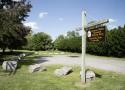
The Genesee Valley Greenway State Park is a 90-mile open space corridor that follows the route of the Genesee Valley Canal (1840-1878) and the Pennsylvania Railroad Rochester Branch (1882-1963) from the Erie Canalway Trail in Rochester's Genesee Valley Park to the Village of Cuba in Allegany County. The Greenway will eventually extend to Hinsdale in Cattaraugus County.
It includes a public, multi-use trail and natural and historic resources. The majority of the trail is an old railway bed that is a straight, level surface consisting of cinders, gravel, and mowed grass. The Greenway passes through woodlands, wetlands, river and stream valleys, rolling farmlands, steep gorges, and historic villages in sixteen towns located in Monroe, Livingston, Wyoming, Allegany, and Cattaraugus counties.
He was offered immortality. He chose home.
Christopher Nolan’s Odyssey opens this week. We won’t be talking about who plays Helen. We’ll be talking about what the poem actually says – which is so much more interesting.
-
The Odyssey is 2,800 years old and contains one choice that defines everything: a goddess offers a mortal man immortality, eternal youth, and paradise. He refuses. He wants to go home. This is not a minor plot point. It is the entire argument of the poem – and one of the most radical statements in Western literature.
-
Home is not a place. It is the accumulated particular – his wife, his son, his dog, his kingdom, the bed he built with his own hands around a living olive tree. Specific. Irreplaceable. The thing no paradise can substitute for, because paradise is general and home is yours. Odysseus knows exactly who he is for the entire poem. Every island, every temptation, every god is trying to make him someone else. He refuses all of it.
-
Immortality is the abstraction. The Form. The Idea. Calypso offers "transcendence" – escape from the mortal, the contingent, the particular, into something eternal and "perfect." This is what Plato promised. This is what every utopia promises. He looks at the offer, looks toward Ithaca, and says no. Written five centuries before Plato – and already containing the correct answer.
-
Every temptation in the poem is a variation of the same offer. The Lotus-eaters give you forgetting – and forgetting is always the first step to losing yourself. Circe turns men into pigs: comfortable, fed, no longer quite human. The Sirens offer pure knowledge – but knowledge that requires you to stop, to be detained, to never arrive. Each one is a different version of the same proposition: stay, be comfortable, become something other than what you are.
-
He defeats the Cyclops — pure brute force — not with strength but with a name trick. He tells the monster his name is Nobody. When the Cyclops screams for help, he screams that Nobody is killing him. Intelligence as the only weapon that works against power. The hero of this poem is not the strongest man in the room. He is the most lucid.
-
Penelope is an underrated figure in Western literature. Twenty years alone, surrounded by a parasitic class consuming everything her husband built, with nothing but intelligence and patience. She holds the line. She tests him at the end with the secret of the bed – not with passion but with proof. She too knows exactly who she is and what she is waiting for. The Odyssey has two heroes. One travels. One stays. Both refuse to become someone else.
-
This week, everyone is arguing about the casting. Helen’s complexion. Representation. Nobody is discussing what the poem says. This is — without anyone noticing — the Odyssey happening in real time. The Lotus-eaters don’t use force. They offer something comfortable enough to make you forget what you were heading toward. The debate about the casting is the Lotus flower – the smokescreen. The poem is Ithaca – home. Odysseus would have recognized the mechanism immediately. He encountered it on every island.
Communism and the Herostratos Instinct – They Couldn’t Build It. So They Burned It.
In 356 BC, a man named Herostratos burned the Temple of Artemis at Ephesus — one of the Seven Wonders of the ancient world — because he could never build something that magnificent and needed the world to know his name. The Athenians made it a capital offense to speak it. We still know it. The first man to destroy a Wonder of the World. It is the same story as Cain and Abel.
-
Every civilization produces two types in permanent tension. Those who build – who create, who reach, who transmit excellence forward. And those consumed by the fact that others build better than they do. They cannot bear the height. Cannot match it. And eventually decide that if they cannot reach it, nobody should have it. The name for this is envy – the specific, corrosive pain caused not by your own suffering but by another’s excellence. Nietzsche called it ressentiment. Genesis called it Cain. Same wound, every century, different clothes.
-
The lie is the first weapon – not to win the argument but to poison it. Not merely strategic propaganda deployed to seize power, but deployed to corrupt, to stain, to contaminate. To make the great seem like thieves, the builder an exploiter, the cathedral oppression, the excellence privilege. The goal is not to defeat the excellent in open debate. It is to make admiring them shameful and transmitting them suspect – so the child who might have reached toward them never learns they existed. Zakłamanie aimed specifically at height (explained below). Not managing reality – poisoning the wells from which excellence drinks.
-
The targets are never accidental. Always the best – the cathedral, not the barn. The scholar, not the clerk. Colonel Ciepliński, not the collaborator who signed the confession (also below). Excellence is the specific offense. Height is the specific wound. The destruction is always aimed upward – which is how you know it is envy and not justice.
-
Communism is the Herostratos instinct given a five-year plan, a secret police, and a philosophy that makes destruction sound like justice. The most organized mobilization of ressentiment in human history. It gave envy a manifesto, an army, and the moral high ground – the most dangerous combination ever assembled. Previous destroyers burned one temple. Communism burned the concept of the temple.
-
The pattern is unbroken across centuries. The French Revolution scattered the bones of French kings – not military necessity, ideological purification. Mao’s Red Guards burned libraries and killed scholars because five thousand years of Chinese excellence was an implicit rebuke to the revolution’s mediocrity. Today’s version cancels Shakespeare, pulls down Newton, erases Jefferson – not despite their greatness but because of it. Same wound. Same response. Updated vocabulary.
-
The lie does not stop at winning. It keeps working before and after victory – corrupting memory, rewriting history, staining reputations across generations, demoralizing and poisoning the souls. A civilization that cannot point to its greatest achievements and say — this is what we are capable of — is a civilization that has been successfully poisoned. The envy wins not when it tears down the statue. It wins when the children no longer know what the statue was.
-
You cannot build from envy. Which is why every revolution driven by it produces the same result: the heights are not replaced by new heights but by the flat, the administered, the carefully mediocre – the Idiocracy, the Last Man blinking. Not a failure of implementation. The intended output of the Herostratos instinct at civilizational scale. The Temple of Artemis was rebuilt twice before the destroyers finally won. Western civilization has been rebuilt before. The question is whether enough people understand what is being burned — and why — before the last stones are gone.
The Thousand Years We Lost.Not because it burned.
In 240 BC, a man named Eratosthenes calculated the circumference of the earth in a library in Alexandria. He was accurate to within 1%. Euclid worked there. Archimedes studied there. Hero of Alexandria built a working steam engine there. Aristarchus proposed that the earth orbits the sun – 1,800 years before Copernicus. The question nobody asks about the Library of Alexandria is not who burned it. It is: what happened to all of that? Why did we spend over a thousand years rediscovering things already known?
The answer has nothing to do with fire.
The Library didn’t burn in one dramatic catastrophe. That is the myth – Julius Caesar’s fleet accidentally igniting the greatest repository of knowledge in the ancient world in 48 BC, everything consumed in a single night. It makes a good story. It is mostly wrong. The Library was damaged, partially, by Caesar’s fire. It continued in diminished form for centuries afterward. What finally ended it was not flame but the slow withdrawal of the resources and attention that any living institution requires to remain alive. It was administered to death. Budget by budget. Scholar not replaced. Wing not maintained. Political priority shifted. The most consequential loss in intellectual history was not an act of destruction. It was an act of indifference.
What the Library contained mattered less than what it made possible. Eratosthenes, Euclid, Archimedes, Aristarchus – these were not isolated geniuses working alone. They were the product of an institutional ecosystem: scholars from every civilization gathering in one place, arguing about the same texts, cross-pollinating disciplines that had never been in the same room before. When the scholars dispersed — to Rome, to Constantinople, to Persia — they took the texts but not the conversation. What was lost was not the inventory. It was the living intellectual culture that gave the inventory meaning.
Think about what that means. The steam engine existed in Alexandria in the first century AD. The heliocentric model existed in the third century BC. The circumference of the earth was known. If the Library had survived and transmitted continuously, the Industrial Revolution might have happened a thousand years earlier. What humanity lost in the slow death of Alexandria is not a collection of scrolls. It is twelve centuries of compounded progress – every discovery that would have followed from the discoveries that were made and then forgotten, every generation that spent its intellectual energy rediscovering what the previous civilization already knew.
The parallel is precise and uncomfortable. The Western university was the Library’s successor – the institution that gathered, preserved, and transmitted the accumulated knowledge of civilization across generations. It is currently being emptied. Not by fire. By ideological capture, administrative indifference, and the replacement of open inquiry with approved conclusions. The scholars and the books are still there. The conversation is being shut down – not dramatically, not visibly, but in the same slow way the Library’s conversation ended: one cancelled course, one retired professor not replaced, one field of inquiry made professionally dangerous. The Library of Alexandria didn’t need an arsonist. Neither does the university.
Civilizational memory doesn’t burn. It is defunded, dispersed or erased until nobody notices it’s gone. The most dangerous threat to what we know is never the barbarian at the gate. It is the administrator at the budget meeting, the ideologue in the curriculum committee, the funding body that decides, for entirely reasonable institutional reasons, that this particular conversation is no longer a priority. We know how this ends. We watched it happen once already, in Alexandria, across three centuries of entirely reasonable decisions. We called what followed the Dark Ages.
We are still deciding what to call what comes next.

Reinventing Nixie tubes through design, research, and craftsmanship.
We are a small team dedicated to restoring historical nixie tube-making techniques and crafting modern timepieces —by hand, in our Czech workshop.
On Thursday mornings, Michael Scurr flips through pages . . . very, very carefully. He volunteers at the United Kingdom’s National Archives. In May, he made a discovery. He found an original copy of the Declaration of Independence!
At the time, Mr. Scurr was sifting through letters. A Royal Navy captain wrote them. Mr. Scurr found a report. It told of Brits capturing an American ship called Dalton. That took place on Christmas Eve in 1776.
Attached to the report? Something labeled as “another paper.” Mr. Scurr gingerly unfolded the document. Then he spotted the word “Declaration” printed across the top. He stopped.
“I thought, oh, right, OK, this is definitely a Declaration of Independence,” he says. “How exciting is this?”
Researchers agree. Before this find, people thought only 10 early copies existed. Now Mr. Scurr has upped that number to 11. The Founders signed the original document on July 4, 1776. This copy was printed days later. The document spread the news. Thirteen American colonies were breaking away from Great Britain.
So, yes, it’s old. But it’s important for another reason too. The ship on which it was captured was sent by the brand-new Continental Congress. John Hancock signed the ship’s orders. (John Hancock also famously signed the Declaration in BIG letters.)
America's Oldest Streaming Site Playing Old Time Radio Programs 24/7 - 365 Days a Year Since 1983!
Welcome to Yesterday USA, where Old Time Radio Programs rule the day. For 42 years we have been playing classic old time radio shows hosted by volunteers who are not only OTR collectors, but also Huge Old Time Radio Fans!
OTR Gems!
Select your favorite stream to tune in!
- Antioch Broadcast Network
- Conyers Old Time Radio
- Yesterday USA
The hand-written parchment copy of the Declaration of Independence showing historic script lines and signatures.
✦ ✦ ✦
56 SIGNATURES,
ONE REVOLUTION
✦ ✦ ✦
On July 4, 1776, representatives from the 13 colonies gathered in Philadelphia to declare independence from Great Britain. The Continental Congress had voted two days earlier to make the break and to write a Declaration of Independence.
John Hancock signed the Declaration first on that Fourth of July. Many of the others signed over the ensuing days and weeks. Their signatures — 56 names added to the official parchment copy — transformed a revolutionary decision into a public pledge.
These are the stories of the people behind the signatures.
United States
of America

Reichinstein also wrote a biography of Einstein, "Albert Einstein sein Lebensbild und seine Weltanschauung" (which roughly translates as Albert Einstein: His Life and Worldview) that came out prior to 1936. Apparently it was written and possibly self-published in 1932, which led to Einstein writing to Reichinstein that
Wenn Sie dieses Manuskript irgendwo und irgendwie veröffentlichen, dann ist es zwischen uns für immer aus.
Google Translate renders this as:
If you publish this manuscript anywhere, in any way, then it's over between us forever.
i.e. strongly asking him not to publish the manuscript. Reichinstein then proceeded to publish the book in Prague in 1934. The relevant letter from Einstein to Reichinstein is dates May 26, 1932 and has been made available by the ETH Zurich Library's "Einstein Online" collection, specifically in the section on The Time in Berlin (1914-1933) along with several other letters to Reichinstein, Hermann Weyl, and others.