Daily Shaarli
January 9, 2026
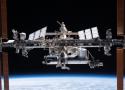
NASA has never before cut short a human spaceflight mission for medical reasons. “It’s the first time we’ve done a controlled medical evacuation from the vehicle, so that is unusual,” Kshatriya said.
The Soviet Union called an early end for an expedition to the Salyut 7 space station in 1985 after the mission’s commander fell ill in orbit.
In a sense, it is surprising that it took this long. Polk said predictive models suggested the ISS would have a medical evacuation about once every three years. It ended up taking 25 years. In that time, NASA has improved astronauts’ abilities to treat aches and pains, minor injuries, and routine illnesses.
Crews in orbit can now self-treat ailments that might have prompted a crew to return to Earth in the past. One astronaut was diagnosed with deep vein thrombosis, or a blood clot, in 2018 without requiring an early departure from the space station. Another astronaut suffered a pinched nerve in 2021 and remained in orbit for another seven months.
One of the more compelling reasons for the space station’s existence is its ability to act as a testbed for learning how to live and work off the planet. The station has served as a laboratory for studying how spaceflight affects the human body, and as a platform to test life support systems necessary for long-duration voyages to deep space.
Dr. Bob Fu of ChinaAid called it what it is. State-sponsored religious persecution. When a government mobilizes riot police and heavy equipment against a peaceful congregation, it is not enforcing laws. It is enforcing ideology.
And that ideology has a name.
President Xi Jinping calls it Sinicisation. It sounds academic. It sounds harmless. In practice, it means every expression of faith must bow to the Chinese Communist Party. Sermons must align with party doctrine. Churches must register under state control. Pastors must preach only through government-approved platforms. Scripture itself must be filtered, reframed, and neutered.
There are two kinds of churches in China. The Three Self churches, which operate with government permission and government supervision, and the underground or house churches, which operate under the conviction that Christ, not the Party, is Lord. The latter have been targeted for decades, but the crackdown has intensified. The internet is now tightly regulated. Clergy are warned not to attract attention. Evangelism is treated like a contagion. //
What stands out in this latest wave of arrests is not just the brutality, but the clarity. The CCP is no longer pretending to tolerate independent faith. It is openly moving to crush it.
And where is the international outcry?
Muted. Careful. Managed.
We issue statements. We express concern. We keep trade flowing. We schedule summits. We talk about cooperation. Meanwhile, Chinese believers are dragged from their homes, churches are dismantled piece by piece, and crosses are wrapped in scaffolding like crime scenes. //
The question is not whether Chinese Christians will endure. They will.
The question is whether the free world will have the courage to stand with them, or whether we will keep pretending that bulldozers and prison cells are just part of doing business with Beijing.
FranzJoseph Wise, Aged Ars Veteran
11m
1,581
DavidEmami said:
Hope the everything turns out well for the crew member. It does make me wonder, though -- how would they deal with something life threatening? And have any medical procedures been done in space before? Did some searching and the closest I can find is a post-splashdown injury on Apollo 12 that the crew treated before egress, but that wasn't in free-fall. In particular, I assume the medical concept of the "golden hour" has to be abandoned.
First, obviously IANAD, so take it with a big grain of salt.
"Golden hour" is usually talked in the context of massive traumatic injuries and/or massive haemorrhaging. Even there it's a bit controversial, as it might be more useful only in the context of triage of massively multiple casualties with limited medevac resources down here.
IOTW, if any massive traumatic injury happens on the ISS (say a micrometeorite going through an astronaut or a pressurised cylinder failure resulting in an open fracture and haemorrhaging), the casualty is likely to be fucked anyway.
For things that develop over a longer time (appendicitis ‑‑> septicaemia), the astronauts are hopefully so well monitored that it would be caught early on.
You can find a full equipment list in the CHeCS onboard here (PDF, 2011 link). https://ntrs.nasa.gov/api/citations/20110022379/downloads/20110022379.pdf
Includes BP/ECG, AED, basic dental & surgery stuff (nothing quite major, scalpel and forceps etc), detox kit, airways kit, ambu bag and low‑flow mask and endotracheal oxygen supply, IV with pump and IV solutions, chest drain valve for pneumothorax, dressings, sutures and splints. Plus medicines, obviously.
Not really sure what the survival rate of somebody with a tension pneumothorax would be, even if quickly drained with the drain valve and intubated. I presume NASA has some procedures for getting an intubated or IV'd astronaut back home, even if it might mean not wearing their suit?
What's the max acceleration experienced during re‑entry and chute deployment? Not Soyuz, hopefully something gentler like CrewDragon (I assume Soyuz's retrorockets are less gentle here)?
henryhbk Ars Tribunus Militum
12y
1,891
Subscriptor++
FranzJoseph said:
First, obviously IANAD, so take it with a big grain of salt.
"Golden hour" is usually talked in the context of massive traumatic injuries and/or massive haemorrhaging. Even there it's a bit controversial, as it might be more useful only in the context of triage of massively multiple casualties with limited medevac resources down here.
IOTW, if any massive traumatic injury happens on the ISS (say a micrometeorite going through an astronaut or a pressurised cylinder failure resulting in an open fracture and haemorrhaging), the casualty is likely to be fucked anyway.
For things that develop over a longer time (appendicitis ‑‑> septicaemia), the astronauts are hopefully so well monitored that it would be caught early on.
You can find a full equipment list in the CHeCS onboard here (PDF, 2011 link).
Includes BP/ECG, AED, basic dental & surgery stuff (nothing quite major, scalpel and forceps etc), detox kit, airways kit, ambu bag and low‑flow mask and endotracheal oxygen supply, IV with pump and IV solutions, chest drain valve for pneumothorax, dressings, sutures and splints. Plus medicines, obviously.
Not really sure what the survival rate of somebody with a tension pneumothorax would be, even if quickly drained with the drain valve and intubated. I presume NASA has some procedures for getting an intubated or IV'd astronaut back home, even if it might mean not wearing their suit?
What's the max acceleration experienced during re‑entry and chute deployment? Not Soyuz, hopefully something gentler like CrewDragon (I assume Soyuz's retrorockets are less gentle here)?
Click to expand...
IAAD, most of the survivable emergencies require only a critical but generally simple procedure to buy time. Often I am faced with surgical emergencies in the hospital overnight, and while on paper we have at least one trauma and one cardiac OR on hot standby, it's not like surgeons are standing there in stasis waiting to operate, and often will be several hours until they can formally operate on someone (or we need some test to complete). So for instance for the appendicitis above we use broad spectrum IV antibiotics, then figure it out later, Broken bones easy - splint and transport, pneumothorax (particularly tension) you can do a needle decompression (all it takes is a 20ga IV catheter and a stopcock) and again you've bought plenty of time for surgeons to get ready to do a definitive thoracostomy (chest) tube, most bleeding can be stopped with pressure.
Things where this isn't true would be a stroke or intracranial bleeding. Not 100% sure if the aircraft carriers that picked up Apollo astronauts even have the ability to treat that onboard. depending where the bleed is. If it is an epidural (in the skull, outside the brain but hydraulically crushing the brain) then the answer is simply we drill a hole and relieve the pressure (trepanning) and then some actual neurosurgeon can fix the issue, and when I was the intern, that's who did the burr hole, a 4 minute procedure that bought you hours to the OR. But if the bleed is deeper (such as a sub-arachnoid bleed or interparenchymal bleed) well not much you are doing outside an interventional neuroradiology suite, and those patients often have a poor prognosis on land. Not sure if they screen for berry aneurysms in the astronaut core with a head angiogram? Penetrating trauma management is battlefield medic level care to buy time to get to surgery, and a lot can be done to stall exsanguination within reason without much clinical skill or equipment. There are military medic deployed pro-coagulants that can be put into a wound to form instant clot, and of course the tried and true tampon in the hole. In a penetrating wound something like a tampon works by absorbing blood and expanding to put pressure on the bleeding vessels, which works surprisingly well in the absence of definitive medical care.
As for g-forces anyone who has ridden in an ambulance on our pothole strewn streets in the northeast knows you subject you patient to a surprising number of shock loads, but I worry more about needing to put a critically ill patient into a chair for the descent when bleeding has stopped while lying prone or on their back. Does crew dragon have a stretcher capability?