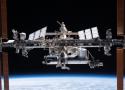
NASA has never before cut short a human spaceflight mission for medical reasons. “It’s the first time we’ve done a controlled medical evacuation from the vehicle, so that is unusual,” Kshatriya said.
The Soviet Union called an early end for an expedition to the Salyut 7 space station in 1985 after the mission’s commander fell ill in orbit.
In a sense, it is surprising that it took this long. Polk said predictive models suggested the ISS would have a medical evacuation about once every three years. It ended up taking 25 years. In that time, NASA has improved astronauts’ abilities to treat aches and pains, minor injuries, and routine illnesses.
Crews in orbit can now self-treat ailments that might have prompted a crew to return to Earth in the past. One astronaut was diagnosed with deep vein thrombosis, or a blood clot, in 2018 without requiring an early departure from the space station. Another astronaut suffered a pinched nerve in 2021 and remained in orbit for another seven months.
One of the more compelling reasons for the space station’s existence is its ability to act as a testbed for learning how to live and work off the planet. The station has served as a laboratory for studying how spaceflight affects the human body, and as a platform to test life support systems necessary for long-duration voyages to deep space.

