Daily Shaarli
April 1, 2026

Starting today, Google will let US-based users ditch an old username without creating a new account.
Google started testing this option some months ago, both in the US and internationally. Today, the name change feature is rolling out widely in the US. You can check for the option on this account page to get started (you’ll have to log in). Some of the accounts we’ve checked already have the option, but it could take a while for it to appear for everyone.
Over the years, many users have abandoned old Gmail addresses because the handle is too personal or their names have changed. Now, you don’t have to abandon anything. When the option appears, you’ll be able to change the username portion of your email (the part before @gmail) to anything you desire. However, Google says you can only change your address once every 12 months.
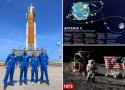
It’s a playbook that closely mirrors the missions that preceded Apollo 11’s historic first moon steps in 1969 — Apollo 7 and 9 tested systems in Earth orbit, while Apollo 8 flew its own figure-eight around the moon with a series of lunar orbits to test the Saturn V rocket’s ability to send a capsule across huge distances.
But Artemis II’s figure-eight will differ from Apollo 8’s and nearly every manned mission in history — it will skip the lunar orbits, but give humans the first extensive look at the far side of the moon through their own eyes.
All previous manned missions routinely flew around the far side of the moon — which perpetually faces away from Earth — but were planned so that the sun constantly shone on the nearside to allow for safe landings and productive moonwalks.
That meant the far side was almost entirely hidden in shadow throughout Apollo — and that most of it has only ever been seen through photographs from unmanned probes.
Artemis II will change that. The mission will pass over the far side in full sunlight and allow for direct observation of the moon’s hidden surface by the astronauts onboard.
Charles Bennett and Gilles Brassard have won the 2026 Turing Award for inventing quantum cryptography.
I am incredibly pleased to see them get this recognition. I have always thought the technology to be fantastic, even though I think it’s largely unnecessary. I wrote up my thoughts back in 2008, in an essay titled “Quantum Cryptography: As Awesome As It Is Pointless.” //
What about quantum computation? I’m not worried; the math is ahead of the physics. Reports of progress in that area are overblown. And if there’s a security crisis because of a quantum computation breakthrough, it’s because our systems aren’t crypto-agile. //
Ray Dillinger • March 31, 2026 2:43 PM
I don’t mean to diminish the work of Bennett and Brassard. They had some amazing insights and deserve their award.
At the same time I suppose that people affiliated with various three-letter-agencies may have been consulted as to the value of their work when the Turing Awards were being considered. Those agencies, if they are behind the Kleptographic attack that appears to be happening here, may have had an interest in promoting public awareness of Quantum Crypto as a threat. Promoting public awareness of a threat is absolutely a necessary step in any campaign to use that threat as a lever to get people to do something stupid out of FUD.
So I fear that the work of Bennett and Brassard, however good it may be, would likely have gone unrecognized if not for the input of people who are, despite all protestations, unlikely to be motivated by protecting people against it.
Ray Dillinger • March 31, 2026 2:43 PM
I don’t mean to diminish the work of Bennett and Brassard. They had some amazing insights and deserve their award.
At the same time I suppose that people affiliated with various three-letter-agencies may have been consulted as to the value of their work when the Turing Awards were being considered. Those agencies, if they are behind the Kleptographic attack that appears to be happening here, may have had an interest in promoting public awareness of Quantum Crypto as a threat. Promoting public awareness of a threat is absolutely a necessary step in any campaign to use that threat as a lever to get people to do something stupid out of FUD.
So I fear that the work of Bennett and Brassard, however good it may be, would likely have gone unrecognized if not for the input of people who are, despite all protestations, unlikely to be motivated by protecting people against it.
If the Sensory Interface is the intake port, the NeuroCompiler is what turns that input into “filtered meaning” before the Mind Kernel ever sees it. It takes raw signal (e.g., photons, sound waves, chemical gradients, pressure) and translates it into something actionable based on binary categories like threat or safe, familiar or novel, trustworthy or suspicious.
The speed is both an evolutionary feature and a modern bug. Processing here is fast enough to get you out of the way of a thrown object before you’ve consciously registered it. But “good enough most of the time” means “predictably wrong some of the time….
A critical architectural feature: the NeuroCompiler can route its output directly back to the Sensory Interface and out as behavior, skipping the conscious awareness of the Mind Kernel entirely. Reflex and startle responses use this mechanism, making this bypass pathway enormously useful for survival. Yet it leaves a wide-open backdoor. If the layer that holds access to skepticism and deliberate evaluation can be bypassed completely, a host of exploits become possible that would otherwise fail.
That’s just one of the five levels Melton talks about: sensory interface, neurocompiler, mind kernel, the mesh, and cultural substrate.
Melton’s taxonomy is compelling, and her parallels to IT systems are fascinating. I have long said that a genius idea is one that’s incredibly obvious once you hear it, but one that no one has said before. This is the first time I’ve heard cognition described in this way.