Daily Shaarli
September 17, 2026
“The damage to our infrastructure spanned multiple Availability Zones and exceeded what our regional and multi-AZ services are designed to withstand,” the AWS update said.
Jonathan Richards 1Silver badge
Reply Icon
Re: Ooh cms
Upvoted. Librarianship 101, or the correct principles for an office filing system which brought myriads of companies successfully through generations of business and progress. The oldest of those companies have curated archives that you can still find documents in. Good luck with that in a hundred years for any of the software solutions kicking around now.
The nightmare began when we stopped filing things in carefully chosen places, or alternatively carefully indexing things placed in a managed store. Some clown thought that having a list of all the words in all the documents would make it easy to find what one was looking for. Repeat after me: the set of words in a document does not tell you what the document is about. cf Manila and manila!
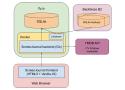
A good design doc can save you years of development time. Writing a design doc forces you to think through important decisions before you waste time on the wrong implementation. It’s also the best way to coordinate design decisions among teammates and partner teams.
I’ve written design docs as a developer at Google, Microsoft, and within my own companies. The specifics vary, but the underlying principles remain the same. A design doc articulates the hard problems you’re solving and helps your teammates give you feedback.
Below, I share my approach to creating effective design docs and explain what belongs in a design doc and what does not.
Jason BloombergSilver badge
Reply Icon
Re: the discipline of using COBOL on show
Is it "the discipline of using COBOL" on show here, or simply that COBOL is so well defined and simplistic that it's easy to convert most COBOL programs to some other language?
I have written a number of transpilers to convert from one language to another. They work brilliantly so long as the source is within the transpiler's constraints. Otherwise update the transpiler or simplify the source.
It's been so long since I had to deal with COBOL the only thing I remember about it, which elicits a smile every time, is the classic -
PERFORM X UNTIL EXHAUSTED //
Roland6Silver badge
Reply Icon
Re: the discipline of using COBOL on show
No COBOL conversion was performed here. As the original commentant pointed out: the ability to specify a problem in a form that permits the writing of a COBOL program also permits the creation of a specification that can be I’m-lamented in a different langauge.
Remember an AI prompt is just a specification written in a way an AI code generator can parse. The writing of specifications is something Imsuspect many older programmers did and do, but many code junkies have avoided doing…

There is an old AWS quote that has aged in a particularly interesting way.
In 2017, CBS asked AWS executive Matt Wood a rather pointed question:
CBS: “I don’t mean to give anyone ideas, but let’s say I figured out that one of these unmarked buildings was an AWS data center, and I blew it up. Are you saying that it’s so backed up and redundant that you probably wouldn’t notice?”
AWS: “Yeah, you wouldn’t notice. I mean, we might be a bit upset, but you wouldn’t notice!”
Nine years later, somebody effectively ran the experiment, although on a much larger scale than the loss of a single building, and people did, in fact, notice. //
I Guess Maybe Now They’ll Do 3-2-1 Backups
The gold standard for data protection is “3 copies, 2 different kinds of media, 1 of which is offsite”.
I’m all for the cloud, but if it’s important data and you’re limited to keeping all of your cloud data in one set of buildings…then for pity’s sake, have off-site backups. You don’t need to have another failover site ready to light up if Amazon goes down for you, but you shouldn’t lose the data. Replicate it off-site. I mean, forget even acts of war – what if hackers get into your systems? Into Amazon’s systems? What if an employee goes rogue? What if, what if…
A replicated off-site solution with ransomware protection and disk snapshots (or heaven forbid, tape!) doesn’t mean you can restore service quickly, but it means you won’t lose the data. In other words, go ahead and say “if we have to go to that dire situation, we’re not promising a recovery time objective (RTO). But we are promising a Recovery Point Objective (RPO).”
Losing data sucks.