Daily Shaarli
November 13, 2026
This stands for client-side caching policy, and specifies how clients capable of offline caching will cache the files in the share. The valid values are: manual, documents, programs, disable.
These values correspond to those used on Windows servers.
For example, shares containing roaming profiles can have offline caching disabled using csc policy = disable.
Default: csc policy = manual
Example: csc policy = programs

This article describes how to use the Always Offline mode of Offline Files to provide faster access to cached files and redirected folders. Offline Files is a feature of Windows that allows users to access files on a network share even when the network connection is unavailable. Offline Files caches files and folders from a network share on the local computer, allowing users to work with them as if they were stored locally. When the network connection is restored, changes made to the files are synchronized with the server copy. //
To enable Always Offline mode, your environment must meet the following prerequisites.
- An Active Directory Domain Services (AD DS) domain, with client computers joined to the domain. There are no forest or domain functional-level requirements or schema requirements.
- Permission in AD DS to create and link Group Policy Objects (GPOs) in the domain or organizational unit (OU) where the users are located.
- Client computers running Windows or Windows Server.
- A computer with the Group Policy Management Console installed.

2ème mouvement "Chant de barde", du poème symphonique pour piano et orchestre, op.43
Peter Benoit
Peter Benoit
Concerto pour piano et orchestre. Poème symphonique (Op. 43)
-
- Ballade
-
- Bardic Song
-
- Scherzo: Fantastical Hunt

Now, one of my close friends dropped a surprise choice on me when I asked him the same movie question I asked the X users. He shared my love of the final movie on this list, but also included: "Stalag 17."
https://www.justwatch.com/us/movie/stalag-17
Stalag 17 (1953), as many readers might know, recounts the exploits of American soldiers being held in a German prisoner of war (POW) camp during World War II, and stars William Holden, Don Taylor, Robert Strauss, Harvey Lembeck, Peter Graves, Neville Brand, Richard Erdman, Sig Ruman, and Otto Preminger. //
Men of Honor (2000) is a great low-key choice //
Another title that surfaced was Hacksaw Ridge (2016), a more recent war offering starring Andrew Garfield, from director Mel Gibson. //
The William Wyler-helmed The Best Years of Our Lives (1946) focuses on vets and their loved ones readjusting (or failing to readjust) to civilian life after World War II. It's amazing to me how the movie was made just a year after the war ended.
Files with the offline DOS attribute are handled differently by the Windows SMB client, as well as by Windows Explorer. In particular, Windows Explorer does not read those files for the sole purpose of drawing a thumbnail, as it normally does. This can improve user experience with some remote file systems.
EXAMPLES
Mark all files in a share as offline:
    [remote]
vfs objects = offline
VERSION
This man page is part of version 4.25.0 of the Samba suite.
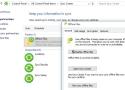
Offline Files feature in Windows 10 allows you to make certain shared network folders and files available offline even if your computer is not connected to the corporate network. In this article, we will show how to enable and configure Offline Files on Windows 10 and Windows Server 2019 manually and using GPO.
Offline Files have been available in Windows for a long time. A user only needs to enable Offline Files on the computer and check the “Always available offline” option for some files or folders in a shared folder. Then Windows saves the specified files to the local cache on the disk and periodically updates them in the background (every 2 hours by default, but you can set how often your Offline Files are synchronized using the Configure Background Sync option in GPO). //
Offline Files are stored in the C:\Windows\CSC folder on a client computer and are not directly accessible through File Explorer.

Refer to the figure below for a Galvanic Series containing values for electrical potential of various metals in a saltwater application8. Generally, severity of corrosion increases when combining galvanized steel with metals far away from zinc in the galvanic series. Actual electrical potential values will vary depending on the specific electrolyte present if not saltwater4.

It's the system costs, stupid
Wind and solar supporters have a nasty habit of pretending that their preferred energy sources are the “cheapest forms of energy.” The problem, of course, is that they use unrealistic Levelized Cost of Energy (LCOE) estimates—see Cooking the Books for wind and solar—and they conveniently forget to mention the large system costs needed to reliably serve electricity demand using these unreliable energy sources.
That’s why, despite its high up-front capital costs, powering an electric grid with nuclear power is cheaper than using wind, solar, and battery storage. //
Before we jump into the benefits of nuclear power, it’s important for our readers to understand that building a fleet of nuclear power plants will be very expensive, which will increase costs for ratepayers. A forced energy transition of any kind is going to increase costs inherently, and nuclear is no different.
If your main priority is reliable, low-cost power, keeping the existing coal and natural gas plants online and building new natural gas plants as needed will be the more affordable option. If decarbonizing the electric grid is your main priority, building new nuclear power plants will deliver a superior value to electricity customers, with reliable service at a lower cost than a grid powered largely by wind, solar, and battery storage.
Our definition of a reliable generator is dispatchability, meaning the unit can be turned on or off as needed.
Because nuclear plants are dispatchable, they don’t require backup generators or batteries like wind and solar facilities, and there is no need to overbuild and curtail the plants to ensure there is enough electricity available when the wind isn’t blowing very hard, or the sun isn’t shining.
In our 2022 report on the cost of Minnesota’s 100 percent carbon-free electricity mandate by 2040, we found meeting Minnesota’s electricity demand would require 100,455 megawatts (MW) of installed capacity under the renewable scenario. In contrast, this same job could be done by just 16,379 MW of new and existing nuclear plants, some battery storage, and retrofitting a North Dakota coal plant with carbon capture and storage technology. //
Nuclear plants are initially licensed for 40 years and can apply for 20-year extensions thereafter. For example, in its Integrated Resource Plan, Arizona Public Service assumes a 40-year book life for nuclear power plants. However, nuclear plants can last twice as long as this estimate, and a growing number of nuclear plants have applied to operate for 80 years, allowing them to generate very cheap electricity for decades.
The main cost for a nuclear plant is paying down the upfront capital cost of the plant. In a way, building a nuclear plant is a lot like taking out a big mortgage on a house. As you pay it off, it becomes cheaper to live there. When the mortgage is fully paid, the house is a very low-cost place to live. It’s the same with a power plant. //
FERC Form 1 data consistently show existing nuclear plants generating electricity for $20.15 per MWh in Virginia, $21.71 per MWh in North Carolina, $37 per MWh in Minnesota, and $26.19 per MWh nationwide. Even without accounting for the system cost of incorporating wind and solar onto the system, the existing nuclear fleet in America is less expensive than existing wind and solar facilities, which cost $52 per MWh and $73 per MWh, respectively, according to FERC Form 1 data.

The csc policy = programs line enables client-side caching for executable files, allowing offline access. ////
csc policy = manual is the SAMBA default.
The IPCC, NASA, NOAA, and EPA state that essentially all of the observed rise in atmospheric CO2 since the pre-industrial era originates from fossil-fuel combustion. This paper shows that claim is mathematically inconsistent with the isotopic record those same agencies rely on. The Keeling plot of 𝛿 13C against 1/𝐶 has an intercept 𝛿13C𝐼 equal to the flux-weighted isotopic signature of the net carbon addition to the atmosphere. Applied by Koutsoyiannis (2024a) [16] to instrumental 𝛿13C records from four Scripps CO2 Program stations (Barrow, La Jolla, Mauna Loa, South Pole) spanning about 1978 to present, this construction gives 𝛿13C𝐼 = −13.2 ± 0.2‰. Caribbean sclerosponge 𝛿13C reconstructions of surface-water dissolved inorganic carbon by Böhm et al. (2002) [2] extend this value back to approximately 1500 AD with no significant drift. Independent Keeling regression of the Law Dome ice-core record by Kohler et al. (2006) [14] yields the same intercept with 𝑟2 = 0.96. The two-endmember mixture equation 𝛿13C𝐼 = 𝑓 𝛿13C𝐹 + (1− 𝑓 ) 𝛿13C𝑁 , using the standard fossil signature 𝛿13C𝐹 ≈ −28‰ and the physically admissible range −13.2‰ ≤ 𝛿13C𝑁 ≤ −8‰, forces the fossil fraction 𝑓 of the net addition into the interval [0, 0.26]. Even under the counterfactual relaxation 𝛿13C𝑁 = 0‰, well outside any physically realizable naturalreservoir signature, 𝑓 is bounded above by 0.471. The five-century invariance of 𝛿13C𝐼 across a roughly 104-fold increase in fossil emissions further collapses the admissible band to 𝑓 ≈ 0.
The claim of fossil dominance is therefore not merely empirically weak; it is inconsistent with the arithmetic of the isotopic constraint applied to the standard measurement record. The rejection of the conclusion requires the rejection of one of three inputs: elementary mass-balance algebra, the standard isotopic endmember values used throughout the carbon-cycle literature, or the primary Scripps and sclerosponge datasets themselves.