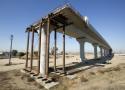
California's high-speed rail project officially began in 2008, although it was initiated on paper earlier. The whole system was initially planned to comprise 776 miles, with a completion date set for 2020. To date, none of the proposed rail network is operational. By way of comparison, the Transcontinental Railroad is 1,911 miles long, cutting through the Rockies and Sierra Nevada, and it was completed in 2,314 days, despite the Civil War and Indian raids. An [Irish track-laying crew laid 10 miles, 1,320 feet of track on a single day](https://en.wikipedia.org/wiki/Tracklaying_race_of_1869#Ten_Miles_of_Track,_Laid_in_One_Day:~:text=new%2520record%2520with-,10%25C2%25A0miles,-1%252C320%25C2%25A0feet%2520(16.496), while California has managed to lay 1,600 feet in nine years. //
The ballyhooed three-hour trip from LA to San Francisco only works if there are no stops. Once you add stops, the time starts to increase. There is no universe in which this rail line would not require large-scale government subsidies because the daily passenger demand just isn't there. At best, this is a sinecure for politically connected construction and consulting firms. At worst, it is outright theft. If California's voters are willing to foot the bill, they should be allowed to do so. The rest of us should be allowed to opt out, and thanks to Secretary Duffy, we have.

