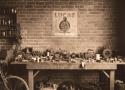
For anyone who's owned a classic British car, three words guaranteed to send a shiver down the spine: Lucas Electrical Systems. For decades, the products made by this Birmingham company became the source of endless, infuriating failures that turned British motorists into unwilling comedians. Headlights would dim to a romantic glow just as you needed them most. Indicators would flash with the random enthusiasm of a broken disco ball. Windscreen wipers would choose the exact moment of a downpour to take early retirement. It's for this reason that Joseph Lucas, the company's long-dead founder, earned the posthumous nickname "Prince of Darkness."
Which makes the story all the more remarkable, because Joseph Lucas himself built his business on exactly the opposite reputation: rock-solid reliability and genuine innovation. //
In the 1920s, Lucas signed cross-licensing deals with Bosch, Delco, and other major electrical suppliers that carved up the world between them. Lucas agreed not to sell in their territories; they agreed not to sell in Britain. By the 1930s, Lucas had achieved something close to a complete monopoly on automotive electrics in Britain.
If you were building cars in Britain, you bought your headlamps, starter motors, alternators, and wiring from Lucas. Austin, Morris, Jaguar, Rover, Triumph, MG - they were all captive customers. There was literally nowhere else to go. This should have been a recipe for excellence, with guaranteed demand allowing investment in the best possible products. Instead, it became a lesson in how monopolies breed complacency. //
The folklore that grew up around Lucas failures became part of British motoring culture. "The Lucas motto: Get home before dark." "Why do the British drink warm beer? Because Lucas makes their refrigerators." "Alexander Graham Bell invented the telephone, Thomas Edison invented the light bulb, Joseph Lucas invented the short circuit." The jokes were funny precisely because they reflected real experiences shared by thousands of frustrated drivers.

