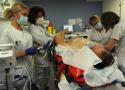
Desflurane is a common anesthetic used in hospital operating rooms worldwide. It’s also a climate super pollutant. Now, several decades after the drug was first introduced, a growing number of US hospitals have stopped using the anesthetic because of its outsized environmental impact. On January 1, the European Union went a step further, prohibiting its use in all but medically necessary cases.
Desflurane is more than 7,000 times more effective at warming the planet over a 20-year period than carbon dioxide on a pound-for-pound basis. However, curbing its use alone won’t solve climate change. The anesthetic contributes only a small fraction of total global warming, which is driven by far larger volumes of carbon dioxide and methane emissions.
Still, emissions from the drug add up. Approximately 1,000 tons of the gas are vented from hospitals and other health care facilities worldwide each year. The emissions have a near-term climate impact equivalent to the annual greenhouse gas emissions from approximately 1.6 million automobiles. //
Instead of desflurane, the Yale New Haven Health System now relies primarily on sevoflurane, an anesthetic that is 10 times less potent as a greenhouse gas and approximately half as expensive. The health care system saved $1.2 million annually on anesthesia medications after making the switch, Sherman said. //
USAP physicians and others are also using less nitrous oxide or “laughing gas,” a mild anesthetic and potent greenhouse gas. Nitrous oxide is commonly distributed throughout hospitals via a centralized, leak-prone pipe network. Pipe networks in US hospitals can leak up to 99.8 percent of the gas before it reaches patients, according to a study published in 2024 in the British Journal of Anaesthesia. Using small, portable tanks can reduce losses by 98 percent. //
A paper published in the academic journal Anesthesia & Analgesia in July argued that the climate impact of desflurane emissions was not significant and suggested that more harm may come from withholding the drug from patients. //
j5i7 Seniorius Lurkius
5y
2
As a anesthesiologist, a few points:
- Desflurane does have distinct advantages compared to sevoflurane or isoflurane. It's is faster acting, and faster to wear off. However, clinically, this doesn't matter too much if you adapt to the anesthetic you are using. But it could get a patient out of an operating room a minute or two faster. The more obese a patient, the larger a difference it could make.
- Due to its vapor pressure, Desflurane requires a powered vaporizer that uses electricity on top of its significantly higher CO2 equivilent.
- Anesthesia machines use a circle breathing system. There is no way to strictly deliver anesthetic gases only when a patient is breathing in, but you can get very close.
Anesthetic waste gases are generally vented through a roof vent in the hospital. There are technologies out there to recapture the anesthetics, but I don't believe any are commercially common. - A lot of nitrous is lost due to leaks in the pipes. Generally nitrous isn't that useful in anesthesia for adults, but it does have its place in pediatrics.
- You can do anesthesia without any gases and just using medications that go through an IV. These are slightly more expensive, but better from a climate perspective. However, there are medical reasons to choose inhaled gases verses IV anesthetics.
- Finally, commonly used anesthetic gases are NOT flammable. However, oxygen is a great oxidizing agent...

