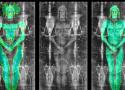
Perhaps the most famous "holy relic" is the Shroud of Turin, an old linen cloth that retains a distinct impression of the body of a crucified mine (both front and back). The legend is that Jesus himself was wrapped in the shroud upon his death around 30 CE, although modern scientific dating methods revealed the shroud is actually a medieval artifact dating to between 1260 and 1390 CE. A 3D designer named Cícero Moraes has created a 3D digital reconstruction to lend further credence to the case for the shroud being a medieval forgery, according to a paper published in the journal Archaeometry.
Moraes developed computer models to simulate draping a sheet on both a 3D human form and a bas-relief carving to test which version most closely matched the figure preserved in the shroud. He concluded that the latter was more consistent with the shroud's figure, meaning that it was likely created as an artistic representation or a medieval work of art. It was certainly never draped around an actual body. Most notable was the absence of the so-called "Agamemnon mask effect," in which a human face shrouded in fabric appears wider once flattened.

