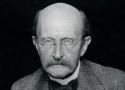
German physicist Max Planck was one of the pioneers of quantum mechanics in the early 20th century, earning the 1918 Nobel Prize in Physics for his discovery of quanta. There has never been a whisper of scandal about the man’s integrity or his scientific work. So a pair of science historians were puzzled when they discovered that a scientific journal had inexplicably retracted two of Planck’s papers from the 1940s.
The journal in question is Naturwissenschaften, now known as The Science of Nature. The journal typically adds a large RETRACTED notice across digital papers that have been retracted, leaving them available for download. But it has removed the two Planck papers entirely, leaving just a blank page (and empty PDFs) with a brief note saying the articles had been “withdrawn due to article violation.” //
Gingras and Khelfaoui suspect the retraction decision was made around this time. “All this clearly suggests that some lawyer at Springer was overshadowing the process and considered these papers as problematic forms of ‘duplicate publications,’” they wrote. //
Duplication/self-plagiarism is also more of an issue now, when publications are a major factor when it comes to hiring and promoting scientists, as well as acquiring research fundings. Applying these contemporary standards can be problematic for the “digital circulation of historical texts,” the authors concluded. //
gowanusstinks Seniorius Lurkius
7y
29
So an entanglement issue?
I’ll let myself out. //
SplatMan_DK Ars Tribunus Angusticlavius
18y
8,310
Subscriptor++
It's really Schrödingers scientific paper.
Just stop looking for it or reading it, and it will be right back. //
Keith Tanner Ars Tribunus Militum
8y
2,325
SplatMan_DK said:
It's really Schrödingers scientific paper.
Just stop looking for it or reading it, and it will be right back.
Maybe it’s more Heisenbergian. You can either read the paper or you can know what’s in it, but not both.

