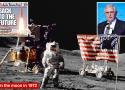
Dr. Harrison “Jack” Schmitt, 90, an Apollo 17 astronaut who spent three days on the moon in 1972, told The Post this week that there is a superfuel locked within the lunar dust that could provide Earth with an abundance of clean and safe energy for generations.
“I’ve been working on this for many decades — harvesting the light isotope of helium-3 from the moon,” said Schmitt, who is from New Mexico and lives in Albuquerque.
Schmitt is one of just 12 humans to ever walk on the moon, and four who are still alive. Buzz Aldrin, Charlie Duke and David Scott are also all in their 90s.
Since his Apollo 17 commander, Gene Cernan, died in 2017, Schmidt has been the last man alive to step off the lunar surface.
He also stands out for another reason: Unlike the other Apollo astronauts, who came from the military, Schmitt was a geologist and the only trained scientist to make the historic trip. //
“The question is, will that momentum keep going forward?”
Schmitt says he believes it will through a viable business model for interlunar travel — fueled by an industry involving the reaping of helium-3.
Helium-3 is a key ingredient needed to run nuclear fusion reactors, which operate with extreme efficiency and without the dangerous radioactive waste today’s fission-based power plants create.
But helium-3 is extremely rare on Earth — so rare that it’s rationed by the federal government — meaning fusion reactors have never been viable on a large scale.
But the moon is believed to be ripe with it, since the sun has been bombarding its atmosphere-free surface with the isotope for billions of years and building it up in the grey lunar dust.

