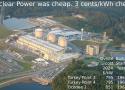
Figure 1. The 2.5 gigawatt Oconee plant in South Carolina. These three reactors were built for just over 350 million dollars between 1967 and 1974. That’s $1141 per kilowatt in 2024 dollars. They took about 6 years to build. Oconee can produce reliable, on-demand, zero pollution, very low CO2 electricity at less than 3 cents/kWh in today’s money. Oconee’s average capacity factor over the last 5 years was 98.2%. All three of these reactors have been licensed into the 2050’s, a gift from the Greatest Generation. Oconee and its cooling pond Lake Keowee have turned a depressed part of western South Carolina into a second home and tourist magnet.
Nuclear power in the West is a disastrously expensive mess. Table 1 shows where we are. Current builds have capital costs that are more than ten times higher than Oconee and her sisters. Only the wealthiest nations can afford these kind of costs, and then only sporadically. The construction times are such that there is no way nuclear can put a dent in global warming, or anything else. And it keeps getting worse. If this is the way things must be, nuclear power is a dead end, and rightly so. //
Yet in 2015, the German utility RWE commissioned their Eemshaven plant in the northeast corner of Holland at a cost of 2.2 billion euros. This is a little under $1500/kW for a 2 by 800 MW plant, or just under $2000/kW in 2024 dollars. This is for the latest and greatest ultra-super-critical plant meeting stringent EU pollution limits, sited in one of the most expensive places to build on the planet. The rule of thumb is $500/kW for the turbine hall and switchgear. The rest is fuel handling, the boiler, and pollution control. //
Figure 4. Fuel for 1 GW plant for one day. The coal plant’s fuel requires a 70 car train. The nuclear plant’s fuel fits in a two gallon jug. Newcastle 6700 is a good coal. Most coal’s are worse. //
A 1 GW nuclear, Figure 5, plant will burn about 82 kg’s of fuel per day, producing the same amount of solid waste. That’s about 100,000 times less than a coal plant. The coal yard and the coal receiving terminal disappear, as do the dryers and pulverizers. The nuke’s Fission Island volume will be smaller than the coal plant’s boiler. The turbine hall will be slightly larger. There will no stack gas handling equipment, no massive Forced Draft and Induced Draft fans, no SCR, no baghouses, no scrubbers, no massive stack. The ash landfill and slurry pond will be replaced by less than an acre of 5.9m(19 ft) high by 3.5m(11 ft) diameter casks. The nuclear plant should be cheaper to build with far cheaper fuel costs. //
Figure 15. Coal should be easy to beat
The reason why it is not is a tragically misdirected, autocratic regulatory system. We give an omnipotent regulator final approval of any nuclear power plant, and judge him on his ability to prevent a release of radiation. He gets no credit for the cheap, pollution-free, CO2-free, on-demand, power generated by a successful plant, nor the avoided mortality and morbidity that would have resulted if the plant had not been built. But he owns any problems. The regulator responds accordingly; and, since he has the final say, it’s his incentives, not society’s, that determines what happens. NRC Chairman Hendrie put it succinctly “The NRC’s responsibility is [nuclear] safety without regard to economic and social costs.” [Joseph Hendrie, NRC Chairman, 1979] The NRC’s definition of nuclear safety is preventing a release.
Figure 16. Hinkley Point tombstone.
No. Human welfare is our overriding priority.
This auto-genocidal myopia produces technical stagnation, a demoralized workforce, lack of competition, and shoddy quality. The end result is nuclear power that costs five or more times what it should-cost and build times that are three or more times longer than they need be. This in turn means nuclear is replaced by far more harmful technologies. It means nuclear can never be cheaper than the competition, which means humanity is far poorer than it could be. The greatest health hazard of all is poverty.

