I've always been a scaredy-cat. Horror movies were my kryptonite, the kind of films that left me sleeping with the lights on and checking under beds like a paranoid child. So this newfound ability to chuckle at cinematic terror felt like discovering I could suddenly speak a foreign language.
As I reflected on this mysterious transformation, three influences kept surfacing in my memory, all carrying the same powerful message: fear loses its grip when you laugh at it. //
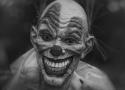
The first was Stephen King's IT, specifically the scene where the Losers Club finally confronts Pennywise. These kids, terrorized by an ancient cosmic horror, make a crucial discovery: the creature that feeds on fear becomes pathetically small when mocked. They literally bully the bully, turning their terror into ridicule. "You're just a clown!" they shout, and suddenly this omnipotent force becomes just another playground antagonist.
The second was from Harry Potter and the Prisoner of Azkaban. Professor Lupin teaches his students to defeat boggarts, creatures that manifest as your worst fear, with the Riddikulus spell. The magic isn't in complex incantations; it's in forcing yourself to imagine your fear in something ridiculous. Snape in your grandmother's dress. A spider wearing roller skates. Fear transformed into comedy. //
All three sources delivered the same revolutionary idea: laughter is fear's kryptonite. //
This shift represents something profound about how we consume media. Stories don't just entertain us; they literally rewire our neural pathways, teaching us new ways to interpret and respond to the world. Every hero's journey we follow, every coping mechanism we witness, becomes part of our own psychological toolkit.

