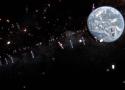
Just 10 years ago, a mere thousand or so operational satellites may have orbited our planet, but there will be tens or even hundreds of thousands a decade from now.
Experts have been sounding alarm bells for years that Earth orbit is getting a bit too crowded. So how many satellites can we actually launch to space before it gets to be too much?
Jonathan McDowell is an astrophysicist and astronomer at the Harvard-Smithsonian Center for Astrophysics who studies super-energetic phenomena in the universe such as jet-emitting black holes in galactic centers. In recent years, however, McDowell has gained prominence for his work in a completely different field of space research. In his monthly digital circular called Jonathan's Space Report, McDowell tracks the growing number of satellite launches and the ballooning number of objects in Earth orbit.
The project started with an ambition to "provide a pedantic historical record of the space age," but has, in a way, become a chronicle of the environmental destruction of the near Earth environment. In his frequent media appearances, McDowell has been vocal about his views on the future of the increasingly overcrowded near-Earth space.
"It's going to be like an interstate highway, at rush hour in a snowstorm with everyone driving much too fast," he told Space.com when asked what the situation in orbit will be like if existing plans for satellite megaconstellations such as SpaceX's Starlink, OneWeb and Amazon Kuiper come to fruition. "Except that there are multiple interstate highways crossing each other with no stoplights." //
"There's good evidence that the number of minor collisions is already increasing significantly," McDowell said. "We're seeing debris from objects that shouldn't really be creating debris. They probably have been hit by something small, even if they carry on working afterwards."
While the larger debris fragments over 4 inches in size are regularly tracked, trajectories of the smaller pieces are mostly unknown, and the collisions they can cause come entirely without warning.
Debris experts, however, are most concerned about encounters between two large defunct bodies — dead satellites or used rocket stages. One such close approach, between a decades-old Russian rocket upper stage and a long-defunct Russian satellite, took place on Jan. 27. With neither object being able to maneuver, space traffic guards could only look on with their fingers crossed, hoping the two would miss each other. On this occasion, they did —by a mere 20 feet (6 meters). The incident, described as a close call "worst-case scenario," could have spawned thousands of dangerous debris fragments that would have stayed in orbit for centuries, threatening everything in their path. //
McDowell says that humankind is likely going to discover the natural capacity of near-Earth space "the hard way." Despite the pledges of megaconstellation operators, the astrophysicist doubts that things will remain manageable in the years ahead.
"Five or 10 years from now, we'll have somewhere between 20,000 and 100,000 satellites, and I am very skeptical that at the upper number of 100,000 things can be operated safely," McDowell sai

