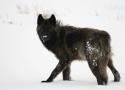
By the 1990s, federal thinking had changed. That's because without wolves atop the food chain, park wildlife drifted out of balance.
Coyotes were all over the place, killing everything in sight, even if it wasn’t diseased and slow. They sharply reduced the beaver population, whose dams made the ponds that caused delicious vegetation and aspen to flourish, which sheltered and fed abundant wildlife and held stream banks in place, especially during spring floods.
Without the threat of wolves culling their weak members, elk had taken over some valleys, consuming trees and plants that other species needed. //
For acclimation, the Canadian creatures were kept first in a large fenced area with minimal human interaction, though some mornings the four-legged prisoners found road-kill strewn around.
After a few months, the team of biologists and naturalists left the gates open.
Strangely, nothing happened for days.
Then, the humans grasped the wolves’ message: The wily animals didn’t trust human gates. So, the men cut a hole in the fence. And just like that, the wolves were sprinting into their new lives in a new territory. //
Ten years after No. 7 and friends arrived from Canada, the park had nearly 150 wolves. They’d become top of the food chain. The coyote population dwindled, as did other sick or weak wildlife. Elk changed their grazing locations and let lowlands recover. Sometimes, lucky tourists would create minor traffic jams as they stopped to watch the wolves at a distance, lounging in the sun or loping into the shade.

