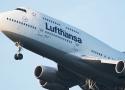
Boeing aircraft, including the 747, 757, 767, and 777, all take on a sleeker, forward-stretching and beak-like shape at the front, while the Airbus planes, such as the A320, A330, A340, A350, and A380 families, have a rounder front profile with a smooth curve from top to bottom. This difference isn't just cosmetic or a preferred choice in design — it's the product of decades of engineering philosophy and aerodynamics history.
Boeing, since 1916, has continued to follow its engineering legacy of pointed noses borrowed from the earliest B17 and 747 aircraft. This was during a time when wind tunnel experimentation was big among the aircraft engineers who believed that a tapered, pointier nose helps reduce drag and cut through wind faster. This design had also become Boeing's signature look and straying away from it would've meant compromising the brand's identity.
Airbus, on the other hand, was born much later in the 1970s, in an era where aerodynamics history had evolved and computer modeling introduced a new idea that at subsonic speeds below Mach 1, a smaller, rounder nose shape actually helps reduce drag and smooth airflow. As a result of this new understanding, Boeing began embracing the compact, dolphin style that now defines its fleet with the arrival of the 787. //
At subsonic speeds, the shape of the aircraft matters less than it does at supersonic or transonic speeds, where a needle-like nose is needed to cut through pressure fronts to avoid the harsh drag that builds at higher Mach levels. Thus, computational modeling prescribed a shorter, rounder shape for lesser skin friction and to minimize the total wetted surface area to facilitate the movement of air particles around it. This is why Airbus has kept its round, bubble shape that is refined for laminar flow, and Boeing is following suit.

