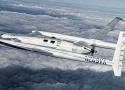
On December 14, 1986, an improbable chapter in aeronautical engineering reached its defining test when the Rutan Model 76 Voyager began its takeoff roll down the runway at Edwards Air Force Base. Conceived by aerospace visionary Burt Rutan and brought to life in Hangar 77 at the Mojave Airport, Voyager was engineered to achieve what had long eluded aviation: flying nonstop and unrefueled around the planet. Burt realized that utilizing advanced carbon fiber, aramid composites, and lightweight paper honeycomb could yield an airframe weighing under ten percent of its total takeoff mass, allowing the remainder to consist almost entirely of aviation fuel. Empty, the aircraft weighed just 939 pounds; laden with 1,200 gallons of fuel distributed across seventeen internal tanks, its weight ballooned to 9,694 pounds.
Piloted by decorated veteran Dick Rutan and record-setting aviator Jeana Yeager, the mission faced imminent disaster before leaving California soil. As the aircraft gathered speed, the heavily burdened, flexible wings bowed downward, violently scraping the runway surface and grinding away the wingtips. Despite severe structural abrasion, Dick nursed the craft into the air past one hundred knots. In the chase aircraft, Burt Rutan and Mike Melvill watched both damaged winglets shear off over the Pacific Ocean, yet the crew elected to press forward. What ensued was a punishing nine-day test of human stamina and mechanical endurance. Dick and Jeana were confined to a cockpit measuring just forty inches wide and thirty-three inches high, subjected to continuous mechanical roar after noise-canceling headsets failed.

