With the clearance, Cuprina appears to be the only company to have FDA clearance to sell two species of fly larvae—and it’s abuzz with the potential to dominate the global maggot market.
The new species is Lucilia cuprina, or Australian sheep blowfly. It’s a close relative of Lucilia sericata, or the common green bottle fly, which is the fly species most often used for wound therapy, often called biosurgery or maggot debridement therapy (MDT). L. sericata is the only other fly with FDA clearance, which the agency first granted in 2004 to Ronald Sherman, who is now Cuprina’s Medical and Scientific Director. //
The two Lucilia species used in MDT are not considered parasitic. They mainly feast on carrion—though L. cuprina can cause a parasitic infestation in sheep called flystrike. In well-controlled MDT use, they feast only on dead and decaying tissue in wounds.
Perhaps the biggest reason MDT hasn’t taken off is that it’s not backed by solid evidence. While small, low-quality studies have indicated that maggot therapy is safe and effective at wound debridement, robust trials and evidence are lacking. As such, the treatment remains niche and is sometimes seen as a last resort for patients who refuse or are poor candidates for surgical or other standard debridement methods.
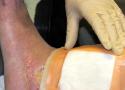
The hypothesis behind MDT is appealing if the maggots aren’t. To treat chronic, unhealing wounds, such as diabetic ulcers in the feet and legs, sterilized maggots are placed in the wound and secrete enzymes to liquify necrotic tissue. They then wiggle around to consume the slurry from all the nooks and crannies of a wound, which may be less painful and more efficient than surgical methods that try to slice out necrotic tissue. The maggots are thought to secrete various antibacterial compounds to ward off pathogenic bacteria and block biofilms from forming, overall preventing secondary infection. Finally, the activity of the maggots may also stimulate tissue regrowth. //
While MDT is intended to be a well-controlled treatment with larvae closely monitored and carefully removed at timed intervals, accidental myiasis carries the risk of having the maggots run amok and becoming difficult to extract. When this happens, doctors in California provide a simple solution: using strips of uncooked bacon to entice the maggots out.
This strategy worked for a woman with a poorly managed wound around her ear. After bacon strips were wrapped around her ear for 5 to 10 minutes, the maggots clung to the bacon and could be removed. The doctors note that they aren’t sure why it works—the bacon may block air, forcing the maggots to surface; the fats from the meat may increase their mobility; or the maggots just like bacon.

