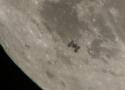
NASA shall evaluate the “viability of transferring the ISS to a safe orbital harbor” after retirement. //
The most recent NASA authorization act, passed in 2022, extended the US government’s support for the ISS program until 2030. The amendment tacked onto this year’s bill would not change the timeline for ending operations on the ISS, but it asks NASA to reconsider its decision about what to do with the complex after retirement.
The amendment would direct NASA to “carry out an engineering analysis to evaluate the technical, operational, and logistical viability of transferring the ISS to a safe orbital harbor and storing the ISS in such harbor after the end of the operational low-Earth orbit lifetime of the ISS to preserve the ISS for potential reuse and satisfy the objectives of NASA.” //
In 2024, NASA awarded SpaceX a nearly $1 billion contract to develop a souped-up version of its Dragon spacecraft, which would be equipped with additional thrusters and propellant tanks to provide the impulse required to steer the space station toward a targeted reentry. The deorbit maneuvers will slow the station’s velocity enough for Earth’s gravity to pull it back into the atmosphere. //
Artist’s illustration of SpaceX’s deorbit vehicle, based on the design of the company’s Dragon spacecraft. The modified spacecraft will have 46 Draco thrusters—30 for the deorbit maneuvers and 16 for attitude control. Credit: SpaceX //
The deorbit vehicle needs to slow the station’s speed by about 127 mph (57 meters per second), a tiny fraction of the spacecraft’s orbital velocity of more than 17,000 mph (7.7 kilometers per second). But the station mass is around 450 tons (400 metric tons), equivalent to two freight train locomotives, and measures about the length of a football field. Changing its speed by just 127 mph will consume about 10 tons (9 metric tons) of propellant, according to a NASA analysis released in 2024.
The analysis document shows that NASA considered alternatives to discarding the space station through reentry. One option NASA studied involved moving the station into a higher orbit. At its current altitude, roughly 260 miles (420 kilometers) above the Earth, the ISS would take one to two years to reenter the atmosphere due to aerodynamic drag if reboosts weren’t performed. NASA does not want the space station to make an uncontrolled reentry because of the risk of fatalities, injuries, and property damage from debris reaching the ground.
Boosting the space station’s orbit to somewhere between 400 and 420 miles (640 to 680 kilometers) would require a little more than twice the propellant (18.9 to 22.3 metric tons) needed for deorbit maneuvers, according to NASA’s analysis. At that altitude, without any additional boosts, NASA says the space station would likely remain in orbit for 100 years before succumbing to atmospheric drag and burning up. Going higher still, the space station could be placed in a 1,200-mile-high (2,000-kilometer) orbit, stable for more than 10,000 years, with about 146 tons (133 metric tons) of propellant.
There are two problems with sending the ISS to higher altitudes. One is that it would require the development of new propulsive and tanker vehicles that do not currently exist, according to NASA. //
BobDole11 Ars Centurion
4y
290
I think everyone would love to see the ISS saved for posterity. I would imagine the grand kids of today's generation, when space flight may perhaps be common, visiting and touring a monument ISS and learning how primitive it was (compared to a +50'ish years future) and the bravery of the souls that ventured forth for the expansion of humanity's knowledge, science, exploration, cooperation, and greatness.
I've had those feelings and thoughts myself when viewing Apollo era hardware long ago. Standing by a Saturn 5 dwarfing my 8yr old stature filled me with inspiration to learn about spaceflight, science, and engineering.
But - the ramifications of a collision (or collisions) with space junk yielding 450 tons of more space junk, yielding further collisions and more and smaller junk, and on and on is just too great. The debris at a higher orbit takes too long to deorbit. The thought of our orbitals becoming impassable for centuries is terrifying. //
Veritas super omens Ars Legatus Legionis
13y
26,080
Subscriptor++
What would it take? Based on the history of the SLS I would predict it would take an order of magnitude more money than whatever NASA says and 20 to 30 years longer. There are many laudable goals for space missions, this isn't one of them!. //
fl4Ksh Ars Tribunus Militum
8y
1,518
Subscriptor
NASA is paying SpaceX $2.9B to develop a Starship lunar lander. That work has been ongoing since late 2021 and is scheduled to launch in late 2028.
That lunar lander design could be a pattern for a Starship LEO space station, which would have 1000 cubic meters of pressurized volume (ISS has 913), would support a crew of 10 (ISS supports 7), would be deployed to LEO in a single Starship launch (ISS required 12 years [1999 to 2011] and 35 launches), and would cost ~$10B (ISS cost $150B to build and deploy to LEO and $3B to $4B per year to operate, in today's money). Like the ISS, that Starship LEO space station would use cargo Dragon and crew Dragon spacecraft for resupply of consumables and for crew rotation.
That Starship LEO space station could be built in 36 months and launched in 2030.

