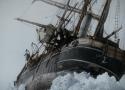
In 1915, intrepid British explorer Sir Ernest Shackleton and his crew were stranded for months in the Antarctic after their ship, Endurance, was trapped by pack ice, eventually sinking into the freezing depths of the Weddell Sea. Miraculously, the entire crew survived. The prevailing popular narrative surrounding the famous voyage features two key assumptions: that Endurance was the strongest polar ship of its time, and that the ship ultimately sank after ice tore away the rudder.
However, a fresh analysis reveals that Endurance would have sunk even with an intact rudder; it was crushed by the cumulative compressive forces of the Antarctic ice with no single cause for the sinking. Furthermore, the ship wasn't designed to withstand those forces, and Shackleton was likely well aware of that fact, according to a new paper published in the journal Polar Record. Yet he chose to embark on the risky voyage anyway. //
The same shipyard that modified Deutschland had also just signed a contract to build Endurance (then called Polaris). So both Shackleton and the shipbuilders knew how destructive compressive ice could be and how to bolster a ship against it. Yet Endurance was not outfitted with diagonal beams to strengthen its hull. And knowing this, Shackleton bought Endurance anyway for his 1914–1915 voyage. In a 1914 letter to his wife, he even compared the strength of its construction unfavorably with that of the Nimrod, the ship he used for his 1907–1909 expedition. So Shackleton had to know he was taking a big risk.

