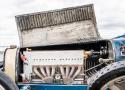
The story goes that, when E.L. Cord purchased a controlling stake in the Duesenberg motor company in 1926, he instructed the Duesenberg brothers to create the finest automobile they knew how to. As a result, the brothers developed the Duesenberg Model J, and while it was impressive in many ways, it was the straight-eight under the hood that stole column inches in the day.
From the 'eight' came 265 horsepower at 4,200 rpm, effectively doubling the grunt on offer from contemporary Cadillac or Packard models, and therefore more than delivering on the brief set by Cord just two years prior. It checked in at 1,150 pounds, and at the time, the Model J's crankshaft retailed for $605 in the parts catalog — more than what a brand-new Model A would set you back. This was anything but a car for the people, and more a statement of sheer excess, with the 419.7ci straight-eight taking center stage.
Very few revisions would be employed over the years, although an 'SJ' variation of the engine did arrive some years later, sporting a supercharger. This addition saw output swell from 265 to 320 horses, and this particular rendition of the Duesenberg would remain America's most powerful road car until the 1950s. It demonstrated just how far ahead of the game the now-defunct Duesenberg automaker was in the late 1920s and early 1930s.

