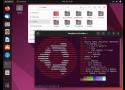
All the mainstream distros (Ubuntu and Mint, openSUSE and Gecko Linux, Fedora, Debian) come with largely the same choice of desktops, and they're all the same. //
I am also not saying that any of these environments are bad. I have my own preferences, but I completely respect that other people have their own. That's fine too.
That is not the purpose of this piece.
What it is asking is: why are they all the same?
So many different implementations of the "traditional" (since 1995) taskbar-and-launch-menu are not different desktops.
Yes, there are differences, but they are trivial and cosmetic. //
The hidden price of duplicated effort
A very important aspect of this is accessibility. Not only for blind users, but they make a good example. GNOME 2 was reasonably good for people without eyesight, but it's gone, and none of its inheritors come close to matching it.
An excellent and very simple test of accessibility is to use a desktop PC and just unplug the mouse. Windows remains highly usable with only a keyboard. As standard, without enabling any special accessibility aids, windows can be opened, moved, resized, switched and closed, entirely with the keyboard. //
The accessibility features and keyboard controls of macOS are not available at all until enabled, whereas in Windows, they are part of the standard UI, there for everyone to use. //
There are other designs out there. There are more desktops than Windows and macOS, and all offer their own unique benefits. Reimplementing the same old desktop model over and over again doesn't help anyone: it just wastes a huge amount of talent and effort. ® //
Tuesday 17th May 2022 08:55 GMT
DrXymSilver badge
The curse of overchoice
Overchoice is actually a term for when a consumer is given so many options, often varying in ways which are meaningless or confusing that they end up making no choice at all.
Linux has always had that issue and it is illustrated in the article in all the desktops that exist or existed. I expect most prospective Linux users just want to install the thing and use it for something. They really don't care what desktop is powering their experience providing it is easy to use, discoverable, familiar, doesn't throw any nasty surprises at them and lets them get on and do stuff.

