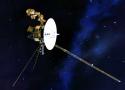
Voyager 1 and Voyager 2 were launched in 1977 and are two of a handful of spacecraft that have entered interstellar space. Two others (Pioneer 10 and Pioneer 11) were launched several years earlier are now derelict and out of communication with the Earth, while New Horizons is much newer, having been launched in 2006.
The Voyager series have onboard computers that are beyond ancient by modern standards. There are a set of interconnected systems, which combined – combined! – have 32KB of memory. From this, they power an array of scientific instruments and communicate with Earth. They are custom hardware, not off-the-shelf electronics, and hold the world records for the oldest continuously-running computers, having been powered-on nonstop since 1977. The CPUs operate at about 250Khz, which is four times slower than a Commodore 64.
There isn’t really an operating system per se, but rather a set of different integrated circuits to do specific things. The design is more like a constellation of Arduino boards than a Raspberry Pi.
One interesting thing is that there’s no encryption or authentication per se.


Cthel Ars Praefectus
6y
11,052
Subscriptor
odikweos said:
Wow. Not even one commenter mentioned the possibility of Chinese competition.
The real story here is exactly when cheap Chinese competition completely erodes the global demand for American launch. It's happened in industry after industry, and the state-owned "company" that handles the matter for PRC just succeeded at its first retrieval last month.
And no one apparently even has this on their radar.
That's because the US outlawed launching anything containing a single US-made component (including software) on a Chinese launch vehicle.
https://spacenews.com/u-s-itar-satellite-export-regimes-effects-still-strong-in-europe/
Massive fines tend to make the business model for launching on a Chinese launch vehicle unviable. //
Mdoug1974 Smack-Fu Master, in training
1y
18
The one and only reason SpaceX holds a monopoly as Gwynne Shotwell has stated many manby times is that all the other launch service providers have failed to provide any competition.
SpaceX cannot be blamed for its competitors failures to bring rockets to market in sufficient numbers to make a challenge.
Shotwell has in so many interviews stated that SpaceX welcoms competition because it will force them to work harder, better and smarter.
Nobody has been even able to start being competion yet. and by the time they do starship will be flying, and maybe Falcon 9 will be slowing down.
SpaceX have to fly F9 until the ISS is shutdown as they are contracted to do so, and starship willnever be cleared to ISS unless somebody(Boeing) re-calculates all the stress and mechanical loading of attaching a fully finished Starship to the ISS.

Even two-tenths of a watt matters when your spacecraft launched in 1977
Adding a few extra years to Voyager 2's prodigiously long life was the result of an effort that began more than a year ago, as engineers and managers pondered how to eke out a few more watts from the spacecraft's dwindling power supply.
"We came up with the 'Big Bang' idea probably more than a year ago now," recalls Suzanne Dodd, Project Manager for the Voyager project.
"We were looking for ways to extend the lifetime of the mission, which means really extending how long we can operate the instruments." //
"The idea behind the Big Bang… If we were to switch systems and do a lot of power switching all at once within the bus of the spacecraft, we would gain a lot of power and it would still keep the electronics warm, as opposed to when we do it serially (in a series), it doesn't provide enough of the heat input to keep the propellant lines warm."
The approach required careful power and thermal modeling. The draw of each component had been documented, but the figures were nearly 50 years old and might contain some hidden margins. "We're talking about a half a watt, or two tenths of a watt, and that makes all the difference on the spacecraft," Dodd explains.

Wickwick Ars Legatus Legionis
16y
40,943
Let's for the moment take the proposed cellular service at face value and try to apply a little analysis to see what might work and how it might happen.
As I see it, SpaceX doesn't have much in the way of ground access but has incredibly flexible backhaul. Once there are lots of direct-to-cell (D2C) satellites flying, any phone in any uncrowded region should be able to connect directly to the network. That's pretty cool in that one can contemplate a global cellular network. But it also only addresses low-density areas.
In high-density areas, Starlink's phased-array beam-forming technology may not be able to connect to enough simultaneous users to be an actual cellular provider. Instead they're proposing a smaller number of cells will connect and will aggregate communications from multiple users. That's fine. One still might run into total bandwidth on the backhaul, but the problem of too many simultaneous users is solved.
What I find interesting is the idea that one might have a lot of these cells. If there are 100X the number of satellite aggregate upload points than a traditional carrier has cellular antennas, then each cell only needs to connect to 1% of the normal traffic for an antenna. That means, these cells only need 1% of the bandwidth for cell-to-user communications, right? So SpaceX's lack of spectrum isn't as terrible as it might be otherwise.
So is it feasible to put many more Starlink uplinks than there are cellular towers for a traditional carrier? Gemini tells me Verizon has 130,000 physical locations between macrocell and small cell nodes. Starlink currently has 2.7 million subscribers in the US - or about 20X more than Verizon cells. That suggests that SpaceX has already deployed something to the tune of 20% the amount of hardware that would be needed to have 100X the number of cells (a number I randomly selected as well). Obviously, it would have to be all-new hardware, but that scale isn't an impossible number to consider.
The final issue is the actual bandwidth of the backhaul. I'm sure we've all been in situations where our cellular strength is strong but the data crawls. That's the biggest challenge for SpaceX here. In densely populated areas, there's still just a finite amount of bandwidth that can be served by the nearby satellites. The new v3 D2C satellites can apparently manage much more than the existing ones, but I'm not sure that even that will be enough.
Oddly, this might turn out to be the cellular provider whose best coverage and bandwidth is found away from city centers.
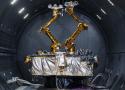
A spacecraft fitted with two flexible robotic arms is on the way to geosynchronous orbit after launching earlier this week on a SpaceX Falcon 9 rocket, kicking off a planned decade-long mission to open new frontiers in satellite servicing.
The Mission Robotic Vehicle, owned and built by Northrop Grumman, rocketed into orbit from Cape Canaveral Space Force Station in Florida on Tuesday. Three small propulsion pods, each functioning as standalone spacecraft, accompanied the MRV aboard the Falcon 9 rocket.
The Falcon 9 deployed all four payloads within about an hour of liftoff. It will take about a year for the satellites to maneuver from their initial elliptical drop-off orbit into a circular orbit more than 22,000 miles (nearly 36,000 kilometers) over the equator. At this altitude, the MRV and the three Mission Extension Pods (MEPs) will travel in lockstep with Earth’s rotation, //
Northrop Grumman’s first three Mission Extension Pods launched on the same rocket as the MRV, but they are flying separately up to geosynchronous orbit using electric propulsion. The pods, each about the size of a dishwasher unit, will loiter there for retrieval by the MRV’s robotic arms. After picking up the first pod, the servicing spacecraft will rendezvous with its first client satellite, lining up precisely with the client to install the pod into its engine compartment. The MEP will latch onto the satellite and take over propulsion for up to eight years, acting as a jetpack, or a smaller version of the MEV, to move the client around geosynchronous orbit as needed. //
This isn’t refueling, but the MRV serves the same end. The Space Force has a separate contract with a company named Astroscale to demonstrate refueling in geosynchronous orbit next year, something no US company has done before. The MRV can also do more than life extension. It can inspect, service, upgrade, or repair satellites that were never designed for it. //
“RSGS has full seven-degree-of-freedom robotic arms, heavily instrumented. The ends of the arms can attach multiple tools as hands, and they also have a good deal of autonomous control,” Shoemaker said. “It’s general-purpose, high-dexterity robotics.”
Ground teams could build and launch more jetpacks to meet up with the MRV in geosynchronous orbit after the spacecraft uses the three pods already in space. Future launches could carry new tools, such as a knife, a cutter, or a robotic screwdriver for more invasive servicing or repairs. And the MRV itself is designed to be refueled in orbit. Northrop Grumman doesn’t plan to immediately build a second MRV, but it will continue upgrading and augmenting the vehicle it just launched. //
These companies and more are taking distinct paths toward satellite servicing, orbital refueling, in-space depots, and what the military likes to call dynamic space operations. But the trend is unmistakable: to fully utilize the domain of space, the throwaway mentality must go.
The completion of the acquisition expands Iridium’s role in the aviation ecosystem by combining Aireon’s space-based air traffic surveillance and aviation intelligence services with Iridium’s global satellite communications network and resilient PNT capabilities.

The Making of the Voyager Golden Record

The following is a listing of sounds electronically placed onboard the Voyager 1 and 2 spacecraft.

The following is a partial listing of pictures electronically placed on the golden records which are carried onboard the Voyager 1 and 2 spacecraft.
The Earth may not be that massive, but it still distorts space-time. //
Albert Einstein’s general theory of relativity predicts that a rotating mass like the Earth pulls the fabric of space and time around with it in a perpetual swirl. This phenomenon is known as frame dragging or the Lense-Thirring effect, after the two physicists who modeled it back in 1918. Frame dragging becomes more significant with larger masses and faster rotation, so we’ve mainly observed it around huge black holes.
Measuring how much the Earth twists spacetime as it rotates has been much more challenging because our pale blue dot of a planet is millions of times lighter than a typical black hole and rotates rather slowly.
But now, a team of astronomers led by Ignazio Ciufolini, a physicist at the Wuhan Institute of Physics and Mathematics in China, reports the most accurate measurement of the terrestrial Lense-Thirring effect to date. Their work brings our uncertainty down from a few percentage points to just 0.2 percent. And they did it with a satellite that looks like a cross between a golf ball and a disco globe. //
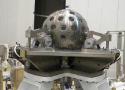
The disco globe satellite that Ciufolini and his colleagues use in their experiment is called LARES-2 (Laser Relativity Satellite 2) and has been developed by the Italian Space Agency. It’s a solid sphere of Inconel 718, a dense nickel-chromium alloy, covered with 303 corner-cube retroreflectors and measuring a bit over 40 centimeters across. It has no thrusters, no solar panels, and no electronics of any kind. It weighs 294.8 kilos. That combination of small size and large mass gives it the lowest area-to-mass ratio of any satellite in medium-Earth orbit.
This was exactly what the scientists needed, since it helped them minimize the impact of other forces.
“The idea is that we want to measure gravitation,” Ciufolini said. “We have non-gravitational effects like photons impinging on the satellite and pushing it. So, the mass must be very large and the cross-section of the satellite very small, so the acceleration induced by photons is very, very small.” In theoretical physics, satellites of this kind are called test particles, meaning an object whose motion is governed almost entirely by the gravitational field. LARES-2 was placed in orbit at an altitude of roughly 12,265 kilometers by a Vega-C rocket in July 2022. //
The measurement confirmed general relativity once more, but Ciufolini thinks its true value lies in what it rules out. General relativity is incompatible with quantum mechanics, despite our best efforts to reconcile the two, and does not explain dark energy. The Chern-Simons theory, one of the leading alternatives that emerged from quantum gravity frameworks, modifies Einstein’s equations and introduces mathematical corrections expected to make them work at ultra-small scales where quantum mechanics and gravity must coexist.
While it does not fully reconcile Einstein’s physics with quantum mechanics and does not offer a universally accepted solution to the dark energy issue, many physicists think Chern-Simons brings us one step closer to the complete Theory of Everything. The problem, though, is that it predicts a different magnitude for frame dragging. //
“These laser-ranged satellites have a peculiar characteristic: They last for hundreds of years,” Ciufolini said. “The more you wait, the more data you accumulate, and the better the results of frame dragging measurements will be. So, we can wait maybe 100 years, and they’ll become even more useful for theoretical physics.”
High above the remote Pacific Ocean, about halfway between Hawaii and the northernmost part of Australia, an air-launched rocket fired into space on Independence Day weekend to kick off a weekslong pursuit of a NASA astronomy satellite perilously close to falling out of orbit.
The endeavor to rescue NASA’s Swift satellite is the first mission of its kind. NASA put out a call for commercial companies less than a year ago to propose how they could rapidly build and launch a small satellite to latch onto the Swift spacecraft and boost its altitude so that it doesn’t come down in a few months.
Katalyst Space Technologies responded with the best offer. NASA awarded the company a contract last September to build and launch a mission to rescue Swift. A little more than nine months later, Katalyst’s nearly half-ton Link satellite is safely in orbit. For anyone who follows the space industry, building, testing, and launching a functioning first-of-its-kind satellite of that size in less than a year is a remarkable achievement; it would usually take several years.

Rocket Lab announced on Monday that it is acquiring the satellite communications company Iridium. The deal, made for cash and shares of Rocket Lab stock, values Iridium at about $8 billion.
The deal pairs the launch company, founded and led by Peter Beck, with a decades-old profitable satellite company whose network of 80 satellites in low-Earth orbit provides telecommunications services.
“We believe this will be one of the most transformative deals in the space industry,” Beck said in a short promotional video announcing the deal. “It’s the ultimate combination for growth.” //
Beck said the deal provides a shortcut for Rocket Lab to enter the “space applications” business—that is, providing space-based services rather than launching the satellites that offer voice, Internet, and other communication services to customers on Earth. This is where the majority of revenue in the space industry lies.
“This is a deal where one plus one equals three,” he said.

So in October 2022, he co-founded a company called OurSky to leverage his software skills. He hired a computer scientist from the scooter company Bird, Connor Poole, to lead software engineering. They set about writing code to essentially mesh the observations of dozens of telescopes to track objects as they moved around the planet. The goal was to provide satellite operators the location of their spacecraft with sub-arcsecond precision within 90 seconds of a request.
This worked well enough, but Roelker and Poole soon realized that to really do this right, they needed more than good software; they had to build hardware as well. Neither had much experience with telescopes, and by then, most telescope manufacturing had moved offshore, primarily to China, including big players like Celestron. //
Roelker is happy to leave it to other companies to launch into space. He’s seen SpaceX from the inside and knows he could never compete with that. Likewise, there are many companies building spacecraft and satellite buses.
What those vehicles all need is the command of light. Rockets, and particularly spacecraft, need it to navigate. They need to see objects to avoid collisions. And somehow, with all of the data they are collecting and processing, they need to get it back to Earth. Because, otherwise, what’s the point?
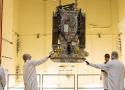
WALLOPS ISLAND, Virginia—Just 10 months ago, NASA asked three companies if they could do something nobody had done before. Could they build and launch a satellite to save a $500 million astronomy mission at risk of crashing back to Earth? What’s more, could they do it in less than a year on a tight budget?
Katalyst Space Technologies, a startup founded in 2020, presented the most compelling solution. “They came back with a response that was technically and programmatically plausible, and then we were like, ‘Yeah, let’s do it,’” said Shawn Domagal-Goldman, director of NASA’s astrophysics division.
That was in August of last year. In September, NASA awarded Katalyst a $30 million contract to build, test, and launch a small satellite to chase down Swift and latch onto it with three robotic arms. Then, Katalyst’s Link servicing spacecraft will boost Swift’s orbit back to a safe operating altitude, allowing it to resume scientific observations. Easier said than done. //
“From a programmatics standpoint, I consider this a success already, just from the fact that we’re even going to try this,” Domagal-Goldman said.

Russian satellites have been identified as the cause of mysterious, seconds-long bursts of GPS interference across Europe—a rare example of human-made GPS interference coming from space. But uncertainty still hangs over whether such interference is intentional and if it could be more powerfully weaponized as GPS jamming with continental reach in the future. //
Such interference patterns happened mostly on Tuesdays, Wednesdays, and Thursdays during business hours in Europe, Humphreys told the YouTube channel Veritasium. Because such “continental-scale” interference was simultaneously affecting GPS receivers across Europe and beyond, Humphreys and his colleagues calculated that the source had to be at least 1,200 kilometers above the Earth. //
But Russia has been demonstrating a growing number of systems that can potentially neutralize space-based assets belonging to the United States and Europe. In April 2026, the leader of US Space Command warned that Russia had operationalized anti-satellite weapons capable of targeting US government satellites. In May 2026, open source orbital tracking data revealed that at least four Russian military satellites performed orbital maneuvers to match the orbit of a Finnish-American radar surveillance satellite.

For most of its time at Mars, the MAVEN spacecraft provided a relay for scientific data uplinked from NASA’s rovers and landers on the Martian surface. The relay allowed NASA to return significantly more data and imagery from rovers like Perseverance and Curiosity than would be possible through a direct-to-Earth radio connection.
With MAVEN out of the picture, NASA has four other orbiters it can use to provide this critical radio link. But officials aren’t sure how much longer they will last. Three of the four remaining relay orbiters are older than MAVEN, which played an outsized role in the relay network thanks to its higher orbit.
“Over the life of the mission, MAVEN supported more than 8 percent of all of our relay sessions planned by our rovers and landers, but it accounted for nearly 18 percent of all of the data returned, illustrating its usefulness when returning large data volumes,” said Tiffany Morgan, director of NASA’s Mars Exploration Program.
The network still has plenty of capacity to support the Perseverance and Curiosity rovers, with some minor caveats.
“We do have remaining assets, and those assets have adjusted the amount of data that they return, and the rovers have also adjusted their planning for how they connect to those assets,” Morgan said. “There is a slight delay on occasion, because we don’t have as many assets in view, to getting our science data back, and MAVEN was critical in returning science data versus operational data. But the Mars Relay Network is resilient enough at this point in time to accommodate, for the most part, the loss of MAVEN with the added delay.” //
jimlux Ars Tribunus Militum
12y
1,671
jlredford said:
It's interesting that they're able to use so many different orbiters to do this relay function. Interesting and resilient! It's great that it can handle dropouts like MAVEN. As the system gets upgraded, I hope they keep all this inter-operability to handle the next failure. The Mars Reconnaissance Orbiter is the main link these days, and it's now 20 years old, almost twice the age of MAVEN.
That’s because most of them (at least those launched after 2005) fly the JPL developed Electra software defined radio (they’re manufactured by L3, but the hardware design and the software is JPL). The landers also use Electra radios (or Electra Lite). MER was the first Mars lander to use relay ops with an orbiter to return data, and after a week or two, it had returned more data through the relay link than all previous Mars missions combined. It’s that effective (compared to basic X-band Direct to Earth at 8 kbps)
And as far as interoperability goes, that’s part of the Prox-1 standard from the Consultative Committee on Space Data Standards (ccsds.org) - most people flying a relay payload use it (as will the new Mars Telecom Network, and similar spacecraft planned for the Moon). 400 MHz UHF at Mars for now, but S-band is coming, as is Ka-band.
Jet Propulsion Laboratory and California Institute of Technology
Deep Space Network logo
VIEW DATA PANEL
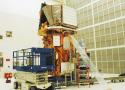
Katalyst Space Technologies must launch the Swift rescue mission by this summer.
This page lists various fan-made tools that can help calculations related to the gameplay of Kerbal Space Program. Unlike addons, they do not directly influence the game, as they are run separately.
Performing a transfer from an orbit of one body directly to an orbit of another one seems like serious business. A few guides published on the forums have a lot of maths and stuff, you may think this is too complicated to figure out.
Well, it is rocket science, but: it's not complicated.