
In theory, a civilian power reactor could be used to provide weapons grade plutonium; but this is such a difficult and expensive route, that with almost no exceptions the current weapons states have elected to use special purpose reactors to do this.
The 1968 Non-Proliferation Treaty (NPT) recognized the problem; but, unlike current anti-proliferation activists, the NPT took a constructive attitude. The deal was simple: in return for full access to the wonders of nuclear power, you will forego making a bomb and allow our inspectors full access to all your nuclear facilities. Unfortunately, the weapons states, led by the USA, have violated the letter and spirit of this treaty over and over, and in process they have gutted the treaty and made it much more difficult for nuclear power to solve the Gordian Knot. We have turned Eisenhower's solemn pledge into a grotesque lie. Maybe we should take a look at the Non-Proliferation Treaty. //
In 1977, the Carter administration threatened to stop fuel shipments to any nation that undertook reprocessing.\cite{cohen-1990}[p 235-236] Hard to imagine a more flagrant violation of the NPT. Nor a more counter productive one. Overnight, countries that thought they had a treaty, which said they could rely on the US to be their nuclear fuel supplier, knew this was not the case. They now had a strong incentive to become self-sufficient.
Any country who is a signatory to the NPT should invoke her inalienable rights. Buy or build enrichment facilities. Recycle fuel if she wants. Just forego a nuclear weapons program and let the IAEA inspect whatever they want. This is not only her inalienable right, but the NPT shows that the USA and all the other signatories recognize that it is her inalienable right.



test configuration
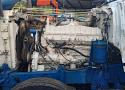
It’s the engine that more than doubled Cummins’ share of the Class 8 market in just eight years’ time. It was extremely durable, powerful, and returned best-in-class fuel economy. It’s called the Cummins 855 Big Cam, and it dominated the heavy-duty diesel segment in the 1970s and 1980s. But, far from perfect, this 14.0L inline-six isn’t without its shortcomings. Many of them have surfaced in recent years due to age, but others have existed since the 855 (Big Cam and Small Cam) was still relatively new. From NVH and father time-induced oil leaks, PT pump failure to liner pitting, and the problematic low-flow cooling system they came with, there were problems and solutions to address. We’ll cover all of them in detail here—and then wrap up each summary with the best solution(s) for this time-tested workhorse.

There’s still a slew of questions about why some people develop alpha-gal syndrome.
In some parts of the US, up to 30 percent of people may carry the antibody behind a red meat allergy spurred by tick bites, far exceeding the estimated number of people who actually have the allergy, according a study published in Morbidity and Mortality Weekly Report.
The findings suggest far more Americans than previously thought may be at risk of the allergy, which can make having a hamburger for dinner a potentially life-threatening choice.
On Thursday mornings, Michael Scurr flips through pages . . . very, very carefully. He volunteers at the United Kingdom’s National Archives. In May, he made a discovery. He found an original copy of the Declaration of Independence!
At the time, Mr. Scurr was sifting through letters. A Royal Navy captain wrote them. Mr. Scurr found a report. It told of Brits capturing an American ship called Dalton. That took place on Christmas Eve in 1776.
Attached to the report? Something labeled as “another paper.” Mr. Scurr gingerly unfolded the document. Then he spotted the word “Declaration” printed across the top. He stopped.
“I thought, oh, right, OK, this is definitely a Declaration of Independence,” he says. “How exciting is this?”
Researchers agree. Before this find, people thought only 10 early copies existed. Now Mr. Scurr has upped that number to 11. The Founders signed the original document on July 4, 1776. This copy was printed days later. The document spread the news. Thirteen American colonies were breaking away from Great Britain.
So, yes, it’s old. But it’s important for another reason too. The ship on which it was captured was sent by the brand-new Continental Congress. John Hancock signed the ship’s orders. (John Hancock also famously signed the Declaration in BIG letters.)
A samurai, several AIs, and one Japanese guy trying to understand America.
NOBUNAGA is a Japanese comedy and storytelling project. It follows a small, confused, dignified samurai who has somehow wandered into modern American life, and is doing his best.
He is not here to judge America. He is here to misunderstand it beautifully //
The stories are written in Japanese by a guy in Japan. He writes them at his desk, mostly at night, mostly while drinking convenience-store coffee that he secretly considers superior to American gas-station coffee, although he would never say so to the samurai's face.
They are then translated into English with the help of a small army of AI tools — for nuance, for rhythm, for the small jokes that do not survive the jump between languages. The English you read here is collaborative: human taste, machine assistance, many drafts, no shortcuts.
Plug-and-Play HD Star Projector
$26.99
Style: Galaxy
Blank ceilings and dark walls can make a room feel ordinary. This star projector instantly fills your space with stunning galaxies, planets, and starfields, creating a magical atmosphere for relaxing, sleeping, or simply escaping into your own universe.
Earth is the only planet we know of with buoyant, silica-rich continents. But, despite decades of research, geologists still don’t agree on how they formed. “The continents started appearing around about four billion years ago—that’s the oldest continental rock we know about,” said Tim Johnson, a geologist at Curtin University in Perth, Australia. “The Earth is four and a half billion years old, so why they started appearing then is unknown, as is the mechanism to make that continental crust.”
Johnson and his colleagues are now arguing that the formation of continents on Earth was caused largely by an intense, sustained barrage of asteroid impacts that kept the early crust hot and thin enough to make buoyant continents possible. In short, the lands we live on are here because of ancient bombardment from space.
High above the remote Pacific Ocean, about halfway between Hawaii and the northernmost part of Australia, an air-launched rocket fired into space on Independence Day weekend to kick off a weekslong pursuit of a NASA astronomy satellite perilously close to falling out of orbit.
The endeavor to rescue NASA’s Swift satellite is the first mission of its kind. NASA put out a call for commercial companies less than a year ago to propose how they could rapidly build and launch a small satellite to latch onto the Swift spacecraft and boost its altitude so that it doesn’t come down in a few months.
Katalyst Space Technologies responded with the best offer. NASA awarded the company a contract last September to build and launch a mission to rescue Swift. A little more than nine months later, Katalyst’s nearly half-ton Link satellite is safely in orbit. For anyone who follows the space industry, building, testing, and launching a functioning first-of-its-kind satellite of that size in less than a year is a remarkable achievement; it would usually take several years.
America's Oldest Streaming Site Playing Old Time Radio Programs 24/7 - 365 Days a Year Since 1983!
Welcome to Yesterday USA, where Old Time Radio Programs rule the day. For 42 years we have been playing classic old time radio shows hosted by volunteers who are not only OTR collectors, but also Huge Old Time Radio Fans!
OTR Gems!
Select your favorite stream to tune in!
- Antioch Broadcast Network
- Conyers Old Time Radio
- Yesterday USA
Nate Bargatze @natebargatze
·
Nobody knows
Jim Geraghty @jimgeraghty
"But a goal will not count if a player is offsides."
"When is a player offsides?"
"Whenever anything exciting happens."
3:04 PM · Jul 5, 2026

U.S. Executive Order 10834 specifies proportions for the flag, as recreated here.
The U.S. flag has a proportion of 1:1.9.
Each stripe is 1/13 the width of the hoist and each star is 4/5 the width of a stripe.
The union is the width of seven stripes and 2/5 the length of the fly. //
Shown here is a timeline of each official iteration (including notable variations).
What better way to celebrate Independence Day than with American stories featuring the good, true, and beautiful — and the occasional epic chase scene?

When MeshCentral's ports are redirected by a home router, reverse proxy or load balance, it can cause problems unless MeshCentral is aware of what external port is being used. In this video, we look at how to "alias" the port and the practical impact of this. More information at: https://meshcentral.com ////
add "?debug=1" on URL to get more detail from MeshCentral

A MeshCentral server can be configured to look like many servers at one with each domain customized with it's own branding, users, device groups and devices. In this video we look at how to setup a second domain and how to access it. More information at: https://meshcentral.com
The hand-written parchment copy of the Declaration of Independence showing historic script lines and signatures.
✦ ✦ ✦
56 SIGNATURES,
ONE REVOLUTION
✦ ✦ ✦
On July 4, 1776, representatives from the 13 colonies gathered in Philadelphia to declare independence from Great Britain. The Continental Congress had voted two days earlier to make the break and to write a Declaration of Independence.
John Hancock signed the Declaration first on that Fourth of July. Many of the others signed over the ensuing days and weeks. Their signatures — 56 names added to the official parchment copy — transformed a revolutionary decision into a public pledge.
These are the stories of the people behind the signatures.
United States
of America
Ceph and ZFS solve different storage problems. Ceph is designed for distributed storage across many servers, while ZFS focuses on maximizing performance, reliability, and simplicity on a single storage system.
Distributed storage introduces operational and performance trade-offs. Ceph provides horizontal scalability and resilience against multiple node failures, but requires additional networking, coordination, and management overhead that can increase latency and complexity.
Many organizations don’t need distributed storage. Modern ZFS systems can deliver exceptional capacity, performance, and availability with significantly lower operational complexity, making them a strong alternative for virtualization, databases, backups, and enterprise storage.
Repaired blocks indicate that ZFS found mismatched checksums and corrected the underlying data. A small number of repaired blocks is normal for large storage pools, and occasional bit rot is expected. A rising number of repaired blocks over multiple scrubs signals a problem. //
- Occasional repaired blocks are normal in large pools but, rising totals across scrubs indicate degrading hardware.
- The READ and WRITE counters indicate device level I/O errors. Persistent values on a single device suggest cable problems, controller instability, or a failing disk.
- The CKSUM column indicates checksum mismatches detected during normal reads.

One of the most effective ways to boost performance is by optimizing PHP settings and PHP-FPM in Plesk. This comprehensive guide provides a step-by-step tutorial to help you fine-tune your server configuration, resulting in faster loading times, improved resource utilization, and a better user experience. Let’s dive in and unlock the full potential of your Plesk server!