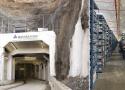
Elon Musk uncovers limestone mine used for storing federal workers' retirement papers
White House correspondent Peter Doocy discusses Elon Musk discovering federal workers' retirement documents being stored in a Pennsylvania limestone mine as questions over efficiency arise.
Elon Musk announced on Tuesday that the Department of Government Efficiency (DOGE) was looking into a limestone mine in Pennsylvania, where the cost-cutting organization says federal employee retirements are processed manually using a system that could take months.
Musk told reporters about the mine on Tuesday during an appearance with President Donald Trump in the Oval Office, as the president prepared to sign an executive order concerning the billionaire’s work leading DOGE.
"And then we're told this is actually, I think, a great anecdote, because we're told the most number of people that could retire possibly in a month is 10,000," Musk said.
"We're like, well, what? Why is that? Well, because all the retirement paperwork is manual on paper," he continued. "It's manually calculated and written down on a piece of paper. Then it goes down to mine and like, what do you mean, a mine?" //
"And then the speed, the limiting factor is the speed at which the mine shaft elevator can move, determines how many people can retire from the federal government," Musk said. "And the elevator breaks down and sometimes, and then you can't, nobody can retire. Doesn't that sound crazy?"


Christy Lucas, FNP and Debbie Turner, DNP are currently taking new patients. You can pre-join now. Their rosters will fill quickly, so do not wait! Join today!
Autonomic Care $199
-add on Primary care for $69
-$99 enrollement fee
Hi, I'm Jamie Zawinski. I'm the proprietor of DNA Lounge, a world famous and award-winning all ages dance club and live music venue in San Francisco, and of DNA Pizza, our attached cafe and pizzeria.
Prior to that, I worked as a programmer. I was one of the founders of Netscape and Mozilla.org, and have been involved in the free software and open source community since the mid-80s. I was the primary developer of Lucid Emacs (now XEmacs), and probably wrote most of your screen savers.
XScreenSaver
a collection of
free screen savers
for X11, Wayland,
macOS, iOS and
Android

Reichinstein also wrote a biography of Einstein, "Albert Einstein sein Lebensbild und seine Weltanschauung" (which roughly translates as Albert Einstein: His Life and Worldview) that came out prior to 1936. Apparently it was written and possibly self-published in 1932, which led to Einstein writing to Reichinstein that
Wenn Sie dieses Manuskript irgendwo und irgendwie veröffentlichen, dann ist es zwischen uns für immer aus.
Google Translate renders this as:
If you publish this manuscript anywhere, in any way, then it's over between us forever.
i.e. strongly asking him not to publish the manuscript. Reichinstein then proceeded to publish the book in Prague in 1934. The relevant letter from Einstein to Reichinstein is dates May 26, 1932 and has been made available by the ETH Zurich Library's "Einstein Online" collection, specifically in the section on The Time in Berlin (1914-1933) along with several other letters to Reichinstein, Hermann Weyl, and others.

I continue to be interested in learning Rust, the programming language that’s gaining ascendancy in the systems programming world. I reviewed The Rust Programming Language which is not a bad book but I didn’t care for it, for reasons I outlined in a previous post.
Since then, I’ve moved on to Rust Exercises, which a very cool course you can take for free. Through 100 exercises, you learn Rust step by step.
I ran into a polyglot the other day who asked me how many languages I knew. I flashed back to a moment circa 1977 when I was a young kid in a summer program to learn about computers. We were sitting at terminals and someone asked a hacker (in the good sense of that word) how many languages he knew.
The hacker was about 19, with long hair in a pony tail, wearing jeans, hiking boots, round-rimmed John Lennon glasses, and a T-shirt with some kind of rock band logo on it. He was the epitome of the cool nerdy hacker, leaning over our shoulders as we typed out BASIC programs and giving us tips, excited to share his craft.
“Well, if you mean human languages, only one fluently,” he said. “But if you mean computer languages, well, let’s see…” He started counting them off on his fingers. The only ones I remember now are BASIC (because I was learning it) and SNOBOL because the name was funny.
So I answered my polyglot acquaintance “Well, if you mean human languages, only one fluently. But if you mean computer languages…”
Then later when I got home, I made a list, and it was surprisingly long.

Struggling to tell the difference between WD’s NAS HDDs? This will help.
The Financial Times has a good article on how AI is changing the capabilities of video surveillance, with information from both Israel/Iran and Russia.
I wrote about this sort of thing a few years ago, how AI enables mass spying in the way that computers and networks enabled mass surveillance. The interesting development in the article is that AI allows people to ask natural language questions about video footage to AIs—and AIs can answer them. //
That lets intelligence officers hunt through massive streams of videos using simple search terms, such as two men handing a bag to each other; a person who has changed their appearance, or has changed clothes multiple times in a day; or a vehicle that has recently been painted over, or has driven past the same spot several times in a short period.
The pizza chain recently tapped NBCUniversal, Instacart and the dentsu-owned media agency Carat for help reaching consumers when they’re low on groceries—and thus more likely to be swayed by a mouth-watering ad. The idea is to reach hungry consumers by “knowing what is in their fridge without being too creepy,” said Carrie Drinkwater, chief investment officer at Carat. //
Rontea • July 1, 2026 9:22 AM
In a world where even the emptiness of your refrigerator becomes a pretext for surveillance, the absurdity is complete. Papa Johns peers into your void, not to offer solace, but to monetize your hunger. The fridge, once a private cathedral of decay and disappointment, now signals the market when your despair has ripened.
We have reached a point where the faint growl of a stomach is data, where the absence of milk is a summons to the algorithm. They do not wait for you to feel desire; they conjure it, weaponize it, and then serve it back to you with garlic sauce. The empty fridge is no longer your own—it belongs to the ad.
To be hungry is to be known. To be known is to be hunted. And still, we will scan the QR code, because our revolt extends only as far as our apathy will allow.
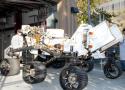
NASA officials said Tuesday that they are seriously considering sending the full-scale engineering model of the Perseverance rover, which is currently housed at the Jet Propulsion Laboratory in California, to the Moon to expedite their efforts to explore the south pole region.
The car-sized rover nicknamed “Promise,” which serves as a testbed for Perseverance and was not otherwise planned for a launch, would land equipped with a multi-mission radioisotope thermoelectric generator (MMRTG) to power it across difficult terrain and through the lunar night. //
NASA has an MMRTG available, with a supply of Plutonium-238 that is just decaying away. It is likely the rover, with a mass of about 1 ton, would need to be delivered by Blue Origin’s Blue Moon lander or SpaceX’s Starship due to its size. //
Over the years, Promise has served as a test bed for problems that Perseverance might encounter on Mars. Commands are often tested on this vehicle in the “Mars yard” at the California laboratory before similar commands are sent to the rover on the surface of Mars. It has also helped ensure Perseverance can safely traverse various areas on Mars.
Perseverance launched to Mars in July 2020, and its predecessor, the similarly sized Curiosity rover, launched to the red planet in November 2011. //
Curiosus Novitius Wise, Aged Ars Veteran
2y
105
semyorka said:
To be clear, there is no pre-existing "Promise" rover. "PROMISE" stands for "Polar Rover for Observation, Mapping, and In-Situ Exploration"
At least it wasn't Prototype Repurposed from Old Mars Inventory for Secondhand Expeditions. //
brokescientist Wise, Aged Ars Veteran
7y
135
I was just at JPL last week and they have also recently dusted off ATHLETE (All-Terrain Hex-Limbed Extra-Terrestrial Explorer). After over a decade in storage they were surprised everything seemed to be operational. Having the test bed is likely important, but actually using hardware and working to deploy long shelved ideas is really cool, and likely much more exciting for the engineers.

The Plustek OpticFilm 8200i SE is the best dedicated film scanner on the market. It features a dedicated infrared scanning channel that allows for the removal of dust and scratches from your scans. The 8200i SE also has a high-resolution sensor that produces superb image quality. And if you need to scan slides or negatives, the 8200i SE comes with an integrated slide holder.
Note: Plustek has recently released a new model with the same model name (Plustek OpticFilm 8200i) that is currently incompatible with VueScan so it’s hard to know whether you have the Plustek 8200i that is compatible with VueScan or the one that isn’t.
When it comes to scanning film and slides, the Nikon CoolScan 5000 is the gold standard. Unfortunately, Nikon no longer makes them, which means your only option is to buy a used scanner.
If you’re looking for the best flatbed photo scanner, the Epson v600 is our top pick. It’s a versatile scanner that can handle both individual photos and photo albums, and it produces high-quality scans. The v600 is also great for scanning delicate photos, as you can place them directly on the flatbed without having to use a sheet feeder. And if you need to scan multiple photos at once, the v600 can do that too.
Share files without the cloud.
Fast, private, offline.
Open source and cross-platform file sharing for everyone.
The bases for declaring the start of a “Golden Era of Nuclear Power” are a set of achievements that only a few could imagine just a year ago. After 50 years without starting any novel reactors in the United States, a handful of exciting new projects have achieved substantial completion. Those projects reached their current state just 14 months after President Trump issued an Executive Order with the audacious goal of achieving criticality for three new reactors by July 4, 2026. The Reactor Pilot Program (RPP) participants were announced just 10 months ago. //
Three new power and heat production reactors from three young ventures – Antares, Aalo and Deployable – have been constructed or installed at the Idaho National Laboratory. Antares’s Mark-0 successfully completed its initial startup, reaching criticality on June 1, becoming the INL’s 53 reactor. Aalo Atomics’s Critical Test Reactor and Deployable Energy’s Unity Nuclear Battery (UNB) are within days of achieving initial criticality. During the celebration, Sec. Wright gave a progress report on the imminent reactor startups: //
Though the celebration event was INL-centric, the speakers also mentioned additional activity that is underway in other locations. Two more reactors are at a similar development stage in Lockhart, TX (Oklo Isotopes’s Groves) and Orangeville, UT (Valar’s Ward 250). After starting operations on June 18, Valar increased the Ward 250’s power to its rated level of 100 kWt and also tested the system at its short term maximum power of 250 kWt. It is conducting a carefully planned sequence of operational and safety tests. Oklo Isotopes’s Groves is complete and close to starting up.
The leaders of the Radiant Nuclear’s Kaleidos DOME testing program chose to skip the race for early criticality in favor of assembling a more complete, full scale power plant. Radiant’s plan is to go critical and then promptly move to full power operations. The final reactor that is under construction at INL, Oklo’s Aurora-INL, is a significantly larger reactor – 75 MWe – that should be ready to operate in 2028. //
Three of the new reactors at INL took advantage of existing facilities and buildings, the other two at INL and the two outside INL are building new facilities from scratch. It has been a very long time since five new reactors were simultaneously under construction at INL. It’s possible that it has never happened before. //
As one senior official stated, he is happy that the new default attitude is to say “yes” or to find a way to the point where “yes” is the right answer.
That same senior official also noted that these new reactors represented a completely different paradigm from the one that produced the first 52 reactors built at Idaho National Laboratory. Instead of government funded, government directed and private company supported projects, all of the new ones are privately funded and privately directed with the support of laboratory experts and the oversight of the government officials at the Department of Energy.
Interesting research on a new class of weak RSA keys: keys with lots of zeros. It turns out that these keys are out in the wild. //
The article doesn’t speculate, but I will. This could be a deliberately designed backdoor, of the sort I wrote about back in 2013. I could imagine some government agency figuring out how to break this class of RSA keys, and then convincing different providers to hand them out to users.

Important -- It's heavily recommended to activate HTTPS before enabling this feature, to avoid possible MITM attacks.
The Vaultwarden Admin panel allows a server administrator to configure Vaultwarden, view all the registered users and organizations and also to delete them. It allows inviting new users even when registration has been disabled. And it provides a diagnostics page in which you can generate the Support String.
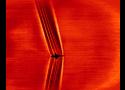
In the wake of recent success with air-to-air schlieren photography using the speckled desert floor as a background, researchers at NASA’s Armstrong Flight Research Center, Edwards, California, are now looking to the heavens for backgrounds upon which to capture images of supersonic shock waves using ground-based cameras. A bright light source and/or speckled background – such as the sun or moon – is necessary for visualizing aerodynamic flow phenomena generated by aircraft or other objects passing between the observer’s camera and the backdrop. This patent-pending method, made possible by improved image processing technology, is called Background-Oriented Schlieren using Celestial Objects, or BOSCO.
Flow visualization is one of the fundamental tools of aeronautics research, and schlieren photography has been used for many years to visualize air density gradients caused by aerodynamic flow. Traditionally, this method has required complex and precisely aligned optics as well as a bright light source. Refracted light rays revealed the intensity of air density gradients around the test object, usually a model in a wind tunnel. Capturing schlieren images of a full-scale aircraft in flight was even more challenging due to the need for precise alignment of the plane with the camera and the sun.
Elon Musk’s SpaceX has told investors that it plans to launch a new Starlink mobile service for US consumers, in a move that would upend the country’s multibillion-dollar phone network market.
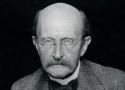
German physicist Max Planck was one of the pioneers of quantum mechanics in the early 20th century, earning the 1918 Nobel Prize in Physics for his discovery of quanta. There has never been a whisper of scandal about the man’s integrity or his scientific work. So a pair of science historians were puzzled when they discovered that a scientific journal had inexplicably retracted two of Planck’s papers from the 1940s.
The journal in question is Naturwissenschaften, now known as The Science of Nature. The journal typically adds a large RETRACTED notice across digital papers that have been retracted, leaving them available for download. But it has removed the two Planck papers entirely, leaving just a blank page (and empty PDFs) with a brief note saying the articles had been “withdrawn due to article violation.” //
Gingras and Khelfaoui suspect the retraction decision was made around this time. “All this clearly suggests that some lawyer at Springer was overshadowing the process and considered these papers as problematic forms of ‘duplicate publications,’” they wrote. //
Duplication/self-plagiarism is also more of an issue now, when publications are a major factor when it comes to hiring and promoting scientists, as well as acquiring research fundings. Applying these contemporary standards can be problematic for the “digital circulation of historical texts,” the authors concluded. //
gowanusstinks Seniorius Lurkius
7y
29
So an entanglement issue?
I’ll let myself out. //
SplatMan_DK Ars Tribunus Angusticlavius
18y
8,310
Subscriptor++
It's really Schrödingers scientific paper.
Just stop looking for it or reading it, and it will be right back. //
Keith Tanner Ars Tribunus Militum
8y
2,325
SplatMan_DK said:
It's really Schrödingers scientific paper.
Just stop looking for it or reading it, and it will be right back.
Maybe it’s more Heisenbergian. You can either read the paper or you can know what’s in it, but not both.