Keyways, Inc. buys - sells - repairs - trades DEC and DEC-compatible parts.
WE HAVE OVER 75,000 MODULES AND OTHER PARTS IN STOCK.
We now have 30,000 sq. ft. facilities to better serve our customers.


According to a report by TechSpot, Western Digital will now focus solely on its native hard disk technology, with the SSD division being spun off into SanDisk. This means that lineups like WD_BLACK will now be manufactured by SanDisk instead of WD themselves, and this will ultimately mean that Western Digital branding won't be there anymore. //
lostinblue Newbie
12 hours ago
Does the person who wrote the article know anything? Western Digital didn't quit SSD's because they weren't the future and hdds will grow as it's being implied and would be nuts, WD CEO David V. Goeckeler decided to spun the company but resign and become Sandisk CEO, Irving Tan is just a guy appointed to keep at it. Goeckeler is one of the most disliked CEOs in the industry (voted the worst actually), and is chasing his quarterly growth and profits as always because that means prize money for him. He tries to do this every year, inflate the growth to maximize how much money he gets and bet the company in the process. Funny that a ceo with no vision and no morals can fool a tech website this big though. I advise to cover it as it is, not a copy pasting the press release they do about it. PR Speak being PR Speak, it's worth nothing. //
lostinblue Newbie
Kendall
12 hours ago
It's about profits. WD CEO became Sandisk CEO and he is shedding WD skin. This is made in order to maximize and fake growth so he gets his prize money. He's very impopular and more than once took risky decisions like trying mergers just to hit his personal objectives. It should be reported as it is, a company being managed by people taking money out of it. The board is cahoots with him.
Anyway, this board i talk about they all left Western Digital with him. //
lostinblue Newbie
PANOS MESSIOS
12 hours ago
It's just a PR stunt. WD board of directors resigned and all were appointed to the same positions with Sandisk.
I'll let you guess where these CEO's thought there would be growth.
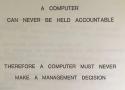
A computer can never be held accountable. This legendary page from an internal IBM training in 1979 could not be more appropriate for our new age of AI.
A COMPUTER CAN NEVER BE HELD ACCOUNTABLE. THEREFORE A COMPUTER MUST NEVER MAKE A MANAGEMENT DECISION
A computer can never be held accountable
Therefore a computer must never make a management decision

Here are a few ways to securely erase your hard drive:
DBAN (Darik's Boot and Nuke) – Use this free tool that overwrites data multiple times, making recovery impossible.
Windows Secure Erase (for SSDs) – If you're wiping an SSD, use the manufacturer's secure erase tool (e.g., Samsung Magician, Crucial Storage Executive).
Command Prompt (for HDDs) – Run cipher /w:C: to overwrite deleted files on the selected drive.
The HP-41C overcame these limitations by adding alphanumeric capabilities to both the display and keyboard. The keyboard had an "Alpha" key that toggled the keyboard between alpha and the normal calculator mode. (The alpha characters were printed on the slanted faces of the keys.) If the user needed a function not printed on a key, the name of the function could be typed in and executed. (About half of the HP-41Cs functions were preassigned to keys.)
Because typing out the name of a function could be cumbersome, the HP-41C added another toggle key called "user". The user could assign any built-in function or user program to any key. Once the keyboard was placed in user mode, any assignments made by the user overrode the label on the key. (With the gold shift key, this allowed two user functions per key.) The user toggle state remained set even when the calculator was turned off allowing true keyboard customization.
To make it easy to remember keyboard assignments, HP provided keyboard overlays along with preprinted labels for all built-in functions and blank labels for user functions. In addition, whenever a key was held down, its function name was displayed. If it was the wrong key, the user could continue to hold it until the display showed "NULL" when meant the function was canceled.
Of course, HP didn't just improve the human interface. The HP-41C had more memory (now non-volatile) than its predecessor, more functions, improved programming, and could be expanded with both RAM and ROM modules.
Ttcalc is a public domain programmable calculator for Microsoft Windows written by Stefan Seiwerth that is modeled after the HP-41C series of calculators. Download the program, unzip and see the readme.txt file for installation instructions. Run ttcalce.exe for the English version or ttcalc.exe for the German version. (The help file for either version is in German.)
I have a soft spot for fictional computers, having implemented compilers, bytecode interpreters, and even program synthesis for various made-up computer architectures.
This post is yet another dive into VM implementation, looking at a particularly fascinating ecosystem from Hundred Rabbits:
The Uxn CPU is a simple, 256-instruction stack machine
Varavara defines a set of peripherals that turn that CPU into an actual computer (display, keyboard, mouse, etc)
Unlike many fictional computers, the Uxn + Varvara ecosystem is sophisticated enough for actual use, and there are dozens of different ROMs – everything from text editors to drawing programs to synthesizers.
The Hundred Rabbits devlog motivates this design with far more eloquence than I could offer; I'd encourage you to browse their sprawling wiki of documentation, blog posts, and development notes.
My implementation is called Raven.
Uxn is the virtual machine powering the Hundred Rabbits software.
This one-page computer, programmable in Uxntal, is an portability layer with a focus on hosting graphical tools and games. It lives at the heart of the Varvara ecosystem.
- Uxn Instructions: Reference, Tests
- Varvara Devices: Reference, Tests
This wiki along with most of the audio-visual projects documented on it are running on Uxn.
Over the millennia, we have created security systems to deal with the sorts of mistakes humans commonly make. //
But it’s not the frequency or severity of AI systems’ mistakes that differentiates them from human mistakes. It’s their weirdness. AI systems do not make mistakes in the same ways that humans do.
Much of the friction—and risk—associated with our use of AI arise from that difference. We need to invent new security systems that adapt to these differences and prevent harm from AI mistakes. //
AI errors come at seemingly random times, without any clustering around particular topics. LLM mistakes tend to be more evenly distributed through the knowledge space. A model might be equally likely to make a mistake on a calculus question as it is to propose that cabbages eat goats.
And AI mistakes aren’t accompanied by ignorance. A LLM will be just as confident when saying something completely wrong—and obviously so, to a human—as it will be when saying something true. The seemingly random inconsistency of LLMs makes it hard to trust their reasoning in complex, multi-step problems. If you want to use an AI model to help with a business problem, it’s not enough to see that it understands what factors make a product profitable; you need to be sure it won’t forget what money is. //
Matt • January 21, 2025 11:54 AM
“Technologies like large language models (LLMs) can perform many cognitive tasks”
No, they can’t perform ANY cognitive tasks. They do not cogitate. They do not think and are not capable of reasoning. They are nothing more than word-prediction engines. (This is not the same as saying they are useless.)
You should know better than that, Bruce.
RealFakeNews • January 21, 2025 12:35 PM
Part of the problem is AI can’t fundamentally differentiate a fact from something it just made up. It can check cabbages and goats are related via some probability, but it can’t check that a cabbage doesn’t eat goats because it can’t use the lack of data to verify if that is correct.

440-pound 1980s behemoth rescued from an Osaka restaurant days before demolition. //
For those who want the absolute largest CRT experience possible, Sony's KX-45ED1 model (aka PVM-4300) has become the stuff of legends. The massive 45-inch CRT was sold in the late '80s for a whopping $40,000 (over $100,000 in today's dollars), according to contemporary reports.
That price means it wasn't exactly a mass-market product, and the limited supply has made it something of a white whale for CRT enthusiasts to this day. While a few pictures have emerged of the PVM-4300 in the wild and in marketing materials, no collector has stepped forward with detailed footage of a working unit. //
Enter Shank Mods, a retro gaming enthusiast and renowned maker of portable versions of non-portable consoles. In a fascinating 35-minute video posted this weekend, he details his years-long effort to find and secure a PVM-4300 from a soon-to-be-demolished restaurant in Japan and preserve it for years to come. //
The full video includes lots of footage and details of the shipping and unboxing process, and confirmation that the TV still works after its incredible journey. Shank Mods also includes a breakdown of the internal design and processing hardware that went into such a uniquely large CRT and an extended discussion of the intricate process of calibrating and tuning the tube to deliver a sharp, color-corrected picture after years of magnetic and electron beam drift.

In the high-stakes world of semiconductor manufacturing, Europe has unveiled a groundbreaking achievement that rivals the cost and complexity of an Airbus A350. This state-of-the-art machine, meticulously assembled by a team of 250 engineers over six months, stands as a testament to European innovation in microtechnology. With ambitions to capture a significant share of the Chinese market, this marvel could reshape the global semiconductor landscape.
Since its inception in 1984, ASML has been at the forefront of semiconductor lithography. The company’s latest creation leverages Extreme Ultraviolet (EUV) technology, a bold move that has paid off handsomely. EUV lithography allows for the precise etching of intricate chip patterns, essential for the next generation of artificial intelligence and high-performance computing. According to industry leaders at the International Semiconductor Association, ASML’s commitment to EUV has not only doubled its revenue in the past five years but also set new standards in chip manufacturing.
The new ASML system promises to revolutionize microprocessor fabrication by reducing transistor sizes to an astonishing 1 nanometer.
Wednesday 19th June 2013 08:28 GMT
John Smith 19Gold badge
Coat
PDP 11 odds and ends.
The PDP 11 (like the PARC Alto) had a main processor built from standard 4 bit TTL "ALU" parts and their companion "register file." So 2nd, 3rd,4th sourced. I'm not sure how many mfg still list them on their available list in the old standard 0.1" pin spacing.
El Reg ran a story that Chorus (formerly British Steel) ran them for controlling all sorts of bits of their rolling mills but I can't recall if they are
I think the core role for this task is the refueling robots for the CANDU reactors. CANDU allows "on load" refuelling. The robots work in pairs locked onto each end of the pressurized pipes that carry the fuel and heavy water coolant/moderator. They then pressurize their internal storage areas, open the ends and one pushes new fuel bundles in while the other stores the old ones, before sealing the ends. However CANDU have been working on new designs with different fuel mixes (CANDU's special sauce (C Lewis Page) is that it's run with unenriched Uranium, which is much cheaper and does not need a bomb making enrichment facility) and new fuel bundle geometries, so time for a software upgrade.
And 128 users on a PDP 11/70. Certain customers ran bespoke OSes in the early 90s that could get 300+ when VMS could only support about less than 20 on the same spec.
Note for embedded use this is likely to be RSX rather than VMS, which also hosted the ICI developed RTL/2, which was partly what hosted the BBC CEEFAX service for decades.
Yes, it's an anorak.. //
Wednesday 19th June 2013 18:20 GMT
Jamie JonesSilver badge
Thumb Up
Who's laughing?
I feel much better knowing this.
What is the alternative? Buggy software written by the "'Have you tried switching it off and on again" generation? Wednesday 19th June 2013 20:24 GMT
bscottm
Reply Icon
Re: It just costs money
It's not the GHz clock cycle that is the problem. It's the smaller feature size of the transistors that increases the single event upset (SEU) rate. Yes, the two are inter-related, but one could conceivably build multi-core, chip symmetric multiprocessors based on the PDP-11 at today's feature sizes and not have GHz clock cycle times (and still end up with significant SEU rates.)
A couple of years ago, a NASA/JPL scientist pointed out that the alpha particles (helium nuclei) from lead solder were causing interesting issues with current x86_64 I/O pins -- radiation issues on commodity hardware. //
Wednesday 19th June 2013 07:32 GMT
Duncan Macdonald
RSX11M - Dave Cutler
Anyone who read the RSX11M sources (driver writers especially) realised that Dave Cutler was a very very good programmer long before he worked on VMS and later Windows NT. He managed to get a multiuser protected general purpose operating system to work with a minimum memory footprint of under 32kbytes on machines with about the same CPU power as the chip on a credit card. (A 96kByte PDP 11/40 (1/3 mip) with 2 RK05 disks (2.4Mbyte each) could support 2 concurrent programmers - a PDP 11/70 (1 mip) with 1Mbyte and 2 RM03 disk packs (65Mbyte each) could support 10 or more.) During the many years that the CEGB used PDP-11 computers with RSX11M, I did not hear of a single OS failure that was not caused by a hardware fault - I wish that current systems were as good. //
Wednesday 19th June 2013 17:23 GMT
MD Rackham
Reply Icon
Re: RSX11M - Dave Cutler
Of course, that was several years after there was a protected, multi-user timesharing system running on the PDP-8, TSS/8. And it would run in 8K of memory, although you had to spring for 12K for decent performance. Swapped off a fixed-head 256K word disk.
You PDP-11 kids get off my lawn! //
Wednesday 19th June 2013 15:28 GMT
Bastage
Reply Icon
Go
Re: there are alternatives
There is replacement hardware available. NuPDP replacment CPU's including QBUS support and peripheral cards. Also NuVAX for the new kids.
The Reviver boards for PDP-11 and HP1000.
The Osprey PDP-11 and Kestral HP1000 hardware from Strobe Data.
There are also the Stromasys/Charon software emulators VAX/AXP/HP3000. //
Go
Re: there are alternatives
@Peter Gathercole
There is already a well established PDP-11 project on OpenCores:
http://opencores.org/project,w11 //
PDP 11 odds and ends.
The PDP 11 (like the PARC Alto) had a main processor built from standard 4 bit TTL "ALU" parts and their companion "register file." So 2nd, 3rd,4th sourced. I'm not sure how many mfg still list them on their available list in the old standard 0.1" pin spacing.
El Reg ran a story that Chorus (formerly British Steel) ran them for controlling all sorts of bits of their rolling mills but I can't recall if they are
I think the core role for this task is the refueling robots for the CANDU reactors. CANDU allows "on load" refuelling. The robots work in pairs locked onto each end of the pressurized pipes that carry the fuel and heavy water coolant/moderator. They then pressurize their internal storage areas, open the ends and one pushes new fuel bundles in while the other stores the old ones, before sealing the ends. However CANDU have been working on new designs with different fuel mixes (CANDU's special sauce (C Lewis Page) is that it's run with unenriched Uranium, which is much cheaper and does not need a bomb making enrichment facility) and new fuel bundle geometries, so time for a software upgrade.
And 128 users on a PDP 11/70. Certain customers ran bespoke OSes in the early 90s that could get 300+ when VMS could only support about less than 20 on the same spec.
Note for embedded use this is likely to be RSX rather than VMS, which also hosted the ICI developed RTL/2, which was partly what hosted the BBC CEEFAX service for decades. //
Wednesday 19th June 2013 13:20 GMT
PhilBuk
Reply Icon
Happy
Re: PDP 11 odds and ends.
Most real-time systems stayed as PDP-11 when the industry realised that the interupt latency on VAX/VMS was too slow for a lot of applications. You could improve it with a ccustomised VMS kernel but, in most cases, it was cheaper to stick with the devil you knew. Similarly, a friend worked for a measuring company that were using embedded PDP-8 systems as controllers well into the end of the 90s. used to drive round with a clip-on PDP-8 front panel in the boot of his car.
Phil. //
Thursday 20th June 2013 08:25 GMT
FrankAlphaXII
Reply Icon
Re: PDP 11 odds and ends.
Its a certainly a CANDU reactor and its fuel bundle loader robots from what it looks like.
CANDU is a different type of reactor than what gets built most of the time, they can burn just about anything, from some unenriched uranium with some slightly enriched uranium at the same time, to thorium, to Mixed Oxide fuels partially from decommissioned nuclear weapons, to "fun" transuranic actinides and also (as a proliferation concern) some quite nasty fuel mixes which can breed massive (relatively speaking of course) amounts of Plutonium if the reactor isn't properly safeguarded. Thats where India and probably Pakistan bred most of their Special Materials.
And what's cool about this is if the PDP-11 is what GE is using in Canada for their loaders, then its probably what they're using in India, South Korea, Romania, Argentina and China as well, as they also have CANDU reactors or designs derived from CANDU. //

HAMR works on the principle that, when heated, a disk's magnetic materials can hold more data in smaller spaces, such that you can fit more overall data on the drive. It's not just putting a tiny hot plate inside an HDD chassis; as Seagate explains in its technical paper, "the entire process—heating, writing, and cooling—takes less than 1 nanosecond." Getting from a physics concept to an actual drive involved adding a laser diode to the drive head, optical steering, firmware alterations, and "a million other little things that engineers spent countless hours developing." Seagate has a lot more about Mozaic 3+ on its site. //
There is no price yet, nor promise of delivery, but you can do some wishful thinking on the product page for the Exos M, where 30 and 32TB capacities are offered. That's 3TB per platter, and up to three times the efficiency per terabyte compared to "typical drives," according to Seagate. Seagate has previously boasted that its Mozaic 3+ HAMR drives, under "aggressive field use stress tests," have seen more than seven years of head life.
Western Digital has its own 32TB drive, based on energy-assisted perpendicular magnetic recording, or e-PMR. Both companies have suggested their high-capacity drives are ideal for AI model training, given the gargantuan storage demands and energy pull of that job. Toshiba intends to move into the HAMR drive space, which accounts for all three of the major HDD makers' plans.
DailyLlama
That reminds me of "The Plan"
The Plan
In the beginning, there was a plan,
And then came the assumptions,
And the assumptions were without form,
And the plan without substance,
And the darkness was upon the face of the workers,
And they spoke among themselves saying,
"It is a crock of shit and it stinks."
And the workers went unto their Supervisors and said,
"It is a pile of dung, and we cannot live with the smell."
And the Supervisors went unto their Managers saying,
"It is a container of excrement, and it is very strong,
Such that none may abide by it."
And the Managers went unto their Directors saying,
"It is a vessel of fertilizer, and none may abide by its strength."
And the Directors spoke among themselves saying to one another,
"It contains that which aids plants growth, and it is very strong."
And the Directors went to the Vice Presidents saying unto them,
"It promotes growth, and it is very powerful."
And the Vice Presidents went to the President, saying unto him,
"This new plan will actively promote the growth and vigour
Of the company With very powerful effects."
And the President looked upon the Plan
And saw that it was good,
And the Plan became Policy.
And this, my friend, is how shit happens. //
http://www.catb.org/~esr/jargon/html/S/SNAFU-principle.html. //
ichael H.F. WilkinsonSilver badge
Thumb Up
"organic factual compost"
Sheer genius, especially after the amuse gueule of "a light dusting of the chicken manure of sales", and "the dump truck of male bovine excrement" as main course.
Superb episode, once again

Gather around the fire for another retelling of computer networking history. //
Systems Approach A few weeks ago I stumbled onto an article titled "Traceroute isn’t real," which was reasonably entertaining while also not quite right in places.
I assume the title is an allusion to birds aren’t real, a well-known satirical conspiracy theory, so perhaps the article should also be read as satire. You don’t need me to critique the piece because that task has been taken on by the tireless contributors of Hacker News, who have, on this occasion, done a pretty good job of criticism.
One line that jumped out at me in the traceroute essay was the claim "it is completely impossible for [MPLS] to satisfy the expectations of traceroute." //
Many of them hated ATM with a passion – this was the height of the nethead vs bellhead wars – and one reason for that was the “cell tax.” ATM imposed a constant overhead (tax) of five header bytes for every 48 bytes of payload (over 10 percent), and this was the best case. A 20-byte IP header, by contrast, could be amortized over 1500-byte or longer packets (less than 2 percent).
Even with average packet sizes around 300 bytes (as they were at that time) IP came out a fair bit more efficient. And the ATM cell tax was in addition to the IP header overhead. ISPs paid a lot for their high-speed links and most were keen to use them efficiently. //
The other field that we quickly decided was essential for the tag header was time-to-live (TTL). It is the nature of distributed routing algorithms that transient loops can happen, and packets stuck in loops consume forwarding resources – potentially even interfering with the updates that will resolve the loop. Since labelled packets (usually) follow the path established by IP routing, a TTL was non-negotiable. I think we might have briefly considered something less than eight bits for TTL – who really needs to count up to 255 hops? – but that idea was discarded.
Route account
Which brings us to traceroute. Unlike the presumed reader of “Traceroute isn’t real,” we knew how traceroute worked, and we considered it an important tool for debugging. There is a very easy way to make traceroute operate over any sort of tunnel, since traceroute depends on packets with short TTLs getting dropped due to TTL expiry. //
ISPs didn’t love the fact that random end users can get a picture of their internal topology by running traceroute. And MPLS (or other tunnelling technologies) gave them a perfect tool for obscuring the topology.
First of all you can make sure that interior routers don’t send ICMP time exceeded messages. But you can also fudge the TTL when a packet exits a tunnel. Rather than copying the outer (MPLS) TTL to the inner (IP) TTL on egress, you can just decrement the IP TTL by one. Hey presto, your tunnel looks (to traceroute) like a single hop, since the IP TTL only decrements by one as packets traverse the tunnel, no matter how many router hops actually exist along the tunnel path. We made this a configurable option in our implementation and allowed for it in RFC 3032. //
John Smith 19Gold badge
Coat
Interesting stuff
Sorry but yes I do find this sort of stuff interesting.
Without an understanding of how we got here, how will we know where to go next?
Just a thought. //
doublelayerSilver badge
Responding to headlines never helps
This article's author goes to great lengths to argue against another post based on that post's admittedly bad headline. The reason for that is simple: the author has seen the "isn't real" bit of the headline and jumped to bad conclusions. It's not literal, but it's also not satire a la "birds aren't real". The article itself explains what they mean with the frequent claims that traceroute "doesn't exist":
From a network perspective, traceroute does not exist. It's simply an exploit, a trick someone discovered, so it's to be expected that it has no defined qualities. It's just random junk being thrown at a host, hoping that everything along the paths responds in a way that they are explicitly not required to. Is it any surprise that the resulting signal to noise ratio is awful?
I would have phrased this differently, without the hyperbole, because that clearly causes problems. This response makes no point relevant to the network administration consequences of a traceroute command that is pretty much only usable by people with a lot of knowledge about the topology of any networks they're tracing through and plenty more about what that command is actually doing. Where it does respond, specifically the viability of traceroute in MPLS, it simplifies the problem by pointing out that you can, if you desire, manually implement the TTL field, then goes on to describe the many different ways you can choose not to, ways that everyone chose to use. It is fair to say the author of the anti-traceroute article got it wrong when they claimed that MPLS couldn't support it, but in practice, "couldn't support" looks very similar to "doesn't because they deliberately chose not to". It is similar enough that it doesn't invalidate the author's main point, that traceroute is a command that is dangerous in the hands of people who aren't good at understanding why it doesn't give them as much information as they think it does. //
ColinPaSilver badge
It's the old problem
You get the first version out there, and see how popular it is. If it is popular you can add more widgets to it.
If you spend time up front doing all things, that with hindsight, you should have done, you would never ship it. Another problem is you can also add all the features you think might be used, in the original version, and then find they are not used, or have been superseded.
I was told, get something out there, for people to try. When people come hammering on your door, add the things that multiple people want.
20 hrs
the spectacularly refined chapSilver badge
Re: It's the old problem
Cf the OSI network stack, which took so long to standardise that widespread adoption of IP had already filled the void it was intended to.
In some ways that is not ideal, 30+ years on there is still no standard job submission protocol for IP, OSI had it from the start.
Have you ever wondered how the chips inside your computer work? How they process information and run programs? Are you maybe a bit let down by the low resolution of chip photographs on the web or by complex diagrams that reveal very little about how circuits work? Then you've come to the right place!
The first of our projects is aimed at the classic MOS 6502 cpu processor. ///
load some assembly language and watch the paths light up on the CPU die

Peter Galbavy
So, 2TB micro SD cards are how much volume? I am not sure what's novel here - or is it the WORM nature of the feat?
ChrisCSilver badge
Reply Icon
Using the bounding box dimensions for a MicroSD card (15x11x1mm) gives a volume of 0.165 cm3, so with 2TB per card now, that gives 12.1TB/cm3...
..which, quite frankly, is insane. I mean, even being able to shovel 2TB of data onto something the size of a fingernail still blows my mind, but the thought of being able to store 12TB in the space taken up by a sugar cube or a D6, when it really wasn't all that long ago being able to store even 1GB on a 3.5" hard drive was every bit as mind blowing at the time, really does make me stop and think about just how far we've come in such a short period of time, and what sort of similar mind blowing technological advances are yet to come over the next few decades.

FrontierMath's difficult questions remain unpublished so that AI companies can't train against it. //
On Friday, research organization Epoch AI released FrontierMath, a new mathematics benchmark that has been turning heads in the AI world because it contains hundreds of expert-level problems that leading AI models solve less than 2 percent of the time, according to Epoch AI. The benchmark tests AI language models (such as GPT-4o, which powers ChatGPT) against original mathematics problems that typically require hours or days for specialist mathematicians to complete.
FrontierMath's performance results, revealed in a preprint research paper, paint a stark picture of current AI model limitations. Even with access to Python environments for testing and verification, top models like Claude 3.5 Sonnet, GPT-4o, o1-preview, and Gemini 1.5 Pro scored extremely poorly. This contrasts with their high performance on simpler math benchmarks—many models now score above 90 percent on tests like GSM8K and MATH.
The design of FrontierMath differs from many existing AI benchmarks because the problem set remains private and unpublished to prevent data contamination. Many existing AI models are trained on other test problem datasets, allowing the AI models to easily solve the problems and appear more generally capable than they actually are. Many experts cite this as evidence that current large language models (LLMs) are poor generalist learners.
The headline is pretty scary: “China’s Quantum Computer Scientists Crack Military-Grade Encryption.”
No, it’s not true.
This debunking saved me the trouble of writing one. It all seems to have come from this news article, which wasn’t bad but was taken widely out of proportion.
Cryptography is safe, and will be for a long time
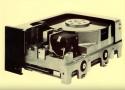
Mass storage has come a long way since the introduction of the personal computer. [Tech Time Traveller] has an interesting video about the dawn of PC hard drives focusing on a company called MiniScribe. After a promising start, they lost an IBM contract and fell on hard times.
Apparently, the company was faking inventory to the tune of $15 million because executives feared for their jobs if profits weren’t forthcoming. Once they discovered the incorrect inventory, they not only set out to alter the company’s records to match it, but they also broke into an outside auditing firm’s records to change things there, too.
Senior management hatched a plan to charge off the fake inventory in small amounts to escape the notice of investors and government regulators. But to do that, they need to be able to explain where the balance of the nonexistent inventory was. So they leased a warehouse to hold the fraud inventory and filled it with bricks. Real bricks like you use to build a house. Around 26,000 bricks were packaged in boxes, assigned serial numbers, and placed on pallets. Auditors would see the product ready to ship and there were even plans to pretend to ship them to CompuAdd and CalAbco, two customers, who had agreed to accept and return the bricks on paper allowing them to absorb the $15 million write off a little at a time.
Unfortunately, the fictitious excellent financial performance led to an expectation of even better performance in the future which necessitated even further fraud.