
A new listing of the 50 most concerning pieces of space debris in low-Earth orbit is dominated by relics more than a quarter-century old, primarily dead rockets left to hurtle through space at the end of their missions. //
Russia and the Soviet Union lead the pack with 34 objects listed in McKnight's Top 50, followed by China with 10, the United States with three, Europe with two, and Japan with one. Russia's SL-16 and SL-8 rockets are the worst offenders, combining to take 30 of the Top 50 slots. //
The list published Friday is an update to a paper authored by McKnight in 2020. This year's list goes a step further by analyzing the overall effect on debris risk if some or all of the worst offenders were removed. If someone sent missions to retrieve all 50 of the objects, the overall debris-generating potential in low-Earth orbit would be reduced by 50 percent, according to McKnight. If just the Top 10 were removed, the risk would be cut by 30 percent. //
China, on the other hand, frequently abandons upper stages in orbit. China launched 21 of the 26 hazardous new rocket bodies over the last 21 months, each averaging more than 4 metric tons (8,800 pounds). Two more came from US launchers, one from Russia, one from India, and one from Iran. //
Since 2000, China has accumulated more dead rocket mass in long-lived orbits than the rest of the world combined, according to McKnight. "But now we're at a point where it's actually kind of accelerating in the last two years as these constellations are getting deployed."



These vehicular attacks present a troubling new twist on ICE enforcement operations in Chicago. ICE agents have already faced doxing, threats, and physical assault this year, as well as several incidents of lethal ambushes. Those attacking federal officers while they carry out their duty to enforce federal law have no excuse for their lawless violence. Their actions only provide an excuse for federal authorities to respond with their own aggressive tactics. And, while it’s fair to question whether those federal actions are warranted, it’s clear to see the opposition that prompted them.
When aggression follows aggression, it only leads America down a path towards further violence, less freedom, and an erosion of the ordered liberty that has made America unique and successful. When administrations set concerning new precedents, they must answer the question, what is the justification, and what is the cost?
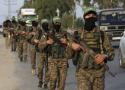
The two religious kibbutzim near Gaza are Sa'ad and Alumim. Sa'ad did not suffer a single death or kidnapping. Hamas terrorists did not enter Sa'ad even though it was less than a mile from Kfar Aza, where Hamas killed 54 civilians and kidnapped 20 others. Twenty-six IDF soldiers were killed trying to liberate Kfar Aza.
In Alumim, the town's armed security prevented Hamas from killing or kidnapping any Israelis. Hamas then targeted the Thai workers in the fields, killing 22 of them and kidnapping four. It is reasonable to assume that Sa'ad had armed security similar to Alumim, and thus, Hamas decided not to attack. //
In conclusion, gun laws that allow for personal gun ownership with fewer restrictions certainly help residents protect their families and homes from an attack. However, if the residents do not believe in purchasing firearms, then those laws are meaningless. Thus, even if Israel had allowed all of its civilians to purchase and carry guns without a permit, it is unlikely that it would have prevented the atrocities of October 7 due to the demographics that Hamas targeted that day. In short, many politically conservative Israelis hope their leftist counterparts wake up one day and understand the need to protect themselves without relying on the IDF or the police. Even after October 7, it remains to be seen whether that will be the case.

MMarsh Ars Praefectus
10y
4,490
Subscriptor
p-chapman said:
Ok, if Shackleton would have known about what seemed to work in the Antarctic ice, why did Shackleton cheap out for the Endurance?
Wikipedia suggests that the fully equipped, custom-built Discovery cost 51,000 pounds.
Ignoring British inflation adjustments over the next decade or so, Endurance was bought for 11,600 pounds. (And he also spent 3,200 pounds on the Aurora, the smaller 2nd ship for the expedition group at the other side of the Antarctic continent -- this was all about an Antarctic land crossing, after all.) However, the Discovery was slightly over twice the GRT (gross registered tonnage) of the Endurance. (GRT isn't always the best metric, as for example the bulbous Fram, shorter than the Endurance, still has a larger GRT.)
So let's say that a smaller custom-built ship the size of the Endurance would have been, say 2/3rds the cost (as cost won't scale linearly). Thus something like 34k custom build cost vs. 12k for the actual Endurance. Plus some additional customization costs for the Endurance that must have been added on afterwards.
In any case, well over twice the cost to buy a custom ship for likely the biggest expense of the expedition!
(I suppose the cost ratio would have been guessed by anyone buying a depreciated used car vs. a new one...)
What about the diagonally reinforced Deutschland ship, mentioned in this article?
Shackleton was well aware of it, as he had wanted to buy it for his earlier 1907 expedition. But as wikipedia notes:
Thus at one point even 11,000 pounds, less than Endurance's cost, was too much for his finances.
So I won't write Shackleton off as being a dumbass when it came to choosing a ship. But it still bears looking into, just what the Endurance's structure was, how it compares to the Fram and Discovery and Deutschland -- and whether any useful reinforcements could have added at moderate cost within a reasonable time.
Cost was certainly a factor. If you don't have £50,000 available, but can scrounge up £11,600, then your choices are to either go in the cheaper ship or don't go at all. Men like Shackleton don't wait for the money to turn up. They do what they can with what they can get now.
Also worth noting is that the design compromises required to make a ship really good at freezing into pack ice tend to make it relatively miserable to live with at other times. It'll have a hull shape that yields a less comfortable motion in ocean waves. It'll be heavier for its length and beam, thus slower and less able to get out of the way of bad weather. It'll be crisscrossed internally by beams and braces that make it awkward to live and work aboard. A higher percentage of its total displacement will be its own structure, leaving less for people and cargo; thus, it needs to be bigger for the same usable capacity. That, in turn, makes it more expensive to maintain and operate after you've paid off the higher initial cost.
Designing Endurance to handle bumping into ice floes, but not to freeze into pack ice, was a perfectly reasonable decision for the ship's original mission. Picking it for the expedition was a justified risk, against the backdrop of all the other insane risks being taken by the very nature of the expedition. Letting it freeze into the pack ice was not planned or wanted – it was simply the only possible option left to Shackleton after all other options had been closed off by conditions that, until they happened, could only be foreseen as a vague and imprecise probability or possibility. //
atomicpowerrobot Smack-Fu Master, in training
3y
66
ramases said:
It is called the Action Fallacy. It describes our tendency to elevate leaders who appear decisive in a crisis over leaders who manage to avoid the crisis in the first place.
Martin Gutmann talks about it specifically within the context of Ernest Shackleton:
View: https://www.youtube.com/watch?v=b0Z9IpTVfUg
Click to expand...
The Action Fallacy isn't really appropriate here b/c the bar isn't "not getting stuck in the Antarctic Ice" but rather "crossing the Antarctic continent by land first". First being a critical part of that bar. It was difficult enough to secure funding for these "Exploration Age" adventures but nobody was going to fund anyone to do it second.
By the definition of the Action Fallacy, you are a better leader than Shackleton b/c you did not get a bunch of men stuck in the ice in the Antarctic by choosing the wrong ship. But you also didn't attempt to be the first person to cross the Antarctic continent by land.
Shackleton had previously nearly made it to be the first person to reach the South Pole, having to turn around and very nearly starving on his return journey, after which he lost out on that particular honor to Roald Amundsen. His "settling" for the Endurance was likely a concession made in an attempt to win honors for himself, his (volunteer) crew, and his country.
Of course you evaluate the risks, but at a certain point, for the immortal honors of doing something first, you pays your moneys and you takes your chances.
His legendary advertisement for the expedition read:
"Men wanted for hazardous journey. Low wages, bitter cold, long hours of complete darkness. Safe return doubtful. Honour and recognition in event of success."
Now that may have been real, or it may have been apocryphal, but it does accurately represent the situation that all of the men knowingly signed up for.
icosapode said:
I personally think it's important to have a clear eyed understanding of people who are often held up as heroes. A more nuanced picture that includes their faults as well as strengths doesn't diminish the things they did achieve after all.
That negates the point of having heroes though. We don't celebrate heroes for their faults. We all have faults - pointing out that they are no different is counterproductive. We celebrate them for the things they DID achieve beyond the standard works of men and women. Sniping at dead men who did great things b/c they weren't perfect is petty and driven by envy.
You don't have to idolize Shackleton's trip planning to recognize him as the type of man you want when the chips are down. As was said of him:
“For scientific discovery give me Scott; for speed and efficiency of travel give me Amundsen; but when disaster strikes and all hope is gone, get down on your knees and pray for Shackleton.”
p-chapman Ars Centurion
7y
220
Continuing trying to be an amateur historian in the time span of only a few minutes -- There's a lot more back and forth one can get into, regarding Shackelton's knowledge of ice and choice of ships.
Shackleton certainly knew something about building for ice, so he wasn't entirely ignorant:
[Edit: That's sort of the TL;DR of this long winded post. Shackleton certainly had some experience with ships for ice. Getting a custom built ship probably was far too much for his finances. As arjalon wrote, it was likely Endurance or nothing.]
For a 1902 British government expedition, with Robert F. Scott in charge, and Shackleton as 3rd officer or something, the custom built ship RRS Discovery was described this way:
Having observed previous expedition boats, particularly Nansen’s Fram, he [Scott] knew how to maximize the Discovery’s chances of not becoming enmeshed in the ice. The ship had therefore been designed with a well-rounded, bulbous hull made from thick wooden beams which meant it could rise up without being crushed by the extreme pressure caused by million-ton ice floes on the move.
[in Ranulph Fiennes' book on Shackleton]
Well, a quick look at pics makes the Discovery look fairly conventional, with some slab sides up top at least, and wikipedia says this:
Early discussions on building a dedicated polar exploration ship considered replicating Fridtjof Nansen's ship Fram, but that vessel was designed specifically for working through the pack ice of the Arctic. The British ship would have to cross thousands of miles of open ocean before reaching the Antarctic, so a more conventional design was chosen.
Still, it goes on to describe all the various heavy wooden construction used in the ship, so it was heavily reinforced, in some manner. But I don't know about whether diagonal reinforcing, as opposed to heavier hull, ribs, and cross beams. (The Fram had some diagonals.)
Whatever the details of its construction, the Discovery was stuck in Antarctic ice for two years. And came out OK.
So it might not have been a Fram-like gold standard, but would have been well regarded as very suitable.
Ok, if Shackleton would have known about what seemed to work in the Antarctic ice, why did Shackleton cheap out for the Endurance?
Wikipedia suggests that the fully equipped, custom-built Discovery cost 51,000 pounds.
Ignoring British inflation adjustments over the next decade or so, Endurance was bought for 11,600 pounds. (And he also spent 3,200 pounds on the Aurora, the smaller 2nd ship for the expedition group at the other side of the Antarctic continent -- this was all about an Antarctic land crossing, after all.) However, the Discovery was slightly over twice the GRT (gross registered tonnage) of the Endurance. (GRT isn't always the best metric, as for example the bulbous Fram, shorter than the Endurance, still has a larger GRT.)
So let's say that a smaller custom-built ship the size of the Endurance would have been, say 2/3rds the cost (as cost won't scale linearly). Thus something like 34k custom build cost vs. 12k for the actual Endurance. Plus some additional customization costs for the Endurance that must have been added on afterwards.
In any case, well over twice the cost to buy a custom ship for likely the biggest expense of the expedition!
(I suppose the cost ratio would have been guessed by anyone buying a depreciated used car vs. a new one...)
What about the diagonally reinforced Deutschland ship, mentioned in this article?
Shackleton was well aware of it, as he had wanted to buy it for his earlier 1907 expedition. But as wikipedia notes:
Unfortunately, Christiansen's price – £11,000, or approximately £1,150,000 in 2018 terms[3] – was beyond Shackleton's means; he eventually acquired the much older, smaller Nimrod for around half of Bjørn's price
Thus at one point even 11,000 pounds, less than Endurance's cost, was too much for his finances.
So I won't write Shackleton off as being a dumbass when it came to choosing a ship. But it still bears looking into, just what the Endurance's structure was, how it compares to the Fram and Discovery and Deutschlan -- and whether any useful reinforcements could have added at moderate cost within a reasonable time.
Again, this is all a quick & dirty look at the subject and I'm sure one can find more and better evidence for all sorts of opinions & counter opinions.
Rirere Ars Centurion
12y
263
Subscriptor++
Wheels Of Confusion said:
Seems to me competence might include not making a voyage in a ship you're well-informed isn't up to the task. That's like having to make an important cross-continental road trip on a beater with bad spark plugs.
Now now, I didn't say that the competence was all Shackleton!
While I do think Shackleton demonstrated some admirable on-the-ice leadership (but also some questionable decisions, of which the most infamous is probably his treatment of the carpenter, McNish), the name I was actually thinking of was Frank Worsley, who navigated during the journey of the James Caird through 800 miles of the nastiest weather and waves imaginable using a sextant and brief moments of sun, hitting an island at that distance that was more or less the size of a speck compared to the open seas.
wow, that's a long sentence oops //
ramases Ars Tribunus Angusticlavius
14y
8,332
Subscriptor++
Wheels Of Confusion said:
Seems to me competence might include not making a voyage in a ship you're well-informed isn't up to the task. That's like having to make an important cross-continental road trip on a beater with bad spark plugs.
It is called the Action Fallacy. It describes our tendency to elevate leaders who appear decisive in a crisis over leaders who manage to avoid the crisis in the first place.
Martin Gutmann talks about it specifically within the context of Ernest Shackleton:
View: https://www.youtube.com/watch?v=b0Z9IpTVfUg //
Nooge Wise, Aged Ars Veteran
11y
188
Subscriptor
TheColinous said:
There is no accounting for the urge "If I don't get there first, the wrong 'un will get there before me" to explain why people take risks that in hindsight prove less than intelligent.
The thing is this was his already his third trip to Antartica, having failed twice (on the Discovery and Nimrod expeditions) to be first to the pole (Amundsen was first). He was already knighted. But he wanted to be first to cross the entire Antarctic from sea to sea. Despite his failure on Endurance he chose to return to the Antarctic a fourth time but died of a heart attack en route. The guy just couldn’t get enough.
There’s a podcast called Cautionary Tales that I highly recommend in general, but especially the mini series on the Antarctic expeditions of Scott and Amundsen, the two explorers whose race to the South Pole was intertwined. It explores the motivations of the men and how that affected their decisions and errors.
Here’s the first episode
View: https://omny.fm/shows/cautionary-tales-with-tim-harford/south-pole-race-david-and-goliath-on-ice //
c1josh Seniorius Lurkius
15y
5
When the 'Endurance' was launched (as 'Polaris') in Dec. 1912, as a ship designed for interaction with ice, it was not designed for extended polar exploration. It was built to bring wealthy tourists to the edges of the ice for hunting big game. 'Fram' a true polar exploration ship was launched 20 years earlier and successfully survived extended periods of time frozen into pack ice in the Arctic. She was designed by Colin Archer for the Norwegian explorer Fridtjof Nansen.
The key design feature was a hull that didn't include any vertical portions below the waterline. It was designed to be lifted by the ice as the pressure increased, not crushed. And it was build HEAVILY, at 5m shorter and 50 tons heavier than 'Endurance'. //
Oldmanalex Ars Legatus Legionis
13y
11,321
Subscriptor++
citizencoyote said:
It's not criticizing Shackleton, it's asking a very valid question: why did someone with so much experience, knowledge, and preparation make such an obvious mistake/gamble? Was it hubris? Lack of funding? A combination of both? Some other reason? We won't ever know because Shackleton never explained his reasoning.
In a nutshell: the article doesn't say, "Wow, what a bonehead Shackleton was," it asks, "Why would someone otherwise so experienced make this choice?"
Because it was that or nothing. And Shackleton, like the other great explorers of the age, was a risk-taker. Any person who would take a wooden boat deep into the Weddell (or the Beaufort) Sea is someone who has more than my tolerance for risk. And risk-taking involves an assumption that bad luck will not occur. Erebus and Terror sailed on an assumption that they would not enter the Arctic in the three coldest successive years of the 19th century, and when they did, they were buggered. Scott did not assume that the Antarctic winter would be so unusually cold that his sled runners would be unable to melt a lubricating water layer, and Shackleton did not assume that he would be caught in an unusually bad Antarctic ice season.
And look at the timing. In August 1914, there were other things on most peoples' minds. And Shackleton's misjudgments here cost several men great hardship, and one several appendages. At the same time, the world leaders made decisions that killed over 20 million.
And look at ourselves. We know the risks we are taking, and the consequences. But, we are drifting into both a loss of our (relative) freedom, and a possible human extinction, because we cannot tell a few hundred greedy psychopaths to change course on global destruction. I think Shackleton would have been embarrassed on our behalf. //
matt_w Ars Scholae Palatinae
17y
1,169
One of my favorite songs is a Chris Thile cover of a Josh Ritter song that romanticizes this story.
In 1915, intrepid British explorer Sir Ernest Shackleton and his crew were stranded for months in the Antarctic after their ship, Endurance, was trapped by pack ice, eventually sinking into the freezing depths of the Weddell Sea. Miraculously, the entire crew survived. The prevailing popular narrative surrounding the famous voyage features two key assumptions: that Endurance was the strongest polar ship of its time, and that the ship ultimately sank after ice tore away the rudder.
However, a fresh analysis reveals that Endurance would have sunk even with an intact rudder; it was crushed by the cumulative compressive forces of the Antarctic ice with no single cause for the sinking. Furthermore, the ship wasn't designed to withstand those forces, and Shackleton was likely well aware of that fact, according to a new paper published in the journal Polar Record. Yet he chose to embark on the risky voyage anyway. //
The same shipyard that modified Deutschland had also just signed a contract to build Endurance (then called Polaris). So both Shackleton and the shipbuilders knew how destructive compressive ice could be and how to bolster a ship against it. Yet Endurance was not outfitted with diagonal beams to strengthen its hull. And knowing this, Shackleton bought Endurance anyway for his 1914–1915 voyage. In a 1914 letter to his wife, he even compared the strength of its construction unfavorably with that of the Nimrod, the ship he used for his 1907–1909 expedition. So Shackleton had to know he was taking a big risk.

If you wanted to build the quintessential fictional character that embodies the leftist trope of the “toxic male,” you would be hard-pressed to find a better avatar than James Bond. Find the male trait the activist set has railed against, and 007 has that tucked away inside his elitist tuxedo. //
Over the weekend, it was noticed that on Amazon Prime, they had a series of new series of promotional images for the collection of James Bond films on the platform. //
Also noticed: Every single gun originally portrayed was either airbrushed out or the image was cropped to remove the weapon from being visible

For years, I have used mainstream cloud storage services, including Google Drive, OneDrive, and iCloud. They are all convenient, but rely on centralized servers. This creates reliance on centralized infrastructure, and once I started thinking more about cost, control, and avoiding vendor lock-in, I knew I had to consider other options.
I recently replaced Google Drive with a self‑hosted NextCloud server, but there are several other options to explore. So, I tried Syncthing.
Using Syncthing has paid off in several ways, most notably through superior synchronization speed and efficiency for large files and folders, as well as true decentralization and local redundancy.
To resize an LVM partition in VirtualBox, first increase the virtual disk size using the command VBoxManage modifyhd <UUID> --resize <new size in MB>. Then, within the virtual machine, use commands like lvextend to expand the logical volume and resize2fs to resize the filesystem.
Resizing LVM Partition in VirtualBox
To resize an LVM partition in a VirtualBox virtual machine, follow these steps:
Step 1: Resize the Virtual Disk
- Shutdown the VM: Ensure your virtual machine is powered off.
- Open Command Line: Navigate to the VirtualBox installation directory.
- Run Resize Command: Use the following command to resize the disk:
VBoxManage modifyhd <UUID> --resize <new size in MB>
Replace<UUID>with your virtual disk's UUID and<new size in MB>with the desired size.
Step 2: Modify the Partition
- Boot the VM: Start your virtual machine.
- Check Current Partitions: Use the command:
df -lh
Identify the partition you want to resize, typically/dev/mapper/ubuntu--vg-ubuntu--lv. - Use fdisk: Run:
fdisk /dev/sda- Type
nto create a new partition. - Use default values for the partition number and first sector.
- Set the last sector to use all available space.
- Type
- Write Changes: Type
wto write the changes.
Step 3: Resize the LVM
- Create Physical Volume: Run:
pvcreate /dev/sdaX
ReplacesdaXwith your new partition fromfdiskabove. - Extend the Volume Group: Use:
vgextend <vg-name> /dev/sdaX
Replace<vg-name>with your volume group name. - Extend the Logical Volume: Run:
lvextend -l +100%FREE /dev/mapper/ubuntu--vg-ubuntu--lv
Step 4: Resize the Filesystem
- Resize the Filesystem: Finally, execute:
resize2fs /dev/mapper/ubuntu--vg-ubuntu--lv
After completing these steps, your LVM partition should be successfully resized, allowing you to utilize the additional space.
POV: You’re a sysadmin who set up a one-off Linux machine for an app you needed, and now it’s out of disk space.
You originally spun up a VM, installed a recent Ubuntu OS, and just hit Next, Next, Finish through the guided install. Linux is not your bread and butter, you usually deal in Windows, and you just need to get this done.
Approx Reading Time: 10 minutes

LVM is a volume manager in a Linux platform that helps us to allocate partitions in the system and configure the storage size that will be utilized for a specific volume group. There are some points to be noticed when we work with LVM on VirtualBox to resize our storage.
You can run the calibre server via the command:
/opt/calibre/calibre-server /path/to/the/library/you/want/to/share

Step 1: Add the User to the Sudo Group
First, add the user to the group of sudo by replacing the “vboxuser” with the actual username in the below command:
# sudo usermod -aG sudo [username]
Step 2: Verify the Addition of the User to sudo Group
To verify the successful execution of the above command, list the groups in which “vboxuser” is a part:
# groups vboxuser
The Installed version of SyncTrayzor will install itself into C:\Program Files\SyncTrayzor or %LocalAppData%\Programs\SyncTrayzor for all-users or current-user version respectively.
By default, SyncTrayzor will put its own configuration in C:\Users\<You>\AppData\Roaming\SyncTrayzor, and let Syncthing use its default folder for its database, which is C:\Users\<You>\AppData\Local\Syncthing. It will also create a registry key at HKEY_CURRENT_USER\Software\Microsoft\Windows\CurrentVersion\Run\SyncTrayzor the first time that it is run, which will let it start when you log in.
You can delete this registry key by unchecking "Automatically start on login" in the settings.
You can set a custom home path for Syncthing in the settings if you wish (Settings -> Syncthing -> Advanced -> Syncthing Custom Home Path). This is useful if you want to keep the copy of Syncthing managed by SyncTrayzor separate from another copy running on your machine.
Hang on, that is for the setup of XN. After that you need this https://www.xigmanas.com/wiki/doku.php?id=documentation:setup_and_user_guide:virtualization_virtualbox
That's the problem I'm having - this is out of date (half way down it states *noVNC is currently broken and removed from XigmaNAS builds, please ignore below.). using a different VNC viewer I couldn't get it to connect though.
While writing this I finally figured out the issue though so to help anyone else who might get stuck with this:
By default on 'remote display' settings for the VM - 'Net Address' is set to 127.0.0.1. This is greyed out and unable to change while VM powered on. If you power off the VM and overwrite it with your Xigmanas IP then power VM back on then I could now get VNC viewer to connect.
Patients with complex wounds need elevated care. So, we designed the Hillrom Envella Air Fluidized Therapy (AFT) Bed as our most advanced wound care surface to date. The Hillrom Envella bed can help with pain management and supports wound healing.1
The pressure redistribution surface pushes air through millions of tiny beads, creating a fluid-like environment that feels similar to floating on water. This action boosts immersion and envelopment, minimizes shear and pressure, and helps control the skin’s microclimate.2

To anyone familiar with Hamas' history, there is a greater chance of winning the lottery without purchasing a ticket than of Hamas both releasing all the hostages and abiding by all the terms of the peace deal.
The Hamas terrorist organization is an expert at delay tactics. Since Trump forced Israel to unilaterally halt its offensive operations in Gaza, Hamas will use the talks to delay as long as possible to allow it to regroup and rebuild its tunnels and defenses.
Hamas agreed to release all of the hostages as a delay tactic and to flatter Trump's ego. At best, Hamas will release most of the hostages, but there will be some hostages that Hamas claims it cannot locate. What remains to be seen is how much Trump really wants a Nobel Peace Prize and how long he will allow Hamas to stall the talks. The other question is how much patience Netanyahu has before he orders the IDF to finish the job. //
Trump likely thinks that when Hamas fails to abide by the terms of the peace deal, the entire world will have Israel's back in its effort to finish off Hamas.
However, if Trump does believe that, then he is wrong. When it becomes obvious that Hamas is not going to agree to the peace deal and the IDF resumes the war, Hamas will scream from the rooftops, "We agreed to release all the hostages and Israel failed to live up to the deal," and then like always, the international media will spread this lie far and wide and countries like Canada, Australia, France and the UK will call for the recognition of a Palestinian state all over again.
Lee DSilver badge
Reply Icon
The primary reason to remove code is maintenance burden.
Every time you want to change some underlying API, or migrate to a new primitive, or introduce new locking, you have a bunch of old code that receives really quite devasting changes that can't be automated... and there's nobody using or maintaining that code to check it still works properly in all possible instances. Then some pillock boots it up on their NAS products as part of their natural firmware upgrades, and it starts trashing customer's NAS data because of some niche side-effect, and now you have a major NAS vendor telling its customers that Linux isn't reliable and just trashed all their customer's filesystems.
As soon as something falls out of active maintenance, it has to be marked for deprecation to let people know not to use it, and if nobody steps up to maintain it, it gets removed.
Lack of maintenance is literally the primary reason for code removal in the Linux kernel. Things that should have been removed decades ago were still actively maintained, so they were allowed to stick around until the last maintainers left (not the last users!). Similarly, things that were brand-new but didn't have adequate maintenance were removed and pushed back out of tree. In fact, one of the main reasons for being refused to be pulled in-tree is that someone then has to maintain it forever. And that's a huge burden for code they may not understand, so it can take DECADES to get code into mainline simply because you have to break it down and get every piece in and slip it past all the maintainers before you ever get close to actually merging the final product, and then you have to prove that enough people will use it so that enough people will be around to maintain it so that kernel maintainers aren't spending half their life trying to fix issues in other people's code that they don't understand.
And this severely affects security. One locking or permission change, and if you don't go updating all your code you are leaving security holes in the kernel. That can't be allowed. And if there's nobody around to say "Yeah, I've fixed bcachefs against this new novel attack that we're seeing throughout the kernel code" then it gets removed. Quite rightly.
People think it's personalities, or technicalities, or some desire to just move into every new thing and throw away every old thing (which is utter nonsense, Linux supports some ridiculously antique stuff still), it's not. It's about maintenance. The one thing Linux lacks is good maintainers with time on their hands to do that job, usually for free! Those are the most valuable and precious resources. And, as things like NTFS filesystem support cough Paragon cough, whole-kernel mass-patches that nobody is willing to break down (cough grsecurity cough) etc. have found out... it doesn't matter how great your code is, if people aren't willing to maintain it you have a decades-long uphill battle to get it into the kernel, let alone keep it there.
Nobody wants to babysit your code in perpetuity, especially if... when a new maintainer is required... not one competent, trusted person is willing to step up and say "I'll do that".

Ants carry lactic and acetic acid bacteria that help coagulate milk, as well as formic acid to acidify it
Fermenting milk to make yogurt, cheeses, or kefir is an ancient practice, and different cultures have their own traditional methods, often preserved in oral histories. The forests of Bulgaria and Turkey have an abundance of red wood ants, for instance, so a time-honored Bulgarian yogurt-making practice involves dropping a few live ants (or crushed-up ant eggs) into the milk to jump-start fermentation. Scientists have now figured out why the ants are so effective in making edible yogurt, according to a paper published in the journal iScience. The authors even collaborated with chefs to create modern recipes using ant yogurt.