-
Nobody knows how much warming will occur in the next century. The computer models vary by 400 percent, de facto proof that nobody knows. But if I had to guess—the only thing anyone is doing, really—I would guess the increase will be 0.812436 degrees C. There is no evidence that my guess about the state of the world one hundred years from now is any better or worse than anyone else’s. (We can’t “assess” the future, nor can we “predict” it. These are euphemisms. We can only guess. An informed guess is just a guess.)
-
I suspect that part of the observed surface warming will ultimately be attributable to human activity. I suspect that the principal human effect will come from land use, and that the atmospheric component will be minor.
Before making expensive policy decisions on the basis of climate models, I think it is reasonable to require that those models predict future temperatures accurately for a period of ten years. Twenty would be better. -
I think for anyone to believe in impending resource scarcity, after two hundred years of such false alarms, is kind of weird. I don’t know whether such a belief today is best ascribed to ignorance of history, sclerotic dogmatism, unhealthy love of Malthus, or simple pigheadedness, but it is evidently a hardy perennial in human calculation.
-
There are many reasons to shift away from fossil fuels, and we will do so in the next century without legislation, financial incentives, carbon-conservation programs, or the interminable yammering of fearmongers. So far as I know, nobody had to ban horse transport in the early twentieth century. //
-
The current near-hysterical preoccupation with safety is at best a waste of resources and a crimp on the human spirit, and at worst an invitation to totalitarianism. Public education is desperately needed.
-
I conclude that most environmental “principles” (such as sustainable development or the precautionary principle) have the effect of preserving the economic advantages of the West and thus constitute modern imperialism toward the developing world. It is a nice way of saying, “We got ours and we don’t want you to get yours, because you’ll cause too much pollution.”
-
The “precautionary principle,” properly applied, forbids the precautionary principle. It is self-contradictory. The precautionary principle therefore cannot be spoken of in terms that are too harsh.



Unlike its rival, Intel, AMD saw the need for battery efficient chips. It bet better than Intel. It will now be competitively disadvantaged by the United States government becoming Intel’s largest single shareholder.
Apple, too, is a major player in microchip architecture. Using ARM chip architecture, which is very power efficient, Apple engineers and manufactures all its chips for its devices. The Mac uses M-chips. The iPad Pro uses M-chips. Apple’s other devices use A-series chips. Many of Apple’s processing features run faster with less power than Intel’s chips.
But, again, the United States now is the largest shareholder of Intel, which puts every other microchip company at a disadvantage. Why? Because Intel now has subsidy by taxpayers. Instead of having to let the creative destruction of the market place pick apart Intel, which has chronically made bad decisions, the leadership that made those bad decisions has been rewarded.
Uncle Sam insists it will exercise no voting with its stock. But the fine print of the deal shows Uncle Sam is getting common stock with voting rights. Saying it will not vote and not actually voting are two different things. If the situation continues and a Democrat takes back the White House, you will see ESG and DEI explode as Intel seeks to humor its largest shareholder.
This is another step down a dangerous path. Defenders will say the government bailed out Fannie and Freddie. The government bailed out General Motors. The government even bailed out Chrysler. //
The government keeps making companies too big to fail and hiding behind “national security” as the excuse. In fact, that has become the consensus talking point among defenders who will say things like, “I’m uncomfortable with this, but national security…”. It is an excuse and justification, but not reality.
Intel can now ignore most of its other shareholders. Its competitors now face a company subsidized unfairly by taxpayers. Its business decisions get to shift with the whims of political administrations.
This is a terrible decision. Donald Trump has beaten Mamdani to seizing the means of production.
The miracles in the New Testament were not recorded by imbeciles, and thousands witnessed them. You are welcome to deny all of the New Testament as mythology, but you are not free to make up nonsensical pseudo-scientific explanations for phenomena when you've obviously never read the document you're critiquing and expect not to be mocked. //
Quiverfull
4 hours ago
Putting the theological arguments aside (which I/you could write books about), if you fed a bunch of fish that had died in that fashion to folks in Galilee, it would've been recorded in secular history as a mass die-off of people!
streiff Quiverfull
3 hours ago
exactly and the locals would've balked at eating dead fish floating in the surface because they would've assumed they were sick or poisoned.
Building on the case for the intelligent design of life that he developed in Signature in the Cell and Darwin’s Doubt, Meyer demonstrates how discoveries in cosmology and physics coupled with those in biology help to establish the identity of the designing intelligence behind life and the universe.
Meyer argues that theism — with its affirmation of a transcendent, intelligent and active creator — best explains the evidence we have concerning biological and cosmological origins. Previously Meyer refrained from attempting to answer questions about “who” might have designed life. Now he provides an evidence-based answer to perhaps the ultimate mystery of the universe. In so doing, he reveals a stunning conclusion: the data support not just the existence of an intelligent designer of some kind — but the existence of a personal God.
A new portrait of the founding father challenges the long-held perception of Thomas Jefferson as a benevolent slaveholder. //
With five simple words in the Declaration of Independence—“all men are created equal”—Thomas Jefferson undid Aristotle’s ancient formula, which had governed human affairs until 1776: “From the hour of their birth, some men are marked out for subjection, others for rule.” In his original draft of the Declaration, in soaring, damning, fiery prose, Jefferson denounced the slave trade as an “execrable commerce ...this assemblage of horrors,” a “cruel war against human nature itself, violating its most sacred rights of life & liberties.” As historian John Chester Miller put it, “The inclusion of Jefferson’s strictures on slavery and the slave trade would have committed the United States to the abolition of slavery.”
That was the way it was interpreted by some of those who read it at the time as well. Massachusetts freed its slaves on the strength of the Declaration of Independence, weaving Jefferson’s language into the state constitution of 1780. The meaning of “all men” sounded equally clear, and so disturbing to the authors of the constitutions of six Southern states that they emended Jefferson’s wording. “All freemen,” they wrote in their founding documents, “are equal.” The authors of those state constitutions knew what Jefferson meant, and could not accept it. The Continental Congress ultimately struck the passage because South Carolina and Georgia, crying out for more slaves, would not abide shutting down the market. //
But in the 1790s, Davis continues, “the most remarkable thing about Jefferson’s stand on slavery is his immense silence.” And later, Davis finds, Jefferson’s emancipation efforts “virtually ceased.”
Somewhere in a short span of years during the 1780s and into the early 1790s, a transformation came over Jefferson.
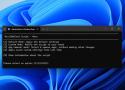
A simple, easy to use PowerShell script to remove pre-installed apps, disable telemetry, as well as perform various other changes to customize, declutter and improve your Windows experience. Win11Debloat works for both Windows 10 and Windows 11.
Ersatz-11 emulates an entire DEC PDP-11 system in software while running on low-cost PC hardware. It outperforms all of the hardware PDP-11 replacements on the market, outstripping them by a particularly wide margin in disk-intensive applications.
The PDP-11 was, and is, an extremely successful and influential family of machines which has spanned over two decades from the early 1970s through the mid 1990s. This note is an attempt to gather some of the knowledge on this family and present it for the benefit of those who are enthusiasts, curious, or downright confused as to what the -11 was and is, and how it related and still relates to its world.
What operating systems were written for the PDP-11?
Tldr: Boot into safe mode, and restart. Voila.
I cloned my 970 Evo Plus to a 990 Pro Put the 990 in place of the 970 and moved the latter to another m.2 slot. Cloned with clonezilla. Booted into windows, but it seemingly booted onto the 970, as it said the 990 had a "collision" (of ids). So, after that I took out the 970.... Got this error. Fix was to boot into safe mode, and it magically worked.
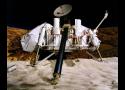
Launched in 1975, the probe outlived its 90-day mission by years and set the standard for Mars landings //
It's been 50 years since NASA sent Viking 1 on a mission to Mars.
Launched on a Titan-Centaur rocket from Complex 41 at Cape Canaveral Air Force Station on August 20, 1975, Viking 1 was one of a pair of probes sent to land on Mars.
Viking 1 consisted of an orbiter and a lander and followed earlier US missions to Mars that had begun with Mariner 4 in 1964, continuing with the Mariner 6 and 7 flybys, and the Mariner 9 Mars orbital mission. //
The Viking 1 spacecraft arrived in orbit around Mars on June 19, 1976.
Power came from a pair of 35 W radioisotope thermoelectric generators (RTGs), connected in series on top of the lander. According to NASA [PDF], "the computer was one of the greatest technical challenges of Viking." There were two general-purpose computer channels, each with a storage capacity of 18,000 words. One was active while the other was in reserve. There was also a tape recorder.
Viking 1 was an unparalleled success. The orbiter and lander lasted far longer than initial expectations. The orbiter was eventually shut down in August 1980 after it ran out of attitude control propellant. It had begun to run low in 1978, but engineers were able to eke it out for a further two years. The lander kept on going until its final transmission on November 11, 1982.
Unfortunately, the lander's failure wasn't due to its hardware or the harsh environment of Mars. It was instead "a faulty command sent from Earth," according to NASA. The command resulted in loss of communication. Controllers spent the next six and a half months attempting to regain contact with the lander before the overall mission came to an end on May 21, 1983.
It is debatable how much longer the lander could have lasted. Viking 2's lander transmitted data until April 12, 1980, but its batteries eventually failed. Both landers and their respective orbiters had operated far beyond their planned mission lifetimes.
Alan J. Wylie
VMS got it right
VMS (since 1977) has stored time as 100ns clock ticks since 17 November 1858 (the start of the Reduced Julian Day (an astronomical timescale, the "reduced" variant was introduced by the Smithsonian Astrophysical Observatory in 1957 to record the orbit of Sputnik). It will run out of bits in the year 31,086.
Evil Auditor
Re: VMS got it right
...and about 29,000 years from now, someone will have discovered an ancient calculation machine and will have figured out how it worked. And they will see that its clock stops in the year 31,086. And some of them will start a cult that believes the end is near for an ancient civilisation allowed their calender to run until then...
Phil O'SophicalSilver badge
Re: VMS got it right
VMS got most things right.
There is, though, a well-known bug filed against VMS for a related issue. The standard message display only permits 4-digit years, so even if the clock is fine until 31,086 there will be a display error when it ticks over on Dec 31st 9999. Last time I saw that bug in the DEC tracking system it was in an 'accepted' state, with a note that it will be fixed "in a future major architecture". Sadly unlikely now...

Feeling old yet? Let the Reg ruin your day for you. We are now substantially closer to the 2038 problem (5,849 days) than it has been since the Year 2000 problem (yep, 8,049 days since Y2K).
Why do we mention it? Well, thanks to keen-eyed Reg reader Calum Morrison, we've spotted a bit of the former, and a hint of what lies beneath the Beeb's digital presence, when he sent in a snapshot that implies Old Auntie might be using a 32-bit Linux in iPlayer, and something with a kernel older than Linux 5.10, too.
That 2020 kernel release was the first able to serve as a base for a 32-bit system designed to run beyond 03:14:07 UTC on 19 January 2038. //
Like Y2K, it's easy to explain and fairly easy to fix: traditionally, UNIX stored the time as the number of seconds since January 1, 1970 – but they held it in a signed 32-bit value. That means that at seven seconds after pi o'clock in the morning of January 18th, 2038 (UTC), when it will be 2,147,483,647 (2³¹) seconds after the "epoch", the next time will be -2³¹: 20:45:52 in the evening of December 13th, 1901.
It has already been fixed in Linux and any other recent UNIX-ish OSes. The easy way is to move to a 64-bit value, giving a range of 292 billion years either way. That'll do, pig.
The fun bit is finding all the places it might occur, like this fun (and old and long-fixed) MongoDB bug. MongoDB stores the date correctly, Python stores the date correctly, but dates were passed from one to the other using a 32-bit value.
vtcodger
Re: Attitude problem
YOU may have spent New Years Eve 2000 at a great party. I and many others I'm sure, spent New Years morning,2000 booting 100-plus PCs to make sure they at least sort of worked -- never a certainty with Windows-98 even on normal mornings.
MiguelC
Re: Attitude problem
I was on duty that evening. At midnight we nodded, saluted each other, and went to work checking everything was running smoothly. Having had no alerts whatsoever, at around 1AM I went to the nearest ATM and checked my balance and latest account movements (an account in another bank than the one I was working for at the time). There was an interest credit of around the equivalent of 3000€. Resisting the urge to spend it there and then, I went back, showed the slip to my co-workers and pondered on what would happen from there on. At 8 AM, after an uneventful night on the job, I went down and checked my balance again. Without a trace of that earlier payment, it now showed the correct and, unfortunately, much smaller interest deposit...
Someone's night was indeed a lot more eventful than mine ;) //
Bill GraySilver badge
Reply Icon
Re: The bug is in the support library code (libc?) of a 1982 C compiler?
I suspect most time library code of this vintage also omits the year 2000 leap year (as I recall SGI Indigo Irix 4 did) and would be a day out after 2000.02.28.
I dunno how common that particular error would be? To screw things up that way, you have to simultaneously know that (in the Gregorian calendar) "century" years are not leap years, but also not know that years evenly divisible by 400 are leap years. That is to say, you have to be a little ignorant, but not completely ignorant.
If you're completely ignorant of the problem, you'll say that 2000 should have a leap day, and be correct for the wrong reasons.
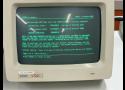
Museum boffins find code that crashes in 2037
A stark warning about the upcoming Epochalypse, also known as the "Year 2038 problem," has come from the past, as National Museum Of Computing system restorers have discovered an unsetting issue while working on ancient systems.
Robin Downs, a volunteer who was recently involved in an exhibition of Digital Equipment Corporation (DEC) gear at the museum, was on hand to demonstrate the problem to The Register in the museum's Large Systems Gallery, which now houses a running PDP-11/73. //
"So we found bugs that exist, pre-2038, in writing this that we didn't know about."
The Year 2038 problem occurs in systems that store Unix time – the number of seconds since the Unix epoch (00:00:00 UTC on January 1, 1970) in a signed 32-bit integer (64-bit is one modern approach, but legacy systems have a habit of lingering).
At 03:14:07 UTC on January 19, 2038, the second counter will overflow. In theory, this will result in a time and date being returned before the epoch – 20:45:52 UTC on December 13, 1901, but that didn't happen for Downs. //
zb42
As the article is specifically about date problems that occur before the 32bit unix time rollover, I think it should be mentioned that:
32bit NTP is going to roll over on the 7th of February 2036.
Perseid Meteors from Durdle Door
The limestone arch in the foreground in Dorset, England is known as Durdle Door, a name thought to survive from a thousand years ago.
Maximum-Stretch® is a white, elastomeric, acrylic, rubberized roof coating & sealant with 650% elongation to resist cracking & peeling. With 88% light reflectivity, the bright white finish reduces surface temperatures resulting in lowered cooling costs.
- Use on metal, built-up roofing, rolled roofing, concrete, EPDM & wood
- Designed for low-slope roof maintenance
- Non-toxic, eco-friendly, low VOC & made in the USA
The Preamble
We the People of the United States, in Order to form a more perfect Union, establish Justice, insure domestic Tranquility, provide for the common defence, promote the general Welfare, and secure the Blessings of Liberty to ourselves and our Posterity, do ordain and establish this Constitution for the United States of America.

Made by a pharmacist whose son was sick with croup, Vicks VapoRub saw skyrocketing sales during the 1918 Spanish flu outbreak.
For most people, memories of childhood coughs and colds are synonymous with a menthol-smelling ointment in a dark blue jar with a turquoise cap.
For more than a century, Vicks VapoRub has been a household name across continents. How it became one has roots in the Spanish flu pandemic in the early 20th century.
America’s lower judiciary is out of control — and Supreme Court Justice Neil Gorsuch is putting it on notice.
In a Thursday order, the nation’s highest court granted (in part) a request by the Trump administration to temporarily pause a lower court blockade on the National Institutes of Health’s bid to terminate DEI-related grants totaling nearly $800 million. The ruling was 5-4, with Chief Justice John Roberts and the court’s Democrat appointees saying they would have denied the administration’s application in full. //
In addition to signing onto the majority’s Thursday decision, Gorsuch penned a concurring opinion in the case in which he ripped into the lower judiciary’s out-of-control behavior. While noting that “[l]ower court judges may sometimes disagree with this Court’s decisions … they are never free to defy them.”
Citing a related case recently before the Supreme Court (Department of Ed. v. California), the Trump appointee highlighted how the high court “granted a stay [in that case] because it found the government likely to prevail in showing that the district court lacked jurisdiction to order the government to pay grant obligations.” He wrote, “California explained that ‘suits based on “any express or implied contract with the United States”’ do not belong in district court under the Administrative Procedure Act (APA), but in the Court of Federal Claims under the Tucker Act.”
“Rather than follow that direction, the district court in this case permitted a suit involving materially identical grants to proceed to final judgment under the APA,” Gorsuch wrote. “As support for its course, the district court invoked the ‘persuasive authority’ of ‘the dissent[s] in California‘ and an earlier court of appeals decision California repudiated … That was error.”
Gorsuch went on to underscore that “the promise of our legal system that like cases are treated alike means that a lower court ought not invoke the ‘persuasive authority’ of a dissent or a repudiated court of appeals decision to reach a different conclusion on an equivalent record.” More to the point, however, he noted that the district court’s apparent rebuke of the precedent very recently established by SCOTUS in the California case is not an isolated incident among the lower courts.
“If the district court’s failure to abide by California were a one-off, perhaps it would not be worth writing to address it. But two months ago another district court tried to ‘compel compliance’ with a different ‘order that this Court ha[d] stayed,'” Gorsuch wrote. “Still another district court recently diverged from one of this Court’s decisions even though the case at hand did not differ ‘in any pertinent respect’ from the one this Court had decided … So this is now the third time in a matter of weeks this Court has had to intercede in a case ‘squarely controlled’ by one of its precedents.” //
“All these interventions should have been unnecessary, but together they underscore a basic tenet of our judicial system: Whatever their own views, judges are duty-bound to respect ‘the hierarchy of the federal court system created by the Constitution and Congress,'” Gorsuch wrote.