
For most of its time at Mars, the MAVEN spacecraft provided a relay for scientific data uplinked from NASA’s rovers and landers on the Martian surface. The relay allowed NASA to return significantly more data and imagery from rovers like Perseverance and Curiosity than would be possible through a direct-to-Earth radio connection.
With MAVEN out of the picture, NASA has four other orbiters it can use to provide this critical radio link. But officials aren’t sure how much longer they will last. Three of the four remaining relay orbiters are older than MAVEN, which played an outsized role in the relay network thanks to its higher orbit.
“Over the life of the mission, MAVEN supported more than 8 percent of all of our relay sessions planned by our rovers and landers, but it accounted for nearly 18 percent of all of the data returned, illustrating its usefulness when returning large data volumes,” said Tiffany Morgan, director of NASA’s Mars Exploration Program.
The network still has plenty of capacity to support the Perseverance and Curiosity rovers, with some minor caveats.
“We do have remaining assets, and those assets have adjusted the amount of data that they return, and the rovers have also adjusted their planning for how they connect to those assets,” Morgan said. “There is a slight delay on occasion, because we don’t have as many assets in view, to getting our science data back, and MAVEN was critical in returning science data versus operational data. But the Mars Relay Network is resilient enough at this point in time to accommodate, for the most part, the loss of MAVEN with the added delay.” //
jimlux Ars Tribunus Militum
12y
1,671
jlredford said:
It's interesting that they're able to use so many different orbiters to do this relay function. Interesting and resilient! It's great that it can handle dropouts like MAVEN. As the system gets upgraded, I hope they keep all this inter-operability to handle the next failure. The Mars Reconnaissance Orbiter is the main link these days, and it's now 20 years old, almost twice the age of MAVEN.
That’s because most of them (at least those launched after 2005) fly the JPL developed Electra software defined radio (they’re manufactured by L3, but the hardware design and the software is JPL). The landers also use Electra radios (or Electra Lite). MER was the first Mars lander to use relay ops with an orbiter to return data, and after a week or two, it had returned more data through the relay link than all previous Mars missions combined. It’s that effective (compared to basic X-band Direct to Earth at 8 kbps)
And as far as interoperability goes, that’s part of the Prox-1 standard from the Consultative Committee on Space Data Standards (ccsds.org) - most people flying a relay payload use it (as will the new Mars Telecom Network, and similar spacecraft planned for the Moon). 400 MHz UHF at Mars for now, but S-band is coming, as is Ka-band.


These captivating reads offer some needed and expert perspectives on our quest to understand the universe and our place within it.
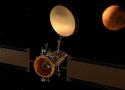
What everyone agrees on is that NASA needs a new spacecraft capable of relaying communications from Mars to Earth. This issue has become especially acute with the recent loss of NASA’s MAVEN spacecraft. NASA’s best communications relay remains the Mars Reconnaissance Orbiter, which has now been there for 20 years.
Congress cared enough about this issue to add $700 million in funding for a “Mars Telecommunications Orbiter” in the supplemental funding for NASA provided by the “One Big Beautiful Bill” passed by the US Congress last year.
Based on some projected analyses, SpaceX is expected to have in the neighborhood of $22 to $24 billion in revenue next year. That is a lot of money—it’s on par with NASA’s annual budget, for example, and SpaceX can deploy its capital far, far more efficiently than the government can. So the company will be able to accomplish a lot. But with a large infusion of cash, SpaceX will be able to go much faster. And it will take a lot of cash to design and build the satellites and launch the rockets to deploy data centers in space.
Abhi Tripathi, a long-time SpaceX employee who is now director of mission operations at the UC Berkeley Space Sciences Laboratory, believes that once Musk realized Starlink satellites could be architected into a distributed network of data centers, the writing was on the wall.
“That is the moment an IPO suddenly came into play after being unlikely for so long,” Tripathi told Ars. “If you have followed Elon’s tactics, you know that once he commits to something, he leans fully into it. Much of the AI race comes down to amassing and deploying assets that work quicker than your competition. A large war chest resulting from an IPO will greatly help his cause and disadvantage all others.” //
Musk also believes that a larger and more financially robust SpaceX is necessary to undertake the settling of Mars. He understands that NASA will not pay for this, as the civil space agency is in the business of exploration and not settlement. For several years now, he has expressed that it will require about 1 million tons of supplies to be shipped to Mars to make a self-sustaining settlement. This is roughly 1,000 ships, and including refueling, at least 10,000 Starship launches. At $100 million per launch, that’s $1 trillion in launch costs alone.
Musk has frequently expressed a concern that there may be a limited window for settling Mars. Perhaps financial markets collapse. Perhaps there’s a worse pandemic. Perhaps a large asteroid hits the planet. Taking SpaceX public now is a bet that he can marshal the resources now, during his lifetime, to make Mars City One a reality. He is 54 years old.
Sending astronauts to the red planet will be a decades-long activity and cost many billions of dollars. So why should NASA undertake such a bold mission?
A new report published Tuesday, titled “A Science Strategy for the Human Exploration of Mars,” represents the answer from leading scientists and engineers in the United States: finding whether life exists, or once did, beyond Earth.
“We’re searching for life on Mars,” said Dava Newman, a professor in the Department of Aeronautics and Astronautics at Massachusetts Institute of Technology and co-chair of the committee that wrote the report, in an interview with Ars. “The answer to the question ‘are we alone‘ is always going to be ‘maybe,’ unless it becomes yes.”
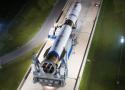
ESCAPADE’s path through space, relative to the Earth, has the peculiar shape of a kidney bean. In the world of astrodynamics, this is called a staging, or libration, orbit. It’s a way to keep the spacecraft on a stable trajectory to wait for the opportunity to go to Mars late next year.
“ESCAPADE has identified that this is the way that we want to fly, so we launch from Earth onto this kidney bean-shaped orbit,” said Jeff Parker, a mission designer from the Colorado-based company Advanced Space. “So, we can launch on virtually any day. What happens is that kidney bean just grows and shrinks based on how much time you need to spend in that orbit. So, we traverse that kidney bean and at the very end there’s a final little loop-the-loop that brings us down to Earth.”
That’s when the two ESCAPADE spacecraft, known as Blue and Gold, will pass a few hundred miles above our planet. At the right moment, on November 7 and 9 of next year, the satellites will fire their engines to set off for Mars.
An illustration of ESCAPADE’s trajectory to wait for the opportunity to go to Mars. Credit: UC-Berkeley
There are some tradeoffs with this unique staging orbit. It is riskier than the original plan of sending ESCAPADE straight to Mars. The satellites will be exposed to more radiation and will consume more of their fuel just to get to the red planet, eating into reserves originally set aside for science observations.
The satellites were built by Rocket Lab, which designed them with extra propulsion capacity in order to accommodate launches on a variety of different rockets. In the end, NASA “judged that the risk for the mission was acceptable, but it certainly is higher risk,” said Richard French, Rocket Lab’s vice president of business development and strategy.
The upside of the tradeoff is that it will demonstrate an “exciting and flexible way to get to Mars,” Lillis said. “In the future, if we’d like to send hundreds of spacecraft to Mars at once, it will be difficult to do that from just the launch pads we have on Earth within that month [of the interplanetary launch window]. We could potentially queue up spacecraft using the approach that ESCAPADE is pioneering.”
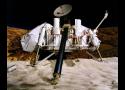
Launched in 1975, the probe outlived its 90-day mission by years and set the standard for Mars landings //
It's been 50 years since NASA sent Viking 1 on a mission to Mars.
Launched on a Titan-Centaur rocket from Complex 41 at Cape Canaveral Air Force Station on August 20, 1975, Viking 1 was one of a pair of probes sent to land on Mars.
Viking 1 consisted of an orbiter and a lander and followed earlier US missions to Mars that had begun with Mariner 4 in 1964, continuing with the Mariner 6 and 7 flybys, and the Mariner 9 Mars orbital mission. //
The Viking 1 spacecraft arrived in orbit around Mars on June 19, 1976.
Power came from a pair of 35 W radioisotope thermoelectric generators (RTGs), connected in series on top of the lander. According to NASA [PDF], "the computer was one of the greatest technical challenges of Viking." There were two general-purpose computer channels, each with a storage capacity of 18,000 words. One was active while the other was in reserve. There was also a tape recorder.
Viking 1 was an unparalleled success. The orbiter and lander lasted far longer than initial expectations. The orbiter was eventually shut down in August 1980 after it ran out of attitude control propellant. It had begun to run low in 1978, but engineers were able to eke it out for a further two years. The lander kept on going until its final transmission on November 11, 1982.
Unfortunately, the lander's failure wasn't due to its hardware or the harsh environment of Mars. It was instead "a faulty command sent from Earth," according to NASA. The command resulted in loss of communication. Controllers spent the next six and a half months attempting to regain contact with the lander before the overall mission came to an end on May 21, 1983.
It is debatable how much longer the lander could have lasted. Viking 2's lander transmitted data until April 12, 1980, but its batteries eventually failed. Both landers and their respective orbiters had operated far beyond their planned mission lifetimes.
Mars, 140 million miles away.
The Dark Ars Tribunus Angusticlavius
8y
11,841
The lander's four shock-absorbing legs have some give, sort of like the crush zone of a car, according to Will Coogan, Firefly's chief engineer for the Blue Ghost lander. The legs have an aluminum honeycomb material inside, and they connect to bowl-shaped footpads with a ball-socket joint to give the spacecraft some flexibility in case it comes down on a slope or a rock.
That's basically a copy of the Apollo landers. Apollo had crushable aluminum honeycomb in the legs and bowl-shaped feet attached to the legs with ball joints. The statistical analysis was that Apollo's system had a 99.9% of not fully crushing the honeycomb as long as the landing velocity was below 4 feet per second horizontally and 7 feet per second vertically (1.22 m/s and 2.13 m/s). All of the landings were well under those velocities:
https://arstechnica.com/civis/attachments/1740667805423-png.103726/
NASA Technical Note TN D-6850 Apollo Experience Report - Lunar Module Landing Gear Subsystem by William F. Rogers (June 1972).
D-6850 Apollo Experience Report - Lunar Module Landing Gear Subsystem
https://ntrs.nasa.gov/api/citations/19730010151/downloads/19730010151.pdf. //
EarendilStar Wise, Aged Ars Veteran
8y
148
SkyeFire said:
Lunar conditions are brutal. Two weeks of brutal daylight (plus unfiltered solar radiation) followed by 2 weeks of total darkness. A few lunar probes have managed to survive the night and reboot once they got some sunlight again, but none of them survived more than a few day/night cycles. The thermal swings tend to destroy the electronics and power systems.
This entire bath and forth made me realize I don’t know how the temperature swings of the moon and Mars differ. I was reading thinking “How is this thermal swing different than Mars, a place we operate electronics for far more heat cycles than this?”.
Allow me to share what I found:
Commonly accepted average temps for Luna:
-180°C to 105°C
Mars:
-130°C to 22°C
That’s quite the difference!
Does anyone know why Mars nights are warmer? Is it mostly due to ground surface absorption of radiation, and not losing most of it until the next day cycle? The (limited) atmosphere retaining some heat? ///
Shorter nights on Mars
The agency tasked government labs, research institutions, and commercial companies to come up with better ideas to bring home the roughly 30 sealed sample tubes carried aboard the Perseverance rover. NASA deposited 10 sealed tubes on the surface of Mars a couple of years ago as insurance in case Perseverance dies before the arrival of a retrieval mission.
"We want to have the quickest, cheapest way to get these 30 samples back," Nelson said. //
"It has been more than two years since NASA paused work on MSR," the Planetary Society said. "It is time to commit to a path forward to ensure the return of the samples already being collected by the Perseverance rover.
"We urge the incoming Trump administration to expedite a decision on a path forward for this ambitious project, and for Congress to provide the funding necessary to ensure the return of these priceless samples from the Martian surface."
China says it is developing its own mission to bring Mars rocks back to Earth. Named Tianwen-3, the mission could launch as soon as 2028 and return samples to Earth by 2031. While NASA's plan would bring back carefully curated samples from an expansive environment that may have once harbored life, China's mission will scoop up rocks and soil near its landing site.
"They’re just going to have a mission to grab and go—go to a landing site of their choosing, grab a sample and go," Nelson said. "That does not give you a comprehensive look for the scientific community. So you cannot compare the two missions. Now, will people say that there’s a race? Of course, people will say that, but it’s two totally different missions."
Still, Nelson said he wants NASA to be first. He said he has not had detailed conversations with Trump's NASA transition team.

With the vast distances involved, any manned mission to Mars won’t be able to haul substantial solid buildings to another planet. The easiest solution would be to use what’s already there. Researchers from Kharazmi University in Tehran, Iran explored several possible materials. Their findings were published in the journal Acta Astronautica. An excerpt from the report reads:
“Although it is a bit strange, blood can be utilized to create strong concrete or bricks for onsite construction on Mars. After the arrival of the first Martian inhabitants and their placement in primary structures, which can include inflatable structures, the combination of tears, blood, and sweat from the inhabitants, along with Martian regolith, can be used to produce a concrete known as AstroCrete. The production process is simple.”. //
The researchers note that ancient Romans used animal blood to reinforce their mortar. However, AstroCrete has some issues. Living on Mars will be a physical challenge and forcing astronauts to constantly donate blood would hamper progress on all other projects on the Martian surface. Also, the material’s low density would offer lackluster protection against cosmic radiation.

Eleven months after the Ingenuity helicopter made its final flight on Mars, engineers and scientists at NASA and a private company that helped build the flying vehicle said they have identified what probably caused it to crash on the surface of Mars.
In short, the helicopter's on-board navigation sensors were unable to discern enough features in the relatively smooth surface of Mars to determine its position, so when it touched down, it did so moving horizontally. This caused the vehicle to tumble, snapping off all four of the helicopter's blades.
It is not easy to conduct a forensic analysis like this on Mars, which is typically about 100 million miles from Earth. Ingenuity carried no black box on board, so investigators have had to piece together their findings from limited data and imagery.
"While multiple scenarios are viable with the available data, we have one we believe is most likely: Lack of surface texture gave the navigation system too little information to work with," said Ingenuity’s first pilot, Håvard Grip of NASA's Jet Propulsion Laboratory, in a news release. //
Amazingly, the vehicle was able to recharge somewhat with its solar panels and is continuing to communicate about once a week with the Perseverance rover that brought it to Mars in February 2021. This will last a little while longer before the rover and helicopter lose line-of-sight communications.
The remarkable success of Ingenuity has prompted NASA engineers to already begin planning for possible follow-on missions, including a larger "Mars Chopper" that could carry scientific instruments to study areas inaccessible to rovers.
Image was captured during Martian spring, on May 21, by Mars Reconnaissance Orbiter's HiRISE camera
In Mars' northern hemisphere, the snow and ice seen on the dunes is made of carbon dioxide - or, dry ice
As it reacts to sun, the gas that escapes carries up the dark sand from below, creating 'beautiful patterns'

JohnDeL Ars Tribunus Angusticlavius
8y
6,157
Subscriptor
The single bit requirement indicates that this was primarily an engineering mission and not a science one. The intent was to test out new technology and see how it might be improved for use on later science missions.
A great example of this is the Sojourner/Pathfinder mission. Sojourner's mission goals were to roll one meter and send back one image and last one sol on the surface. The nominal plan was for it to roll (IIRC) 10 meters, send back 100 images and APXS readings, and last 7 sols. What we got was 100 meters, more than a thousand readings and images, and a lifetime of 83 sols.
Thanks to Sojourner's work, we now have freakin' huge rovers on Mars that have lasted for a decade, rolled more than 30 km, and provided thousands of images and readings that have significantly improved our understanding of Mars.
We can expect the same sort of improvement from Odie's siblings when they finally make it to the Moon. Per aspera, ad astra!

So, how did the team do it? They ditched traditional, space-rated hardware. They just couldn't take the mass penalty. For example, the RAD750 computer that operates most modern spacecraft—including the Perseverance rover—weighs more than 1 pound. They couldn't blow that much mass on the computer, even if it was designed specifically for spaceflight and was resistant to radiation.
Instead, Tzanetos said Ingenuity uses a 2015-era smartphone computer chip, a Qualcomm Snapdragon 801 processor. It has a mass of half an ounce.
The RAD750, introduced in 2001, is based on 1990s technology. The modern Qualcomm processor was designed for performance and has the benefit of 20 years of advancement in microprocessor technology. In addition to being orders of magnitudes cheaper—the RAD750 costs about a quarter of a million dollars, while the Qualcomm processor goes into inexpensive mobile phones—the newer chip has bucketloads of more performance.
"The processor on Ingenuity is 100 times more powerful than everything JPL has sent into deep space, combined," Tzanetos said. This means that if you add up all of the computing power that has flown on NASA's big missions beyond Earth orbit, from Voyager to Juno to Cassini to the James Webb Space Telescope, the tiny chip on Ingenuity packs more than 100 times the performance.
A similar philosophy went into other components, such as the rechargeable batteries on board. These are similar to the lithium batteries sold in power tools at hardware stores. Lithium hates temperature cycles, and on the surface of Mars, they would be put through a hellish cycle of temperatures from -130° Fahrenheit (-90° C) to 70° (20° C).
The miracle of Ingenuity is that all of these commercially bought, off-the-shelf components worked. Radiation didn't fry the Qualcomm computer. The brutal thermal cycles didn't destroy the battery's storage capacity. Likewise, the avionics, sensors, and cameras all survived despite not being procured with spaceflight-rated mandates.
"This is a massive victory for engineers," Tzanetos said.
Indeed it is. While NASA's most critical missions, where failure is not an option, will likely still use space-rated hardware, Ingenuity's success opens a new pathway for most science missions. They can be cheaper, lighter, and higher-performing in every way. This is almost unimaginably liberating for mission planners. //
The concept of flying Ingenuity came along at just the right time, in the early 2010s, as NASA was finalizing the payloads that would fly on the Perseverance rover to Mars in 2020. When NASA had to make the call on whether or not to fly the technology demonstration mission, the right mix of technologies was coming online: high energy density batteries, high-performance processors for mobile devices, lightweight cameras, and MEMS accelerometers to measure acceleration.
These devices were pushed and perfected as part of the mobile phone revolution. If there had been no iPhone, there would have been no Ingenuity. It was the perfect confluence, and it resulted in the miracle on Mars. //
It's a perilous exercise to judge history while being in the middle of history, of course. But I would rate Ingenuity among the three most innovative and important things that NASA has done during the 21st century. The other two are the James Webb Space Telescope and the Commercial Orbital Transportation Services, or COTS, program.
all the tags from https://b.plas.ml
1st-amendment 2nd-amendment 4th-amendment 5th-amendment 9/11 a8 abortion acl adhd afghanistan africa a/i air-conditioning amateur-radio amazon america american android animals anti-americanism antifa anti-semitism antiv antivirus aoip apollo apple appliances archaeology architecture archive art astronomy audio automation avatar aviation backup bash batteries belleville bible biden bill-of-rights biology bookmarks books borg bush business calibre camping capitalism cellphone censorship chemistry children china christianity church cia clinton cloud coldwar communication communist composed computers congress conservatives constitution construction cooking copyleft copyright corruption cosmology counseling creation crime cron crypto culture culture-of-death cummins data database ddt dd-wrt defense democrats depression desantis development diagrams diamonds disinformation diy dns documentation dokuwiki domains dprk drm drm-tpm drugs dvd dysautonomia earth ebay ebola ebook economics education efficiency electricity electronics elements elwa email energy engineering english environment environmentalism epa ethernet ethics europe euthanasia evolution faa facebook family fbi fcc feminism finance firewall flightsim flowers fonts français france fraud freebsd free-speech fun games gardening genealogy generation generators geography geology gifts git global-warming google gop government gpl gps graphics green-energy grounding hdd-test healthcare help history hollywood homeschool hormones hosting houses hp html humor hunting hvac hymns hyper-v imap immigration india infosec infotech insects instruments interesting internet investing ip-addressing iran iraq irs islam israel itec j6 journalism jumpcloud justice kindle kodi language ldap leadership leftist leftists legal lego lgbt liberia liberty linguistics linux literature locks make malaria malware management maps markdown marriage mars math media medical meshcentral metatek metric microbit microsoft mikrotik military minecraft minidisc missions moon morality mothers motorola movies mp3 museum music mythtv names nasa nature navigation navy network news nextcloud ntp nuclear obama ocean omega opensource organizing ortlip osmc oxygen paint palemoon paper parents passwords patents patriotism pdf petroleum pets pews photography photo-mgmt physics piano picasa plesk podcast poetry police politics pollution pornography pots prayer pregnancy presentations press printers privacy programming progressive progressives prolife psychology purchasing python quotes rabbits rabies racism radiation radio railroad reagan recipes recording recycling reference regulations religion renewables republicans resume riots rockets r-pi russia russiagate safety samba satellites sbe science sci-fi scotus secularism security servers shipping ships shooting shortwave signal sjw slavery sleep snakes socialism social-media software solar space spacex spam spf spideroak sports ssh statistics steampowered streaming supplement surveillance sync tarsnap taxes tck tds technology telephones television terrorism tesla theology thorium thumbnail thunderbird time tls tools toyota trains transformers travel trump tsa twitter typography ukraine unions united.nations unix ups usa vaccinations vangelis vehicles veracrypt video virtualbox virus vitamin vivaldi vlc voting vpn w3w war water weather web whatsapp who wifi wikipedia windows wordpress wuflu ww2 xigmanas xkcd youtube zfs