
And, naturally, the meeting to discuss why yesterday’s meeting failed to produce sufficient meetings.
Eventually the Army achieves the theoretical maximum of military bureaucracy:
Every officer is attending a meeting about work nobody can accomplish because everyone is attending meetings.



The open expression of religion is an American military tradition. George Washington prayed in the snow at Valley Forge. George Patton had prayer cards printed and distributed throughout the Third U.S. Army in 1944. We can't allow the fervently anti-religious to create a heckler's veto over religious liberty. Having a stand-up guy like Pete Hegseth get involved in this battle over a very basic freedom-of-expression issue shows me the Department of War is in good hands.
One point I think gets overlooked is that industry responds to the signals it receives. Companies aren’t going to spend millions expanding facilities, buying equipment and hiring skilled workers if procurement quantities swing wildly every few years. When demand becomes unpredictable, suppliers close their doors, experienced machinists retire, subcontractors move into commercial work, and critical manufacturing capability slowly disappears. Years later, we act surprised when production can’t keep up. It isn’t because industry suddenly forgot how to build jet engines. It’s because we’ve allowed pieces of the industrial ecosystem to disappear, and rebuilding them takes years, not months.
I’ve seen a lot of discussion blaming manufacturers. Some criticism is certainly warranted. Quality matters. Delivery schedules matter. Accountability matters. But government also has a responsibility to provide stable procurement strategies and predictable demand. Industry cannot build long-term capacity around short-term thinking.
This isn’t unique to jet engines, either. We’ve watched similar issues emerge in munitions production, shipbuilding, missile manufacturing, and other critical sectors of the defense industrial base. Every time demand spikes, we discover we no longer have the surge capacity we assumed existed. The uncomfortable truth is that surge capacity isn’t something you create during a crisis. You build it years before you need it.
That’s really the lesson here. The article is about engines, but the real story is much bigger. Jet engines are simply where the symptoms are showing today. The underlying issue is that we’ve spent decades treating our industrial base as a cost to manage instead of a strategic capability to preserve.
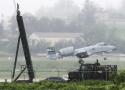
Introduced Monday as H.R. 9780 by Rep. Abe Hamadeh, R-Ariz., the BRRRRT Act (Bolstering Recognition, Resurgence, Retention, and Remembrance of the Thunderbolt) gets its name from the bone-rattling “BRRRRT!” sound the jet’s 30mm Gatling gun makes when fired. //
The current National Defense Authorization Act (NDAA) has some provisions for keeping some A-10s flying as well. But that doesn't sound as cool as the BRRRRT Act.
This bill will probably end up going nowhere, sadly. The A-10s will stick around a little while longer, but the Air Force has stopped training Warthog drivers, and depot maintenance operations on the A-10 are wrapping up. That's too bad. There's still a place in the modern battle space for a dedicated, low-and-slow, dedicated close air-support airplane, and the A-10's a very, very good one.

82 years later, Pointe du Hoc still teaches a hard American lesson: plans matter only until war wrecks them.
Mike Tyson had it right; all plans go out the window when you're punched in the face.
Courage shows itself when the map is wrong, the guns are missing, the commander is wounded, and the enemy still holds the ground. On D-Day, Rudder's Rangers didn't stop at the cliff; they went looking for the guns, found and destroyed them, and held the road.
“Rangers lead the way” wasn't a slogan in the morning; it was a record of what they had already done. Thank God for such men.
Captain is relatively easy. The responsibility is a metric shitton, and it crushes some people. But otherwise the job is mentoring, monitoring, and instilling serenity and confidence in the crew, then pushing the nasty stuff down to your number two so you can keep a clear head.
So what was it, beyond handling the nasty stuff, that made a great chief mate? I truly didn't know.
Then I read The Mirror of the Sea by my favorite author, Joseph Conrad. Conrad (originally Konrad) was an actual ship captain before he was an author. Most of his books are fiction. This one is his lessons learned. //
I've written extensively that our admirals today are too nice. Killers get filtered out. Assholes get tossed. The people who pound on standards, readiness, and lethality don't make flag.
That's a serious problem. Patton wasn't nice. King wasn't nice. Halsey wasn't nice. MacArthur certainly wasn't nice.
But here's what I haven't written about: the particular type of asshole we should want as Deputy SecNav, as Vice Chairman of the Joint Chiefs, as Vice CNO, as Vice Commandant.
It's the type Conrad writes about. It's Chief Mate B--.
It's the man who knows everything. Who is constantly watching for problems. Who is passionate about readiness to the point of paranoia. The man who wants everything perfect. The Cassandra.
That is the type who keeps a ship from sinking in the storm.
You don't want a paranoid captain. The captain needs a clear head. He can't fixate on every cloud shape and every small drop in the barometer. He needs to be optimistic, because his optimism is what the crew runs on.
But the captain can afford that optimism only because Chief Mate B-- exists. B-- holds the watch. B-- carries the worry and the dread for the entire ship so the captain doesn't have to. The optimism at the top is purchased by the paranoia one rank down.
Now look at how we build our flag and general officer corps.
The result is a chain of command in which everyone is the captain and no one is the chief mate. Everyone is projecting confidence. Nobody is grappling with the impending calamity at the table over the salt beef. The bad news has nowhere to go, because the second in command was promoted precisely for not being the kind of person who delivers it.
This is why our readiness numbers are fiction. This is why our shipbuilding programs slip for a decade before anyone in a deputy chair says the program is dead. This is why magazine depth, drydock capacity, and mariner manning all degraded in plain sight while every brief said green. The watchstander role was abolished by personnel policy. We optimized the second in command for comfort, and comfort is the one thing a number two is never supposed to provide.
The fix is unpleasant, which is why nobody will like it.
Stop promoting deputies for likability. Promote them for the trait Conrad hated and trusted in the same breath: the unrestful one. Find the officers who make their bosses uncomfortable. Find the ones with the uneasy eye, the ones everlastingly ready for the calamity, the ones whose determined silences imply the ship is not safe. Then put them one rank below the optimists, on purpose.
Find the ones insecure about our readiness.
It will be miserable. The captains will resent them, exactly as Conrad resented B--. Good. That friction is the system working. A deputy who never makes the principal uncomfortable is not doing the job. He is just a second optimist, and two optimists in a storm is how ships sink.

Between 1939 and 1945, Allied planes dropped 3.4 million tons of bombs on Axis powers.

The federal government plans to automatically register eligible men for the military draft beginning in December, according to a proposed rule published last week.
The Selective Service System (SSS), the government agency that maintains the database of draft-eligible Americans, submitted the “automatic registration” rule change to the Office of Information and Regulatory Affairs on March 30. //
Congress approved automatic registration for the draft last December as part of the 2026 National Defense Authorization Act, must-pass legislation that authorizes funding for military personnel and operations.
“This statutory change transfers responsibility for registration from individual men to SSS through integration with federal data sources,” the agency notes on its website. “SSS will implement the change by December 2026, resulting in a streamlined registration process and corresponding workforce realignment.” //
Currently, 46 states and territories have laws in place to automatically register eligible men when they apply for driver’s licenses or IDs, according to the Selective Service System.

Someday there is going to be a movie made about this rescue mission in Iran.
But man, what a morale booster for our military to know that the Secretary of War and Commander-in-Chief will blow up $300 million worth of our own military aircraft to rescue one US soldier.
No man left behind!
God bless our troops!
Military personnel matter to President Trump. At $300 million a troop the 1.3 million people in uniform means they are worth 390 trillion dollars (a million times a million is a trillion).
To Joe Biden, they were worth nothing.
He left 13 behind to die in Afghanistan and he looked at his watch repeatedly when their bodies came home.
But for a moment, look at our military’s rescue through the eyes of the enemy.
Iran had two men downed inside Iran and somehow its military was unable to find them, while the military from a nation thousands of miles away rescued them. It was like a groundball going through a fielder’s legs and costing his team a World Series game.
The rescue feels like victory because it is.

"Now, these are not routine operations. They were high-risk, high-stakes missions conducted in the heart of enemy territory.
"This was not just barely into Iran. This was deep into Iran, involving coordinated strikes to suppress threats, deception tactics to protect our teams, and full synchronization across air, ground, and special operations.
"The Iranians are still asking themselves right now, how did the Americans do this?"
Of the first mission, Hegseth said:
"The first mission, the first of two, was an audacious daylight thunder run right up the middle.
"It was authorized in less than two hours from that pilot going down, when we knew where he was, and it was authorized in the middle of the night because anybody that’s worked for this man knows he’s up in the middle of the night." //
"I looked up at my screen when the final mission was complete inside our SCIF, our secure facility.
"And we have a running VTC, a running coordination cell, and the top of it read 45 hours and 56 minutes.
"For 45 hours and 56 minutes, we held that call open for coordination.
"From the moment our pilots went down, our mission was unblinking.
"The call never dropped.
"The meeting never stopped.
"The planning never ceased."
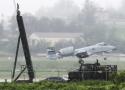
The A-10 Warthog never tried to impress anyone with looks. Good thing, because it couldn't; the plane looks as though it was assembled in a scrapyard during a bar fight.
And when things get serious, it's still one of the first aircraft anybody wants covering them overhead. Operation Epic Fury just drove the point home again, this time over the Red Sea. //
Built by Fairchild Republic, the A-10 exists for one purpose: to kill enemy threats close to American forces.
That mission hasn't changed since the 1970s, and no amount of PowerPoint presentation has replaced it. The aircraft was designed around the GAU-8 Avenger cannon, a 30 mm monster that roars like a lion and leaves fire in its wake like a dragon. Everything else on the plane exists to support that weapon and keep the pilot alive long enough to use it. //
The Warthog didn't just show up; it stayed, loitered, and delivered precise firepower where it mattered, when it mattered. Fast jets hit and leave, while the Warthog sticks around to make sure the job's finished. //
The operation also highlights a critical limitation in the current U.S. force structure. While fifth generation aircraft excel in penetrating defended airspace and striking fixed high value targets, they are not optimized for sustained engagement of numerous low value but operationally decisive targets such as fast attack craft or mobile launch teams. Epic Fury exposes this gap under real combat conditions and reinforces the need for platforms capable of persistent close engagement.
The Air Force keeps trying to retire it in favor of fifth-generation fighters. It sounds like a modern and efficient argument, but in reality, it keeps running into the same problem. The A-10 does a job no other aircraft on the planet handles as well as the Warthog does. //
AnonymousinIL
13 hours ago
It’s not pretty. It’s not ugly. It’s pretty ugly but very well suited for ground support. Fast movers say “my plane has a gun.” Hog drivers say “my gun has a plane.” //
anon-xzx7
13 hours ago
It would be a better plan to identify the generals who want to retire this magnificent aircraft and retire the generals. //
Dawgly One
14 hours ago
The Air Force wants to retire it SOOOOOO bad. You know who doesn’t want it retired? The Army and the Marines. The Army has begged the Air Force to give it to them, but they won’t, because it has jet engines and carries weapons. Clowns. Just give it up, and go do your fast mover stuff. //
David Lang
13 hours ago
Everyone over-estimates how many targets a fighter can take out, a F15 has ~900 rounds, a F 15, F18 has ~500 rounds, a F-25 has 180 rounds, an A-10 has 1150 rounds (and much more powerful rounds than any of the others). The Apache helicopter has a similar number of rounds as the A-10 (same caliber but less powerful)
The A-10 also has more weapons pylons to hang bombs/rockets/etc off of (and flying slower, it can use cheaper rockets rather than guided missiles and smart bombs)
so a single A-10 can take out more targets, armored or not (and many ships would count as armored, not because they specifically have armor, but just the amount of steel needed to hold the ship together in the face of an angry sea is what land vehicles would call armored)
The Air Force has been trying to get rid of them for decades, claiming that the new jets can do the job, but war after war the A-10s show they do a better job, and for less money.
Nowadays they are exclusively flown by National Guard units, so when you hear about them in a war zone, remember those pilots are taking time away from their job to do this. Their jobs are protected by law, but that doesn't get work projects done or earn promotions.

Fatesrider Ars Legatus Legionis
13y
24,850
Subscriptor
(An example of these types of burns can be seen here, but be warned, the image is graphic.)
On my medical professional "ick" scale of 1-10, it rates about a 3 at most.
It'd give it at least a 5 if the blisters were open and oozing. 7-8 if necrosis is involved (that shit will gag a maggot).
The other thing of note, is that though I have every sympathy for those three fishermen who were exposed to and injured by these chemical weapons over those 7 years, it should also be noted that 12 East Coast fishermen DIE EVERY YEAR (PDF) just from the regular hazards of the job. Hundreds to thousands are injured (3000-4000 off of both East and West coasts) in total annually.
So, yes, not a cool thing to have happen to anyone, but on the overall scale of "things that can hurt you", comparatively speaking on a relevant, and relative scale, you're tens of thousands of times more likely to have something ELSE injure or kill you while engaged in commercial fishing off of the East Coast than you are to have some munitions dumped by a clueless nation over the years doing you any harm at all.
Nice to know about the issue, though. And thanks for the picture. I've seen some stuff like that, usually from hot liquid burns, but it does bring back some PTSD-inducing memories.
OpenAI is in and Anthropic is out as a supplier of AI technology for the US defense department. This news caps a week of bluster by the highest officials in the US government towards some of the wealthiest titans of the big tech industry, and the overhanging specter of the existential risks posed by a new technology powerful enough that the Pentagon claims it is essential to national security. At issue is Anthropic’s insistence that the US Department of Defense (DoD) could not use its models to facilitate “mass surveillance” or “fully autonomous weapons,” provisions the defense secretary Pete Hegseth derided as “woke.” //
Despite the histrionics, this is probably the best outcome for Anthropic—and for the Pentagon. In our free-market economy, both are, and should be, free to sell and buy what they want with whom they want, subject to longstanding federal rules on contracting, acquisitions, and blacklisting. The only factor out of place here are the Pentagon’s vindictive threats.

If the president wants to revive the Navy’s surface fleet, he could look to Asian partners to assist in building a reasonably priced and proven multi-mission frigate, such as the South Korean FFX Batch IV class or the Japanese upgraded Mogami class frigates.
Both of these ship designs meet the Navy’s warfighting-capability needs in a cost-effective manner.
This sort of partnership can be modeled on the president’s icebreaker deal with Finland: Build the first few warships in Asia, while training US workers there, then build the remaining 20-plus ships at an existing US military or commercial shipyard modernized with Korean or Japanese technology and processes.
Another opportunity for Asian partnership is in building support vessels — ammunition ships, refueling ships, hydrographic ships, etc.
When the Navy had 600 ships, 200 were support vessels — historically, they’ve been about 30% of the fleet.
As the Navy tries to grow back to 350 or 400 ships, it’ll need 100 to 125 support vessels to meet this ratio. Today, it has only 65.
Yet existing US military shipyards are not scaled to build these, and when they try, they tend to deliver them at double the cost of Korean or Japanese shipyards.
The most expensive element in the Golden Fleet plans is the Navy’s next generation of “large surface combatant,” and this design has also veered off course.
With unprecedented input from the president, the design morphed from a 15,000-ton destroyer to a supersized 35,000-ton “battleship,” likely costing $20 billion for the first ship and $13 billion per follow-on.
For the lower of those prices, you could buy five Aegis-equipped destroyers (DDGs).
And with the “battleship,” the Navy would get only 140 missile cells (as opposed to 480 cells with those DDGs) and one AEGIS air-defense system (as opposed to five with the DDGs).
At a time when the Navy needs to boost capabilities, an oversized ship like the battleship is tactically regressive, and consolidates more eggs in one basket.
A more effective way to maintain America’s dominance in large surface combatants is a three-pronged strategy. //
The president knows he needs to invest in a Navy, but if he wants to get the Golden Fleet right, he should reject much of what he’s hearing from the Pentagon and look to his Asian allies for help.

Secretary Marco Rubio @SecRubio
·
On February 5, 2026, the New START Treaty expired. Negotiated at a different time to meet a different challenge, New START no longer serves its purpose. Our desire to reduce global nuclear threats is genuine, but we will not accept terms that harm the United States or ignore Show more
7:01 AM · Feb 6, 2026 //
This treaty, in today's current environment, has the sole purpose of limiting the U.S. nuclear arsenal. It controls the number of ballistic missile submarines, strategic bombers, and silo-based ICBMs we have. We can't test new nuclear weapons designs or validate the quality of our existing stockpile. Most importantly, it ignores the existence of China. It really makes no sense for us to make a treaty with what amounts to a failed state simply to boost Putin's ego, when our real threat, China, is free to build nuclear weapons and delivery systems and test them at will.

Ordered not to discuss the battle with anyone, Williams remained silent for decades. Only after the U.S. government contacted him years later to let him know that the mission had been declassified did he finally tell someone about it for the first time: His wife.
Williams was later awarded the Silver Star for his bravery, which was upgraded to the Navy Cross in 2023.
Speaking to Task & Purpose for a story in June, Williams said he was honored by efforts to have his award upgraded to the Medal of Honor. When asked how he was able to shoot down four Soviet MiGs during the 1952 dogfight, he replied, “I have a God that did it for me.”
The news that Williams would receive the Medal of Honor came shortly after the parents of a soldier killed while shielding a Polish officer from a suicide bomber in Afghanistan would also be recognized with the award.
Staff Sgt. Michael Ollis, who was killed on Aug. 28, 2013, will be awarded the Medal of Honor posthumously, a White House official confirmed.

President Trump awarded two very belated Medals of Honor to two highly deserving Americans on Wednesday.
The first went to Army Staff Sergeant Michael Ollis, unfortuantely this was a posthumous award. //
The second story is much more uplifting.
Elmer Royce Williams was born April 4, 1925, in Wilmot, South Dakota. He enlisted in the U.S. Navy shortly after Pearl Harbor as an aviation cadet and completed flight training in August 1945. Williams chose a career as a career officer and eventually flew the Navy's first jet carrier fighter, the Grumman F9F Panther. //
In his efforts, Williams expended all of his ammunition and shot down four, very likely five, of the seven Soviet MiG–15s, setting the American aviator record for MiGs shot in a single sortie and the only naval dogfight over water in the Korean War. //
Williams was told the MiGs were not flown by North Koreans, or Chinese, but by Soviet Naval Aviation pilots flying out of Vladivostok. He was also told never to speak of the incident to anyone—his squadron mates or even his wife.

Ten years after the end of ground combat in Vietnam, the US returned to military intervention, instigating the invasion of Grenada to restore order.

A pizza place near the Pentagon received an unusual rush in orders just an hour after the US launched its attack on Venezuela. //
That would be 3 a.m. in Caracas, one hour after the US rained down airstrikes on the capital city that lasted less than 30 minutes. //
The Pentagon Pizza theory follows pizza orders surrounding the Pentagon, speculating that an increase in late nights orders for federal agents corresponds with major historical events.
Any community's arm of force - military, police, security - needs people in it who can do necessary evil, and yet not be made evil by it. To do only the necessary and no more. To constantly question the assumptions, to stop the slide into atrocity.
Lois McMaster Bujold, "Barrayar", 1991