Q. So is SpaceX just being selfish, or what?
A. SpaceX is a business, and like a lot of other businesses, especially publicly traded ones, the goal is to maximize revenue. From their perspective, it makes sense to remove distractions (such as Dragon and Falcon 9) and focus on the future of the company (Starship).
One way of looking at the last 20 years of spaceflight history, and NASA’s efforts to stimulate a low-Earth orbit economy, is to view SpaceX as the exception to the rule. In some sense, an economy based on astronauts in low-Earth orbit got lucky that SpaceX executed so successfully on Dragon. This allowed for the creation of a market around the idea of access at a price of $50 million per seat. At the same time, transportation competitors in cargo (Northrop) and crew (Boeing) struggled mightily. The best SpaceX’s competitors could do was nearly twice the price, and even then, not as reliably.
NASA seems to think Starliner, even at higher prices, will provide the guaranteed access it needs to low-Earth orbit in the 2030s for its astronauts. But in terms of a broader space economy in low-Earth orbit—which for decades the space agency has explicitly sought to foster—it is difficult to see Starliner providing a suitable solution. So yes, SpaceX pulling out of this market harms the industry. But should it be incumbent upon SpaceX to continue a line of business solely because it benefits its peers and competitors? //
Wickwick Ars Legatus Legionis
16y
41,072
I mentioned this after another article on the topic. The problem was NASA simply assumed that Dragon would be available for them in the future. They were used to dealing with contractors who were beholden to NASA's (and the DoD's) purse strings. It never occurred to NASA that a private company might decline to do business with them when given the opportunity. Otherwise, NASA would have included an availability clause in their Commercial Crew contracts that required SpaceX to provide the craft they helped pay for. It was simply NASA hubris that never envisioned this possibility. //
afidel Ars Legatus Legionis
24y
18,341
Subscriptor
Asbestos Muffins said:
nasa was barred from doing anything like that though. the whole point was commercial operators, privately owned and maintained vehicles
No, they weren't. They could have put in optional buys into the contract requirements, say up to 30 launches in traunches of 5 or 10 with pricing not to exceed X% above the previous traunch. That's fairly standard contract language when a buyer is investing heavily in a product.


Cthel Ars Praefectus
6y
11,052
Subscriptor
odikweos said:
Wow. Not even one commenter mentioned the possibility of Chinese competition.
The real story here is exactly when cheap Chinese competition completely erodes the global demand for American launch. It's happened in industry after industry, and the state-owned "company" that handles the matter for PRC just succeeded at its first retrieval last month.
And no one apparently even has this on their radar.
That's because the US outlawed launching anything containing a single US-made component (including software) on a Chinese launch vehicle.
https://spacenews.com/u-s-itar-satellite-export-regimes-effects-still-strong-in-europe/
Massive fines tend to make the business model for launching on a Chinese launch vehicle unviable. //
Mdoug1974 Smack-Fu Master, in training
1y
18
The one and only reason SpaceX holds a monopoly as Gwynne Shotwell has stated many manby times is that all the other launch service providers have failed to provide any competition.
SpaceX cannot be blamed for its competitors failures to bring rockets to market in sufficient numbers to make a challenge.
Shotwell has in so many interviews stated that SpaceX welcoms competition because it will force them to work harder, better and smarter.
Nobody has been even able to start being competion yet. and by the time they do starship will be flying, and maybe Falcon 9 will be slowing down.
SpaceX have to fly F9 until the ISS is shutdown as they are contracted to do so, and starship willnever be cleared to ISS unless somebody(Boeing) re-calculates all the stress and mechanical loading of attaching a fully finished Starship to the ISS.
The company that is almost exclusively responsible for the dramatic increase in launch availability in the 2020s has signaled that it intends to wind down Falcon 9 operations as quickly as possible in favor of the larger Starship rocket. Some might see that as a good thing due to Starship’s enormous payload capacity. But there are growing concerns that SpaceX will largely focus on its own payloads—Starlink v3 satellites and orbital data centers—because of their potential to drive far greater profits. The Starship rocket’s PEZ satellite dispenser, optimized for Starlink, is an indication of the company’s priorities.
In financial documents, it’s clear that SpaceX views commercial launch as a rounding error compared to revenues from its own satellites in space. A majority of the company’s revenue ($4.3 billion out of $7.8 billion) during the second quarter of 2026 came from Starlink, whereas less than 12 percent was due to space services, of which commercial launch is but a fraction. This disparity is only likely to widen.
SpaceX has already moved beyond “peak” Falcon 9 operations. The company flew the rocket 165 times last year, and it will probably fly about 20 fewer missions this year. SpaceX is already making ground system changes to reflect these reductions. //
Whether or not these dates stick, it has become clear to commercial satellite operators that they can no longer reliably plan their future around the workhorse Falcon 9 rocket, creating a huge pain point for the commercial space industry in the United States and other Western countries.
This is because of an inescapable reality: Without SpaceX, the Western launch market would have been completely screwed over the last half-decade. //
The Ariane 6 rocket made its debut flight in July 2024 and has had a nice track record. But with a production goal of ten vehicles a year, the rocket won’t make a meaningful dent in the global need for launch capacity.

Wickwick Ars Legatus Legionis
16y
40,943
Let's for the moment take the proposed cellular service at face value and try to apply a little analysis to see what might work and how it might happen.
As I see it, SpaceX doesn't have much in the way of ground access but has incredibly flexible backhaul. Once there are lots of direct-to-cell (D2C) satellites flying, any phone in any uncrowded region should be able to connect directly to the network. That's pretty cool in that one can contemplate a global cellular network. But it also only addresses low-density areas.
In high-density areas, Starlink's phased-array beam-forming technology may not be able to connect to enough simultaneous users to be an actual cellular provider. Instead they're proposing a smaller number of cells will connect and will aggregate communications from multiple users. That's fine. One still might run into total bandwidth on the backhaul, but the problem of too many simultaneous users is solved.
What I find interesting is the idea that one might have a lot of these cells. If there are 100X the number of satellite aggregate upload points than a traditional carrier has cellular antennas, then each cell only needs to connect to 1% of the normal traffic for an antenna. That means, these cells only need 1% of the bandwidth for cell-to-user communications, right? So SpaceX's lack of spectrum isn't as terrible as it might be otherwise.
So is it feasible to put many more Starlink uplinks than there are cellular towers for a traditional carrier? Gemini tells me Verizon has 130,000 physical locations between macrocell and small cell nodes. Starlink currently has 2.7 million subscribers in the US - or about 20X more than Verizon cells. That suggests that SpaceX has already deployed something to the tune of 20% the amount of hardware that would be needed to have 100X the number of cells (a number I randomly selected as well). Obviously, it would have to be all-new hardware, but that scale isn't an impossible number to consider.
The final issue is the actual bandwidth of the backhaul. I'm sure we've all been in situations where our cellular strength is strong but the data crawls. That's the biggest challenge for SpaceX here. In densely populated areas, there's still just a finite amount of bandwidth that can be served by the nearby satellites. The new v3 D2C satellites can apparently manage much more than the existing ones, but I'm not sure that even that will be enough.
Oddly, this might turn out to be the cellular provider whose best coverage and bandwidth is found away from city centers.
Elon Musk’s SpaceX has told investors that it plans to launch a new Starlink mobile service for US consumers, in a move that would upend the country’s multibillion-dollar phone network market.

NASA shall evaluate the “viability of transferring the ISS to a safe orbital harbor” after retirement. //
The most recent NASA authorization act, passed in 2022, extended the US government’s support for the ISS program until 2030. The amendment tacked onto this year’s bill would not change the timeline for ending operations on the ISS, but it asks NASA to reconsider its decision about what to do with the complex after retirement.
The amendment would direct NASA to “carry out an engineering analysis to evaluate the technical, operational, and logistical viability of transferring the ISS to a safe orbital harbor and storing the ISS in such harbor after the end of the operational low-Earth orbit lifetime of the ISS to preserve the ISS for potential reuse and satisfy the objectives of NASA.” //
In 2024, NASA awarded SpaceX a nearly $1 billion contract to develop a souped-up version of its Dragon spacecraft, which would be equipped with additional thrusters and propellant tanks to provide the impulse required to steer the space station toward a targeted reentry. The deorbit maneuvers will slow the station’s velocity enough for Earth’s gravity to pull it back into the atmosphere. //
Artist’s illustration of SpaceX’s deorbit vehicle, based on the design of the company’s Dragon spacecraft. The modified spacecraft will have 46 Draco thrusters—30 for the deorbit maneuvers and 16 for attitude control. Credit: SpaceX //
The deorbit vehicle needs to slow the station’s speed by about 127 mph (57 meters per second), a tiny fraction of the spacecraft’s orbital velocity of more than 17,000 mph (7.7 kilometers per second). But the station mass is around 450 tons (400 metric tons), equivalent to two freight train locomotives, and measures about the length of a football field. Changing its speed by just 127 mph will consume about 10 tons (9 metric tons) of propellant, according to a NASA analysis released in 2024.
The analysis document shows that NASA considered alternatives to discarding the space station through reentry. One option NASA studied involved moving the station into a higher orbit. At its current altitude, roughly 260 miles (420 kilometers) above the Earth, the ISS would take one to two years to reenter the atmosphere due to aerodynamic drag if reboosts weren’t performed. NASA does not want the space station to make an uncontrolled reentry because of the risk of fatalities, injuries, and property damage from debris reaching the ground.
Boosting the space station’s orbit to somewhere between 400 and 420 miles (640 to 680 kilometers) would require a little more than twice the propellant (18.9 to 22.3 metric tons) needed for deorbit maneuvers, according to NASA’s analysis. At that altitude, without any additional boosts, NASA says the space station would likely remain in orbit for 100 years before succumbing to atmospheric drag and burning up. Going higher still, the space station could be placed in a 1,200-mile-high (2,000-kilometer) orbit, stable for more than 10,000 years, with about 146 tons (133 metric tons) of propellant.
There are two problems with sending the ISS to higher altitudes. One is that it would require the development of new propulsive and tanker vehicles that do not currently exist, according to NASA. //
BobDole11 Ars Centurion
4y
290
I think everyone would love to see the ISS saved for posterity. I would imagine the grand kids of today's generation, when space flight may perhaps be common, visiting and touring a monument ISS and learning how primitive it was (compared to a +50'ish years future) and the bravery of the souls that ventured forth for the expansion of humanity's knowledge, science, exploration, cooperation, and greatness.
I've had those feelings and thoughts myself when viewing Apollo era hardware long ago. Standing by a Saturn 5 dwarfing my 8yr old stature filled me with inspiration to learn about spaceflight, science, and engineering.
But - the ramifications of a collision (or collisions) with space junk yielding 450 tons of more space junk, yielding further collisions and more and smaller junk, and on and on is just too great. The debris at a higher orbit takes too long to deorbit. The thought of our orbitals becoming impassable for centuries is terrifying. //
Veritas super omens Ars Legatus Legionis
13y
26,080
Subscriptor++
What would it take? Based on the history of the SLS I would predict it would take an order of magnitude more money than whatever NASA says and 20 to 30 years longer. There are many laudable goals for space missions, this isn't one of them!. //
fl4Ksh Ars Tribunus Militum
8y
1,518
Subscriptor
NASA is paying SpaceX $2.9B to develop a Starship lunar lander. That work has been ongoing since late 2021 and is scheduled to launch in late 2028.
That lunar lander design could be a pattern for a Starship LEO space station, which would have 1000 cubic meters of pressurized volume (ISS has 913), would support a crew of 10 (ISS supports 7), would be deployed to LEO in a single Starship launch (ISS required 12 years [1999 to 2011] and 35 launches), and would cost ~$10B (ISS cost $150B to build and deploy to LEO and $3B to $4B per year to operate, in today's money). Like the ISS, that Starship LEO space station would use cargo Dragon and crew Dragon spacecraft for resupply of consumables and for crew rotation.
That Starship LEO space station could be built in 36 months and launched in 2030.
Looking west from Tucson, Arizona, USA one day last month, the sunset sky looked strange when it briefly lit up with the plume of a rocket launched from California a few minutes earlier. Appearing at times like a giant space fish, the impressive rocket launch from Vandenberg Air Force Base near Lompoc, California, was so noticeable because it was backlit by the setting Sun.
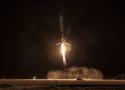
“It’s hard to describe how epic this comeback was after our first Falcon 9 launch failure.”
On Dec. 21, 2015, SpaceX launched the Orbcomm-2 mission on an upgraded version of its Falcon 9 rocket. That night, just days before Christmas, the company successfully landed the first stage for the first time. The story behind this remarkable achievement is nowhere more fully told than in the book Reentry, authored by Ars Technica Senior Space Editor Eric Berger and published in 2024. To mark the tenth anniversary, Ars is reprinting a slightly condensed chapter from the book that tells the inside story of this landing. The chapter begins in June 2015 with a tragedy, the disintegration of a Falcon 9 rocket carrying the CRS-7 cargo supply mission for NASA. It was the first time a Falcon 9 had been lost in flight.
normally butters Ars Praefectus
18y
5,285
ahsgdbeyb3 said:
I am curious about what role exactly he had here in the control room. Operators freezing up sounds like an understandable response, but also sounds like there was a lack of sims to prepare then for such events. The flight director would be the one who should keep them on focus, not a manager. I would actually keep such 'VIP' people out of the control room, they tend not to be able to offer much of use during an actual flight, so I'm wondering how SpaceX managed their presence here and what kind of access to the loops they were/are given?
SpaceX has a "responsible engineer" culture. The engineers who know the most about a system assume responsibility for that system and may eventually have a management role and/or represent that system on console in mission control. This philosophy extends to higher levels. The manager of the Dragon program is a responsible engineer wearing a manager hat, not an MBA. David Giger was responsible for Dragon as a whole, and that was the role he was playing when he reminded the team that Dragon is still alive and might still be saved.
This isn't how NASA works. This isn't how legacy NASA contractors work. For example, Boeing outsources Starliner mission control to NASA. Boeing trains NASA controllers and managers on how to operate Starliner, and they provide "back room" engineering support for the NASA controllers on console. I'll never forget the video from Mission Control Houston during the Starliner OFT-1 MET clock anomaly when the thrusters were firing like crazy immediately after separating from the launch vehicle. The NASA Flight Dynamics Officer was gesticulating wildly in an animated conversation facing the Flight Director, obviously unprepared for this scenario and probably not giving the Flight Director the answers he wanted to hear. I felt sorry for him.
Based on some projected analyses, SpaceX is expected to have in the neighborhood of $22 to $24 billion in revenue next year. That is a lot of money—it’s on par with NASA’s annual budget, for example, and SpaceX can deploy its capital far, far more efficiently than the government can. So the company will be able to accomplish a lot. But with a large infusion of cash, SpaceX will be able to go much faster. And it will take a lot of cash to design and build the satellites and launch the rockets to deploy data centers in space.
Abhi Tripathi, a long-time SpaceX employee who is now director of mission operations at the UC Berkeley Space Sciences Laboratory, believes that once Musk realized Starlink satellites could be architected into a distributed network of data centers, the writing was on the wall.
“That is the moment an IPO suddenly came into play after being unlikely for so long,” Tripathi told Ars. “If you have followed Elon’s tactics, you know that once he commits to something, he leans fully into it. Much of the AI race comes down to amassing and deploying assets that work quicker than your competition. A large war chest resulting from an IPO will greatly help his cause and disadvantage all others.” //
Musk also believes that a larger and more financially robust SpaceX is necessary to undertake the settling of Mars. He understands that NASA will not pay for this, as the civil space agency is in the business of exploration and not settlement. For several years now, he has expressed that it will require about 1 million tons of supplies to be shipped to Mars to make a self-sustaining settlement. This is roughly 1,000 ships, and including refueling, at least 10,000 Starship launches. At $100 million per launch, that’s $1 trillion in launch costs alone.
Musk has frequently expressed a concern that there may be a limited window for settling Mars. Perhaps financial markets collapse. Perhaps there’s a worse pandemic. Perhaps a large asteroid hits the planet. Taking SpaceX public now is a bet that he can marshal the resources now, during his lifetime, to make Mars City One a reality. He is 54 years old.
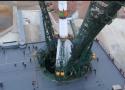
The damage will therefore test the current leaders of Russia. How committed are they to the International Space Station partnership with NASA? Before, they were willing to play out the string to 2030 and the end of the station’s lifetime, but that required minimal investment in new capabilities. In fact, Russia recently cut the number of crewed Soyuz missions to the station from four every two years down to three, to save money. Now they must devote significant resources to the Soyuz program critical to the ISS.
“This is a real-life test of their resilience,” Jeff Manber, a senior Voyager official and former Nanoracks chief executive with long-time expertise in Russia’s space program, told Ars. “We are going to learn just how important the ISS is to leadership there.” //
The at least temporary loss of Site 31 will only place further pressure on SpaceX. The company currently flies NASA’s only operational crewed vehicle capable of reaching the space station, and the space agency recently announced that Boeing’s Starliner vehicle needs to fly an uncrewed mission before potentially carrying crew again. Moreover, due to rocket issues, SpaceX’s Falcon 9 vehicle is the only rocket currently available to launch both Dragon and Cygnus supply missions to the space station. For a time, SpaceX may also now be called upon to backstop Russia as well.
blackhawk887 Ars Tribunus Angusticlavius
9y
19,694
100% TNT equivalent is crazy. Even 25% is probably twice a reasonable figure. The FAA uses 14% for LOX/hydrogen and 10% for LOX/kerosene. Hydrogen is more than twice as energetic per mass of methane, and kerosene about 80% as energetic as methane.
LOX and liquid methane are miscible, unlike the other combinations, but there aren't any plausible scenarios where you'd get better mixing than a rocket falling back on the pad shortly after liftoff, which both kerolox and hydrolox are also perfectly capable of doing. //
mattlindn Ars Centurion
7y
231
NASA's current blast range evacuation area ranges from 3 to 4 miles as shown in the diagrams in this article (I measured it on google maps).
It's worth mentioning that the privately run Rocket Ranch down in South Texas where people can pay money to get closer to the Starship launches is only 3.9 miles from the launch site. The people who watch from the Mexico can get as close as 2.4 miles.
Where most people (including myself) watch(ed) from, South Padre Island, is almost exactly 5 miles away.
So yeah this seems kind of excessive. //
Jack56 Ars Scholae Palatinae
7y
672
For the nth time, a fuel-oxidiser explosion is not a detonation. It is a deflagration. They are far less violent. An intimate mixture of gaseous oxygen and methane can detonate but liquid methane and liquid oxygen cannot mix intimately - are not miscible - because methane is a solid at lox temperatures, especially the sub-cooled lox which Starship uses. A detonation takes place in under a millisecond. Deflagrations are fires. I’m not saying it wouldn’t be bad but comparisons with an energetically equivalent mass of TNT are way out of line. //
mattlindn Ars Centurion
7y
231
Jack56 said:
For the nth time, a fuel-oxidiser explosion is not a detonation. It is a deflagration. They are far less violent. An intimate mixture of gaseous oxygen and methane can detonate ....
Didn't think about this, but yes you're correct. The boiling point of Oxygen is 90.2 K and the melting point of Methane is 90.7 K. If you mix the two together, before any Methane can melt all the oxygen has to boil off. Though there should still be some local melting given the outside air temperatures are MUCH warmer than the liquid oxygen.
Though at the same time given the temperatures are so close together I don't think much Methane will freeze before an explosion happens. So maybe the point is moot? //
SpikeTheHobbitMage Ars Scholae Palatinae
3y
1,745
Person_Man said:
I have to imagine a fully fueled stack with optimal mixing for the biggest explosion would probably be the largest non nuclear explosion ever.
Most of Starship's propellant is oxygen. The full stack only carries 1030t of methane (330t on Ship, 700t on SuperHeavy). Methane also has a TNT equivalent of only 0.16. Using the omnicaluclator, I get 1030t of methane* = 164.8t of TNT. That doesn't even make the top 10 list.
*omnicalculator lists natural gas, which is mostly methane. //
blackhawk887 Ars Tribunus Angusticlavius
9y
19,694
mattlindn said:
Didn't think about this, but yes you're correct. The boiling point of Oxygen is 90.2 K and the melting point of Methane is 90.7 K. If you mix the two together, ...
Mixing with oxygen should depress the freezing point of methane. For example, if you take water at its freezing point, and mix it equally with alcohol that is itself, say, 10 degrees colder than the freezing point of water, the resulting mix will be well below 0 C but will not contain any frozen water.
Also, you can mix butane and water under a little pressure, even though at atmospheric pressure butane boils a half-degree below the freezing point of water. They aren't miscible, but that's just because of polarity - they are happy to both be liquids at the same temperature and a little pressure.
Methane and LOX are considered miscible and were even considered for monopropellants at various mix ratios. The mixture is reportedly a bit shock sensitive though. //
SpikeTheHobbitMage Ars Scholae Palatinae
3y
1,745
Mad Klingon said:
For the many debating using eminent domain to expand launch facilities, that would likely be the simple part of the issue. Most of that area is considered sensitive wildlife area and dealing with the current piles environmental regulations and paperwork could take decades for a major expansion. Look at all the grief SpaceX gets when they build on the relatively bland bit of Texas coast they are currently using. It would be much worse at the Florida site.One of the great legacies of Apollo was we got a well built out area for launching stuff before most of the environmental legislation was passed.
One of the great legacies of Apollo was that the exclusion zone around Cape Canaveral preserved enough of the wetlands in good enough condition to become a protected nature reserve.
“Until we get that data from the testing that is ongoing and the analysis that needs to occur, we’re going to continue to treat any LOX-methane vehicle with 100 percent TNT blast equivalency, and have a maximized keep-out zone, simply from a public safety perspective,” Chatman said.
The data so far shows promising results. “We do expect that BDA to shrink,” he said. “We expect that to shrink based on some of the initial testing that has been done and the initial data reviews that have been done.”
That’s imperative, not just for Starship’s neighbors at the Cape Canaveral spaceport, but for SpaceX itself. The company forecasts a future in which it will launch Starships more often than the Falcon 9, requiring near-continuous operations at multiple launch pads. //
The Commercial Space Federation, a lobbying group, submitted written testimony to Congress in 2023 arguing the government should be using “existing industry data” to inform its understanding of the explosive potential of methane and liquid oxygen. That data, the federation said, suggests the government should set its TNT blast equivalency to no greater than 25 percent, a change that would greatly reduce the size of keep-out zones around launch pads. The organization’s members include prominent methane users SpaceX, Blue Origin, Relativity Space, and Stoke Space, all of which have launch sites at Cape Canaveral.
The government’s methalox testing plans were expected to cost at least $80 million, according to the Commercial Space Federation.
The concern among engineers is that liquid oxygen and methane are highly miscible, meaning they mix together easily, raising the risk of a “condensed phase detonation” with “significantly higher overpressures” than rockets with liquid hydrogen or kerosene fuels. Small-scale mixtures of liquid oxygen and liquified natural gas have “shown a broad detonable range with yields greater than that of TNT,” NASA wrote in 2023. //
SpaceX said it has conducted sub-scale methalox detonation tests “in close collaboration with NASA,” while also gathering data from full-scale Starship tests in Starbase, Texas, including information from test flights and from recent ground test failures. //
The company did not disclose the yield calculation, but it shared maps showing its proposed clear areas around the future Starship launch sites at Cape Canaveral and Kennedy Space Center. They are significantly smaller than the clear areas originally envisioned by the Space Force and NASA, but SpaceX says it uses “actual test data on explosive yield and include a conservative factor of safety.” //
Concerns as mundane as traffic jams are now enough of a factor to consider using automated scanners at vehicle inspection points and potentially adding a dedicated lane for slow-moving transporters carrying rocket boosters from one place to another across the launch base, according to Chatman. This is becoming more important as SpaceX, and now Blue Origin, routinely shuttle their reusable rockets from place to place. //
Space Force officials largely attribute the steep climb in launch rates at Cape Canaveral to the launch industry’s embrace of automated self-destruct mechanisms. These pyrotechnic devices have largely replaced manual flight termination systems, which require ground support from a larger team of range safety engineers, including radar operators and flight control officers with the authority to send a destruct command to the rocket if it flies off course. Now, that is all done autonomously on most US launch vehicles.
The Space Force mandated that launch companies using military spaceports switch to autonomous safety systems by October 1 2025, but military officials issued waivers for human-in-the-loop destruct devices to continue flying on United Launch Alliance’s Atlas V rocket, NASA’s Space Launch System, and the US Navy’s ballistic missile fleet. That means those launches will be more labor-intensive for the Space Force, but the Atlas V is nearing retirement, and the SLS and the Navy only occasionally appear on the Cape Canaveral launch schedule.

Waiting in the darkness a few miles away from the launch pad, I glanced around at my surroundings before watching SpaceX’s Falcon 9 thunder into the sky. There were no throngs of space enthusiasts anxiously waiting for the rocket to light up the night. No line of photographers snapping photos. Just this reporter and two chipper retirees enjoying what a decade ago would have attracted far more attention.
Go to your local airport and you’ll probably find more people posted up at a plane-spotting park at the end of the runway. Still, a rocket launch is something special. On the same night that I watched the 94th launch of the year depart from Cape Canaveral, Orlando International Airport saw the same number of airplane departures in just three hours. //
The Falcon 9’s established failure rate is less than 1 percent, well short of any safety standard for commercial air travel but good enough to be the most successful orbital-class in history. Given the Falcon 9’s track record, SpaceX seems to have found a way to overcome the temptation for complacency. //
According to analyses by BryceTech, an engineering and space industry consulting firm, SpaceX has launched 86 percent of all the world’s payload mass over the 18 months from the beginning of 2024 through June 30 of this year.
That’s roughly 2.98 million kilograms of the approximately 3.46 million kilograms (3,281 of 3,819 tons) of satellite hardware and cargo that all the world’s rockets placed into orbit during that timeframe. //
But Starship’s arrival will come at the expense of the workhorse Falcon 9, which lacks the capacity to haul the next-gen Starlinks to orbit. “This year and next year I anticipate will be the highest Falcon launch rates that we will see,” said Stephanie Bednarek, SpaceX’s vice president of commercial sales, at an industry conference in July.
SpaceX is on pace for between 165 and 170 Falcon 9 launches this year, with 144 flights already in the books for 2025. Last year’s total for Falcon 9 and Falcon Heavy was 134 missions. SpaceX has not announced how many Falcon 9 and Falcon Heavy launches it plans for next year.
Starship is designed to be fully and rapidly reusable, eventually enabling multiple flights per day. But that’s still a long way off, and it’s unknown how many years it might take for Starship to surpass the Falcon 9’s proven launch tempo. //
Despite all of the newcomers, most satellite operators see a shortage of launch capacity on the commercial market. “The industry is likely to remain supply-constrained through the balance of the decade,” wrote Caleb Henry, director of research at the industry analysis firm Quilty Space. “That could pose a problem for some of the many large constellations on the horizon.”
United Launch Alliance’s Vulcan rocket, Rocket Lab’s Neutron, Stoke Space’s Nova, Relativity Space’s Terran R, and Firefly Aerospace and Northrop Grumman’s Eclipse are among the other rockets vying for a bite at the launch apple.
Starlink not allowed in Myanmar, but scammers reportedly use it “on a huge scale.”. //
Octavus Ars Scholae Palatinae
19y
1,200
For those that don't know the details of the technology, both the space vehicle and ground terminal must know and accurately report their information in order for both sides to properly compensate for the Doppler effect.
This isn't fully true, the terminal needs to know the satellite's position and velocity but the satellite does not need to know the terminal's location. All the Doppler and time delay compensation happens on the ground side. The terminals transmitter compensates for Doppler and time delay so the signal at the satellite is at the correct frequency, otherwise different terminals would interfere with each other as they will not be frequency and time aligned at the satellite.
From the down link prospective the satellite broadcast to a spot/cell which corresponds to a location on Earth. The satellite does not compensation as even terminals within the same cell will require slightly different frequency shifts and time delay shifts, which the user terminal compensates for.
Now I don't work for Starlink but do work for one of their largest competitors and having the user terminal do all the compensation is by far the easiest method. Our terminals report to a server their GPS XYZ position so we still know where they are located, but for receiving a signal from them the terminals only need the satellite's positional information and the satellite only needs to know the spot ID.
One company, a California-based startup named Muon Space, is partnering with SpaceX to bring Starlink connectivity to low-Earth orbit. Muon announced Tuesday it will soon install Starlink terminals on its satellites, becoming the first commercial user, other than SpaceX itself, to use Starlink for in-flight connectivity in low-Earth orbit. //
Putting a single Starlink mini-laser terminal on a satellite would keep the spacecraft connected 70 to 80 percent of the time, according to Greg Smirin, Muon’s president. There would still be some downtime as the laser reconnects to different Starlink satellites, but Smirin said a pair of laser terminals would allow a satellite to reach 100 percent coverage. //
SpaceX’s mini-lasers are designed to achieve link speeds of 25Gbps at distances up to 2,500 miles (4,000 kilometers). These speeds will “open new business models” for satellite operators who can now rely on the same “Internet speed and responsiveness as cloud providers and telecom networks on the ground,” Muon said in a statement. //
Live video from space has historically been limited to human spaceflight missions or rocket-mounted cameras that operate for a short time.
One example of that is the dazzling live video beamed back to Earth, through Starlink, from SpaceX’s Starship rockets. The laser terminals on Starship operate through the extreme heat of reentry, returning streaming video as plasma envelops the vehicle. This environment routinely causes radio blackouts for other spacecraft as they reenter the atmosphere. With optical links, that’s no longer a problem.
“This starts to enable a whole new category of capabilities, much the same way as when terrestrial computers went from dial-up to broadband,” Smirin said. “You knew what it could do, but we blew through bulletin boards very quickly to many different applications.”

Two Falcon 9 rockets lifted off from spaceports in Florida and California on Sunday afternoon, adding 56 more satellites to SpaceX’s Starlink broadband network.
The second of these two launches—originating from Vandenberg Space Force Base, California—propelled SpaceX’s Starlink program past a notable milestone. With the satellites added to the constellation Sunday, the company has delivered more than 10,000 mass-produced Starlink spacecraft to low-Earth orbit.
The exact figure stands at 10,006 satellites, according to a tabulation by Jonathan McDowell, //
The Starlink network surpassed 7 million global subscribers in August, primarily beaming Internet connectivity to homes and businesses. SpaceX is now aggressively pushing to broaden its service direct to smartphones. //
SpaceX is decommissioning aging and obsolete Starlink satellites as the company adds to the fleet. The retired satellites reenter the atmosphere, where they’re designed to burn up without any debris reaching the ground. Taking into account all the reentries, here are McDowell’s numbers for the Starlink fleet as it stands Monday, October 20:
8,680 total Starlink satellites in orbit
8,664 functioning Starlink satellites in orbit (including newly launched satellites not yet operational)
7,448 Starlink satellites in operational orbit //
Sunday’s SpaceX launches weren’t just noteworthy for Starlink. The first of the two missions, departing from Florida’s Space Coast, marked the 31st launch of the company’s most-flown Falcon 9 booster. The rocket landed on SpaceX’s recovery ship in the Atlantic Ocean to be returned to Florida for a 32nd flight. //
SpaceX engineers are now certifying the Falcon 9 boosters for up to 40 flights apiece.
The season of records isn’t over. SpaceX is expected to set another one later this week. The company’s launch log for 2025 currently stands at 132 Falcon 9 missions, tying the total number of Falcon 9 flights last year. SpaceX also launched two flights of the more powerful Falcon Heavy in 2024, bringing the 2024 mark to 134 missions by the Falcon rocket family.

SpaceX's next Starship rocket exploded during a ground test in South Texas late Wednesday, dealing another blow to a program already struggling to overcome three consecutive failures in recent months.
The late-night explosion at SpaceX's rocket development complex in Starbase, Texas, destroyed the bullet-shaped upper stage that was slated to launch on the next Starship test flight. The powerful blast set off fires around SpaceX's Massey's Test Site, located a few miles from the company's Starship factory and launch pads.
Live streaming video from NASASpaceflight.com and LabPadre—media organizations with cameras positioned around Starbase—showed the 15-story-tall rocket burst into flames shortly after 11:00 pm local time (12:00 am EDT; 04:00 UTC). Local residents as far as 30 miles away reported seeing and feeling the blast.
SpaceX confirmed the Starship, numbered Ship 36 in the company's inventory, "experienced a major anomaly" on a test stand as the vehicle prepared to ignite its six Raptor engines for a static fire test. These hold-down test-firings are typically one of the final milestones in a Starship launch campaign before SpaceX moves the rocket to the launch pad.
The explosion occurred as SpaceX finished up loading super-cold methane and liquid oxygen propellants into Starship in preparation for the static fire test. The company said the area around the test site was evacuated of all personnel, and everyone was safe and accounted for after the incident. Firefighters from the Brownsville Fire Department were dispatched to the scene.

Jack56 Ars Scholae Palatinae
7y
607
julesverne said:
Upside:Engine bay leak issue, solved.
Downside:Booster exploded.
Payload bay doors balked.
Ship attitude control lost.
No data on payload deployment.
No data on engine relight on orbit.
No data on Ship reentry.
The list goes on.
I'm sure SpaceX will solve these issues. But the root causes of the failures may negatively affect max payload mass to orbit. And the cadence of failure is picking up. Reason: unknown. But losing key engineers can cause outsized problems. I have no info on this, but given the recent series of backslips, I wonder if any of the most creative thinkers may have jumped Ship(sorry) following Musk's "Roman Salute" and other scumbag actions. I sure as fuck wouldn't want to work for him, despite intense interest in the SpaceX vision.
The main problems have been propellant system & engine leaks. It's new engineering territory. The engine chamber pressure is ~300 bar. The preburners are at >600 bar (>9,000 psi). The turbopumps higher again than that. The wonder is that most things don’t leak. //
Erbium68 Wise, Aged Ars Veteran
3m
1,070
Subscriptor
DistinctivelyCanuck said:
What I'm finding fascinating about the current failure modes on the block two starship is that obviously spacex thought they had a full handle on these from block one: and so many "solved problems" have spiraled into challenging fixes.
Leak issues causing loss of control were obvious in the very first flight that made it to sub orbital: but resolved on the subsequent flights.
Vibration issues causing RUD's: quickly resolved in the very first flights and are back again.
The other interesting aspect: the ground burns at massey's that were designed to identify these failures aren't doing it at ground level. (remember that there was a ground burn test with a near ten minute burn with extensive throttling:
I think we can expect another couple of iterations of those long burn tests soon.
My limited experience in the field of engine development tells me that this is perfectly normal for such projects. The solved problems always come with unexpected caveats. Especially vibration.
An example from ship practice is early reduction gear failures in turbines. All sorts of things were considered, lubrication was improved and the things worked perfectly on long term dyno tests. And then broke up at sea even under good sailing conditions.
The cause was eventually traced to the vibrations from the props caused by interference from the rudders. It was difficult to fix, but fixes were found (flexible shafts, basically).
Despite being so well understood the problem recurs over and over again as new bearing, hull and rudder designs come into use.
There was also a major vibration problem that hit Luftwaffe fighters in WW2. Arguments about defective bearings, reduction gears etc. duly took place. It was eventually traced to the fact that the fuel being used by the test labs was better than that often used at the front, which was messing with spark plugs and causing misfires which resulted in the vibration.
In engines, whether piston, turbine or rocket, just about everything interacts in ways beyond the scope of computer modelling - because until the mechanism is identified, it can't be modelled.

As the Federal Communications Commission considers GPS alternatives, SpaceX says its Starlink satellites are already up for the task.
The company made its pitch in a Wednesday letter to the FCC after the commission kicked off a public inquiry about developing alternatives to GPS, which has long been run through a single provider, the US Defense Department.
The FCC’s goal is to usher in Positioning, Navigation, and Timing (PNT) solutions to complement GPS. In response, SpaceX sent a five-page letter that noted: "One opportunity stands out as a particularly ripe, low-hanging fruit: facilitating the rapid deployment of next-generation low-Earth orbit ('LEO') satellite constellations that can deliver PNT as a service alongside high-speed, low-latency broadband and ubiquitous mobile connectivity.”