Daily Shaarli
December 26, 2025

Wiring error. Label was placed partially over a terminal preventing he terminal from seating in a connector.

Links to those before us broaden our perspective, provide us with a sense of place in time and make us part of a larger narrative and a shared experience.
We begin to sense a tradition worth preserving and passing along to those who come after us.
Tocqueville made this point in “Democracy in America” by distinguishing between instinctive patriotism, rooted in custom and a sense of belonging based on place and personal loyalty, and reflective patriotism, based more on the opinions of free citizens, who understand their common liberties and their shared responsibilities with their fellow citizens.
This latter, more thoughtful form of patriotism, Tocqueville argued, is shaped by the exercise of individual rights within republican institutions and by what Tocqueville called “self-interest well understood.”
Indeed, one of the reasons Tocqueville admired America so much was that it bred both types of patriotism, a spirited attachment to American self-government as well as a reasoned devotion to the general principles of natural right and human liberty.
Tocqueville concluded that a patriotism in which particular loyalties and universal purposes reinforce each other was the source of the community bond and national cohesion needed to perpetuate democratic societies.
Without patriotism — instinctive patriotism for sure, but especially reflective patriotism — democratic peoples would become preoccupied with narrow, private concerns and come to neglect their civic duties.
The result is social division and civic apathy, as formerly self-governing citizens become themselves passive subjects in a modern, impersonal nation-state.
Without this dual patriotism of both the heart and the head, America’s thriving republic, Tocqueville famously warned, would be overtaken by a new form of democratic despotism that flattens the human spirit.
Today, patriotism is often misunderstood and criticized as an unthinking allegiance to chauvinistic urges.
Yet it is a love of country that is thoughtful as well as passionate — not “the impostures of pretended patriotism” Washington warned us against — that stands confident against the cultural relativism that plagues our society and undermines the defense of liberty by its disingenuous embrace and tendency toward despotic self-assertion.
Patriotism, rightly understood, has always been the civic antidote to what C. S. Lewis called “the poison of subjectivism.” //
Having rejected the Old World’s rule of accident and force in favor of government by reflection and choice, the Founders understood education — heretofore an elite privilege of the upper class and often a tool of state control — to take on a new civic role in service to popular government.
In a republican regime, built on equal rights and the consent of the governed, education not only shapes the private character that allows the individual to govern the self but also imparts the principles necessary for those individuals to practice the arts of self-government.
The student is transformed into the citizen through the expansion and deepening of the natural attachments as well as the cultivation of the civic knowledge necessary to perpetuate free government.
“The Education of youth is, in all governments, an object of the first consequence,” Noah Webster wrote in opening his 1788 essay on the topic. “The impressions received in early life, usually form the characters of individuals; a union of which forms the general character of a nation.” //
Education begins at home, when the habits and manners are established, first by parents, who have the primary responsibility for the upbringing of their children, and then by family, church, community and the first lessons of early instruction.
Like in the great nations of Europe, Webster maintained the formal educational system to be adopted and pursued in America should focus on the foundations of knowledge: reading, writing and arithmetic, as well as a basic understanding of the sciences and the outlines of geography and history.
But in republican America, Webster argued popular education must also “implant, in the minds of the American youth, the principles of virtue and of liberty; and inspire them with just and liberal ideas of government, and with an inviolable attachment to their own country.”
At a young age, this inculcation was especially to be done by teaching history: “every child in America should be acquainted with his own country. He should read books that furnish him with ideas that will be useful to him in life and practice. As soon as he opens his lips, he should rehearse the history of his own country; he should lisp the praise of liberty, and of those illustrious heroes and statesmen, who have wrought a revolution in her favor.”
Thomas Jefferson and James Madison concurred in a report they authored as commissioners of the University of Virginia.
Beyond improving the faculties and morals, the objects of a general education should be for the student “to understand his duties to his neighbors and country, and to discharge with competence the functions confided to him by either,” and “to instruct the mass of our citizens in these, their rights, interests and duties, as men and citizens.”
The objects of “the higher branches of education” — the colleges and universities scattered around the country — were “to develop the reasoning faculties of our youth, enlarge their minds, cultivate their morals, and instill into them the precepts of virtue and order” and “to form them to habits of reflection and correct action, rendering them examples of virtue to others, and of happiness within themselves.”
American higher education should “form the statesmen, legislators and judges, on whom public prosperity and individual happiness are so much to depend.”
Colleges and universities, too, had an obligation to make good citizens.
And the document around which this citizen education was to be constructed, the creed of America’s civic life and political identity, its temporal scripture and its epic poetry, was the Declaration of Independence.
The Declaration is the defining act of the great drama that is the American founding.
When Jefferson and Madison outlined an educational curriculum with “especial attention to the principles of government which shall be inculcated therein,” their first reading was the Declaration, which Jefferson called “an expression of the American mind.”
It is what the ancients described as the prelude to the laws, meant to define the regime and animate what is to come.
Although a “merely revolutionary document,” the Declaration of Independence contains, as Abraham Lincoln wrote on the eve of Civil War, “an abstract truth, applicable to all men and all times,” put there “that today, and in all coming days, it shall be a rebuke and a stumbling-block to the very harbingers of re-appearing tyranny and oppression.”
Lincoln also said once that public opinion “always has a ‘central idea,’ from which all its minor thoughts radiate.”
America’s central idea is the Declaration, and everything else radiates from that. //
By defining our common loves — our native country and our common commitment to republican government based on equal rights, political liberty and the consent of the governed — the Declaration unites our hearts and our minds in a civic friendship of enlightened patriotism.
We must know the Declaration if we truly are to love America.
From the new book “The Making of the American Mind: The Story of our Declaration of Independence.”

“I’ve made it to 99 in no small part because I have stubbornly refused to give into the bad stuff in life: failures and defeats, personal losses, loneliness and bitterness, the physical and emotional pains of aging,” he explained.
“That stuff is real but I have not let it define me. Instead, for the vast majority of my years, I have been in what I can only describe as a full-on bear hug with the experience of living. Being alive has been doing life — not like a job but rather like a giant playground.”
Van Dyke — who still sings with an a cappella group — also credited his 54-year-old wife, Arlene Silver, with keeping him from “wither[ing] away into a hermetic grouch.”

The dress was a 2015 online viral phenomenon centred on a photograph of a dress. Viewers disagreed on whether the dress was blue and black, or white and gold. The phenomenon revealed differences in human colour perception and became the subject of scientific investigations into neuroscience and vision science.
The phenomenon originated in a photograph of a dress posted on the social networking platform Facebook. The dress was black and blue, but the conditions of the photograph caused many to perceive it as white and gold, creating debate. Within a week, more than ten million tweets had mentioned the dress. The retailer of the dress, Roman Originals, reported a surge in sales and produced a one-off version in white and gold sold for charity.

We've learned a lot from the viral image.
The viral image holds a lesson in why people disagree—and how we can learn to better understand each other.
It was not a tranquil time. People argued with their friends about the very basics of reality. Spouses vehemently disagreed. Each and every person was on one side or the other side. It could be hard to imagine how anyone in their right mind could hold an opinion different from your own.
I’m talking, of course, about “the dress,” which went viral on Feb. 26, 2015. To recap: A cellphone picture of a wedding guest’s dress, uploaded to the internet, sharply divided people into those who saw it as white and gold and those who saw it in black and blue—even if they were viewing it together, on the very same computer or phone screen.
The notorious dress, under natural lighting conditions, is unambiguously black and blue, for (almost) everyone who saw it in person, or in other photographs. It was just the one image, snapped by a mother of a bride and uploaded to Tumblr by one of her daughter’s friends, that caused so much disagreement. How can it be that there is such strong consensus about the colors of the actual dress, but such striking disagreements about its colors in this particular image? This is not a debate about people seeing different shades of gray: blue and gold are categorically different colors, not even in the same neighborhood on the color wheel.
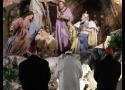
Luke does not say Mary and Joseph were turned away. He says the guest room was already full. //
So when Luke tells us that the child was laid in a manger, he is likely not moving the story into a detached stable. He is describing a practical detail within a lived-in household. The scene remains humble, but it is no longer marginal. It is domestic, crowded, and human. //
Seen this way, Mary was not relegated to a stable because there was “no room.” She was placed where birth customarily happened, in a space set apart for dangerous, necessary, and sacred work, surrounded by competent women.
Once the household is understood as full, the courtyard as a customary birth space, and women as the necessary attendants, the setting of the Nativity no longer appears improvised. It appears normal. //
Nothing in Luke requires the manger to be symbolic in the moment. It is enough that it is specific. The sign given to the shepherds works because it is ordinary and recognizable.
Later Christians could not help noticing the resonance: the Lamb of God first laid where animals were fed and protected. Luke does not spell this out. The meaning emerges over time, once the whole story is known. //
The Nativity is populated almost entirely by liminal figures — people who live and work at boundaries.
Women attend the birth because childbirth itself is liminal, poised between life and death. Shepherds receive the announcement because they live between settled society and wilderness, handling blood, birth, injury, and loss as part of daily life. They are neither elites nor outsiders, but something in between, ritually ambiguous, socially peripheral, and practically indispensable.
The Magi arrive later, and for a different reason. They are not guardians of fragile life, but boundary-crossers between cultures and nations. They do not belong at a birth, but at a recognition.
The shepherds witness the child’s arrival into life; the Magi recognize his meaning for the world. One belongs at a birth. The other belongs at a throne.
This is not accidental staging. Liminal moments require liminal witnesses, people accustomed to ambiguity, risk, and transition. The story does not begin in palaces or temples because it is not about maintaining established power. It is about the arrival of someone who will cross boundaries without destroying them.
Jesus himself is the ultimate boundary figure: fully human and fully divine; clean, yet willing to touch the unclean; alive yet destined to pass through death. From the beginning, his life occupies contested space.
Christmas and the Restoration of Order
This pattern of thresholds and careful crossings is not an innovation introduced at Christmas. It is a restoration.
The opening chapters of Genesis describe a world ordered by distinction rather than domination. Creation unfolds through separations: light from darkness, land from sea, heaven from earth. These boundaries are not barriers. They are the conditions that make life possible. //
The Incarnation does not abandon the human order. It inhabits it fully, dangerously, and honestly. God enters the world where life has always entered it: through women, within households, surrounded by risk and love, attended by those who know how to guard what is fragile.
When Christmas is seen this way, nothing essential is lost but much is restored. The story becomes larger, more human, and more demanding, and in that fullness, more joyful than the thin version we repeat by rote.
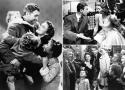
Amazon Prime Video is under fire for streaming a butchered version of “It’s a Wonderful Life” that guts the beloved Christmas classic.
Viewers say the abridged cut — roughly 22 minutes shorter than the original 130-minute film — removes the iconic “Pottersville” sequence, the pivotal stretch that explains why despairing hero George Bailey suddenly rediscovers the will to live.
In that part, Bailey declares his wish never to have been born and gets to see how crummy life would have been without him.
Without that sequence, audiences are left watching a man contemplate suicide one moment, then sprint joyfully through town the next — with no logical explanation. //
The “Pottersville” sequence is the portion most directly adapted from Stern’s story.
Legal experts say the abridged version appears to be a workaround — by removing that specific sequence, distributors may have believed they could avoid infringing on the short story’s copyright while still offering a version of the film. //
Amazon Prime reportedly carries both the full and abridged versions, but viewers say the platform does not clearly explain the difference — leaving unsuspecting viewers to click the wrong one.
This comic shows two drawings of a woman wearing the same dress, but with different background (and body) colors. The two drawings are split with a narrow vertical portion of an image from the web.
The comic strip refers to a dress whose image went viral on Tumblr only hours before the strip was posted and soon showed up also on Reddit, Twitter, Wired and on The New York Times.
Due to the dress's particular color scheme and the exposure of the photo, it forms an optical illusion causing viewers to disagree on what color the dress actually seems to be. The xkcd strip sandwiches a cropped segment of the photographed dress between two drawings which use the colors from the image against different backgrounds, leading the eye to interpret the white balance differently, demonstrating how the dress can appear different colors depending on context and the viewer's previous experiences.
Both dresses have exactly the same colors actually: //
To the uninitiated, the color of the dress seems immediately obvious; when others cannot see it their way, it can be a surreal (even uncomfortable) experience.
As an aside, the retailer Roman Originals would later confirm the dress was blue with black lace, and that a white dress with gold lace was not offered among the clothing line.

A better explanation is that DOGE is functioning as a stress test of the federal bureaucracy.
Stress tests are not designed to produce immediate, permanent fixes. They are designed to apply pressure and observe outcomes: where systems bend, where they break, where they resist, and where supposed constraints turn out to be optional once incentives change. It is a drive to gather data, not repair issues.
Under this model, efficiency gains are not the primary goal. They are signal, evidence of latent capacity revealed under load. Resistance, delay, panic, and narrative hostility are also signal. They show where authority actually resides and which processes exist because they are necessary, versus merely habitual.
The Social Security Administration results fit this model precisely. When pressure was applied, performance improved quickly and measurably. That does not prove the system is now permanently fixed. It shows something more revealing: The capacity was there all along. //
This interpretation aligns closely with how Elon Musk has repeatedly operated across very different domains.
Musk does not treat institutions as abstract ideals. Thinking like an engineer, he treats them as systems that must be tested under real conditions. His approach favors empirical stress over theoretical reassurance and exposure over simulation.
One of the clearest expressions of this philosophy is SpaceX’s use of the acronym RUD, “rapid unscheduled disassembly,” referred to by most people as a big old explosion. Rockets are pushed until they fail. Failure is not an embarrassment, but rather a valuable data collection moment. Each breakdown reveals load-bearing assumptions that no white paper can surface.
The goal is not to avoid failure at all costs. The goal is to fail fast enough, visibly enough, to learn where the system’s true limits are, and to learn it quickly.
Viewed through this lens, DOGE’s behavior becomes coherent. //
From a stress-test perspective, controversy is not proof of failure. It is proof that pressure reached something structural.

On Christmas morning, General Washington issued orders that the Continental Army was going across that river to kick some Hessian butts. He ordered rations cooked for three days, fresh flints to be put in every musket, and he also ordered that even the musicians and officers were to arm themselves, not with the usual swords and pistols, but with muskets. The Continental Army was betting everything. Bear in mind that in 1776, most of these men couldn't even swim; further, when this happened, the North American continent was in the throes of the Little Ice Age.
General Washington crossed with the first wave. He was leading his men, as a good commander should. By daybreak, the crossing was complete. //
When it was all over, the Hessians had suffered 22 killed, including the commander, Colonel Johann Rall, along with 83 wounded and almost 900 captured. The Americans suffered two killed and five wounded. By noon on the 26th, Washington's forces, with the Hessian prisoners, had crossed safely back across the Delaware into Pennsylvania.
Historian David Hackett Fischer later wrote of this event:
Until Washington crossed the Delaware, the triumph of the old order seemed inevitable. Thereafter, things would never be the same again.
Unlike the battle of Midway, the attack on Trenton wasn't the turning point - but it was a turning point. After Trenton, after that nighttime crossing of an icy river, in the depths of one of the coldest winters in written history, American determination and capability were never again in doubt. General Washington had established himself as a dangerous foe to the British, ... //
We're Americans. If you mess with us, we will cross a frozen river at night to kill you in your sleep. On Christmas.