Daily Shaarli
January 30, 2026
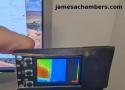
I recently ordered a bunch of new Stemma QT devices including the Adafruit ESP32-S3 Reverse TFT Feather and a MLX90640 IR camera module that I wanted to turn into a DIY thermal camera. I wanted it to be small and battery powered.
In this guide I’ll show you the parts I used to build it as well as the code. Let’s get started!
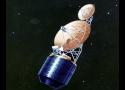
The JUMPSEAT satellites loitered over the North Pole to spy on the Soviet Union. //
In a statement, the NRO called Jumpseat “the United States’ first-generation, highly elliptical orbit (HEO) signals-collection satellite.” //
The Soviet Union was the primary target for Jumpseat intelligence collections. The satellites flew in highly elliptical orbits ranging from a few hundred miles up to 24,000 miles (39,000 kilometers) above the Earth. The satellites’ flight paths were angled such that they reached apogee, the highest point of their orbits, over the far northern hemisphere. Satellites travel slowest at apogee, so the Jumpseat spacecraft loitered high over the Arctic, Russia, Canada, and Greenland for most of the 12 hours it took them to complete a loop around the Earth.
This trajectory gave the Jumpseat satellites persistent coverage over the Arctic and the Soviet Union, which first realized the utility of such an orbit. The Soviet government began launching communication and early-warning satellites into the same type of orbit a few years before the first Jumpseat mission launched in 1971. The Soviets called the orbit Molniya, the Russian word for lightning. //
The disclosure of the Jumpseat program follows the declassification of several other Cold War-era spy satellites. They include the CIA’s Corona series of photo reconnaissance satellites from the 1960s, which the government officially acknowledged 30 years later. The NRO declassified in 2011 two more optical spy satellite programs, codenamed Gambit and Hexagon, which launched from the 1960s through the 1980s. Most recently, the NRO revealed a naval surveillance program called Parcae in 2023.
Download URLs for Minecraft Bedrock servers
- Press Windows Key + R to open the Run prompt. Type regedit and hit Enter.
- Navigate to the following registry path:
HKEY_CURRENT_USER\Software\Microsoft\Windows\CurrentVersion\Search - Right-click the empty space in the right pane. Select New followed by
DWORD (32-bit) Value.
Set its name toBingSearchEnabled. Set the value to0. - Restart your PC for the changes to take effect.
And that's it. Your Start menu will now only search locally.
If you're on Windows 11 version 24H2 or newer running the May 2020 Update or later, there's an alternative registry path that you might need to update. Navigate to:
HKEY_CURRENT_USER\Software\Policies\Microsoft\Windows\Explorer
Create a DWORD called DisableSearchBoxSuggestions and set its value to 1 using the same steps mentioned above. This disables both web results and search box suggestions in one shot.

DeMercurio and Wynn sued Dallas County and Leonard for false arrest, abuse of process, defamation, intentional infliction of emotional distress, and malicious prosecution. The case dragged on for years. Last Thursday, five days before a trial was scheduled to begin in the case, Dallas County officials agreed to pay $600,000 to settle the case.
It’s hard to overstate the financial, emotional, and professional stresses that result when someone is locked up and repeatedly accused of criminal activity for performing authorized work that’s clearly in the public interest. DeMercurio has now started his own firm, Kaiju Security.
“The settlement confirms what we have said from the beginning: our work was authorized, professional, and done in the public interest,” DeMercurio said. “What happened to us never should have happened. Being arrested for doing the job we were hired to do turned our lives upside down and damaged reputations we spent years building.” //
Martin Blank
Reading more about it, it seems a bit more complicated. While I don't think the pentesters should have been arrested (much less defamed), it does seem like the people who authorized them might not have actually had that authority.
I was a pentester for about a decade (though I didn't do physical testing), including at the time of this incident. There is a certain amount of trust that goes into contracting. We don't go out just based on an email approval. We get signed authorizations that are presumably vetted by knowledgeable people, and frequently lawyers, on both sides. I wouldn't have thought twice about accepting a contract signed by a representative for the court system itself.
But even more important, the people who hired them should have done their due dilligence. Had they followed the standard protocol and brought legal in, these issues of authority would likely have been pointed out.
There is a high likelihood that legal was brought in. This circumstance was weird, and the only reason that it got out of control was the sheriff. In most places, an improperly authorized test would have resulted in no charges or charges rapidly dismissed after showing that there was no intent to break the law.
You want to be especially in the clear on this, given cops inherent tendencies to be dicks about anything.
Yeah, this whole incident caused some significant changes in how physical pentesting was done.
January 29, 2026 at 7:08 pm

I'd strongly suggest not to use find -L for the task (see below for explanation). Here are some other ways to do this:
If you want to use a "pure find" method, and assuming the GNU implementation of find, it should rather look like this:
find . -xtype l
(xtype is a test performed on a dereferenced link)

A federal judge in Virginia ruled Tuesday that the City of Norfolk’s use of nearly 200 automated license plate readers (ALPRs) from Flock is constitutional and can continue, dismissing the entire case just days before a bench trial was set to begin.
The case, Schmidt v. City of Norfolk, was originally filed in October 2024 by two Virginians who claimed that their rights were violated when the Flock network of cameras captured their cars hundreds of times, calling the entire setup a “dragnet surveillance program.”
However, in a 51-page ruling, US District Court Judge Mark S. Davis disagreed, finding that the “…plaintiffs are unable to demonstrate that Defendants’ ALPR system is capable of tracking the whole of a person’s movements.” //
I intended to NOT drop what I was doing and just let the video play in the background. But after 1 minute, I dropped what I was doing to give the video my full attention. https://www.youtube.com/watch?v=vU1-uiUlHTo
See also "We’re All So F’d | NVIDIA x Palantir, Global Surveillance, 'Pre-Crime' Arrests, & AI." https://www.youtube.com/watch?v=5lYsO4k7OIY
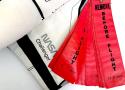
The advertisement on the auction website was titled “Space Shuttle Remove Before Flight Flags Lot of 18.” They were listed with an opening bid of $3.99. On January 12, 2010, I paid $5.50 as the winner.
At that point, my interest in the 3-inch-wide by 12-inch-long (7.6 by 30.5 cm) tags was as handouts for kids and other attendees at future events. Whether it was at an astronaut autograph convention, a space memorabilia show, a classroom visit, or a conference talk, having “swag” was a great way to foster interest in space history. At first glance, these flags seemed to be a perfect fit.
So I didn’t pay much attention when they first arrived. The eBay listing had promoted them only as generic examples of “KSC Form 4-226 (6/77)"—the ID the Kennedy Space Center assigned to the tags. //
It was about a year later when I first noticed the ink stamps at the bottom of each tag. They were marked “ET-26” followed by a number. For example, the first tag in the clipped-together stack was stamped “ET-26-000006.” //
A fact sheet prepared by Lockheed Martin provided the answer. The company operated at the Michoud Assembly Facility near New Orleans, where the external tanks were built before being barged to the Kennedy Space Center for launch. Part of the sheet listed each launch with its date and numbered external tank. As my finger traced down the page, it came to STS 61-B, 11/26/85, ET-22; STS 61-C, 1/12/86, ET-30; and then STS 51-L, 1/28/86… ET-26. //
Once the tags’ association with STS-51L was confirmed, it no longer felt right to use them as giveaways. At least, not to individuals.
There are very few items directly connected to Challenger‘s last flight that museums and other public centers can use to connect their visitors to what transpired 40 years ago. NASA has placed only one piece of Challenger on public display, and that is in the exhibition “Forever Remembered” at the Kennedy Space Center Visitor Complex. //
digital.rain Smack-Fu Master, in training
2y
34
Sarty said:
It is such an extremely NASA thing to do to mark items so mundane and interchangeable as remove-before-flight tags with individually traceable serial numbers.
It has to be one of the quality control check points … you know you placed, say, 56 tags for a specific mission. After removal, you can check that all the 56 tags for that mission have been properly removed.