
Liberia’s aviation safety systems have come under critical review following an urgent inspection tour of the Roberts International Airport (RIA) and the Liberia Civil Aviation Authority (LCAA) by House Speaker Richard N. Koon.
The Speaker’s visit was prompted by reports of malfunctioning navigation and safety equipment that have left Liberia’s only international airport vulnerable and below international standards. The tour also followed revelations that the country “failed miserably” during a 2022 audit conducted by the International Civil Aviation Organization (ICAO). ///
The airport collects a lot of money for every passenger. Why doesn't that fund all this?
Yes it does.
Seems like a lot doesn't it?
But, we must consider scale.
A 747-400 carries around 63,500 gallons of fuel, which actually makes that gallon-per-second burn rate quite efficient when you think about it.
At cruising altitude (around 35,000 feet), a 747 burns approximately 5-5.5 gallons per mile.
Works out to about 0.2 miles per gallon, which sounds terrible until you consider that the plane is moving nearly 400 people and their luggage at about 550 miles per hour.
Break it down per passenger, and you're looking at roughly 85-100 passenger miles per gallon. //
Greyhound many years ago measured its bus transport efficiency in passenger-miles/gallon. Their goal was to …wait for it… get to and maintain that very 85–100 passenger-miles/gallon number range.

If airlines are no longer required to disclose fees upfront, passengers may face a barrage of surprise charges, from baggage fees to seat selection costs. The cost of air travel could increase significantly, even if base fares appear lower. //
The proposal to eliminate the guarantee that families will be seated together without extra charges could lead to more stress for families travelling with young children. Parents may find themselves paying additional fees just to sit next to their kids. //
Airlines would have more power to decide whether or not to refund passengers for flight cancellations. //
In Europe, stricter regulations have led to fewer delays and cancellations, and the market remains competitive with budget airlines thriving under the current system. The fear is that deregulation in the U.S. could result in a situation where airlines dominate the market, and passengers are left with fewer rights and more fees.
Ep. 2.05 When You Comin' Back, Range Rider?
Republic of Liberia Government Boeing 727-25, registration EL-GOL, c/n 18253/11 built in 1963 for Eastern Air Lines.
Please note the Beechcraft King Air hidden by the stairs and cars.
You wouldn’t believe this if you saw it in a movie
If you were watching a movie and saw a 737 swerve to avoid a truck on the runway and have it narrowly pass between the nose and main landing gear, you'd think the script writers had gone too far. But that’s exactly what happened this February in Brazil. On this week’s AvTalk we walk through the incredible sequence of events. https://www.flightradar24.com/blog/avtalk-podcast/avtalk-332/
Putin en route to Anchorage
Russian president Vladimir Putin is en route to Anchorage, Alaska to meet with US president Donald Trump at Joint Base Elmendorf-Richardson. https://www.flightradar24.com/RSD539/3bbf7fe8


According to the BBC's Future Planet, a cruising Boeing 747 burns through 0.9 gallons (4 liters) of fuel each second. This is equivalent to 3,500 gallons (13,250 liters) of fuel every hour. If a 747 is cruising at its standard cruising speed of around 580 mph (933 km/h), it is covering a mile every 6.2 seconds. Covering a mile requires 5.9 gallons of fuel. As a result, a cruising Boeing 747 can achieve just 0.18 miles per gallon.
However, this is not the full picture, as a 747 carries far more people. SeatGuru writes that Qantas Airways' 747-400 aircraft carry 364 passengers across Business, Premium Economy, and Economy classes. If we extrapolate this number of seats into the mpg that each passenger has, the data shows 65.5 mpg per passenger. According to calculatormpg.co.uk, the baseline for a good car mpg is 50. If a car is carrying two people, then the car is achieving 100 miles per gallon for each person. This suggests that flying on a 747 still uses substantially more fuel than a car carrying multiple people, but less than a car carrying one person.

For the Dreamliner, the 1B has three different model types, providing between 69,800 and 76,100 pounds of thrust. Those with a fan diameter of 111.1 inches (282 centimeters) have a baseline engine length of 184.7 inches (469 centimeters). These engines have been designed with a high-bypass function, which results in the majority of the air drawn not sucked in for combustion, but instead is ducted outside of the engine core. The GEnx has a bypass ratio of 9.1, which is one of the highest in the industry.
As a comparison, the Trent 1000, developed by Rolls-Royce, requires additional cooling as a result of lower pressure ratios. The GEnx engine, additionally, has a ten-stage high-pressure compressor, which produces a 23:1 pressure ratio. This puts it ahead of the Trent 1000 model, with an eight-stage high-pressure compressor and a 19:1 pressure ratio. While the Trent 1000 has a better bypass ratio of 10:1, the GEnx is lighter, which results in improved fuel efficiency and requires less cooling. //
The GEnx-1B is manufactured across six countries, in 12 different states at 21 manufacturing sites. According to GE Aerospace, more than 1.1 million parts make up the engine. With a high degree of popularity for the engine, it is also one of the fastest-selling high-thrust engines ever built by GE. Batesville, Mississippi, is home to a GE plant that produces the composite fan case, alongside Safran Engines in San Marcos, Texas, which lays up the third generation of the composite fan blades.

August 6th, 1955; As part of the Dash 80's demonstration program, Boeing invited representatives of the Aircraft Industries Association (AIA) and International Air Transport Association (IATA) to the Seattle's 1955 Seafare and Gold Cup Hydroplane Races held on Lake Washington
The Dash 80, Boeing's newest and biggest thing, was scheduled to perform a simple flyover. At the controls was Chief Boeing test pilot Alvin "Tex" Johnston, ex barnstormer, civilian flight instructor, U.S. Army Air Corps Ferry Command pilot, flight test engineer and winner of the Thompson Trophy at the 1946 National Air Races. (Alvin earned his nickname "Tex" because of his unique flight gear, consisting of cowboy boots and a Stetson hat)
Boeing Dash 80
Tex had other plans. As Boeing's pride and joy, approached low over Lake Washington, in front of 250,000 people, including several of the nation's top aviation executives, watched as the Dash 80 pulled nose up and gracefully entered a barrel roll, causing the crowd to drop into silence.

Vintage Wings of Canada is a not-for-profit, charitable organization with a collection of historically significant aircraft and is run entirely by volunteers. It is our mission to acquire, restore, maintain and fly classic aircraft significant to the early history of powered flight in Canada, focussing largely on the aircraft of the Second World War. We run education and flying programs with our own aircraft and in concert with the aircraft collection of our founder, Michael Potter. It is our goal to inspire and educate future generations about the historical significance of our aviation heritage and to demonstrate that these aircraft are more than just metal, fabric, and wood artifacts. We seek to keep the souls of these aircraft alive through the thundering sound of engines, the smell of leather, glycol, oil and sweat, as well as the laughter of their pilots as they dance with them in their natural element in the skies over Canada.
There may be no more iconic aircraft in America than a Goodyear blimp. A blimp is a unique advertising extravaganza and a mainstay of live aerial television coverage at every imaginable sporting event. The Goodyear blimp represents the brand, but also is every bit of Americana as can be found in aviation.
This year, two of the Goodyear NT (new technology) airships — Wingfoot One and Wingfoot Two — are in attendance in a salute to the 100th anniversary of Goodyear’s airship operations. There are three Goodyear blimps in the United States; Wingfoot Three is in for maintenance. To honor the heritage of the program, Wingfoot One is flying a livery inspired by the original Pilgrim. In 1925, Pilgrim became the world’s first commercial nonrigid airship that used helium.
MOSAIC is done. After more than a decade of work by EAA, the FAA, and numerous others, MOSAIC (Modernization of Special Airworthiness Certification) is now a final rule. The rule was announced by U.S. Secretary of Transportation Sean Duffy on Tuesday afternoon at EAA AirVenture Oshkosh 2025. A generation after the creation of the original sport pilot and light-sport aircraft (LSA) rules, today we celebrate Sport Pilot 2.0 and LSA 2.0. Ninety days from now, about three-quarters of the general aviation fleet will be accessible to sport pilots and those exercising sport pilot privileges. One year from now, new and modern aircraft will begin entering the fleet with minimal certification costs. //
With MOSAIC, the weight limitation is removed. GONE! In its place is a new set of limitations; the primary limitation will now be a “clean” stall speed (VS1) of 59 knots calibrated airspeed. Aircraft with up to four seats are now allowed, although sport pilots will still be limited to one passenger. Sport pilots are also now allowed to fly aircraft with controllable-pitch propellers and retractable landing gear, with the appropriate training and endorsements.
Equally exciting to the future of aviation is the aircraft certification reform included in the rule. New aircraft are on the way! The original LSA rule proved that safe, modern aircraft could be certified with a minimum of FAA oversight by using industry consensus standards and simple forms of validation. Now, LSA 2.0 is set to deliver far more capability.
OurAirports is a free site where visitors can explore the world's airports, read other people's comments, and leave their own. The help pages have information to get you started.
The site is dedicated to both passengers and pilots. You can create a map of the airports you've visited and share that map with friends. You can find the closest airports to you, and discover the ones that you haven't visited yet.
Behind the fun and features, OurAirports exists primarily as a public good. When Australia forced the US government to shut down public access to its Digital Aeronautical Flight Information File (DAFIF) service in 2006, there was no longer a good source of global aviation data. OurAirports started in 2007 primarily to fill that gap: we encourage members to create and maintain data records for airports around the world, and they manage over 40,000 of them. Many web sites, smartphone apps, and other services rely on OurAirport's data, which is all in the Public Domain (no permission required).
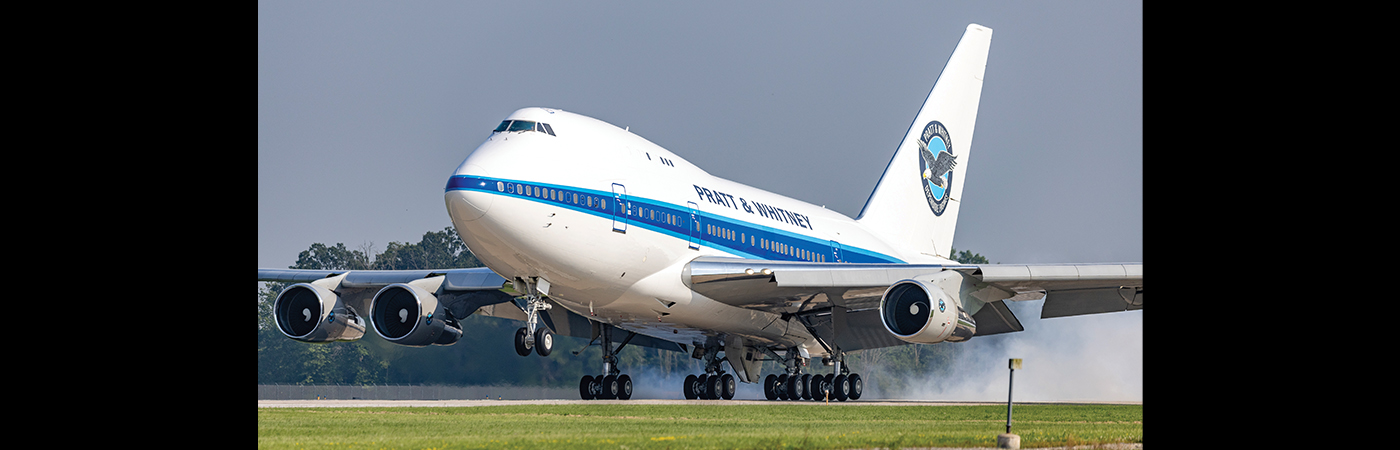

RTX subsidiary Pratt & Whitney brought its Boeing 747SP test bed to Oshkosh as part of the company’s global centennial celebration, commemorating 100 years since its founding in 1925. The 747SP is expected to be here until Thursday, July 24, offering attendees a rare opportunity to tour this iconic flying test bed.
Pratt & Whitney began operations in 1925 with the invention of the R-1340 Wasp engine, which revolutionized military and commercial aviation. The 1940s saw more innovation as the company powered several era-defining aircraft for the Allies in World War II and began exploring jet propulsion.
The Boeing 747SP (for special performance) is a shortened version of the 747 airliner that features a longer range than its full-sized counterpart and is powered by four Pratt & Whitney JT9D engines. Only 45 such aircraft were produced, with Pratt & Whitney owning the only two that are currently airworthy. The test bed variant features a fifth engine mount separate from the four main powerplants located below the wings. This extra engine configuration allows for testing engines in real-life weather conditions. Since 2001, Pratt & Whitney’s test beds have completed more than 1,400 ground runs and flight tests using 71 different experimental engines.

Regulations are always fully thought through and serve a clear purpose—thus always achieving their goals, right? Recently, I’ve started to question some of them and invite everyone to second-guess with me.
In Europe, many airports have strict curfews for noise abatement purposes. We can all agree on how important a good night’s sleep is. But is it always sensible to comply with a restriction if the outcome doesn’t actually uphold its intended purpose? If that sounds puzzling, the real-world example I’m about to share might strike you as equally amusing and frustrating. //
However, the point of this article isn’t to speculate on what-ifs. The pilots of NH203 and the tower controller played the cards they were dealt. And it all culminated at 04:59:42—just 18 seconds before the earliest allowed landing time—when the radio transmitted: “ALLNIPPON 203, GO AROUND”
A go-around call requires immediate compliance—no discussion, no delay. It’s part of our safety culture and rigorous training. Once stabilized, we can begin to ask “why.” Moments later, the tower controller explained: the aircraft had arrived too early. And this is why I’m writing this.
Have We Lost Sight of the Original Goal?
Somewhere along the line, we’ve lost the plot. Pilots, passengers, airlines—and the environment—were penalized for being early. //
The direct consequences?
- An additional 16 minutes of flight time
- Additional high-workload scenarios for the crew after nearly 14 hours of overnight flying
- A stressful experience for passengers, many of whom may never have experienced a go-around
Environmentally, an extra 1,900 kg of fuel burned, additional uncalled for CO₂ emitted, and perhaps the loudest possible noise event as the aircraft roared over Frankfurt and its surroundings—including, no doubt, a wake-up call—before the official opening hour.
All of this—done in the name of avoiding noise pollution.
I have to ask again, what was achieved here?
Two added critical phases of flight.
Higher operating cost.
And the very thing the regulation was supposed to prevent: excessive noise.

The report focused on the moments after the takeoff, showing the aircraft’s two fuel control switches moved to the ‘cutoff’ position in quick succession. This action cut off fuel supply to the engines, immediately causing the aircraft to lose all thrust.
The switches are on the centre console of the cockpit, just below the engine thrust levers. They are used to control fuel flow to the engines—primarily during engine start-up and shutdown on the ground, or to shut down an engine in the event of an engine failure during flight. //
The fuel control switches are equipped with a spring-loaded locking mechanism that keeps them in position and prevents unintended movement. You would have to pull the switch up before moving it from run to cutoff, or vice versa.
Aviation experts say a pilot would not have been able to move the fuel switches accidentally. Once moved, the effect would be immediate, cutting off engine power.

India's Aircraft Accident Investigation Bureau (AAIB) found that fuel switches had flipped to cutoff position—a move typically done only after landing—just 50 seconds into the flight as the aircraft climbed to 625 feet. The cockpit voice recorder captured one pilot asking the other why he cut off the fuel, with his colleague replying that he hadn't. The switches flipped a second apart, roughly the time it would take to shift one and then the other manually. //
Both fuel switches were found in the run position with indications that both engines were attempting to relight before the crash.

The McDonnell Douglas MD-80 was the last American-built aircraft to feature an analog cockpit. The aircraft entered commercial service with Swissair in October 1980, and became a mainstay of short-haul aviation across the world. The US-based manufacturer went on to build a total of 1,191 MD-80s, several of which are still in service today.
Kwik EFIS is a suite of applications which implement a Glass Cockpit solution designed to function on most Android devices equipped with a GPS, gyroscope, accelerometer and a CPU with reasonable performance. The suite currently consist of applications:
- Primary Flight Display (PFD), Kwik PRIM
- Multi Function Display (MFD) Digital Moving Map, Kwik DMAP
- Combined Format Display (CFD), Kwik COMP
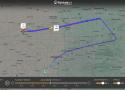
Around 03:13 UTC on 21 June (22:13 local time) a flight of US Air Force KC-135 Stratotanker aerial refueling aircraft departed Altus Air Force Base in Oklahoma. Operating in two flights of four aircraft, the Stratotankers headed northeast toward Missouri. Those aircraft quickly climbed to the top of Flightradar24’s most tracked flights list—not because thousands of people find aerial refueling aircraft over the central US fascinating, but for the inference of their purpose.