Thanks to the nature of my day job, I’ve covered quite a few commercial aviation accidents during the past decade. It’s easy to get caught up in the fast-paced news cycle and in some ways unintentionally neglect the human element of these tragedies.
The effort of producing content on these disasters, along with post-accident investigations, can stave off thoughts – at least temporarily – about how people are impacted, both in terms of the victims and their loved ones.
But that was far from the case last Wednesday when PSA flight 5342 and a Black Hawk helicopter collided over the Potomac River.
I grew up on the Maryland side of the Washington, D.C., area and started my aviation career at Reagan National. The so-called “little airport by the river,” as one former airport manager called it, was almost my second home.


Pan Am’s famous logo is returning to the skies this week as part of a transatlantic luxury tour.
The journey, known as “Tracing the Transatlantic,” will take travelers in a circuit from New York to Europe and back on board a privately chartered, all-business-class Boeing 757-200 bearing Pan Am’s blue and white insignia. The tour departs from New York-JFK on Tuesday and makes stops in Bermuda; Lisbon, Portugal; Marseille, France; London; and Foynes, Ireland, before returning to New York.
The trip is limited to just 50 participants.
“Tracing the Transatlantic” is a collaboration between tour operator Criterion Travel and private jet touring business Bartelings in an official licensed partnership with Pan Am.
On Monday, the Pan Am Museum Foundation wrote on social media that the 757 was close to landing at JFK after a flight from Florida. It is registered as TF-FIC and will be operated by Icelandair. //
While Pan American World Airways ceased operations over 30 years ago, Pan Am Global Holdings continues to manage the defunct airline’s intellectual property and licenses the Pan Am name and logo.
sectional charts

Photos of damage to the fuselage of an American Airlines Boeing 787-9, registration N839AA, caused by a lightning strike, are spreading through social media. The incident occurred on Monday’s Tokyo Narita to Dallas – Fort Worth flight.
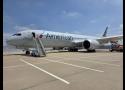
On Monday, June 2 2025, American Airlines flight 780 took off from Philadelphia for Naples, Italy. They sent the wrong plane – and passengers wound up having to land 124 miles away in Rome.
Normally this flight is operated by a Boeing 787-8 aircraft. However, on Monday American used a larger Boeing 787-9 – which isn’t permitted at the Naples airport. //
Normally the American Airlines Boeing 787-8 and 787-9 are going to be pretty interchangeable. It isn’t for the Naples flight. And they clearly didn’t flag that restriction or program in logic to prevent this. That’s a big operational failure, reminiscent of when American sent the wrong Airbus A320 – a legacy US Airways plane not certified for extended overwater operations – to Hawaii.
https://www.flightaware.com/squawks/view/1/y_days/popular/50472/Oops_American_Accidentally_Flies_Wrong_Plane_To_Hawaii

Marc Scribner and Ginger Evans have a new report on remote air traffic control towers, looking at why the U.S. won’t adopt them even as they’re being used successfully around the world.
Remote towers would help a lot with the air traffic control shortage. They’re in use around the world, Congress has told the FAA to start using them, but the agency’s intransigence has blocked efforts for years.
These are facilities where controllers are not physically on-site at the airport. They use high-definition cameras, sensors, and communication links to transmit a real-time 360° view of the airport environment to controllers sitting at a n air traffic control center in another location. //
Sweden launched the world’s first remote tower at Örnsköldsvik Airport in 2015 and has built centers in Sundsvall and Stockholm that control eight airports. Norway operates 11 airports from a single center at Bodø. A single controller will handle multiple low volume airports from that center. //
Franz Stappen says:
May 24, 2025 at 4:05 pm
Foreign countries don’t have the amount of VFR traffic we do. That’s why everyone comes here to train. //
Regnad Radzinovic says:
May 24, 2025 at 7:45 pm
I worked in FAA air traffic control for nearly 40 years. I was also the second Terminal ATC rep from FAA headquarters assigned to the Leesburg (SAAB) project. This author and the people commenting have no idea what’s involved with providing sir traffic control service. Remote towers, given their current level of technology and capability will only work at small, low traffic-density airports. (Like the airports in Europe mentioned here. One of those airports, is so slow. The log only about five take off and landing operations per day.) Any comparison to Newark or any other large place like that, is ridiculous. //
SayAgain says:
May 24, 2025 at 7:48 pm
The real issue is folks that have never been a cpc are making decisions for us and junk articles like this just prove that most don’t fully understand the atc system.
The EWR CPC’s didn’t walk off the job, additionally the staffing shortage is with the radar controllers who work the EWR sector from Philly. So your remote tower idea is a bust there.
Having remote towers Co located in the same building is a great idea but it wouldn’t help with staffing. CPC’s are specialists in their respective airspace and airports. If one remote tower is short a body they just can’t grab Steve that works COS and plug him in to work APA. So womp womp that point is out.
PHX is not the only airport that the tower and TRACON are co-located. It’s called an Up/Down and the faa has quite a few. Pit / phl / sat / las / har just to name a handful. Smaller up/downs are great for newer controllers to cut their teeth and get both tower and radar experience before going to a busier facility where you don’t have time to learn the basics, you need to learn how to work the volume of traffic.
You want to fix atc, put one of us in charge. And by one of us I mean someone that has worked traffic the last 15 years. Not some manager ladder climber that has dodged working traffic the last 15 years.SayAgain says:
May 24, 2025 at 7:48 pm
The real issue is folks that have never been a cpc are making decisions for us and junk articles like this just prove that most don’t fully understand the atc system.
The EWR CPC’s didn’t walk off the job, additionally the staffing shortage is with the radar controllers who work the EWR sector from Philly. So your remote tower idea is a bust there.
Having remote towers Co located in the same building is a great idea but it wouldn’t help with staffing. CPC’s are specialists in their respective airspace and airports. If one remote tower is short a body they just can’t grab Steve that works COS and plug him in to work APA. So womp womp that point is out.
PHX is not the only airport that the tower and TRACON are co-located. It’s called an Up/Down and the faa has quite a few. Pit / phl / sat / las / har just to name a handful. Smaller up/downs are great for newer controllers to cut their teeth and get both tower and radar experience before going to a busier facility where you don’t have time to learn the basics, you need to learn how to work the volume of traffic.
You want to fix atc, put one of us in charge. And by one of us I mean someone that has worked traffic the last 15 years. Not some manager ladder climber that has dodged working traffic the last 15 years.
You could feel the tension—passengers staring at their watches, refreshing airline apps, sighing loudly, and shifting uncomfortably in their seats.
After we had all boarded and settled into the growing frustration of the unknown, the pilot stepped out of the cockpit, walked into the cabin, stood where we could all see him, and addressed the entire plane face-to-face.
“I want to start with an apology,” he said.
Just one sentence—seven words, to be precise—is all it took to make a huge difference in the overall experience for everyone on board. Nothing about the delay was his fault. Pilots don’t schedule thunderstorms or control air traffic flow. He hadn’t caused the delay, and he certainly wasn’t to blame for the chain reaction it was causing in all of our carefully planned travel itineraries. But he still began with an apology.
In that moment, the mood on the plane shifted. The pilot didn’t magically make the delay go away, and it didn’t guarantee that everyone would make their connection, but it did something almost as powerful—it made everyone feel seen. It made everyone on the plane feel like someone understood how frustrating the situation was and cared enough to acknowledge it. //
What the captain did at that moment offers three lessons every leader should remember:
He came to us
He started with empathy
He made it clear he was on our side

1 Hour of the world's most iconic airport KAI TAK filmed 30 years ago!
http://www.youtube.com/watch?v=e-pa-AHMZUw

The tax code encourages airlines to charge separately for checked bags, and Southwest Airlines was easily leaving $75 million in tax savings on the table each year by refusing to do so. //
The airline’s CEO Bob Jordan has essentially capitulated to activist investor Elliott in order to save his job, but at the expense of the airline’s culture and product differentiation. These changes won’t make Southwest Airlines better. Southwest had problems – Elliott and everyone else in the world observing them were not wrong – but there are no solutions to bring Southwest back to its earlier growth days because the model has simply run its course.
They have maxed out the ability to grow with a single fleet type, distributing tickets through their own channels, going it alone with a simplified product. So any future will be a lower growth, lower stock multiple, less valuable one. But that doesn’t have to mean doubling down on the race to the bottom, which is why it’s sad to see today’s change. //
Ultimately what this underscores is that there is no returning to the differentiated airline business model that gave Southwest significantly higher earnings multiples, catapulting their stock beyond peers, and generating decades of consistent profits.
Nobody had solutions, so they gave up and did what everyone else does which is what company executives do to protect their jobs. They stopped sticking their necks out, because they might get chopped off. Southwest is now just like everyone else, but a bit less (they don’t even plan to sell blocked middle seats, let alone first class; they have less valuable miles; they don’t have lounges; their wifi lags the industry). A moment of silence for this once great company. //
In the meantime, as checked bag fees roll out to tickets purchased May 28 onward, over the next few months we’ll begin to see everyone trying to carry all their bags on board. That’ll mean more gate checking of bags, which has meant Southwest needed to retrofit gate equipment. This will slow down boarding and delay flights. Good luck out there to Southwest customers!
F22 Raptor filmed with a camera so fancy, you can see the vertical stabilizers get all wobbly
More power, no moving parts: the quest to fly a rotating detonation engine
After decades of research, tests advance innovative engine for improved military effectors //
Rotating detonation engines have no moving parts and a unique design that makes them both lighter and more powerful than traditional engines. Here’s how they work.
Prior to 1960, no maximum retirement age existed. Although it’s a colorful story, ripe with questionable political ethics, the maximum retirement age for U.S. pilots operating in a Part 121 environment was arbitrarily established at 60 and remained so for 47 years until it was changed to 65 in 2007. //
In 1959, the CEO of American Airlines, C.R. Smith, publicly convinced the first FAA administrator, Elwood Quesada, that after age 60, pilots begin to suffer disqualifying medical issues, notwithstanding being significantly challenged in the transition from props to jets. No substantive studies, medically or otherwise, were presented for such arguments. Privately, Smith was simply attempting to reduce the number of higher-paid older and more senior pilots.
It would seem that the same strategy of a medical argument is repeating itself in the current environment. Although some truth exists as to aging pilots succumbing to more ailments and requiring the use of more sick time leave, past studies indicate that sudden incapacitation, such as a cardiac arrest causing an accident, is highly unlikely. Because of initial screening and continued FAA medical exam scrutiny, the airline pilot population trends healthier than the general population. As for cognitive skills, the argument has often been made that pilots who demonstrate successful performance during recurrent training cycles in a classroom and in a simulator are definitive proof of mental capabilities. //
One of the larger hurdles is the fact that ICAO rules still restrict pilots over 65 to fly internationally. But based on recent ICAO agendas, it would seem the organization is seriously considering lifting the ceiling. If ICAO’s research studies bear out that airline pilots’ above-average health does not pose a risk to the flying public even in cases of sudden incapacitation, why have a ceiling at all? Why establish another arbitrary age? //
Pilots flying under Part 91 and Part 135 operations have no age restrictions. They fly in the same environment as airline pilots, so the only justification seems to be that those operations put less people at risk per flight. With some exceptions, air traffic controllers still must retire at age 56. Why would a healthy controller be any different than a healthy airline pilot to continue on the job?
If airline pilot mandatory retirement age has no ceiling, recovery from sudden pilot incapacitation should be a training requirement. Recognition is key, especially during critical phases of flight like takeoff or landing. Perhaps as was initially instituted for age 65, a restriction for pairing pilots in the same cockpit at certain ages should be considered. Can the public, let alone airline pilots, embrace two 75-year-olds on the same flight deck? //
My argument for mandatory airline pilot age is simple. If no substantive study with accurate data quantifies a particular age whereupon medical and cognitive issues indicate enough of a decline to create a risk to the flying public, then why define another arbitrary age?
A group of lawmakers in Congress is putting forward a bill that would undo much of the more than 50-year-old rule banning most supersonic flight over U.S. land.
The Supersonic Aviation Modernization Act, introduced Wednesday by Senator Ted Budd of North Carolina and Representative Troy Nehls of Texas, would instruct the FAA to revise a 1973 statute prohibiting nonmilitary air travel that exceeds Mach 1 over land. The rule was introduced to limit sonic booms, which are not only loud but capable of damaging property on the ground below.
The proposed bill would allow civilian aircraft to travel at Mach 1 and faster provided no sonic booms reach the ground. Its supporters said American companies have already developed “quiet supersonic” technology that makes the current ban irrelevant. //
The Supersonic Aviation Modernization Act is cosponsored by Senators Thom Tillis of North Carolina, Mike Lee of Utah, and Tim Sheehy of Montana, together with Representative Sharice Davids of Kansas.
Duffy said during Monday’s press conference. “In July of 2024, the Biden [and] Buttigieg FAA moved control of the New York Newark airspace from New York [N90] to the Philadelphia Tower [Philadelphia TRACON].”
He said that as part of the move, the Standard Terminal Automation Replacement System (STARS) system which processes radar data for Newark stayed based in New York. Telecommunication lines would feed this data from New York to Philadelphia TRACON, where controllers would then handle New York arrivals and departures.
“The Biden [and] Buttigieg FAA bungled this move without properly hardening the telecom lines feeding the data which was already well known to be error-prone,” he said. “Without addressing the underlying infrastructure, they added more risk to the system.”

The safety nightmare continues at Newark Liberty International Airport, where all air traffic control will be manned by just one fully qualified person during its busiest time tonight, The Post can exclusively reveal.
One air traffic controller (ATC) and a trainee will operate every flight in and out of Newark between 6.30pm-9.30pm — despite 15 staffers being the standard requirement for a shift.
A New York-based ATC, who spoke on the condition of anonymity, described the situation as “pure insanity” and warned that the schedule shows the control tower for the airport will operate “at bare bones” while between 168 and 180 planes are usually scheduled to take off and land.
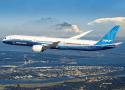
On a typical day, the global 787 fleet conducts approximately 2,100 flights, transporting roughly 480,000 passengers daily – about 14.5 million people monthly. //
Boeing announced that its pioneering 787 Dreamliner fleet has transported over one billion passengers faster than any widebody commercial airplane in history, achieving this milestone in under 14 years since entering service.
The global fleet of more than 1,175 Dreamliners has completed nearly 5 million flights covering over 30 million flight hours. //
The 787 Dreamliner has fundamentally transformed the aviation landscape by enabling airlines to efficiently operate previously unprofitable long-haul routes.
With its exceptional fuel efficiency and extended range capabilities, carriers have established more than 425 new nonstop routes, connecting cities that previously required multiple stops or weren’t served at all. //
The aircraft’s operational capabilities have made it particularly valuable for airlines like Qantas Airways (QF), which operates the longest nonstop 787 route from London to Perth spanning 7,829 nautical miles.
At the other extreme, TUI Airways (BY) utilizes the Dreamliner for shorter high-demand routes including the 65 nautical mile hop between Aruba and Curaçao. //
The Dreamliner’s commercial success is reflected in its position as the bestselling passenger widebody in aviation history, with more than 2,000 orders from 89 airlines, operators, and lessors. The aircraft operates across more than 85 countries and serves over 520 airports worldwide.
In the case of MEL 32-12-01 covering missing gear door seals, the prescribed remedy involves maintaining the extended gear position temporarily after takeoff. //
-
During normal operations, gear retraction typically occurs within 10 seconds after takeoff
-
The system applies automatic braking to wheels during retraction to prevent gyroscopic forces from spinning wheels from entering the gear bay
For aircraft operating with deactivated brake units (another MEL condition), extended gear position becomes especially important.
The spinning mass of wheels (exceeding 100kg each) creates substantial gyroscopic forces that could stress the landing gear system if retracted while still spinning rapidly. Natural deceleration time prevents potential damage.
Between October and December 2024, the airline did not have a single passenger involuntarily denied boarding, according to statistics published by the Department of Transportation.
In comparison, Ameican Airlines involuntarily bumped more than 3,200 people from its flights during the same period.
Why do shockwaves extend past the body that created them? As seen in this photo, the shock doesn’t stop in the air the plane is effecting, but continues on. I always assumed it was high pressure air from the shock extending out, but now I’m not too sure. //
Shocks are not because of the pressure. Shocks happen because of the turning -- the pressure jump is a result of the shock. – Rob McDonald Mar 14, 2024 at 17:27
A shock wave generated at 30,000 feet at Mach 1 cannot be heard on the ground for precisely the reason you surmise in your comment.
The US Air Force has conducted tests with supersonic aircraft and has this to say:
Under standard atmospheric conditions, air temperature decreases with increased altitude. For example, when sea-level temperature is 58 degrees Fahrenheit, the temperature at 30,000 feet drops to minus 49 degrees Fahrenheit. This temperature gradient helps bend the sound waves upward. Therefore, for a boom to reach the ground, the aircraft speed relative to the ground must be greater than the speed of sound at the ground. For example, the speed of sound at 30,000 feet is about 670 miles per hour, but an aircraft must travel at least 750 miles per hour (Mach 1.12, where Mach 1 equals the speed of sound) for a boom to be heard on the ground.