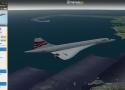
Spoiler alert – no. Concorde did not return to the skies on April 1st, 2025. Instead, we paid tribute to the legendary supersonic jet by recreating two Concorde flights on Flightradar24. Here’s a look at what happened. //
We thought it would be fun to use April Fool’s Day as an opportunity to recreate two of Concorde’s most iconic flights, giving these beautiful aeroplanes one last chance to cross the Atlantic (albeit virtually).
The Air France (AF/AFR) Concorde F-BTSD departed Paris Charles de Gaulle Airport (CDG) at 08:00 local time, and arrived at New York’s John F. Kennedy Airport (JFK) after a 3 hour and 50 minute flight. Later at 11am UK local time, British Airways (BA/BAW)‘s Concorde G-BOAG left London Heathrow Airport (LHR) for JFK, landing 3 hours and 33 minutes later.
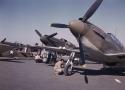
It has been about a year since we reported on the major revelation that many thousand original North American Aviation manufacturing drawings survived destruction during the 1980s because one of their employees, Ken Jungeberg, saved them from incineration. Furthermore, as we also discussed last year, AirCorps Aviation worked out a deal with Jungeberg in 2019 to secure these historic artifacts for their longterm preservation. Ever since their arrival at AirCorps last winter, Ester Aube, the company’s manager for their technical documentation division, AirCorps Library, has been working diligently to preserve and catalogue this massive archive. With so many drawings to review, this would be a daunting task for anyone to undertake successfully, but Ester has applied her keen intellect, professional training and substantial skillset to systematically document and collate these drawings into a practical and valuable resource for aircraft restorers, historians, and the aviation-minded public at large. Additionally, Aube has delved deeper into the process, tracing personal details for several NAA technicians who originally drafted these drawings, because their stories are no less important to the narrative than the documents themselves; this aspect of aviation history has received little prior attention from the wider world …until now.
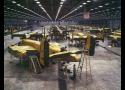
AirCorps Aviation of Bemidji, Minnesota has just announced that they have acquired a massive trove of original manufacturing drawings for North American Aviation (NAA) covering types such as the P-51, T-6, B-25 and P-82. This is a remarkable development, and all due to a lone engineer at NAA named Ken Jungeberg who had the foresight to save these drawings when they were days away from destruction at North American’s plant in Columbus, Ohio during the late 1980s. But before we discuss this find, it is perhaps first worth reflecting upon what it represents…
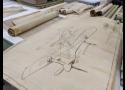
Just a few of the thousands of WWII-era North American Aviation aircraft manufacturing drawings which Ken Jungeberg saved. (image via AirCorps Aviation)
The American aircraft industry produced just under 300,000 aircraft between 1940 and 1945, a staggering feat by any measure, especially considering that just 3,600 rolled off U.S. assembly lines during the entirety of 1940. While aviation companies such as Boeing, Douglas, Curtiss and their like would design the aircraft, and put them together at their factories, it was simply impossible for them to both make all of the components and subassemblies on site and keep up with production demand. They had to subcontract out the bulk of this work once a design received an order for full-scale production. Indeed, much of America’s entire manufacturing base was involved in this effort – from small ma and pa furniture shops to industrial giants like Ford and Chrysler – whether they were making map cases or wing panels. Some companies, such as Ford, even had their own aircraft assembly lines, like the one in Willow Run, Michigan which built B-24 Liberators.
But have you ever wondered how it was possible to have such a prolific output of high quality aerial machinery when each aircraft assembly line received component parts from so many different independent subcontractors? How was it possible for all of those many thousands of parts to fit together properly in such a repeatable fashion?
The answer is pretty simple; it all came down to the quality of the manufacturing drawings which the aircraft company engineers created during their design process. If you had a coherent set of accurate drawings showing how to make each part, and how to put each assembly together, then you could rely upon skilled workers at disparate factory locations to produce components whose dimensions complied with design tolerances. Of course, there were times when problems arose, but when they did, the engineers usually found solutions. But a coherent set of manufacturing drawings was key to this effort.
However, every single component, from the tiniest rivet to the entire aircraft, required drawings to properly describe them. Obviously, the more complex parts and sub-assemblies required multiple drawings, sometimes hundreds. Highly skilled draftsmen and women created all of these drawings by hand by – usually using pencil on vellum drafting paper. Drawings could sometimes be massive too, extending ten feet or more. The finished product was designed to be practical, fully describing the part and how it fit into an assembly. Drawings were often exquisitely beautiful too – more works of art than simply functional. //
But then along came AirCorps Aviation with their AirCorps Library project. For a small annual subscription of just $50, you have access to serious engineering details, including manuals, for several dozen American WWII-era aircraft designs. They have also digitized the engineering drawings for a number of these aircraft too, such as the P-51 Mustang, F4U Corsair and B-17 Flying Fortress. While they haven’t digitized everything available yet for each aircraft design – it’s a massive process – it is a fascinating resource for anyone with even a passing interest in WWII aviation. //
This is why the news about the preservation of more than 15,000 original drawings produced by North American Aviation that relate to such iconic designs as the T-6 Texan, P-51 Mustang and B-25 Mitchell is such a revelation. AirCorps Aviation has gained access to these drawings, and is presently cataloguing and copying them for their subscription library. However, the fact that these drawing still exist at all is down to the dedicated efforts of just one man, Ken Jungeberg. His name will resonate in aviation lore for generations to come due to his foresight in saving such historically important documents. For further details on this remarkable news, we will let AirCorps Aviation’s Ester Aube continue the story…
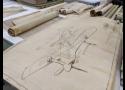
Thousands of original North American Aviation technical drawings undergo preservation and cataloguing, highlighted in museum exhibit. //
In April of 2023, Ester Aube finalized and installed an exhibit at the EAA museum using the drawings and telling the story of the draftsmen from North American and highlighting their contribution to the war efforts. When the collection was initially received from Ken Jungeberg, they had promised to do something to help get the story of the draftsmen out to the general public and get some of the drawings in public view so that people could enjoy and learn. The exhibit will be in the museum until September of 2025. “I chose some, cherry-picked some really amazing drawings to highlight in that exhibit,” says Aube. //
With so many drawings and aircraft to sort through, Aube started the project working on a specific aircraft, the P-51, because both AirCorps Aviation and the many aircraft in the warbird community would get a lot of benefit from such extensive original engineering drawings. At this point she estimates she has catalogued a little over 15,000 drawings just for the Mustang, and has also ventured into the smaller size drawings for the early B-25 models, which will be her next branch to catalogue. “The cataloging process is very labor intensive,” she says. “So I’m cataloging part number and the description, which under normal circumstances isn’t as important. But because this collection contains so many experimental and pre-production drawings, you have to catalog the description because that part number isn’t listed anywhere in a parts catalog or it’s not referenced.” North American did have a part numbering system, but all the pieces of data are needed or else the searchability is difficult. So part number, description, the date it was drawn, name of the draftsman, the material the drawing was done on, and the factory it was made in all are recorded during the cataloguing process. There are drawings from factories in Inglewood, Kansas City, Dallas, and even some from the Canadian Car Foundry in Ontario, Canada’s largest aircraft manufacturer during World War II.
Ken Jungeberg’s efforts saved a vast collection of North American Aviation’s WWII engineering drawings from being lost. In this interview, Ester Aube of AirCorps Aviation shares his story and her role in their preservation. //
During World War II, long before the advent of computer-aided design, thousands of skilled draftsmen meticulously created tens of thousands of engineering drawings for every aspect of each aircraft model produced. These drawings were not only precise and detailed—ensuring different factories could manufacture components to exact specifications—but also works of art in their own right. Without the dedication of preservationists and archivists, many of these irreplaceable documents might have been lost forever. Thanks to the vision of a select few, however, these drawings are being safeguarded—not just as historical artifacts but as invaluable resources for the warbird restoration community. In 1988, Ken Jungeberg, head of the Master Dimensions Department at North American-Rockwell’s Columbus plant, was granted permission to save a large collection of non-current engineering drawings from the company archive. //
In this video interview, Ester Aube, Manager at AirCorps Aviation, shares Ken’s story and her role in preserving these invaluable engineering drawings.
https://youtu.be/eK--vNanN_U

Delta Air Lines is celebrating its 100th anniversary with a grand renovation of the Delta Flight Museum, reopening on April 7. Located at the airline’s Atlanta headquarters, the museum showcases a century of aviation history with expanded exhibits, interactive experiences, and rare aircraft like the Douglas DC-3 and Spirit of Delta Boeing 767.
A customer received $100,000 from American Airlines after getting a ticket they bought for $1,000 refunded. //
The honest customer did not want to keep the money since it wasn't theirs. So the person dialled customer care at American Airlines and told them about the mistake. However, every agent insisted that the refund was perfectly correct. When that didn't work, the person wrote emails to the airline's Revenue Protection group and even put the matter on social media. But nothing worked. //
So the customer then filed a "dispute" about the refund with American Express. //
The refund was received on Feb 21, and the airline acknowledged that a mistake had happened days later. However, it still couldn't be fixed. The airline processed an adjustment on Feb 27, and to the shock of the passenger, charged them $28 million.
This spiralled into a whole other issue since American Express suspended their account due to “high credit exposure" on March 1. The person tried to get in touch with people at Amex but could not reach a person of authority outside of normal business hours. Others who were available at those hours did not have the authority to correct a $30 million error.
Finally, Amex acknowledged the multiple errors on March 3 and removed the $28 million charge the next day. Things didn't end there as the process of fixing the problem had led to $300,000 being refunded, besides currency conversion costs and losses of $75,000.
American Airlines and American Express have apologised for the error and offered an undisclosed amount as compensation to the passenger.
The Boeing E-4B, known as the “Doomsday Plane,” is the airborne command center for the United States government during national emergencies meant to ensure continuity of government command after nuclear attack, major natural disasters, or terrorism. And it’s a fleet of old Boeing 747-200s that’s difficult to find parts for. //
The E-4 was developed in the early 1970s as the National Emergency Airborne Command Post. The first was delivered in 1973 (“E-4A”) and three of the planes were upgraded to higher specs (“E-4B”) in 1985. Four E-4Bs are currently in operation, maintained by the 1st Airborne Command out of Offutt Air Force Base outside of Omaha. //
Since the planes are now 50 years old, they’ve become incredibly costly to maintain. The Government Accountability Office estimates a cost of $372,496 per flight hour, and spare parts procurement is difficult as there’s no longer an active world fleet of similar aircraft.
Last April, the Air Force awarded a $13 billion contract to Sierra Nevada Corporation for developing the next-gen Doomsday Plane” called the Survivable Airborne Operations Center. These will be ex-Korean Air Boeing 747-8s. The first of these aircraft arrived at Sierra Nevada facilities late last year to start conversion. The fleet will grow to 10 “E-4C” aircraft by 2036. //
David says:
March 30, 2025 at 2:49 pm
The little-known HBO’s “By dawn’s early lights”, with Powers Boothe and James Earl Jones, almost takes place entirely in a Doomsday plane during WW3. Highly recommended.



Why should passengers not delay donning emergency oxygen masks after they deploy from the overhead compartments?
A
As soon as the oxygen masks fall down, the flight crew will know, and they will make it an immediate priority to get the aircraft down to an altitude where the masks are not needed anymore because the outside pressure is high enough to breathe by. This takes less than the time the oxygen generators last for.
(Usually descending will take much less time than the masks are good for -- the critical design factor for the oxygen mask duration is that if you happen to be over tall mountains when the pressure drops you may need to fly for a bit of time to reach terrain low enough to dispense with the masks. There are a few places, such as over the Tibetan plateau, where airline flights simply don't go because it's too far from sufficiently low terrain for the masks to last).
There is no realistic chance of the oxygen generators running dry while you still need them. If you delay putting your mask on, all you buy is a danger of fainting or otherwise being unable to don it (from low pressure, not depletion of oxygen in the air) before you decide to put it on -- and then you may end up in a low-oxygen state for long enough to risk permanent harm.
There's a reason why the safety briefing always instructs you to put your own mask on before helping others -- because the time it takes to help someone else may well be enough to incapacitate yourself. //
In a typical decompression, there will be a gradual loss of pressure. However, by the time the masks drop, the pressure has already dropped a fair amount. There is no set time that it takes for pressure to drop. It could be very gradual, or it could be explosive decompression that happens extremely quickly. As a passenger, aside from the obvious explosive decompression, you will not be able to tell how fast the pressure is dropping. And because of how hypoxia works, you many not even be able to tell that you are not getting enough oxygen. So you have no way to tell how long you can safely wait before putting on your mask. Without enough oxygen, you eventually die.
So by not putting on the mask, you are risking death. What is the benefit of waiting to put on your mask?
Airlines operating under FAA regulations are required to carry certain amounts of oxygen, depending on the flight. FAR 121.333 covers the requirements for oxygen supply during an emergency descent.
For airliners certified to FL250 and below, they must carry 30 minutes of oxygen for 10 percent of passengers, but only if they can safely descend to 14,000 feet in 4 minutes.
If they cannot safely descend, or if the airplane is certified above FL250 (as most airliners are), there must be at least 10 minutes of oxygen for all passengers, and enough for 10 percent of passengers for the duration of flight with cabin altitude between 10,000 and 14,000 feet. //
At high altitude, the time for useful consciousness is measured in seconds. Pilots are trained to take on the mask immediately when the alarm goes off.
The problem of your approach lies in two uncertainties:
Uncertainty of cabin pressure. Unless you happen to have carried a altimeter with you, of course.
Uncertainty of the oxygen level in your blood. Prolonged hypoxia may cause permanent brain damage.
For your reference, the time of useful consciousness at FL350 is 30 seconds only. If it was a rapid decompression, then the fog which formed instantaneously may have obscured your vision for a good 10 seconds. Granted, at FL150 you'd have 30 minutes. But you wouldn't know. And most passengers simply wouldn't have known the aircraft's attitude the moment it happens. It is simply too risky (for both pilots and passengers) to wait while oxygen supply is available. //
it's important to understand that 100% oxygen at 11 km is possible because pressure is still 22 kPa, greater than the physiological minimum of 16 kPa. If it was below 16 kPa (e.g. at 13 km), even if this 100% O2 supply was in excess for our body needs, it wouldn't be transferred to our blood without increasing its partial pressure to 16 kPa, either by providing more oxygen, or adding another gas to the same quantity of oxygen. Hence at 13 km a pressurized mask would be necessary.
–
mins Commented Dec 27, 2016 at 2:23
@mins, yes, above certain altitude even 100% O₂ won't help, but adding other gasses won't change anything, because what matter is that partial pressure of oxygen is at least ~14 kPa (You need 11.6 kPa more O₂ than CO₂ to displace the later from the hemoglobin, plus a bit more for the process to be sufficiently efficient. Exhaled air has around 14.5% of oxygen and that is still plenty for mouth-to-mouth resuscitation.). Total pressure only matters to prevent excessive drying above the Armstrong limit, that pressure is 6.8 kPa (18–19 km; then you need full pressure suit).
– Jan Hudec Commented Dec 27, 2016 at 11:10

The airspeed was 136 knots, or roughly 155 mph, according to the preliminary findings.
The report, which doesn’t provide a final cause for the crash, added that the jet’s right main landing gear collapsed after making contact with the runway.
“At touchdown, the following occurred: the side-stay that is attached to the right [main landing gear] fractured, the landing gear folded into the retracted position, the wing root fractured between the fuselage and the landing gear, and the wing detached from the fuselage, releasing a cloud of jet fuel, which caught fire,” the report stated. //
Astro 9007 Da FAC
6 hours ago
Read the prelim report - east yo find on-line. VVI at touchdown >1100 fpm. Book recommends 600 (RJ Manual). Design load limit was a measly 750 or so VVI.... oops.

By the time adversaries detect the Raptor, it has often already fired missiles and maneuvered to a superior position. On the other hand, the F-15 might outrun its targets but retains a larger radar cross-section and can be tracked and engaged by many more enemies.
The Eagle relies on its high thrust-to-weight ratio and robust radar suite for air intercept, whereas the Raptor leverages stealth and sensor fusion to stalk its prey.
Each philosophy that is imbued in the two designs reflects the doctrine from the eras of their development. The 1970s favored dominance through speed and heavy weapons, while modern tactics focus on evading detection and maximizing electronic warfare (EW) techniques.
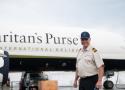
For John Morgan, the sky has never just been a career—it’s been a lifelong journey. A journey that has taken him from the left seat of a Cherokee 140 at age 17 to the controls of the world’s last Douglas DC-8 flying humanitarian missions around the world.
As recently as two years ago, there were five operational Douglas DC-8s around the world. Sadly, with the retirement of NASA’s DC-8 last April, N782SP became the sole operational DC-8 after more than five decades of service. Between 1958 and 1972, 556 DC-8s were built at Douglas’ (later McDonnell Douglas) Long Beach, Calif. factory.
That makes John a member of a very elite club in aviation today.
The Vickers VC10 holds a special place in aviation history as one of the most elegant and innovative airliners ever built. Designed in the early 1960s to meet the unique requirements of British overseas routes, it became a distinctive icon of British engineering. Though it never achieved the commercial success of its American counterparts, the VC10 remains beloved for its quietness, comfort, and exceptional performance. It also just happens to be this author’s all time favorite passenger jet. Whilst I never flew on one, I had the pleasure of being around the jet in the UK and Cyprus as an air cadet, as well as seeing the last ‘living’ RAF VC10 displaying a fast taxi at Bruntingthorpe’s Cold War jets display back in 2019. Let’s explore the history of the VC10, its design, legacy, and influence on aviation.

Broceephus anon-x8p1
5 hours ago
There were over 1200 plane crashes in the US in 2023. Most don’t make national news unless there are more than 2 casualties. Unfortunately, it literally happens every day.
anon-545z Broceephus
4 hours ago
Non were commercial aircraft. There hasn’t been a commercial crash in the US since 2009. Also, 1017 of those crashes were non fatal. The remainder never saw anywhere close to the loss of life we have seen the past two days. Yes, you are right, if there is not more than 1 or 2 deaths, it is not reported. Also we rarely see a crash in a metro area.

For one, just as I speculated, the Black Hawk was in a nose-low attitude, which you can see based on where it's rotor beacon is in relation to the lights on the first of the helicopter. That means their upward visibility was very limited. If they were wearing night-vision goggles, which were reported by the Department of Defense as being on board, it would have been even more so. That's the first major issue.
Secondly, while some keep referencing how bright the landing lights were, those would not be very visible to an aircraft approaching from the side, as the Black Hawk was. That's especially true on a clear, dry night where there's not much moisture in the air for the lights to project on and reflect back. There is also an enormous amount of light pollution in the background for beacons and strobes to get lost in.
Thirdly, and perhaps most telling, is that the regional jet was descending on the final approach path after making its base-to-final turn while the Black Hawk seemed to be in a slight climb (according to the track data). That means the two aircraft were not at the same altitude until the moment of impact. In other words, the regional jet essentially descended into the flight path of the helicopter, with the latter's crew having little to no upward visibility.
As a point of clarity, the regional jet was where it was supposed to be. The Black Hawk's flight path was the issue, and it never should have been where it was. Further, given that the helicopter appeared to have called the wrong traffic in sight when warned by air traffic control, it's also very possible they were distracted and not even looking in the direction when the collision occurred.
The last question (one President Donald Trump himself has raised) revolves around why the Black Hawk was at the wrong altitude, and there are several possible explanations. You can gain a hundred or so feet of altitude in an aircraft in the blink of an eye. That could happen due to a lack of proficiency. It could also happen due to being distracted.

Staffing at the air traffic control tower at Ronald Reagan National Airport was “not normal for the time of day and volume of traffic,” according to an internal preliminary Federal Aviation Administration safety report about the collision that was reviewed by The New York Times.
The controller who was handling helicopters in the airport’s vicinity Wednesday night was also instructing planes that were landing and departing from its runways. Those jobs typically are assigned to two controllers, rather than one.
...
The tower [at Reagan] was nearly a third below targeted staff levels, with 19 fully certified controllers as of September 2023, according to the most recent Air Traffic Controller Workforce Plan, an annual report to Congress that contains target and actual staffing levels. The targets set by the F.A.A. and the controllers’ union call for 30. //
This shocking event follows problematic and likely illegal decisions during the Obama and Biden Administrations that minimized merit and competence in the Federal Aviation Administration (FAA). The Obama Administration implemented a biographical questionnaire at the FAA to shift the hiring focus away from objective aptitude. During my first term, my Administration raised standards to achieve the highest standards of safety and excellence. But the Biden Administration egregiously rejected merit-based hiring, requiring all executive departments and agencies to implement dangerous "diversity equity and inclusion" tactics, and specifically recruiting individuals with "severe intellectual" disabilities in the FAA.
On my second day in office, I ordered an immediate return to merit-based recruitment, hiring, and promotion, elevating safety and ability as the paramount standard. Yesterday's devastating accident tragically underscores the need to elevate safety and competence as the priority of the FAA.

In aviation, “retard” is a command to reduce the throttle position. It is used throughout the industry but is especially noteworthy in Airbus aircraft. These highly-automated planes make aural callouts based on the aircraft’s radar altitude, including one telling the pilot to retard the thrust levers on their final approach to landing.
When first heard from the jump seat or in a simulator, the Airbus call out of “50…40…30…20…RETARD, RETARD” can sound a bit odd. Numerous jokes have popped up. After all, who would want to fly a plane that insults its pilot?
The Merriam-Webster Dictionary defines the verb retard as “to delay or impede the development or progress of…to slow up, especially by preventing or hindering advance or accomplishment. For example, chemicals are used to retard the spread of fire.”
In the example of an aircraft, the thrust levers are moved aft to retard the power produced by the engines.

Is there an ATC shortage? Yes, there is, and we'll get to that. Was it caused by any action of the Trump administration instituted eight days ago? There's no planet on which that's true. You don't train to be an air traffic controller in eight days, much less would you be assigned to what is one of the most senior sectors in the country.
But if Democrats want to go down this road, we can. What caused the current ATC shortage? The Biden administration, which took its cues from diversity programs created by the Obama administration, rejected over 3,000 qualified applicants who didn't meet DEI standards. How do we know this? Because it led to a major class action lawsuit that is still ongoing. //
In other words, Democrat presidents put DEI above safety, purging thousands of people who could have solved the shortage because their skin color didn't match up with the left's political wants. That's what the Trump administration is trying to fix by eliminating diversity quotas at the FAA. So again, if Democrats would like to go down this road of trying to place blame, Republicans should be happy to do so. It won't work out well for the former.
With that said, it does not appear that ATC was primarily at fault here. There may be questions about how much separation was allowed to begin with, and an investigation will figure all that out. In the meantime, these attempts to blame a presidential administration that's been in office for eight days are laughable. Not only that, they are ghoulish and disgusting.
DCA JIA5342 & PAT25 mid air

DOT should certainly enforce refunds for services charged but not provided. But they shouldn’t lock airlines and airfare search sites into displaying specific charges in a standardized way, the same everywhere. We should be encouraging competition in meeting consumer needs, not making airline sites and Expedia displays the same forever. It’s not only seat and bag fees that matter – and even those don’t always matter!