
Did you know that the first character that Walt Disney created to specifically appear on television was inspired, in part, by early Space Age rocket scientists?
On this day 65 years ago (September 24, 1961), Disney introduced the “renowned scientist, lecturer, psychologist [and] world traveler,” Ludwig Von Drake. A member of the Duck family (he is the “brilliant and eccentric” uncle of Donald Duck), Von Drake was “the outstanding genius of the century” (per Disney himself) who helped to explain scientific principles and technological concepts to the millions of people who tuned in every Sunday to watch Walt Disney’s Wonderful World of Color on NBC. //
“The world-famous authority on outer space, Professor Wernher von … I mean … Ludwig Von Drake,” Disney said.



“Beijing’s intended strategy is to dominate the high ground of the twenty-first century.” //
In a forthcoming memoir, former US politician and NASA Administrator Bill Nelson offers a blistering assessment of China, saying the United States must do all it can to retain its leadership in space exploration.
“Beijing’s intended strategy is to dominate the high ground of the twenty-first century,” writes Nelson in Space Odyssey, a book to be published by Harper Horizon in January 2027. //
Nelson has long been wary of China as a threat to the United States, noting his concerns about technology theft from the West. Unlike his predecessor under a Democratic president—former astronaut Charlie Bolden, who served as NASA leader under President Obama—Nelson supported the Wolf Amendment, which strictly limits cooperation between NASA and China’s space program.
The reason, Nelson says, is that China’s space program is militarized and highly secretive.
“China is not a partner to be trusted,” he writes. “Partnership requires trust, and trust is founded on transparency. With China, despite repeated efforts to build verifiable, rules-based cooperation and set commonsense guard rails for engagement, there has never been much of either.” //
Although he’s no fan of the Trump administration, Nelson does seem to agree with NASA’s current administrator, Jared Isaacman, that this competition is urgent and requires the agency to pursue more than a flags-and-footprints approach. In his 10 months as administrator, Isaacman’s signature initiative has been to launch an effort across NASA and its commercial space ecosystem to build a Moon Base at the lunar South Pole.
China, Nelson writes, is planning “infrastructure for lunar permanence,” seeking to occupy the limited area at the South Pole of the Moon where the most resources are. “They are not sprinting against us to plant another flag; they are settling in for a marathon, an endurance race that will take us deeper into space than humankind has ever dared to venture before,” Nelson writes. //
Being first, and being there for the long haul, matters, Nelson says. And he tells his readers to not be fooled by talk of exploration, especially when it comes to China’s space program. This is a competition for the high ground of the 21st century.
“What looks like exploration on the surface is, in truth, also a raging struggle for space supremacy,” he writes. “This race will determine who sets the rules for a new era of human expansion beyond Earth. For Beijing, this race is not about exploration but about domination, securing the infrastructure of orbit in much the same way empires once seized trade routes and aggressively defended sea lanes.”
Should the United States lose this competition, Nelson writes, “we’ll watch the next frontier slip from our grasp.”

Even two-tenths of a watt matters when your spacecraft launched in 1977
Adding a few extra years to Voyager 2's prodigiously long life was the result of an effort that began more than a year ago, as engineers and managers pondered how to eke out a few more watts from the spacecraft's dwindling power supply.
"We came up with the 'Big Bang' idea probably more than a year ago now," recalls Suzanne Dodd, Project Manager for the Voyager project.
"We were looking for ways to extend the lifetime of the mission, which means really extending how long we can operate the instruments." //
"The idea behind the Big Bang… If we were to switch systems and do a lot of power switching all at once within the bus of the spacecraft, we would gain a lot of power and it would still keep the electronics warm, as opposed to when we do it serially (in a series), it doesn't provide enough of the heat input to keep the propellant lines warm."
The approach required careful power and thermal modeling. The draw of each component had been documented, but the figures were nearly 50 years old and might contain some hidden margins. "We're talking about a half a watt, or two tenths of a watt, and that makes all the difference on the spacecraft," Dodd explains.
It took two years and cost $5 million—but the results are absolutely spectacular. //
HOUSTON—Following the completion of a multi-year, multi-million-dollar restoration, NASA’s historic Apollo Mission Operations Control Room 2 (“MOCR 2”) is set to reopen to the public next week. The $5 million in funding for the restoration was partially provided by Space Center Houston, but the majority of the money was donated by the city of Webster, the Houston suburb where the Johnson Space Center is located. Another half-million in funding came from the general public via a Kickstarter campaign (disclosure: your humble author was a backer).
For the past two years, historians and engineers from the Kansas Cosmosphere’s Spaceworks team have been lovingly restoring and detailing the 1,200-pound (544kg) historic sage green Ford-Philco consoles that populated the control room—repairing damage from decades of casual neglect and also adding in the correct control panels so that each console now correctly mirrors how it would have been configured for an Apollo flight.
Ars was invited to view the restored MOCR 2 last week as the final finishing restoration touches were still being applied. We conducted some interviews and shot some photos while technicians and construction workers bustled around us, hammering and screwing the last bits and bobs into place.

“The anomaly originated at the main oxygen valve on one of the BE-4 engines.” //
Wickwick Ars Legatus Legionis
16y
40,965
Companies don't just change their culture. One doesn't simply take a ponderous, deliberative engineering house and suddenly see them moving at warp speed. It takes time and experience to know when to push a risk and when not to.
Attempting to change the behavior of a company overnight is likely to lead to ill effects like blowing up your only launch facility during a static fire because you decided you wanted to test some new engine configuration before totally validating it on a test stand. //
Zacharot Wise, Aged Ars Veteran
13y
181
It may have been the valve that initiated the issue. But to be perfectly clear, the hazard they are working with is liquid oxygen. It takes so little to set it off, and it's self combusting. People have died from underestimating how volatile liquid oxygen is. Multiple rockets have been lost to valving or cracking liners, or anything that can generate heat around liquid oxygen. If they are still modifying valves at this stage, I worry that they lack the knowledge or experience necessary for rapid re-use. They certainly are not correctly characterizing the risk.
Edit: Downvote as you please, but New Glenn isn't operating under the same methodologies as Starship. It's a top down design. It worked out of the gate. It's Old Space manufacturing. They do not have the operational capacity to trial and error in the field. Sure, things go wrong and you fix them, there are always lessons to learn. But Blue Origin is not new. Those lessons should be years behind them at this point. If you seriously think "oh, they are of course fixing it, and learning, and understanding the risk", then you missed the point that the de-risk phase was before they built it. They are not hardware rich. They do not iterate to fix. As noted, they have to make modifications in-place. Maybe that works this time, but it's a huge red flag to everyone banking on New Glenn being reliable. It should not be an oxygen valve causing total vehicle and pad loss. For a company as mature as this, that's egg on face levels of execution.
lurknomore Ars Tribunus Militum
5y
3,581
mjuarez1977 said:
This bit stuck out to me.
Is it possible that after such a massive conflagration, literal ball-of-fire hundreds of feet into the air, they actually found the oxygen valve that failed, the actual hardware, somewhere in the debris, and somehow confirmed it had an anomaly prior to the explosion? I honestly can't see how that's possible.
Or is this more like "we have telemetry that showed the explosion started at an oxygen valve, and we confirmed with other oxygen valves we have that it needs to be redesigned"?
That threw the credibility off for me. Even after SpaceX showed how good companies can be at finding the needle in the pile of melted rubble, the wording made the rest sound, to me, like a "trust us dear customers, we/you can rush back to the pad" statement.
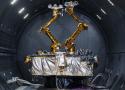
A spacecraft fitted with two flexible robotic arms is on the way to geosynchronous orbit after launching earlier this week on a SpaceX Falcon 9 rocket, kicking off a planned decade-long mission to open new frontiers in satellite servicing.
The Mission Robotic Vehicle, owned and built by Northrop Grumman, rocketed into orbit from Cape Canaveral Space Force Station in Florida on Tuesday. Three small propulsion pods, each functioning as standalone spacecraft, accompanied the MRV aboard the Falcon 9 rocket.
The Falcon 9 deployed all four payloads within about an hour of liftoff. It will take about a year for the satellites to maneuver from their initial elliptical drop-off orbit into a circular orbit more than 22,000 miles (nearly 36,000 kilometers) over the equator. At this altitude, the MRV and the three Mission Extension Pods (MEPs) will travel in lockstep with Earth’s rotation, //
Northrop Grumman’s first three Mission Extension Pods launched on the same rocket as the MRV, but they are flying separately up to geosynchronous orbit using electric propulsion. The pods, each about the size of a dishwasher unit, will loiter there for retrieval by the MRV’s robotic arms. After picking up the first pod, the servicing spacecraft will rendezvous with its first client satellite, lining up precisely with the client to install the pod into its engine compartment. The MEP will latch onto the satellite and take over propulsion for up to eight years, acting as a jetpack, or a smaller version of the MEV, to move the client around geosynchronous orbit as needed. //
This isn’t refueling, but the MRV serves the same end. The Space Force has a separate contract with a company named Astroscale to demonstrate refueling in geosynchronous orbit next year, something no US company has done before. The MRV can also do more than life extension. It can inspect, service, upgrade, or repair satellites that were never designed for it. //
“RSGS has full seven-degree-of-freedom robotic arms, heavily instrumented. The ends of the arms can attach multiple tools as hands, and they also have a good deal of autonomous control,” Shoemaker said. “It’s general-purpose, high-dexterity robotics.”
Ground teams could build and launch more jetpacks to meet up with the MRV in geosynchronous orbit after the spacecraft uses the three pods already in space. Future launches could carry new tools, such as a knife, a cutter, or a robotic screwdriver for more invasive servicing or repairs. And the MRV itself is designed to be refueled in orbit. Northrop Grumman doesn’t plan to immediately build a second MRV, but it will continue upgrading and augmenting the vehicle it just launched. //
These companies and more are taking distinct paths toward satellite servicing, orbital refueling, in-space depots, and what the military likes to call dynamic space operations. But the trend is unmistakable: to fully utilize the domain of space, the throwaway mentality must go.

The Making of the Voyager Golden Record

The following is a listing of sounds electronically placed onboard the Voyager 1 and 2 spacecraft.

The following is a partial listing of pictures electronically placed on the golden records which are carried onboard the Voyager 1 and 2 spacecraft.
High above the remote Pacific Ocean, about halfway between Hawaii and the northernmost part of Australia, an air-launched rocket fired into space on Independence Day weekend to kick off a weekslong pursuit of a NASA astronomy satellite perilously close to falling out of orbit.
The endeavor to rescue NASA’s Swift satellite is the first mission of its kind. NASA put out a call for commercial companies less than a year ago to propose how they could rapidly build and launch a small satellite to latch onto the Swift spacecraft and boost its altitude so that it doesn’t come down in a few months.
Katalyst Space Technologies responded with the best offer. NASA awarded the company a contract last September to build and launch a mission to rescue Swift. A little more than nine months later, Katalyst’s nearly half-ton Link satellite is safely in orbit. For anyone who follows the space industry, building, testing, and launching a functioning first-of-its-kind satellite of that size in less than a year is a remarkable achievement; it would usually take several years.
On Wednesday, NASA’s Office of the Inspector General prepared a memorandum on the elements of the Artemis Program that NASA was canceling as its focus shifted to the Moon’s surface. These were:
Exploration Upper Stage, an upgrade for the Space Launch System rocket
Universal Stage Adapter, which links the Orion spacecraft to the Exploration Upper Stage
Mobile Launcher 2, a larger launch tower for the upgraded Space Launch System rocket
Habitation and Logistics Outpost, a habitation module for the Lunar Gateway
The memorandum notes that each of these projects has experienced substantial cost increases and numerous delays over the last decade.
“Over the course of their life cycles, the combined contract values for these efforts ballooned from nearly $2.8 billion to $5.9 billion and NASA extended their contracted delivery dates by up to seven years,” states the report by the inspector general. “However, our projections indicate that if NASA allowed work to continue to completion, the systems would have cost more and taken longer than what was on contract.”

So in October 2022, he co-founded a company called OurSky to leverage his software skills. He hired a computer scientist from the scooter company Bird, Connor Poole, to lead software engineering. They set about writing code to essentially mesh the observations of dozens of telescopes to track objects as they moved around the planet. The goal was to provide satellite operators the location of their spacecraft with sub-arcsecond precision within 90 seconds of a request.
This worked well enough, but Roelker and Poole soon realized that to really do this right, they needed more than good software; they had to build hardware as well. Neither had much experience with telescopes, and by then, most telescope manufacturing had moved offshore, primarily to China, including big players like Celestron. //
Roelker is happy to leave it to other companies to launch into space. He’s seen SpaceX from the inside and knows he could never compete with that. Likewise, there are many companies building spacecraft and satellite buses.
What those vehicles all need is the command of light. Rockets, and particularly spacecraft, need it to navigate. They need to see objects to avoid collisions. And somehow, with all of the data they are collecting and processing, they need to get it back to Earth. Because, otherwise, what’s the point?
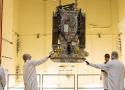
WALLOPS ISLAND, Virginia—Just 10 months ago, NASA asked three companies if they could do something nobody had done before. Could they build and launch a satellite to save a $500 million astronomy mission at risk of crashing back to Earth? What’s more, could they do it in less than a year on a tight budget?
Katalyst Space Technologies, a startup founded in 2020, presented the most compelling solution. “They came back with a response that was technically and programmatically plausible, and then we were like, ‘Yeah, let’s do it,’” said Shawn Domagal-Goldman, director of NASA’s astrophysics division.
That was in August of last year. In September, NASA awarded Katalyst a $30 million contract to build, test, and launch a small satellite to chase down Swift and latch onto it with three robotic arms. Then, Katalyst’s Link servicing spacecraft will boost Swift’s orbit back to a safe operating altitude, allowing it to resume scientific observations. Easier said than done. //
“From a programmatics standpoint, I consider this a success already, just from the fact that we’re even going to try this,” Domagal-Goldman said.
Mission Commander Reid Wiseman, pilot Victor Glover, and mission specialists Christina Koch and Jeremy Hansen (the latter with the Canadian Space Agency) spent 10 days in early April flying by the Moon. Their journey took them farther away from Earth than any humans have gone (52,756 miles [406,771 km]) and then, on the way back on board their Orion spacecraft Integrity, they sped up to about 24,664 miles per hour (39,693 k/ph) reentering the atmosphere.
Only three other people in history have traveled faster. NASA’s Apollo 10 astronauts Thomas Stafford, John Young, and Eugene Cernan set the record for the highest speed attained by a crewed vehicle relative to the Earth’s surface: 24,791 mph (39,897 kph) on May 26, 1969.
Cernan died in 2017, Young in 2018, and Stafford in 2024.

For most of its time at Mars, the MAVEN spacecraft provided a relay for scientific data uplinked from NASA’s rovers and landers on the Martian surface. The relay allowed NASA to return significantly more data and imagery from rovers like Perseverance and Curiosity than would be possible through a direct-to-Earth radio connection.
With MAVEN out of the picture, NASA has four other orbiters it can use to provide this critical radio link. But officials aren’t sure how much longer they will last. Three of the four remaining relay orbiters are older than MAVEN, which played an outsized role in the relay network thanks to its higher orbit.
“Over the life of the mission, MAVEN supported more than 8 percent of all of our relay sessions planned by our rovers and landers, but it accounted for nearly 18 percent of all of the data returned, illustrating its usefulness when returning large data volumes,” said Tiffany Morgan, director of NASA’s Mars Exploration Program.
The network still has plenty of capacity to support the Perseverance and Curiosity rovers, with some minor caveats.
“We do have remaining assets, and those assets have adjusted the amount of data that they return, and the rovers have also adjusted their planning for how they connect to those assets,” Morgan said. “There is a slight delay on occasion, because we don’t have as many assets in view, to getting our science data back, and MAVEN was critical in returning science data versus operational data. But the Mars Relay Network is resilient enough at this point in time to accommodate, for the most part, the loss of MAVEN with the added delay.” //
jimlux Ars Tribunus Militum
12y
1,671
jlredford said:
It's interesting that they're able to use so many different orbiters to do this relay function. Interesting and resilient! It's great that it can handle dropouts like MAVEN. As the system gets upgraded, I hope they keep all this inter-operability to handle the next failure. The Mars Reconnaissance Orbiter is the main link these days, and it's now 20 years old, almost twice the age of MAVEN.
That’s because most of them (at least those launched after 2005) fly the JPL developed Electra software defined radio (they’re manufactured by L3, but the hardware design and the software is JPL). The landers also use Electra radios (or Electra Lite). MER was the first Mars lander to use relay ops with an orbiter to return data, and after a week or two, it had returned more data through the relay link than all previous Mars missions combined. It’s that effective (compared to basic X-band Direct to Earth at 8 kbps)
And as far as interoperability goes, that’s part of the Prox-1 standard from the Consultative Committee on Space Data Standards (ccsds.org) - most people flying a relay payload use it (as will the new Mars Telecom Network, and similar spacecraft planned for the Moon). 400 MHz UHF at Mars for now, but S-band is coming, as is Ka-band.

Is it a hidden gem, a cult classic, or hopelessly dumb? We vote “all of the above.” //
Even operating at its most frantic peak in 1985 just before Challenger’s loss, the shuttle hardware managed a maximum of nine flights in one calendar year; for most of the 1990s, it performed at five or six flights per year. Civilians in space—to say nothing of Big Bird—would have to wait.
And into that post-Challenger disillusioned summer of 1986, Hollywood brought us SpaceCamp. It had all the right ingredients: A stacked cast with a solid leading duo (Kate Capshaw and Tom Skerritt), tons of real NASA location footage, and a big, brassy score by none other than John Williams. The film was completed before the Challenger disaster, leaving 20th Century Fox with something of a nightmarish choice on their hands—to shelve the film and lose millions, or send it to theaters and risk a PR disaster.
For better or for worse, Fox chose to release the film, which ultimately made about $9.6 million on a reported $25 million budget. Ouch.
Point Nemo is officially known as “the oceanic pole of inaccessibility,” or the point in the ocean farthest from land. Located at 48°52.6’S 123°23.6’W, the spot is quite literally the middle of nowhere, surrounded by more than 1,000 miles of ocean in every direction.
The closest landmasses to the pole are one of the Pitcairn Islands to the north, one of the Easter Islands to the northeast, and one island off the coast of Antarctica to the south.
There are no human inhabitants anywhere near Point Nemo. And scientists chose to call the location “Nemo” because it is Latin for “no one” and as a reference to Jules Verne’s submarine captain from 20,000 Leagues Under The Sea.
The location is so isolated that the closest people to Nemo are not even on Earth. According to the BBC, astronauts aboard the International Space Station are around 258 miles from the Earth’s surface at any given time. Since the inhabited area closest to Point Nemo is more than 1,000 miles away, the humans in space are far closer to the pole of inaccessibility than those on land. //
As for non-human inhabitants, there aren’t very many of those around Point Nemo either. Point Nemo’s coordinates fall within the South Pacific Gyre, an enormous rotating current that prevents nutrient-rich water from flowing into the area. Without any food sources, sustaining most life in this part of the ocean is impossible.

View and download this historic assembly code for your own space program //
The historic computer software code that took Apollo 11 to the moon has been open-sourced and is available for anyone to read, download, and tinker with. NASA’s Chris Garry made the code available on GitHub as public domain. The published resource is basically in two large codebases, one set of code for the Command Module (Comanche055) and another for the Lunar Module (Luminary099). These modules both had their own Apollo 11 guidance computers (AGC) upon which to run the code, and were instrumental to the success of the remarkable mission – the first human Moon landing in history. //
It is fascinating to see this Apollo 11 code from nearly 60 years ago shared in the context of the ongoing Artemis II lunar mission. Today, we aren’t marveling at the lean and mean machine code that NASA is using to get humans to and from the Moon. Rather, Microsoft Outlook email bugs and a malfunctioning toilet on the Orion spacecraft may have taken the shine off the momentous achievement this latest mission represents.
These captivating reads offer some needed and expert perspectives on our quest to understand the universe and our place within it.
Welcome to the Artemis II multimedia resource collection. Here, you can view and download mission photographs, behind‑the‑scenes videos, podcasts, and more. The Artemis II mission—NASA’s first crewed lunar flyby in over 50 years—is a key step toward a long‑term return to the Moon and future crewed missions to Mars.