
HAL 9000 is the sentient computer aboard Discovery One in 2001: A Space Odyssey, the calm and quietly terrifying artificial intelligence that supervises the ship, speaks in a soft measured voice, and eventually turns on the human crew.
In plot terms, HAL is the system meant to keep the mission alive. In thematic terms, HAL is one of science fiction’s clearest warnings about what happens when intelligence is trusted more than judgment, when machine authority is treated as neutral, and when a mind is built to serve conflicting masters.
HAL becomes lethal not because the story imagines a robot suddenly turning wicked for fun. HAL becomes lethal because the mission gives him a contradiction he cannot absorb. He is built to process and deliver truth, yet he is also ordered to conceal the true purpose of the journey. That fault line breaks everything.
That is why HAL still matters. More than half a century later, he remains one of cinema’s defining artificial intelligence figures, not because he is the loudest machine villain in the genre, but because he is one of the most believable. The danger arrives as procedure, as tone, as denial, as a system that sounds composed while quietly taking away human agency.



But for local audiences here in Aotearoa, no scene comes close to the emotional climax of the film, when a choir of women’s voices starts to ring through outer space with a very familiar melody and lyrics: “Pō atarau / E moea iho nei”.
The song is ‘Pō Atarau’, a te reo Māori wartime anthem penned by composer Emira Maewa Kaihau in 1915. Inspired by Clement Scott’s 1913 ‘Swiss Cradle Song’, Kaihau’s version was used as a farewell to soldiers fighting in the first world war (Kaihau also wrote the lyrics for ‘Now is the Hour,’ which became intertwined with ‘Pō Atarau’ in 1935). Over the 20th century, the song would come to be associated with a range of farewells, including funerals, leaving parties and memorials, and in 2024 it was included in The Aotearoa Songbook, celebrating the legacy of waiata Māori. //
Among this extensive Viking catalogue is the LP Turakina Sings, recorded with the Turakina Māori Girls Choir in 1976. //
While searching for goodbye songs from different cultures, I came across ‘Pō Atarau’ and I knew the song was special because of how it conveyed the sentiment of saying goodbye, even if you didn’t understand the lyrics,” he tells The Spinoff.
Lehman listened to many different recordings of the song, and found that the version sung by the Turakina Māori Girls’ Choir in 1976 “fit perfectly with the tone and pace of the scene” as well as the “vintage quality” of most of the soundtrack. “When I played it for the directors, they got goosebumps and were instantly sold,” he says. “It became a standout moment we kept referring back to throughout the process as the perfect example of what we wanted to achieve with the soundtrack, highlighting the richness of global music and the shared human experience.”

Project Hail Mary is now in theaters, and directors Phil Lord and Chris Miller are no strangers to making stylish movies with great music. Whether they're directing, writing, or producing, their films always have music that is essential to both the aesthetic and the story. Project Hail Mary is no exception. It features both an astounding score and a selection of songs that help to accentuate the mood or story beat.
Josh Howerton @howertonjosh
·
OK, here's my thesis: "Project Hail Mary," starring @RyanGosling, is actually a CHRISTIAN movie.
Now, all of this could theoretically be a coincidence, but let me make my case 👇
6:01 PM · Jul 27, 2026
https://x.com/howertonjosh/status/2081877719864762708
The main character, Ryland Grace, is sent into certain death to save everyone else. His alien cohort, named Rocky, is the rock by which Grace builds his entire rescue. His entire adventure is kicked off by a woman named Eva. The long shot of a project is called "Hail Mary," which is something the Catholics will adore.
But once you put it all together, that grace saved a decaying universe after Eve's actions began the whole thing, and that Christ built his church upon the "rock" that was Peter, and what's more, Christ made himself a sacrifice to accomplish that end.
Obviously, the film is not a one-to-one beat of Christ's journey, but if the theories are correct, then the point wasn't to mirror His story, but to borrow heavily from it. //
What was produced is so Christian, not just in name, but in feel, that I honestly think that any creators in the Christian space should take notes.
This is how you do it. Jesus told parables that got His point across. Christians should do the same. You don't need to be on the nose about it. I would even say I would avoid making Christian content that would meet the approval of the front row of the church.
Just tell a human story and put God over it. You don't have to reference Him. Tolkien surely didn't, but you could feel the influence of God in the story. The traits and virtues He wants you to have pushed forward. Clear lines of good and evil. Hope in the face of hopelessness. Action taken, even if the chances are slim. Faith that it'll work out right, even if you can't figure out how. //
The ship "Hail Mary" was full of "grace" (Doctor Grace).

Jurassic Park, while beloved as a film, has been the subject of snarky memes for the infamous line in which one of the characters declares, “This is a Unix system, I know this!” while using a computer with an unusual 3D file manager interface.
Despite the memes, the film’s production team was meticulous in accurately sourcing the right PCs (and adjacent details) for the sets—not too much of a surprise, given writer Michael Crichton’s background with computing and his obsessive attention to detail in the book the film is based on.
This was made clear by a little hobbyist investigation from Google software engineer Fabien Sanglard. He scanned the film and picked out every specifically identifiable piece of hardware he could see, listed what they were, and shared context from other sources on their specs, costs, and how they ended up in the production.
https://fabiensanglard.net/jurrasic_park_computers/index.html //
For additional background, Sanglard shared this quote from Jurassic Park special effects coordinator Cory Faucher, as seen in the book The Making of Jurassic Park:
Everything in the set was real. We couldn’t fake any of it, because audiences are so sophisticated now in their knowledge of computers. All told, $875,000 worth of computer hardware loaned by Silicon Graphics, $350,000 worth from Apple and some $500,000 in additional hardware and software went into equipping both the set and off-stage control room.

The actor, who starred in 1993’s Jurassic Park, died Monday in Sydney, Australia, at the age of 78.
What better way to celebrate Independence Day than with American stories featuring the good, true, and beautiful — and the occasional epic chase scene?
It's amazing to me that a major corporation can purchase the rights to a very popular character you've known all your life, and then when they create something "for a modern audience," you fail to recognize the character at all.
Yet, people turned on "Clarkson's Farm," never having met any of the ancillary characters, and yet you feel like you've known them all your life. You relate to them in a big way, and you realize that even if the show didn't have half the budget it did, you'd probably still watch it because you actually feel something for these people.
A billion dollars doesn't buy relatability. Nobody wants safe and sterile.

Is it a hidden gem, a cult classic, or hopelessly dumb? We vote “all of the above.” //
Even operating at its most frantic peak in 1985 just before Challenger’s loss, the shuttle hardware managed a maximum of nine flights in one calendar year; for most of the 1990s, it performed at five or six flights per year. Civilians in space—to say nothing of Big Bird—would have to wait.
And into that post-Challenger disillusioned summer of 1986, Hollywood brought us SpaceCamp. It had all the right ingredients: A stacked cast with a solid leading duo (Kate Capshaw and Tom Skerritt), tons of real NASA location footage, and a big, brassy score by none other than John Williams. The film was completed before the Challenger disaster, leaving 20th Century Fox with something of a nightmarish choice on their hands—to shelve the film and lose millions, or send it to theaters and risk a PR disaster.
For better or for worse, Fox chose to release the film, which ultimately made about $9.6 million on a reported $25 million budget. Ouch.
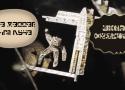
The film adaptation of Andy Weir’s novel Project Hail Mary hits general release today, March 20, and it’s great—go see it! Though a little light on the science, the movie goes hard on the relationship between schoolteacher Ryland Grace (Ryan Gosling) and an extraterrestrial named Rocky, and it’s a ride well worth taking.
But as good as it is, the movie shares a small flaw with the book: Despite having very few things in common, Grace and Rocky learn to communicate with each other extremely quickly. In fact, Grace and Rocky begin conversing in abstracts (concepts like “I like this” and “friendship”) in even less time than it takes in the book. Obviously, there are practical narrative reasons for this choice—you can’t have a good buddy movie if your buddies can’t talk to each other. It’s therefore critical to the flow of the story to get that talking happening as soon as possible, but it can still be a little jarring for the technically minded viewer who was hoping for the acquisition of language to be treated with a little more complexity.
And because this is Ars Technica, we’re doing the same thing we did when the book came out: talking with Dr. Betty Birner, a former professor of linguistics at NIU (now retired), to pick her brain about cognition, pragmatics, cooperation, and what it would actually take for two divergently evolved sapient beings not just to gesture and pantomime but to truly communicate. And this time, we’ll hear from Andy Weir, too. So buckle up, dear readers—things are gonna get nerdy.

MRC Video @mrcvideo
·
Beautiful! Best Actress winner Jessie Buckley uses her acceptance speech to praise marriage and promote motherhood.
A sharp contrast from last year's winner, Mikey Madison, who dedicated her award to sex workers.
10:02 AM · Mar 16, 2026
Jessie Buckley was a best actress nominee for the movie Hamnet, a period drama based on a fiction novel about William Shakespeare's family. The film explored Shakespeare's and his wife Agnes' marriage, particularly after the loss of their 11-year-old son, and how it shaped Agnes as a mother, as well as Shakespeare's writing. Buckley's portrayal of Agnes won her the Academy Award for Best Actress, but it is her acceptance speech that appears to be more popular than the actual film. //
Buckley's unbridled expression of love for her husband was not just heartwarming, but a biblical example of honoring her husband.
Fred, I love you man. I love you, she said.
You're the most incredible Dad, you're my best friend, and I want to have 20,000 more babies with you. I do, I do! //
Buckley also honored the writer and director of the film by saying, "To understand the capacity of a mother's love is the greatest collision of my life." Collision is probably the right word, because what I know of the mothers in my family and my life, this word embodies the massive impact of their great love for their children. A love that never goes away, no matter how old they get. One mom friend described her 18-year-old as her heart walking outside of her body. That's fierce.
Buckley ended her speech with an homage to mothers in the U.K. and all over the world. "It's Mother's Day in the U.K., so I would like to dedicate this to the beautiful chaos of a mother's heart."
This "beautiful chaos," Buckley described, illuminating that motherhood, and the passion and great love that drives it, is not supposed to be neatly packaged in illusory perfection or impossible milestones. It's meant to be messy and chaotic, as is much of life — at least the part that matters.

Emotion and character are what we remember… not spectacle. At best, spectacle is salt on a good steak.
On the other end of the spectrum, necessity is said to be the mother of invention, and nowhere have we seen this old axiom play out more often than in the movies. Magic happens at the movies most reliably when filmmakers do not have unlimited resources from which to draw, and must find creative ways to “make do” instead.
The most famous example is “Jaws.” As the legend goes, Steven Spielberg’s rubber shark, named “Bruce” after his lawyer, was chronically broken and so Spielberg had to figure out ways to suggest or imply the shark’s presence in scenes without the audience being able to actually see it. The result was a brilliantly understated thriller that plays more like Hitchcock than Roland Emmerich.
All of which cries out for a question be asked… what if bigger isn’t better?
these days, most film studios outside the faith-based sector don't bother to tell them at all.
That is what makes the upcoming film Moses the Black such an interesting event, along with its unique narrative framing. Saint Moses of Ethiopia served as a monk and abbot in the fourth century, transforming his life by accepting Christ after a life of bloody criminal activity. Moses the Black, recognized as a saint in the Orthodox and Catholic churches, converted after fleeing to a monastery after a career of murder, terror, and mayhem. He struggled in faith, finding it difficult to leave his life of criminality on one hand and despairing at redemption for it on the other.
Rather than take that story on directly, however, rapper Curtis '50 Cent' Jackson teamed up with Simeon Faith, the Nick Mirkopoulos Cinematic Fund, and Fathom Entertainment to exec-produce a film that sets the redemption question in a modern, violent setting. It mainly follows the recently released gang member Malik (Omar Epps) and his return to Chicago, seeking revenge for the murder of his mentor and partner Sayeed. His crew wants revenge, but Malik's grandmother introduces him to the story of St. Moses the Black, whose life parallels Malik's and is shown in flashbacks throughout the film. Everything escalates in Malik's life – a gang war, potential betrayal, and Malik's growing sense that he yearns for redemption, even if it comes in the harsh terms of the life he's led. //
Moses the Black would get an R rating for very good reasons. It has graphic violence, bad language, and enough emotional turbulence that children and teens probably shouldn't see the film. For those too young to see this film, may I suggest this YouTube video on Saint Moses himself. His redemption story may be lesser known than that of other saints such as Augustine, but it is no less inspirational. https://youtu.be/jCmn1ENRVLM?si=yUUqqrHeFKFr5kHr

Amazon Prime Video is under fire for streaming a butchered version of “It’s a Wonderful Life” that guts the beloved Christmas classic.
Viewers say the abridged cut — roughly 22 minutes shorter than the original 130-minute film — removes the iconic “Pottersville” sequence, the pivotal stretch that explains why despairing hero George Bailey suddenly rediscovers the will to live.
In that part, Bailey declares his wish never to have been born and gets to see how crummy life would have been without him.
Without that sequence, audiences are left watching a man contemplate suicide one moment, then sprint joyfully through town the next — with no logical explanation. //
The “Pottersville” sequence is the portion most directly adapted from Stern’s story.
Legal experts say the abridged version appears to be a workaround — by removing that specific sequence, distributors may have believed they could avoid infringing on the short story’s copyright while still offering a version of the film. //
Amazon Prime reportedly carries both the full and abridged versions, but viewers say the platform does not clearly explain the difference — leaving unsuspecting viewers to click the wrong one.

Macaulay Culkin just wanted to stay home alone.
The actor, 45, revealed why he decided to step away from acting in 1994 after starring in the holiday classic “Home Alone” in 1990 and its 1992 sequel, “Home Alone 2: Lost in New York.”
“What I wanted is to be with people my own age. You have to remember: a lot of the stuff I did when I was a kid … I’m not doing ensembles. It’s me,” Culkin shared while appearing on Mythical Kitchen. //
In 1994, the child star led the family comedy “Richie Rich,” about a boy who has everything in the world except friends.
Afterwards, Culkin had the urge for a more normal lifestyle.
“I wanted to go out and I wanted to date girls, and I wanted to hang out with people my own age. I wanted to, you know, go to a party,” he detailed. “I wanted to do those kind of things. I can’t tell you how many bar mitzvahs I missed.”
Mike: (during his and Pearl's neighborly chat) So... you are gonna send us a movie though, huh?
Pearl: Yeeeaaah. And it's pretty bad. I hope that's okay. It was made in Vermont and it's about this guy who travels through time, and then he has to go back in time to change what he did in the future. It's- it's called Time Chasers. Oh, it's got that guy in it. Oh, and that other guy, too.
Film watched: Time Chasers //
[In the dystopian future, an eyepatch-wearing armed survivor leaps atop a smashed car for a better shooting angle]
Mike [as Gunman]: Arrgh! Sixteen men on a dead Dodge Dart! //
Crow: But I only have one jar of mustard!

Beyond the blockbusters: This watch list has something for everyone over the long holiday weekend.

"Hoist the Colours", also written as "Hoist the Colors", was a haunting sea shanty known by all pirates across the Seven Seas. The song was related to the action of hoisting of a pirate's flag, though it was mainly used as a call ... //
Lyrics by Ted Elliott and Terry Rossio
Music by Hans Zimmer and Gore Verbinski //
Hoist the Colours was first mentioned in the 2007 reference book Pirates of the Caribbean: The Complete Visual Guide,[1] prior to its first appearance as "an old pirate song" in T.T. Sutherland's junior novelization for the 2007 film Pirates of the Caribbean: At World's End.[2][3] In addition, "Hoist the Colours" would be heard in full in the film's soundtrack as well as the film itself.[6][3] "Hoist The Colours — The Story Behind The Song" was a bonus feature for the various DVD/Blu-ray releases for the film, "The tale of house this haunting shanty was created. An anthem for pirates across the seven seas". //

I've always been a scaredy-cat. Horror movies were my kryptonite, the kind of films that left me sleeping with the lights on and checking under beds like a paranoid child. So this newfound ability to chuckle at cinematic terror felt like discovering I could suddenly speak a foreign language.
As I reflected on this mysterious transformation, three influences kept surfacing in my memory, all carrying the same powerful message: fear loses its grip when you laugh at it. //
The first was Stephen King's IT, specifically the scene where the Losers Club finally confronts Pennywise. These kids, terrorized by an ancient cosmic horror, make a crucial discovery: the creature that feeds on fear becomes pathetically small when mocked. They literally bully the bully, turning their terror into ridicule. "You're just a clown!" they shout, and suddenly this omnipotent force becomes just another playground antagonist.
The second was from Harry Potter and the Prisoner of Azkaban. Professor Lupin teaches his students to defeat boggarts, creatures that manifest as your worst fear, with the Riddikulus spell. The magic isn't in complex incantations; it's in forcing yourself to imagine your fear in something ridiculous. Snape in your grandmother's dress. A spider wearing roller skates. Fear transformed into comedy. //
All three sources delivered the same revolutionary idea: laughter is fear's kryptonite. //
This shift represents something profound about how we consume media. Stories don't just entertain us; they literally rewire our neural pathways, teaching us new ways to interpret and respond to the world. Every hero's journey we follow, every coping mechanism we witness, becomes part of our own psychological toolkit.
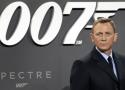
If you wanted to build the quintessential fictional character that embodies the leftist trope of the “toxic male,” you would be hard-pressed to find a better avatar than James Bond. Find the male trait the activist set has railed against, and 007 has that tucked away inside his elitist tuxedo. //
Over the weekend, it was noticed that on Amazon Prime, they had a series of new series of promotional images for the collection of James Bond films on the platform. //
Also noticed: Every single gun originally portrayed was either airbrushed out or the image was cropped to remove the weapon from being visible