Based on our analysis, Endurance has the best overall plans, prices and customer reviews in 2026. CarShield offers better coverage for older vehicles, while Omega Auto Care stands out for its maintenance benefits. We think Premier Auto Protect offers the best variety of coverage, Zurich has the best claims process and American Dream Auto Protect provides the best value.


High-beam rules are pretty similar throughout the US. In most states, the distance you need to dim your high beams when an oncoming vehicle is approaching is 500 feet (152 meters). When you’re behind a vehicle, this is reduced to 200 to 300 feet (61-91 m). //
Mungus the Unhyphenated Ars Tribunus Militum
9y
1,899
For Europe, at least, it's a shame that lighting regulations pushed aside selective yellow as used primarily in France. The lighting color actually makes a huge difference in reducing dazzle and glare, especially in wet conditions. It also provides excellent contrast in the range that human vison needs to distinguish objects at night,
It seems counterintuitive that light shifted toward yellow works better than brilliant blue-white, but it does. It's due (as in the name selective yellow) to how it's filtered for specific wavelengths that compensate by improving visibility where human vison at night is weaker, and limiting light wavelengths that tend to appear as overpowering glare. Essentially, it can be more effective at lower outputs, and less blinding when dialed-up to higher outputs. It also doesn't adversely affect the driver's night vision for the area beyond the cutoff as badly. But it seems subjectively "dim" at first look. You have to drive behind a set of selective yellow lamps to get the real effect.
Now that we have LEDs that can be engineered with phosphors and filters to emit virtually any spectrum we want (instead of having to build bulbs or headlight lenses which contained large amounts of highly toxic chromium) it seems just lazy that we've gone for automotive lighting that emits in really the worst spectral range for working in harmony with night vision, when we have technology that probably can revisit and improve on an older and more useful concept.

Now it’s an arms race between OEMs locking down chips and tuners trying to crack them.

The ferry broke down at exactly the wrong moment for everyone except Henry Ford.
On June 8, 1909, two stripped-down Ford Model Ts rolled onto a little wooden ferry at Glasgow, Mo., and crossed the Missouri River. The cars were filthy, the men inside them were running on fumes, and a Boston-built Shawmut was closing fast behind them in a cross-country race.
Then the ferry quit. The boat that’d just carried the Fords to the western bank suddenly couldn’t return for the Shawmut or the Acme, another trailing car. The official explanation was mechanical failure, but the timing looked almost theatrical. //
The Shawmut crew, stranded on the wrong side of the river, had a choice. They could lose hours searching for another crossing. Or they could aim the car toward the railroad bridge looming above the water, a half-mile of ties, gaps and terror, with no guarantee a train wouldn’t come roaring through. They chose the bridge.

The British motor industry has always been brilliant at producing two types of people: engineering geniuses who could design a world-beating chassis on the back of a beer mat, and businessmen who couldn't sell water in a desert. John Tojeiro was a textbook example of the former. He was a quiet, back-shed wizard who built the skeleton for one of the most famous cars ever made, and in return, he got... well, not very much at all. This is the story of the man who did all the hard work, while someone else got all the glory.
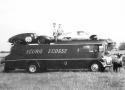
The story of the Ecurie Ecosse Tojeiro at Le Mans is not a story of victory. It is something much more important than that. It is a perfect reminder of the spirit of the great privateer teams, a time when a small group of determined, passionate, and slightly mad enthusiasts could build a world-beating car in a shed, crash it, fix it, paint it in a field, and then turn up at the world's greatest race and give the giants a proper scare. It was a magnificent failure.

There is a wonderful and slightly awkward secret at the heart of the modern Aston Martin. For years, the company has cultivated an image of bespoke, blue-blooded, British excellence. The soul of that image has been its magnificent V12 engine. The problem is, this quintessentially British heart isn't entirely British at all. If you scratch beneath the surface, you'll find that its DNA is about as exotic as a Ford Mondeo. //
Aston Martin, now safely under Ford ownership, needed a world-class engine for its next generation of cars. Ford's accountants had a much cleverer and cheaper idea than a clean-sheet design. They looked at their excellent 3.0-liter Duratec V6 engine, found in countless sensible family saloons, and had a thought: what would happen if we just glued two of them together?

For anyone who's owned a classic British car, three words guaranteed to send a shiver down the spine: Lucas Electrical Systems. For decades, the products made by this Birmingham company became the source of endless, infuriating failures that turned British motorists into unwilling comedians. Headlights would dim to a romantic glow just as you needed them most. Indicators would flash with the random enthusiasm of a broken disco ball. Windscreen wipers would choose the exact moment of a downpour to take early retirement. It's for this reason that Joseph Lucas, the company's long-dead founder, earned the posthumous nickname "Prince of Darkness."
Which makes the story all the more remarkable, because Joseph Lucas himself built his business on exactly the opposite reputation: rock-solid reliability and genuine innovation. //
In the 1920s, Lucas signed cross-licensing deals with Bosch, Delco, and other major electrical suppliers that carved up the world between them. Lucas agreed not to sell in their territories; they agreed not to sell in Britain. By the 1930s, Lucas had achieved something close to a complete monopoly on automotive electrics in Britain.
If you were building cars in Britain, you bought your headlamps, starter motors, alternators, and wiring from Lucas. Austin, Morris, Jaguar, Rover, Triumph, MG - they were all captive customers. There was literally nowhere else to go. This should have been a recipe for excellence, with guaranteed demand allowing investment in the best possible products. Instead, it became a lesson in how monopolies breed complacency. //
The folklore that grew up around Lucas failures became part of British motoring culture. "The Lucas motto: Get home before dark." "Why do the British drink warm beer? Because Lucas makes their refrigerators." "Alexander Graham Bell invented the telephone, Thomas Edison invented the light bulb, Joseph Lucas invented the short circuit." The jokes were funny precisely because they reflected real experiences shared by thousands of frustrated drivers.
Saturday, April 25th, the day this was written, is the 125th anniversary of New York being the first state to require automobile owners to register their vehicles with the state.
That's right. Today is the 125th birthday of everyone's favorite government institution: The Department of Motor Vehicles, or DMV. //
New York's first plates were homemade, bearing only the owner's initials without any numbers. It was Massachusetts that actually issued its first license plates in 1903." //
In fact, the late adoption by the United States leads to one of the few examples of France being in first place in anything that didn't involve snails or surrendering to Germany.
Many people have very strong loyalties to certain brands of oil. They’ll swear by their favorite brand and assure you that anything else is bound to ruin your engine. But we’re here to dispel that myth. After nearly 30 years of testing oils from thousands of different engines and industrial machines, we have discovered a shocking fact: it doesn’t really matter what brand of oil you use.
But wait! Before you dismiss us as heretical, listen to what we do recommend. We always suggest using an oil grade recommended for your engine by the manufacturer and a brand that fits your budget. The grade of oil is much more important to performance in your engine than the brand of oil.
In fact, here’s another little secret. The oils you can find at any mass retailer, such as Wal-Mart or Meijer, are actually name-brand oils (such as Valvoline, Shell, or Quaker State), but with the store’s label on it. Think about it. A place like Auto-Zone is not in the business of manufacturing oil. They buy their oil from the big oil companies and put their name on the bottle. The only difference between the Auto-Zone brand and the name-brand oil is the name on the bottle and a few dollars per quart.
Notice what we have not said we take into account: the brand you’re using and whether it’s synthetic or petroleum oil. When Jim started this company back in 1985 he came up with a line he liked to use: Oil is oil. We still stand by that today. The oil guys would have you believe otherwise, but brand really does not seem to make a difference in how your engine wears, or how often you can change your oil.
Well, okay, if you were using some guy’s oil that he “recycled” in the back of his garage from emptied-out oil pans that he filtered with a piece of cheesecloth, we might say in that case brand does matter. But as long as you’re using an API-certified oil, your engine probably isn’t going to care what you use. We like synthetics and we like conventional oil. In the end, what you use and how often you change your oil is completely your choice. We’ll give you our recommendation and you can do whatever you want with it. If you want to run longer on the oil despite having high wear, that’s totally fine. And if you have great numbers and you like changing at 3,000 miles, that’s perfectly fine too. It’s your engine, your money, and your life: change it when you want!

It’s amazing how far school buses have come in over a century. In the late 1800s, a school bus was barely more than a covered wagon. Today, it’s a big, yellow beast that dutifully serves school districts for decades while safely carrying millions of students every single day. So much of it is thanks to those standards set in the 1930s, including those seemingly random black rails.

In 2021, the State of Delaware, DelDOT, and the City of Newark penned an agreement to install so-called “clankers” at the Casho Mill Road bridge.
Delaware’s interpretation was a bit different than what engineers found at the NYC Port Authority and elsewhere. Engineers had found that the metal cans of those over height vehicle vehicle warning systems weren’t very loud. They also didn’t look particularly appealing. The solution? They grabbed a bunch of Taylor Made Tuff End vinyl boat fenders.
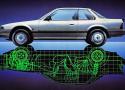
Technology like four-wheel steering and variable valve timing debuted in the Prelude.

Hurling cars through the air with replicas of medieval siege engines has actually become a bit of a popular hobby, with early throws dating back to at least the early 1990s.

So what does the law truly say across all 50 U.S. states? We've dug through every state's department or bureau of transportation resources and compiled a breakdown of what we found to help shed some light on the matter. All told, we found 23 states with laws that required the use of both wipers and headlights in bad weather, although many more have rules related to the use of headlights in low visibility conditions.

These levers control the Lenco transmission, which is stout enough to harness the power of a spinning neutron star and convert its energy into quarter-mile domination and tire smoke.
Lencos' design is unique. It's as if Lenco racing transmissions snuck up behind some automatic and manual gearboxes in the dark and pilfered the finest attributes of each. From the automatic, it pickpocketed the planetary gears and clutch packs, but left behind the fluid valve-actuated gear selection. From the manual, it nabbed the clutch and flywheel, but ditched the slow H-pattern and dogleg shifters in favor of a series of levers the driver can simply slam into place. Also, the Lenco decided that the clutch directly connected to the engine would only be necessary when starting out in first or reverse. Otherwise, it acts like a dog box transmission, letting you run through the gears sans clutch pedal.
Giving each gear its own lever is kind of an odd decision, though. The setup deserves a place among the weirdest car shifters, looking kind of like the Hurst Lightning Rod from the 1980s Hurst/Olds. Why not a single lever like a sequential gearbox?
Well, the reason many Lenco applications use individual levers is that multi-speed Lencos aren't just one transmission in a single case, but rather separate two-speed transmissions centipeded together. So as the driver pulls a lever, one of the transmissions goes from "low" to "high," which then stacks with the ratio in the next transmission, and the next, and so on. It's separate levers for separate segments, which keeps things simpler, mechanically.
Racers looking for ultimate power handling and direct control over shifting turn to Lenco's magnesium-cased CS1 Standard Design racing transmission, which can handle in excess of 3,500 horses. Lenco also offers more compact CS2, CS3, and CS4 gearboxes, as well the ST1200 Street Strip model and the Lencodrive Automatic.
I called Lenco to see what the fluid change intervals are, and here's what the company told me: For street use, you need to change it after 500 miles following the install, then every time you change the engine oil. For drag racing, high-horsepower applications necessitate new fluids after each event. Lower-horsepower drag racing can extend that to every two or three events. Always inspect the fluid, though, because if it's still clean, you're good. If there's clutch material floating in there, change it. The recommended fluid is a light-grade petroleum-based motor oil.
AllUsedParts distributes genuine quality OEM components through the largest national network of used auto parts. Our extensive coverage and inventory of 40+ million items updated daily ensures we can get you what you need. We've been an active player in the automotive industry for decades and have perfected the challenges of e-commerce and complicated logistics of managing and delivering inventories of our size.

The Federal Highway Administration has given interim approval under the national Manual on Uniform Traffic Control Devices (MUTCD) for the optional use of green colored pavement in marked bike lanes to boost visibility and alert drivers to where bicycles are expected to operate.
If there’s one state that’s leaned into this trend, it’s Florida. Transportation agencies there have adopted MUTCD-aligned design and installation requirements for green-colored pavement markings on bike lanes and multi-use paths.
Under the MUTCD rules, green is not just decorative. It’s a legitimate traffic control device meant to communicate a reserved space (usually for cyclists) and to increase conspicuity.

A couple of years ago, we learned that the Euro New Car Assessment Programme (NCAP) organization, which crash tests cars for European consumers, decided that from 2026, it would start deducting points for basic controls that weren’t separate, physical controls that the driver can easily operate without taking their eyes off the road. And now ANCAP, which provides similar crash testing for Australia and New Zealand, has done the same. //
“From 2026, we’re asking car makers to either offer physical buttons for important driver controls like the horn, indicators, hazard lights, windscreen wipers and headlights, or dedicate a fixed portion of the cabin display screen to these primary driving functions,” it wrote in its guidance of what’s changed for 2026. Similarly, Europe is requiring turn signals, hazard lights, windshield wipers, the horn, and any SOS features like the EU’s eCall function.