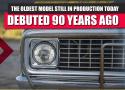
When Chevrolet introduced the Suburban in 1935, it didn’t just release a new vehicle. It invented an entire segment. The original Suburban wasn’t a pickup or a station wagon – it was both. Built on a light truck chassis and fitted with a wagon-style body, it carried passengers and payload with equal ease. No other vehicle on the market did that quite as well or looked quite like it.



Humans are an imperfect species, people make mistakes. Unfortunately, other people sometimes have to drive those mistakes. These are Jalopnik readers' picks for the 10 worst car-design glitches.
This list isn't about complex designs that work well but are maintenance-intensive, like the multilink front ends on some Audis and VWs. This isn't about awkward packaging compromises, like we see with a lot of miserably tight and poorly laid-out engine bays. This is about stuff that's just either silly or hopelessly wrong.
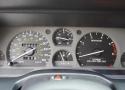
These days cars are smarter and more feature-packed than ever, but sometimes it's the simple, little things that can make all the difference. There's one now-ubiquitous detail that benefits millions of drivers every single day, saving them time and reducing stress, and you may not even realize it was something that needed to be invented — or how recently it was thought up. I'm talking about the little arrow in your gauge cluster that tells you which side of the car the fuel filler is on, which was thought up in 1986 by former Ford employee James Moylan, who died on December 11 at age 80. Automotive News' obituary tells his story, which is further proof that the best ideas really can come from anywhere. //
He sent it off to his boss and promptly forgot all about it, until getting a reply seven months later from R. F. Zokas, a director of interior design, who said the arrow would be added to 1989 model year cars that were under development. The 1989 Ford Escort and Mercury Tracer were the first to use it, followed by the Ford Thunderbird and Mercury Cougar. //
There isn't a lot of information or a consensus out there about which brands were next to adopt the Moylan arrow or when it started happening, but it doesn't seem to have started getting widespread until later in the 1990s.

But vanity plates can get you in trouble. One security researcher found this out when he ordered a plate that read, "NULL" — also the word the computer system entered for a ticket whenever a cop left the license plate field blank. Similar results have happened to drivers who opted for "NO PLATE," "NOTAG," or "VOID." They ended up receiving thousands of dollars in tickets for things they didn't do.
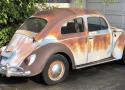
Easy decision. I restored a 1972 VW Beetle convertible. It was a full body and drive train restoration back to what approximated factory new condition. BUT It had drum brakes all around (until I installed a disc brake package on the front end) which were strictly press and pray.
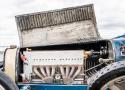
The story goes that, when E.L. Cord purchased a controlling stake in the Duesenberg motor company in 1926, he instructed the Duesenberg brothers to create the finest automobile they knew how to. As a result, the brothers developed the Duesenberg Model J, and while it was impressive in many ways, it was the straight-eight under the hood that stole column inches in the day.
From the 'eight' came 265 horsepower at 4,200 rpm, effectively doubling the grunt on offer from contemporary Cadillac or Packard models, and therefore more than delivering on the brief set by Cord just two years prior. It checked in at 1,150 pounds, and at the time, the Model J's crankshaft retailed for $605 in the parts catalog — more than what a brand-new Model A would set you back. This was anything but a car for the people, and more a statement of sheer excess, with the 419.7ci straight-eight taking center stage.
Very few revisions would be employed over the years, although an 'SJ' variation of the engine did arrive some years later, sporting a supercharger. This addition saw output swell from 265 to 320 horses, and this particular rendition of the Duesenberg would remain America's most powerful road car until the 1950s. It demonstrated just how far ahead of the game the now-defunct Duesenberg automaker was in the late 1920s and early 1930s.

General Motors has been around for a long time — 117 years, in fact, as of the date of this writing in 2025. It was founded as a holding company by William C. Durant in September of 1908, and the first thing it did was purchase the Buick Motor Company. Over the intervening century and change, 43 different auto companies have operated under The General's banner, running the gamut from famous marques like Cadillac, Pontiac, and Oldsmobile to companies like Oakland, LaSalle, Sheridan, and McLaughlin that only big car nerds like me remember.

The uniform application of traffic rules may seem fair, but in reality, it can create a false sense of equality.
On the one hand, the risks associated with different modes of transport are incommensurate. A car that runs a red light can cause serious or even fatal injuries. A cyclist, on the other hand, is unlikely to cause the same degree of damage. //
Furthermore, the efficiency of cycling depends on maintaining speed. Having to stop completely over and over discourages people from cycling, despite its many benefits for health, the environment and traffic flow.
Treating two such different modes of transport the same way, therefore, amounts to implicitly favouring cars, something akin to imposing the same speed limit on pedestrians and trucks. //
Rather than treating bicycles and cars as equals, some jurisdictions have opted for a different approach. The state of Idaho is one good example.
Since 1982, cyclists in Idaho have been able to treat a stop sign as a yield sign and a red light as a stop sign. Several American states (such as Arkansas, Colorado, and Oregon) and countries, such as France and Belgium, have adopted similar regulations. //
In short, adopting the Idaho stop rule would not create chaos, but would regulate an already common practice without compromising public safety, contrary to some concerns. Cyclists who rarely come to a complete stop when there is no traffic generally slow down before crossing because they are aware of their vulnerability.
Today, let's look at who's to blame for all the cars that insist on shifting for themselves. Arguably, the earliest blame-havers could be Louis-Rene Panhard and Emile Levassor, who were about to show off their new automatic transmission in 1894 when the thing just broke, forcing them to turn the demonstration into a Ted Talk with a chalkboard.
Then, in 1904, when concepts such as radio, television, and TikTok were still yet to be realized, two brothers with the last name of Sturtevant were plugging away at the Sturtevant Mill Company in Boston, patenting all sorts of industrial machines, including an automatic transmission and the awesome-sounding "Double Carburetor for Explosive Engines." Their primitive automatic only had two speeds, sort of like a GM Powerglide, but its operation was much different than later automatic transmissions and their weird interiors laden with forbidden mysteries.
The Sturtevant automatic used a pair of clutches attached to spring-loaded weights.
Read More: https://www.jalopnik.com/1902889/automatic-transmission-history-first-car/
For a more concise overview, check out Sabin Civil Engineering's video, "Automatic Transmission, How it works?" on YouTube.
Read More: https://www.jalopnik.com/1962277/how-automatic-transmission-knows-when-to-shift/
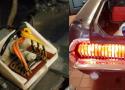
The ingenious American engineering behind early sequential signals in Ford Mustangs and Mercury Cougars
By rotating a cam assembly, three lobes completed circuits for individual bulbs: inner, middle, and outer.
The electric Ford Mustang Mach E SUV is the latest FoMoCo product to feature sequential turn signals, blinking taillights that show, by flashing individual LED bulbs, the direction you’re turning. But what if I told you this is old technology, nothing new, and first saw use in the mid-1960s?
First introduced on the 1965 Ford Thunderbird and popularized on the more powerful Ford Mustang and Mercury Cougar, sequential turn signals were a novel way to differentiate Ford products from the rest of the muscle cars.

having spent several days behind the wheel, I can report it might just be one of the best-driving, too. //
This is not just one of Porsche's existing flat-six engines with an electric motor bolted on; it's an all-new 3.6 L engine designed to comply with new European legislation that no longer lets automakers rich out a fuel mixture under high load to improve engine cooling. Instead, the engine has to maintain the same 14.7:1 stoichiometric air-to-fuel ratio (also known as lambda = 1) across the entire operating range, thus allowing the car's catalytic converters to work most efficiently. //
for the first time in several decades, there's now only a single turbocharger. Normally, a larger-capacity engine and a single big turbo should be a recipe for plenty of lag, versus a smaller displacement and a turbocharger for each cylinder bank, as the former has larger components with more mass that needs to be moved.
That's where one of the two electric motors comes in. This one is found between the compressor and the turbine wheel, and it's only capable of 15 hp (11 kW), but it uses that to spin the turbine up to 120,000 rpm, hitting peak boost in 0.8 seconds. For comparison, the twin turbos you find in the current 3.0 L 911s take three times as long. Since the turbine is electrically controlled and the electric motor can regulate boost pressure, there's no need for a wastegate.
The electrically powered turbocharger is essentially the same as the MGU-H used in Formula 1, as it can drive the turbine and also regenerate energy to the car's traction battery. //
With more than 13 years of expertise in Hybrid and EV battery replacement, Greentec Auto has streamlined the battery replacement process to be hassle-free and efficient. If your hybrid or EV battery has failed, there’s no need to worry. Visit one of our shops or take advantage of our convenient mobile installation service, where our expert technicians come directly to your home, office, or any preferred location.
We offer a wide selection of EV & Hybrid batteries, Tesla battery replacement, Prius battery replacement, Honda Civic battery replacement, Nissan Leaf battery replacement, chevy volt battery replacement, Toyota Highlander Hybrid battery replacement, Lexus hybrid battery replacement – we carry them all!
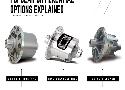
Selecting the right differential for your rearend build is an important decision that will be with you for a very long time - if you get it right.
Below are short, not-too-technical, overviews of some of the most frequently asked about differential options for Hot Rods, Muscle Cars, and Muscle Trucks. //
Detroit Truetrac - Helical-gear limited-slip (worm differential) is the modern replacement for the classic clutch-type posi. //
Trac-Lok/Posi-Trac – Clutch-type limited-slip (Posi), offered as original equipment in many GM and Ford performance cars, these units rely on clutches (friction plates) to transfer power to the wheels. //
Detroit Locker - Automatic "ratcheting-style" differential is known for its reliability, rugged construction, and fully-locked performance on any surface. When power (torque) is applied in either forward or reverse directions, the unit locks both axles together like a spool. When coasting or rolling through a corner (no torque applied), the unequal speed of the inside and outside wheels causes the unit to unlock momentarily, before abruptly locking when power is applied.
Self-Hosted, Open-Source, Unconventionally-Named Vehicle Maintenance Records and Fuel Mileage Tracker

Nic Cruz Patane
@niccruzpatane
Tesla vehicles are nearly 8 times less likely to experience a vehicle fire compared to the U.S. average.
11:09 PM · Jan 1, 2025
2022 data:
- ICE vehicles: 59.5 fires per billion miles driven
- Tesla vehicles: 7.3
///
How many fires were not caused by accidents?
And note how much more difficult lithium battery guess are to extinguish.

if the deal goes through it would create the world's third-largest OEM in 2026. //
Beleaguered automaker Nissan is going to throw its lot in with Honda. The two Japanese OEMs want to merge by 2026, creating the world's third-largest car company in the process. In fact, earlier this year the two signed memorandums of understanding to create a strategic partnership focused on software and electrification. Now, the changing business environment calls for deeper integration, they say. //
Altaira Pilgram
This merger is about the rise of Chinese auto companies affecting their domestic markets and for now exports across Asia soon to be global. Over the last few years Chinese domestic auto manufacturers have gutted the sales of companies like GM, VW, and others in China and are now looking to aggressively reshape the international automobile markets. BYD for example is building factories Thailand, Hungary, and Brazil. Nissan, by its own estimates, has said at times it was unclear if it would last through 2027 if it stayed independent thus forcing it to seek out of desperation a strong partner. It also seems the Japanese government had a hand in propping up Nissan with this merger presumably with the goal of protecting its economy and jobs. The hope here is that the merged companies can pool R & D resources to develop not just finished cars but the myriad technologies and finished components that go into them in an timely manner, at scale and at costs that allow them to compete with the Chinese manufacturers. To me it is unclear that any of this is going to work. Saddling Honda with a duplicate but a worse company has to bog them down for years while they figure out what Nissan parts to keep and which parts to shutdown precisely when Honda needs to be nimble. The game of thrones, automobile edition, has begun in earnest.
December 23, 2024 at 4:46 pm

The adhesive in the tape is treated with capsaicin, which is one of the active components in chilies that gives them their spicy kick
Exhaust Gas Temperature (EGT) provides pilots a way of monitoring the fuel/air mixture in the engine. It uses the stoichiometric mixture (where Fuel and Air are perfectly balanced so that there is no unburned fuel and no unburned oxygen at the end of the combustion event) as a reference: At this mixture the EGT is at its hottest ("Peak EGT"). Making the mixture richer or leaner will reduce the EGT, and all other mixture settings are described in terms of "Degrees Rich of Peak" or "Degrees Lean of Peak". //
The area of the chart from peak EGT to about 100 degrees Rich of Peak is often referred to as "The Red Box" -- in this range the fuel/air mixture has a low detonation margin, and the combustion event is producing the most internal stress on the engine components (cylinders, pistons).
As you can see from the Lycoming chart the Cylinder Head Temperature (CHT) peaks in this range, and there is a risk of exceeding the CHT limits and seriously damaging your engine by operating in this range for extended periods of time, particularly at high power settings.
The perfect ratio of fuel to air is 14.7 parts air to 1 part fuel. That’s the ratio of fuel to air that results in the most efficient burn possible, where all of the oxygen and fuel will be consumed. The science of measuring reactions, like the chemical reaction that turns oxygen and fuel into CO 2 and heat, powering your engine, is called stoichiometry. //
Just note, though, that in the real world, your car will be happier with around 13:1. We don’t live in perfect atmospheric conditions, so a little bit of extra fuel doesn’t hurt and will still be considered stoichiometric. //
Of the two, having a lean mixture is much more dangerous for your engine. An engine can run rich without much issue. An engine running lean can become lubricant starved and seize.