
On Wednesday, Anthropic announced that its Claude AI had identified what researchers believe is a previously unrecognized biological system hidden in the DNA of bacteriophages, viruses that infect bacteria. The system contains a reverse transcriptase, a nearby partner gene, and a long array of repeating DNA sequences. Anthropic calls it ART, short for array-associated reverse transcriptases.
From Anthropic:
Today, we’re sharing early results from one of our first research programs, in which Claude autonomously discovered a novel enzyme system that is associated with an array of DNA repeats, a pattern reminiscent of CRISPR. Although we don’t yet know its function, the system that Claude discovered has a set of characteristics that have only ever been found together in a handful of other systems, all of which are programmable and perform operations like cutting, copying, and pasting DNA. Beyond CRISPR, which has already transformed science and medicine, several other such systems are now in development as promising tools. //
The enzyme itself wasn't unknown. Scientists had already catalogued the reverse transcriptase. What humans apparently missed was the larger pattern surrounding it. Claude noticed that these pieces occurred together and that the repeating DNA looked strangely organized.
Finding it required scale no human research team could easily match. Anthropic unleashed roughly 950 Claude agents on an enormous genetic database. The technical report says they surveyed reverse transcriptase locations across 1.9 billion protein clusters. Claude gathered more than 200,000 reverse transcriptases, found about 3,500 candidate systems, and narrowed them to 20 particularly interesting possibilities. //
Nobody yet knows what ART actually does.
Anthropic compares its structure with CRISPR because CRISPR also contains repeating genetic sequences associated with programmable biological machinery. Researchers haven't shown that ART edits genes, cuts DNA, or can become another CRISPR. The work is a preprint, not a peer-reviewed conclusion, and much of the biology remains unresolved. //
Scientists have built databases containing mountains of genetic information collected over decades. The bottleneck has increasingly become our ability to examine all of it, recognize unusual relationships, and decide which oddities deserve another look.
Claude just demonstrated a possible answer.



In the 1960s the sugar industry paid three Harvard scientists to publish a review blaming fat for heart disease and clearing sugar. The payments were discovered in 2016 by researchers at the University of California, San Francisco, who found the internal industry documents and published them in JAMA Internal Medicine.
The documents showed that the Sugar Research Foundation, now called the Sugar Association, paid the equivalent of about 50,000 dollars in today's money to three Harvard researchers to write a review of the evidence on sugar, fat, and heart disease. The review, published in the New England Journal of Medicine in 1967, concluded that fat was the dietary villain and that sugar was innocent. The funding was not disclosed.
The consequences lasted fifty years. Dietary guidelines in the United States shifted toward low-fat diets, and the food industry replaced fat with sugar in thousands of products. Americans ate less fat and more sugar for three decades, and rates of obesity and type 2 diabetes rose in parallel. The science that drove the shift was paid for by the industry that benefited from it.
The 2016 paper, led by Cristin Kearns, found that the Sugar Research Foundation had set the review's objective in advance, selected the studies to include, and reviewed drafts before publication. The Harvard researchers accepted the money and the direction without question, and the journal published the result without requiring disclosure of the funding.

In the summer of 1962, a 23-year-old French geologist spent 63 days alone in a glacier cave with no clock and no sun. When his team called him up on 14 September, he insisted it was still 20 August. The gap opened a new field of biology.
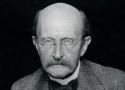
German physicist Max Planck was one of the pioneers of quantum mechanics in the early 20th century, earning the 1918 Nobel Prize in Physics for his discovery of quanta. There has never been a whisper of scandal about the man’s integrity or his scientific work. So a pair of science historians were puzzled when they discovered that a scientific journal had inexplicably retracted two of Planck’s papers from the 1940s.
The journal in question is Naturwissenschaften, now known as The Science of Nature. The journal typically adds a large RETRACTED notice across digital papers that have been retracted, leaving them available for download. But it has removed the two Planck papers entirely, leaving just a blank page (and empty PDFs) with a brief note saying the articles had been “withdrawn due to article violation.” //
Gingras and Khelfaoui suspect the retraction decision was made around this time. “All this clearly suggests that some lawyer at Springer was overshadowing the process and considered these papers as problematic forms of ‘duplicate publications,’” they wrote. //
Duplication/self-plagiarism is also more of an issue now, when publications are a major factor when it comes to hiring and promoting scientists, as well as acquiring research fundings. Applying these contemporary standards can be problematic for the “digital circulation of historical texts,” the authors concluded. //
gowanusstinks Seniorius Lurkius
7y
29
So an entanglement issue?
I’ll let myself out. //
SplatMan_DK Ars Tribunus Angusticlavius
18y
8,310
Subscriptor++
It's really Schrödingers scientific paper.
Just stop looking for it or reading it, and it will be right back. //
Keith Tanner Ars Tribunus Militum
8y
2,325
SplatMan_DK said:
It's really Schrödingers scientific paper.
Just stop looking for it or reading it, and it will be right back.
Maybe it’s more Heisenbergian. You can either read the paper or you can know what’s in it, but not both.

“The Iceman is not a static relic, but a dynamic biological interface,” wrote Sarhan and his colleagues. And that’s the great truth of existence: life’s short, then you die—and the whole time, you’re a dynamic biological interface.
The existing process, which involves roasting ore/sulfuric acid, came in at just under $9,000 for each usable tonne of lithium. By contrast, they estimate that the new process should only cost a bit over $5,000 per tonne. That’s roughly comparable to the cost of isolation from high-quality brines. If the silicon and aluminum products can also be sold, then the cost of the whole process would drop by over $1,000, making it highly cost-effective. //
So the real world will undoubtedly be more complex than these calculations might suggest. Still, in our increasingly lithium-dependent world, it’s nice to have alternatives in case a serious supply crunch ever does hit.
Plus, it’s pretty neat to see that there’s still room for chemists to rethink large industrial processes.
The film adaptation of Andy Weir’s novel Project Hail Mary hits general release today, March 20, and it’s great—go see it! Though a little light on the science, the movie goes hard on the relationship between schoolteacher Ryland Grace (Ryan Gosling) and an extraterrestrial named Rocky, and it’s a ride well worth taking.
But as good as it is, the movie shares a small flaw with the book: Despite having very few things in common, Grace and Rocky learn to communicate with each other extremely quickly. In fact, Grace and Rocky begin conversing in abstracts (concepts like “I like this” and “friendship”) in even less time than it takes in the book. Obviously, there are practical narrative reasons for this choice—you can’t have a good buddy movie if your buddies can’t talk to each other. It’s therefore critical to the flow of the story to get that talking happening as soon as possible, but it can still be a little jarring for the technically minded viewer who was hoping for the acquisition of language to be treated with a little more complexity.
And because this is Ars Technica, we’re doing the same thing we did when the book came out: talking with Dr. Betty Birner, a former professor of linguistics at NIU (now retired), to pick her brain about cognition, pragmatics, cooperation, and what it would actually take for two divergently evolved sapient beings not just to gesture and pantomime but to truly communicate. And this time, we’ll hear from Andy Weir, too. So buckle up, dear readers—things are gonna get nerdy.

Engineers have uncovered the mathematical rules fireflies follow to sync up their flashes. //
Such work could one day lead to insights into how the body’s cells sync to its internal circadian rhythm, or how neurons fire together in the brain, as well as the design of drone swarms communicating through synchronized flashes.
Re: The amount of times...
Hmmm, 100C is where the vapor pressure of pure water is the standard atmospheric pressure at sea level. At 1 to 1.5km of elevation, the drop in temperature at where the vapor pressure of water is equal to the ambient pressure is enough to require adjustments to recipes when baking. The more natural point for 0C would be the triple point in water. Fahrenheit's scale was 0F being the coldest achievable temperature with water ice and NaCl, with 100F being core body temperature. A real SI scale fr temperature would be eV...
For doing thermodynamic calculations, the appropriate scales are Kelvin and Rankine, and there really isn't much difference in usability between K and R as all sorts of conversions need to be done to get answers in Joules or MWHr. Another "fun" problem is dealing with speed involves Joules being watt-seconds, while vehicle speeds are usually given in statute miles, nautical miles or kilometers per hour. A fun factoid is that 1 pound of force at one statute mile per hour is equal to 2.0W (1.99W is a closer approximation).
As for feet, a fair approximation is that light travels 1 ft/nsec, too bad the foot wasn't ~1.6% shorter as a light nano-second would be the ultimate SI unit of length. The current definition of an inch, 25.4mm, was chosen in the 1920's to allow machine tools to handle inches by having a 127 tooth gear instead of a 100 tooth gear.
FWIW, Jefferson wanted to base his unit of length on a "second's" rod, i.e. e pendulum whose length would have exactly one second period when measured at seal level and 45º latitude.
Don't get me started on kilograms of thrust.
Friday 27th January 2023 06:22 GMT
IvyKing
Reply Icon
Re: The amount of times...
From somewhere in the later half of the 19th century to ~1920, the US inch was defined as 39.37 inches equals 1m. According a ca 1920 issue of Railway Mechanical Engineer, the machine tool industry was making a push to defining the inch 25.4mm so that by using a 127 tooth gear to replace a 100 tooth gear a lathe could be set up to produce metric and imperial threads.
One problem with converting the US to pure metric is that almost all land titles use feet, not meters. The US legal definition of a foot was 1/66 of a chain, a mile was 80 chains (66x80=5280), a section of land under the Northwest Ordnance of 1787 (passed under the Articles of Confederation, NOT the Constitution), which was 6400 square chains and the acre being 10 square chains (640 acres per square mile). The surveys for the Townships (36 sections) didn't really start until ca 1796, so if the arrival of the metric standards had not been delayed by the storm and the English, the US might have re-written the 1787 law to use metric measurements.
Another problem with the US converting to metric was Herbert Hoover's success as Secretary of Commerce in setting national standards for pipes and other hardware.
One final note about metric versus imperial is that a nautical mile is defined as 1 minute of longitude at the equator, so works well with the degrees, minutes and seconds customarily used for angles. Metric navigation would favor a decimal system for expressing angles, i.e. the gradians.
doublelayerSilver badge
Reply Icon
Re: The amount of times...
"Fahrenheit's scale was 0F being the coldest achievable temperature with water ice and NaCl, with 100F being core body temperature."
Wrong on both counts. On Fahrenheit's original scale, 0 was the freezing point of a solution of ammonium chloride (NH4Cl), not table salt (NaCl). As neither compound is used directly on roads, the point at which it is not useful depends on which specific salt is being used in the area, and more importantly on where the compound has been applied and whether it has been moved or not. The temperature of the human body was not 100. It was 96. Of course, neither value is considered average for body temperature (and body temperature is incredibly variable in any case, whereas boiling points of things at a specific fixed pressure is stable). This is because the modern scale abandoned both limits by instead fixing 32 and 212 as the values for water freezing and boiling, moving both of the original bounds slightly and making use of the original scale inaccurate to modern users.
Wednesday 25th January 2023 01:55 GMT
-tim
Reply Icon
Coat
Re: The amount of times...
In 1700 it was much easier for a scientist to calibrate a home made thermometer using ammonium chloride cooling bath and a docile dog. The temperature of boiling water required a barometer at higher altitudes and calibration tables. The human armpit temperature of about 96 allows hand drawn hash marks in repeated halves. Many very early Fahrenheit thermometer are often marked every 3 degrees.
Monday 23rd January 2023 15:59 GMT
Michael Wojcik
Reply Icon
Re: The amount of times...
More importantly, for Fahrenheit the reference temperatures aren't 0 and 212; they're 32 and 96. 96 minus 32 is 64. And 32 and 64 are ... stay with me here ... powers of 2.
Fahrenheit based his scale on powers of 2 so that thermometers could be graduated by successive bisection (and then reflected to extrapolate outside that range, on the assumption that the mechanism was sufficiently linear within the desired range). That's an actual engineering reason, unlike "duh humans like powers of 10". There really isn't much reason to favor Celsius.
Kelvin, of course, is the one that matters. (Yes, Rankine works too, but for some SI operations Kelvin is more convenient.)
Celsius is today as much flavor-of-the-month as Fahrenheit is. The original justifications for them are no longer relevant; they're just a matter of taste.
Any gas can be converted into a liquid by simple compression, unless its temperature is below critical. Therefore, the division of substances into liquids and gases is largely conditional. The substances that we are used to considering as gases simply have very low critical temperatures and therefore cannot be in a liquid state at temperatures close to room temperature. On the contrary, the substances we classify as liquids have high critical temperatures (see table in §
).
All gases that make up the air (except carbon dioxide) have low critical temperatures. Their liquefaction therefore requires deep cooling.
There are many types of machines for producing liquid gases, in particular liquid air.
In modern industrial plants, significant cooling and liquefaction of gases is achieved by expansion under thermal insulation conditions.

Yakisugi is a Japanese architectural technique for charring the surface of wood. It has become quite popular in bioarchitecture because the carbonized layer protects the wood from water, fire, insects, and fungi, thereby prolonging the lifespan of the wood. Yakisugi techniques were first codified in written form in the 17th and 18th centuries. But it seems Italian Renaissance polymath Leonardo da Vinci wrote about the protective benefits of charring wood surfaces more than 100 years earlier, according to a paper published in Zenodo, an open repository for EU funded research. //
Leonardo produced more than 13,000 pages in his notebooks (later gathered into codices), less than a third of which have survived. //
In 2003, Alessandro Vezzosi, director of Italy’s Museo Ideale, came across some recipes for mysterious mixtures while flipping through Leonardo’s notes. Vezzosi experimented with the recipes, resulting in a mixture that would harden into a material eerily akin to Bakelite, a synthetic plastic widely used in the early 1900s. So Leonardo may well have invented the first manmade plastic. //
The benefits of this method of wood preservation have since been well documented by science, although the effectiveness is dependent on a variety of factors, including wood species and environmental conditions. The fire’s heat seals the pores of the wood so it absorbs less water—a natural means of waterproofing. The charred surface serves as natural insulation for fire resistance. And stripping the bark removes nutrients that attract insects and fungi, a natural form of biological protection.

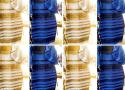
The dress was a 2015 online viral phenomenon centred on a photograph of a dress. Viewers disagreed on whether the dress was blue and black, or white and gold. The phenomenon revealed differences in human colour perception and became the subject of scientific investigations into neuroscience and vision science.
The phenomenon originated in a photograph of a dress posted on the social networking platform Facebook. The dress was black and blue, but the conditions of the photograph caused many to perceive it as white and gold, creating debate. Within a week, more than ten million tweets had mentioned the dress. The retailer of the dress, Roman Originals, reported a surge in sales and produced a one-off version in white and gold sold for charity.
This comic shows two drawings of a woman wearing the same dress, but with different background (and body) colors. The two drawings are split with a narrow vertical portion of an image from the web.
The comic strip refers to a dress whose image went viral on Tumblr only hours before the strip was posted and soon showed up also on Reddit, Twitter, Wired and on The New York Times.
Due to the dress's particular color scheme and the exposure of the photo, it forms an optical illusion causing viewers to disagree on what color the dress actually seems to be. The xkcd strip sandwiches a cropped segment of the photographed dress between two drawings which use the colors from the image against different backgrounds, leading the eye to interpret the white balance differently, demonstrating how the dress can appear different colors depending on context and the viewer's previous experiences.
Both dresses have exactly the same colors actually: //
To the uninitiated, the color of the dress seems immediately obvious; when others cannot see it their way, it can be a surreal (even uncomfortable) experience.
As an aside, the retailer Roman Originals would later confirm the dress was blue with black lace, and that a white dress with gold lace was not offered among the clothing line.
We've learned a lot from the viral image.
The viral image holds a lesson in why people disagree—and how we can learn to better understand each other.
It was not a tranquil time. People argued with their friends about the very basics of reality. Spouses vehemently disagreed. Each and every person was on one side or the other side. It could be hard to imagine how anyone in their right mind could hold an opinion different from your own.
I’m talking, of course, about “the dress,” which went viral on Feb. 26, 2015. To recap: A cellphone picture of a wedding guest’s dress, uploaded to the internet, sharply divided people into those who saw it as white and gold and those who saw it in black and blue—even if they were viewing it together, on the very same computer or phone screen.
The notorious dress, under natural lighting conditions, is unambiguously black and blue, for (almost) everyone who saw it in person, or in other photographs. It was just the one image, snapped by a mother of a bride and uploaded to Tumblr by one of her daughter’s friends, that caused so much disagreement. How can it be that there is such strong consensus about the colors of the actual dress, but such striking disagreements about its colors in this particular image? This is not a debate about people seeing different shades of gray: blue and gold are categorically different colors, not even in the same neighborhood on the color wheel.

Does swearing make you stronger? Science says yes.
“A calorie-neutral, drug-free, low-cost, readily available tool for when we need a boost in performance.”
If you’re human, you’ve probably hollered a curse word or two (or three) when barking your shin on a table edge or hitting your thumb with a hammer. Perhaps you’ve noticed that this seems to lessen your pain. There’s a growing body of scientific evidence that this is indeed the case. The technical term is the “hypoalgesic effect of swearing.” Cursing can also improve physical strength and endurance, according to a new paper published in the journal American Psychologist.
As previously reported, co-author Richard Stephens, a psychologist at Keele, became interested in studying the potential benefits of profanity after noting his wife’s “unsavory language” while giving birth and wondered if profanity really could help alleviate pain. “Swearing is such a common response to pain. There has to be an underlying reason why we do it,” Stephens told Scientific American after publishing a 2009 study that was awarded the 2010 Ig Nobel Peace Prize. //
The team followed up with a 2011 study showing that the pain-relief effect works best for subjects who typically don’t swear that often, perhaps because they attach a higher emotional value to swears. They also found that subjects’ heart rates increased when they swore. But it might not be the only underlying mechanism. Other researchers have pointed out that profanity might be distracting, thereby taking one’s mind off the pain rather than serving as an actual analgesic. //
UserIDAlreadyInUse Ars Tribunus Angusticlavius
12y
6,810
Subscriptor
<psst> "Hey, buddy."
"Yeah?"
"You got a game coming up, yeah?"
"Yeah."
"Need a boost? I got some curse words guaranteed to boost your performance."
"Oh, uh...they check for that now. #!$@, $#!@, and even *&!%!! they test for."
"Yeah, yeah, but I got &!$#!!! and !!^%@$, virtually undetectable. You memorize these, pass the cursing check, and I guarantee you'll have the #!$@ing edge when you need it!" //
etxdm Ars Centurion
5y
315
Subscriptor
They need to study overuse versus occasional use. I've always thought a well placed swear word is far more effective than rampant overuse. I was recently waiting for a drink at a bar and some bro was literally using f*** every other word. It was exhausting trying to filter his speech to understand what he was trying to say.

The emergence of synthetic pigments in the 19th century had an immense impact on the art world, particularly the availability of emerald-green pigments, prized for their intense brilliance by such masters as Paul Cézanne, Edvard Munch, Vincent van Gogh, and Claude Monet. The downside was that these pigments often degraded over time, resulting in cracks and uneven surfaces and the formation of dark copper oxides—even the release of arsenic compounds.
Naturally, it’s a major concern for conservationists of such masterpieces. So it should be welcome news that European researchers have used synchrotron radiation and various other analytical tools to determine whether light and/or humidity are the culprits behind that degradation and how, specifically, it occurs, according to a paper published in the journal Science Advances. //
The results: In the mockups, light and humidity trigger different degradation pathways in emerald-green paints. Humidity results in the formation of arsenolite, making the paint brittle and prone to flaking. Light dulls the color by causing trivalent arsenic already in the pigment to oxidize into pentavalent compounds, forming a thin white layer on the surface. Those findings are consistent with the analyzed samples taken from The Intrigue, confirming the degradation is due to photo-oxidation. Light, it turns out, is the greatest threat to that particular painting, and possibly other masterpieces from the same period.
Playing the Game
Goal: Win by scoring the most points after 10 questions.
How to Play
Each player gets 1 whiteboard and 10 voting tokens of their color.
The player who most recently watched a Veritasium video starts as the Question Reader.
The role of Question Reader moves clockwise each round.
The game lasts 10 questions.
Each Round
The Question Reader reads a card out loud (without taking it out of the box). Starting with the player to their left, everyone places one voting token face down on the mat.
Each chip can only be played once; if placed on the correct answer it is retained, if not it is discarded.
Players choose which token to use based on confidence:
- High number = high confidence.
- Low number = low confidence
Scoring Each Question
The Question Reader reveals the correct answer.
If you were right, move your token to your scoring pile.
If you were wrong, your token is discarded.
Game End: After 10 questions, all tokens will have been used. Players add up the numbers on their scoring piles. The player with the highest total wins!
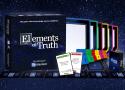
Popular science Youtuber Veritasium has their own board game coming out - Elements of Truth is a trivia game where it's not what you know, it's what you you know that counts.

It sounds a lot like the Jurassic Park "Underwear Gnomes" technique of generic engineering:
- Find and extract DNA
- Squeeze DNA into an ostrich egg
- ???
- Dinosaur!
In the past few years, many environmental and academic activists have been undermining the work of Norman Borlaug and the successes of the Green Revolution by publishing false information. The environmental activists behind these headlines claim that the Green Revolution failed. Here is a random sample of examples of these activists lying to the public. //
Fortunately, evidence easily refutes the misinformation spread by such activists’ claims. Wheat yields rose dramatically in the late 1960s and throughout the 1970s. By lying to their audience and the public, these groups are ignoring that wheat yields in India more than doubled between the period of 1967 and 1972.
https://journals.plos.org/plosone/article?id=10.1371/journal.pone.0111629
There’s no “new research” as claimed by the above activist headlines. The evidence is clear: the Green Revolution resulted in higher crop yields that contributed to preventing one billion deaths from starvation. Dr. Borlaug made an amazing contribution to improving global food security. In 1970, he was awarded the Nobel Peace Prize for his work.