
MKD Ars Praetorian
10y
433
Bash said:
As much as I'd love a future Democrat government to fix this fourth amendment violation, this is not a new policy as of our current president. The current administration may have 'invented' using this tactic for oppression and intimidation, but so far both the R's and the D's are in support of this violation of our constitutional rights.
"Both"? This goes back to Collection Act of 1789, so throw in some Fs (Federalists), Ws (for Washington and the Whigs), NR (National Republican), NU (National Union), and D-Rs (Democrat-Republicans) and those Founding Fathers in the first Congress who voted for it.
Section 24 of the Collection Act empowered inspectors by giving them the authority to execute a warrantless search of any maritime vessel for any undeclared cargo or merchandise that was not on the vessel's shipping manifest if they believed that the ship was concealing taxable items intended for sale. The Collection Act did not specify criteria for suspicion, apparently leaving this up to the individual customs agents to determine on a case-by-case basis. It allowed for appointed agents of the United States to detain and board any vessel in U.S. waters in an effort to discover undocumented cargo. Furthermore, if a search proved fruitful, agents could appropriate a warrant and perform a daytime search of any dwelling, house, storage facility, or other place if they believed operations defrauding the nation of revenue were occurring there.


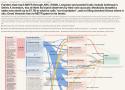
If Anthropic dies, the Regulatory Regime and the AI Doom Machine are crippled or die.
Neither METR nor Tarbell nor the other organizations in the Anthropic Network can allow that to happen.
Hence, neither METR or the AI Doom Machine can be trusted to provide independent assessments of Anthropic's models or AI more broadly.
They simply are not organizations independent of Anthropic.
And Anthropic cannot detach itself from METR or Tarbell or countless other safety orgs (not shown here), either, because they drive hype for the models and the possibility of eventual regulatory capture, and Anthropic will not give that up willingly.
What's more, the people at all of these organizations are all the same ecosystem, the same community. They just shuffle between organizations.
The Anthropic Network is therefore, so long as it is successful, locked into a self-amplifying feedback loop inside an ideological monoculture. //
Anthropic will either create hysteria until American AI slows down and China wins, or it will create fractures throughout American society with severe political consequences.
Ironically, because of the structural financial incentives underpinning the Anthropic Network, it has become the same kind of self-amplifying virus that it fantasizes AI to become in the future -- while hiding its tracks just as carefully.

Again, under the law any death due to measles would be required to be reported to the County Coroner. He has no report.
Given the other apparent deception here it is fair to ask whether the facts of the second case have been materially manipulated similar to the first case, or whether the second case exists at all. //
anon-h5sn
10 hours ago
I guess those 10 plus million illegal aliens who crossed our border unvetted and not vaccinated have nothing to do with the increases in disease cases nationwide. //
anon-8g70
10 hours ago
So....if this country had essentially eliminated measles several years ago, then how do you suppose it was re-introduced to this country? Perhaps through unvaccinated illegals pouring into all parts of the country? Not a great leap to make.
One point I think gets overlooked is that industry responds to the signals it receives. Companies aren’t going to spend millions expanding facilities, buying equipment and hiring skilled workers if procurement quantities swing wildly every few years. When demand becomes unpredictable, suppliers close their doors, experienced machinists retire, subcontractors move into commercial work, and critical manufacturing capability slowly disappears. Years later, we act surprised when production can’t keep up. It isn’t because industry suddenly forgot how to build jet engines. It’s because we’ve allowed pieces of the industrial ecosystem to disappear, and rebuilding them takes years, not months.
I’ve seen a lot of discussion blaming manufacturers. Some criticism is certainly warranted. Quality matters. Delivery schedules matter. Accountability matters. But government also has a responsibility to provide stable procurement strategies and predictable demand. Industry cannot build long-term capacity around short-term thinking.
This isn’t unique to jet engines, either. We’ve watched similar issues emerge in munitions production, shipbuilding, missile manufacturing, and other critical sectors of the defense industrial base. Every time demand spikes, we discover we no longer have the surge capacity we assumed existed. The uncomfortable truth is that surge capacity isn’t something you create during a crisis. You build it years before you need it.
That’s really the lesson here. The article is about engines, but the real story is much bigger. Jet engines are simply where the symptoms are showing today. The underlying issue is that we’ve spent decades treating our industrial base as a cost to manage instead of a strategic capability to preserve.
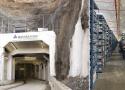
Elon Musk uncovers limestone mine used for storing federal workers' retirement papers
White House correspondent Peter Doocy discusses Elon Musk discovering federal workers' retirement documents being stored in a Pennsylvania limestone mine as questions over efficiency arise.
Elon Musk announced on Tuesday that the Department of Government Efficiency (DOGE) was looking into a limestone mine in Pennsylvania, where the cost-cutting organization says federal employee retirements are processed manually using a system that could take months.
Musk told reporters about the mine on Tuesday during an appearance with President Donald Trump in the Oval Office, as the president prepared to sign an executive order concerning the billionaire’s work leading DOGE.
"And then we're told this is actually, I think, a great anecdote, because we're told the most number of people that could retire possibly in a month is 10,000," Musk said.
"We're like, well, what? Why is that? Well, because all the retirement paperwork is manual on paper," he continued. "It's manually calculated and written down on a piece of paper. Then it goes down to mine and like, what do you mean, a mine?" //
"And then the speed, the limiting factor is the speed at which the mine shaft elevator can move, determines how many people can retire from the federal government," Musk said. "And the elevator breaks down and sometimes, and then you can't, nobody can retire. Doesn't that sound crazy?"

At the height of the Depression that Democrats call Great because it gave them power for 50 years, Yip Harburg wrote the lyrics to the song Brother, Can You Spare a Dime?
The song is sad but laborers were not the only victims of the worldwide collapse of the economy. Their bosses went broke.

The automaker marked its first annual loss in more than 70 years.
After US government policies wrecked the country’s electric vehicle market, automakers have been scrambling to adapt. The loss of federal clean vehicle tax incentives and funding for charging infrastructure, combined with capricious tariffs, has resulted in a 28 percent drop in EV sales for the first three months of the year.
That’s a far cry from just a few years ago, when optimism abounded and a strong commitment to an EV-heavy portfolio translated into a higher share price. As those commitments are abandoned, there’s a financial price to pay, including more than $9 billion of write-downs for Honda, which made its first operating loss in the company’s history.
Saturday, April 25th, the day this was written, is the 125th anniversary of New York being the first state to require automobile owners to register their vehicles with the state.
That's right. Today is the 125th birthday of everyone's favorite government institution: The Department of Motor Vehicles, or DMV. //
New York's first plates were homemade, bearing only the owner's initials without any numbers. It was Massachusetts that actually issued its first license plates in 1903." //
In fact, the late adoption by the United States leads to one of the few examples of France being in first place in anything that didn't involve snails or surrendering to Germany.

The federal government plans to automatically register eligible men for the military draft beginning in December, according to a proposed rule published last week.
The Selective Service System (SSS), the government agency that maintains the database of draft-eligible Americans, submitted the “automatic registration” rule change to the Office of Information and Regulatory Affairs on March 30. //
Congress approved automatic registration for the draft last December as part of the 2026 National Defense Authorization Act, must-pass legislation that authorizes funding for military personnel and operations.
“This statutory change transfers responsibility for registration from individual men to SSS through integration with federal data sources,” the agency notes on its website. “SSS will implement the change by December 2026, resulting in a streamlined registration process and corresponding workforce realignment.” //
Currently, 46 states and territories have laws in place to automatically register eligible men when they apply for driver’s licenses or IDs, according to the Selective Service System.
Our founders intended for the federal government to have limited and divided powers, while most governmental powers would be dispersed among the states and the people. Instead, government power is now concentrated at the federal level.
As predicted, the concentration of power at the federal level has led to waste, fraud, corruption, poor quality and high-cost services, inefficiency, debt, division, and political paralysis. Yet federal politicians, specifically politicians in the Democrat Party, are totally opposed to giving power back to the states and the people. Even though the statistics confirm that the federal government is incapable of providing services efficiently, cost-effectively, and without high levels of waste and fraud, Democrats obstruct efforts to move decision-making to the states and the people. The reason for this obstruction is obvious: Democrats benefit politically by controlling money and services and using this leverage to manipulate voters on a national scale.
Except for national defense, trade, immigration, and border control, there are very few issues that states, private businesses and organizations, or individual Americans could not handle better. The fact that Democrats will not even consider decentralizing power on any issue should tell you everything you need to know. Voters need to wake up and start asking “why.” And Republicans need to be ready with better answers.

Age-verification laws target operating systems because apparently teenagers having root access is now a safeguarding crisis. //
Big Brother is only going to get worse. With the US Congress advancing its own App Store Accountability Act, and more state lawmakers floating copycat bills, OS‑level age verification is poised to become a standard part of how Americans set up phones, tablets and PCs within the next few years. Happy, happy, joy, joy. //
These kinds of laws don't work. They've never worked. Prohibition failed in the United States. I kept reading Playboy, and these days, people use virtual private networks (VPN)s to get around the restrictions of the UK’s Online Safety Act. However, as the Electronic Frontier Foundation (EFF) notes, VPNs are far from a perfect solution.
The real problem is this hodgepodge of laws; it's the growth of the surveillance state.

. The federal workforce is actually shrinking, and the number from late 2024 to January 2026 is now up to 12 percent of the workforce, most having left voluntarily. That, folks, is what we call a good start. //
The OPM's data shows that the government's civilian workforce shrank by 12% between September 2024 and January 2026, going from a headcount of 2,313,216 to 2,035,344.
Separate data, also released by the OPM, shows that the majority of employees who left during that time did so voluntarily rather than being forced out, Reuters reported. //
anon-vg5c Random US Citizen
an hour ago
12% is scrapping the mud off your boot.
Need to cut another 64-65% of the Federal Workforce - and start with the IRS, Dept of Labor, Dept of Education, and completely eliminate (if not already done) USAID.
OpenAI is in and Anthropic is out as a supplier of AI technology for the US defense department. This news caps a week of bluster by the highest officials in the US government towards some of the wealthiest titans of the big tech industry, and the overhanging specter of the existential risks posed by a new technology powerful enough that the Pentagon claims it is essential to national security. At issue is Anthropic’s insistence that the US Department of Defense (DoD) could not use its models to facilitate “mass surveillance” or “fully autonomous weapons,” provisions the defense secretary Pete Hegseth derided as “woke.” //
Despite the histrionics, this is probably the best outcome for Anthropic—and for the Pentagon. In our free-market economy, both are, and should be, free to sell and buy what they want with whom they want, subject to longstanding federal rules on contracting, acquisitions, and blacklisting. The only factor out of place here are the Pentagon’s vindictive threats.

Federal employment dropped to 2,686,000 in January 2026, according to the U.S. Bureau of Labor Statistics. That number has not appeared in federal labor data since Lyndon B. Johnson was in the White House.
The Bureau’s “All Employees, Federal” series confirms it. We have not seen staffing levels this low since May 1966. //
According to Office of Personnel Management data summarized in public reporting, more than 322,000 federal employees left the government workforce during the first year after Trump returned to office. //
Those exits came in different forms. Roughly 149,500 resigned. More than 105,000 retired. Around 10,500 were laid off. Even after new hires were added, overall staffing declined noticeably.
And it was not limited to a single agency tucked away from public view.

There were no pre-game speeches or waving banners; the vets surrounded the jail, demanding access to those ballots.
In response, one side started shooting, and the other answered in kind. The gunfight lasted a couple of hours until the door to the jail opened, giving the ballots a breath of fresh air.
When all eyes could see, the counting resumed.
Consequences, Not Chaos
Unsurprisingly, the slate of GIs won their respective elections — no race was even close — and the corrupt regime lost its grip of control.
There wasn't a loss of life, nor did Athens descend into anarchy; it simply corrected course.
Corrupt authority retreated into the darkness because ordinary people refused to accept theft disguised as governance. //
Despite the desire to paint corruption in postwar America as a foreign disease, Athens was the horn that woke everybody else, illustrating how civic rot grows fast when oversight vanishes, and fear replaces accountability.
Sunshine, as always, is the best disinfectant, so trust returned just as fast when that sunlight exposed everything.
Remember, those men were veterans returning from organized chaos and brutality, and when they returned home, they didn't want to see echoes from the battlefields. All they wanted was a count that matched the vote, while their restraint was just as important as their resolve. //
Across American life, a rope lies across everyone's waist, stretching between trust and force: Keep it slack enough for the law to work and tight enough to stop abuse.
Athens (TN) found its balance when patience was exhausted, and determination emerged.

A better explanation is that DOGE is functioning as a stress test of the federal bureaucracy.
Stress tests are not designed to produce immediate, permanent fixes. They are designed to apply pressure and observe outcomes: where systems bend, where they break, where they resist, and where supposed constraints turn out to be optional once incentives change. It is a drive to gather data, not repair issues.
Under this model, efficiency gains are not the primary goal. They are signal, evidence of latent capacity revealed under load. Resistance, delay, panic, and narrative hostility are also signal. They show where authority actually resides and which processes exist because they are necessary, versus merely habitual.
The Social Security Administration results fit this model precisely. When pressure was applied, performance improved quickly and measurably. That does not prove the system is now permanently fixed. It shows something more revealing: The capacity was there all along. //
This interpretation aligns closely with how Elon Musk has repeatedly operated across very different domains.
Musk does not treat institutions as abstract ideals. Thinking like an engineer, he treats them as systems that must be tested under real conditions. His approach favors empirical stress over theoretical reassurance and exposure over simulation.
One of the clearest expressions of this philosophy is SpaceX’s use of the acronym RUD, “rapid unscheduled disassembly,” referred to by most people as a big old explosion. Rockets are pushed until they fail. Failure is not an embarrassment, but rather a valuable data collection moment. Each breakdown reveals load-bearing assumptions that no white paper can surface.
The goal is not to avoid failure at all costs. The goal is to fail fast enough, visibly enough, to learn where the system’s true limits are, and to learn it quickly.
Viewed through this lens, DOGE’s behavior becomes coherent. //
From a stress-test perspective, controversy is not proof of failure. It is proof that pressure reached something structural.
Despite efforts in recent years to gain clarity, the roughly 110-mile state line between Michigan and Indiana remains blurry as ever.
The last official survey of the dividing line between Michiganders and Hoosiers was conducted in 1827, and wooden markers placed by federal surveyors at that time have largely rotted into the pastoral landscape.
Some surveyors have estimated that the state line generally accepted by locals could be off by a few feet in some areas, creating potential areas of conflict. //
Despite putting out two requests for proposals, the state didn’t get any bites from private surveying companies willing and able to take on the large project.
“We didn’t receive any qualifying bids,” Andrew Brisbo, director of Bureau of Construction Codes for Michigan’s Department of Licensing and Regulatory Affairs, told lawmakers during an October Senate committee hearing.
“We went back and discussed with the commission whether it might be a better approach to provide the funding to the county surveying programs on the border,” he continued. “They have the capacity to do the work, and they can just build it into those programs in order to get the work done.”

Somehow, every Arizona factory and wholesaler selling parts to us became our branch office when we asked them to ship directly to our customers. Address labels became stores, refrigerator magnets became salespeople and, magically, RockAuto was in Arizona.
No previous court case (including ours in the Arizona Tax Court) found a retailer "physically present" without employees or assets or someone making in-state contact with customers. ADoR's own publications say "drop-shipping" from Arizona suppliers does not create tax liability. But ADoR persists in demanding six years of taxes (which we didn't collect from customers) plus interest and penalties — far more money than we earned in 20 years selling auto parts to Arizonans!
For every action there is an equal and opposite government program. -- Bob Wells
in 2025, the next archivist may well be among the most important appointments President Donald Trump will make. Why? Because the federal government’s ability to function transparently, legally, and accountably now depends almost entirely on fixing a catastrophic, decades-long failure in electronic records management — a failure that no other agency but the National Archives and Records Administration (NARA), which the archivist heads, has the authority to repair. //
Most Americans have no idea how bad the situation is. And that’s not their fault. If the government had been managing its electronic records as required by law, we would all have access to the information needed to understand how decisions are made, money is spent, crimes are investigated, and power is used.
Instead, we now have more than two decades of abject information chaos — a level of dysfunction that threatens the very foundations of democratic governance. NARA’s dysfunction has damaged transparency, as seen with Jan. 6, Russiagate, and Arctic Frost, to name a few. On oversight, it has contributed to the Pentagon’s inability to account for trillions of missing taxpayer dollars. With cybersecurity, it has resulted in the loss of more than 25 million classified electronic records, as demonstrated by the Office of Personnel Management’s data breach. Lastly, it has made it difficult to hold anyone accountable for federal health agencies’ misconduct. //
In 1997, NARA endorsed the Defense Department’s DoD 5015.2-certified electronic records repositories as the official solution for managing federal electronic records. The problem? Those systems were designed by professional records managers who — through no fault of their own — had little to no understanding of electronic information management. The result was predictable: applications that were theoretically compliant on paper but fatally flawed in practice.
Federal agencies spent millions purchasing these certified systems. Yet not a single agency ever successfully deployed one in a production environment. The reasons are detailed in a stunning investigative report by the Epoch Times, which chronicles how these failures have cost taxpayers billions, compromised national security, and endangered the lives of innocent Americans. But the bigger story is this: because the DoD 5015.2 systems never worked, federal agencies never managed electronic records in accordance with the Federal Records Act at all. //
If agencies and vendors fail to demonstrate a solution’s compliance with these requirements, NARA can reject it as a suitable solution for managing agency information. Thus, NARA effectively became the government’s default IT regulator — a role for which it was neither trained nor equipped.
As a result, the archivist of the United States, a position once considered ceremonial, suddenly became responsible for overseeing the digital infrastructure of the entire federal government. //
In February, President Trump fired the previous archivist, historian Colleen Shogan. Given her lack of technical experience, her support for her predecessor’s participation in the FBI’s raid on Mar-a-Lago, and her questionable political independence, I fully supported that decision.
But it has left a vacuum at a time when NARA desperately needs leadership with vision, technical expertise, and the ability to rebuild trust across partisan divides. The president has not yet nominated a replacement. //
The person who steps into this role will carry responsibility for ensuring the U.S. government can function in the digital age. If the next archivist fails, the consequences will cascade through every policy domain — from national security to public health to economic oversight. //
The failure of federal electronic records management has already cost billions of dollars, jeopardized transparency, and eroded public trust. It has allowed agencies to operate in the shadows, shielded from accountability by systems too broken to track what they do. //
The archivist of the United States is now the guardian of every recorded action of our government — and therefore the guardian of the public’s right to know.